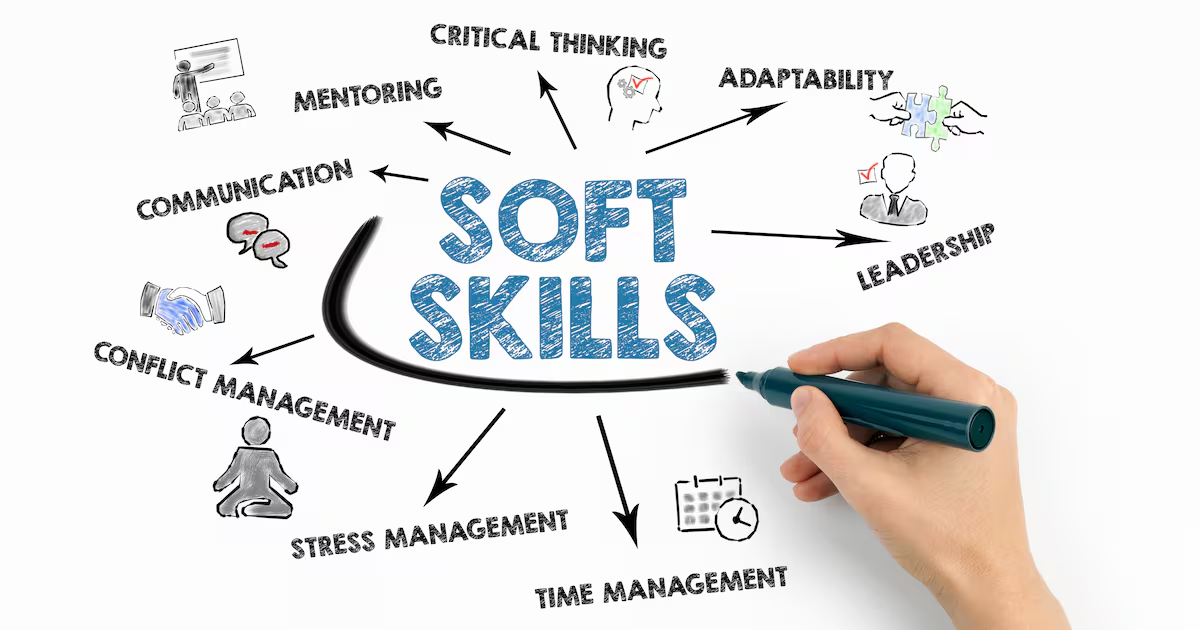
Harvard Business Review LogoAugust 26, 2025Illustration by Harriet Lee-MerrionAn analysis of over 1,000 occupations and hundreds of skills—capturing 70 million job transitions—examined the importance of foundational skills (like reading comprehension, basicAs technology like generative AI reshapes the workplace, it’s easy to assume that pursuing greater technical competence will help ensure a long and lucrative career. Additionally, by this logic, firms should be searching for those with specialized knowledge when seeking to fill entry level roles amid a tough market. But according to our new research, foundational skills—like collaboration, mathematical thinking, and adaptability—may prove much more important for both individuals and companies.
Soft Skills Matter Now More Than Ever, According to New Research
An analysis of over 1,000 occupations and hundreds of skills—capturing 70 million job transitions—examined the importance of foundational skills (like reading comprehension, basic math, and the ability to work well in teams) to career progression. Those who had a broad base of foundational skills (as opposed to a few highly specialized skills, like coding) learned new things faster, earned more money, moved into more advanced positions, and proved more resilient amid market changes throughout their careers. This is because foundational skills helped workers to be more adaptable, provided a solid base from which to learn new skills quickly, and gave them the ability to facilitate smooth, nuanced organizational changes, which is valued in higher-earning positions. Amid massive technological changes, like the advancement of gen AI and its estimated impacts on jobs, the study makes a strong case for the continued development of soft skills—for both individuals and firms.