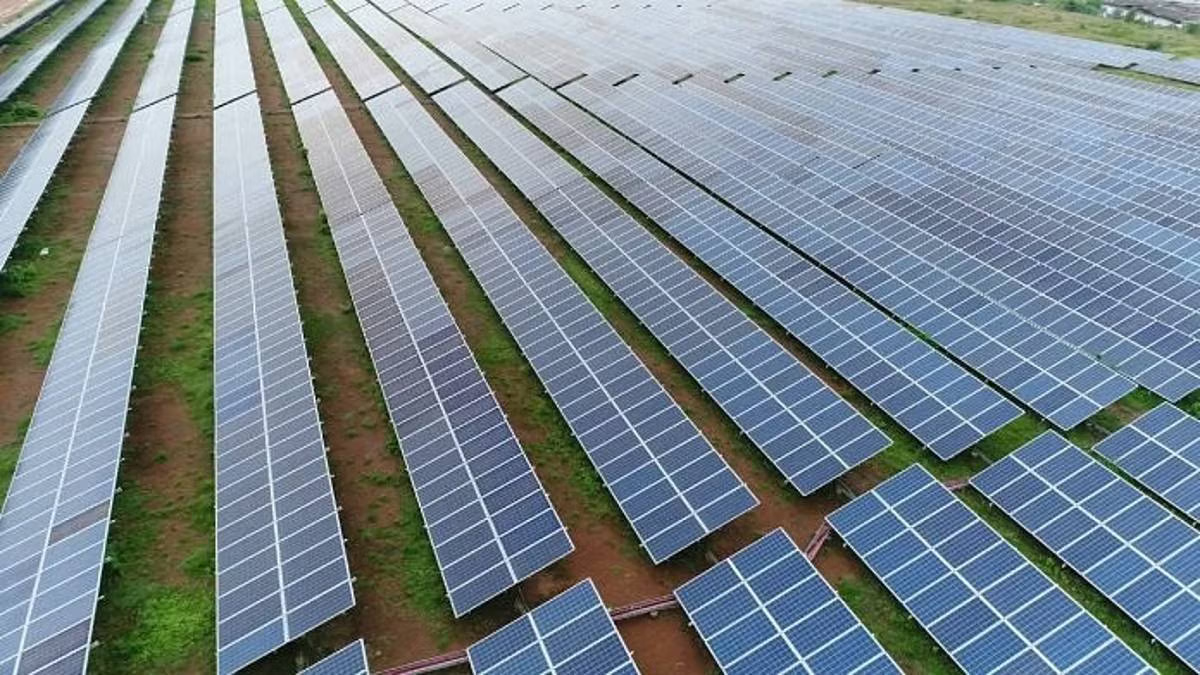
The ultra-low prices of electricity during midday (average ₹1.11 a kWhr in May) and high igh prices during the nights (₹9.71) shows the “stress”.
| Photo Credit:
K Ragesh
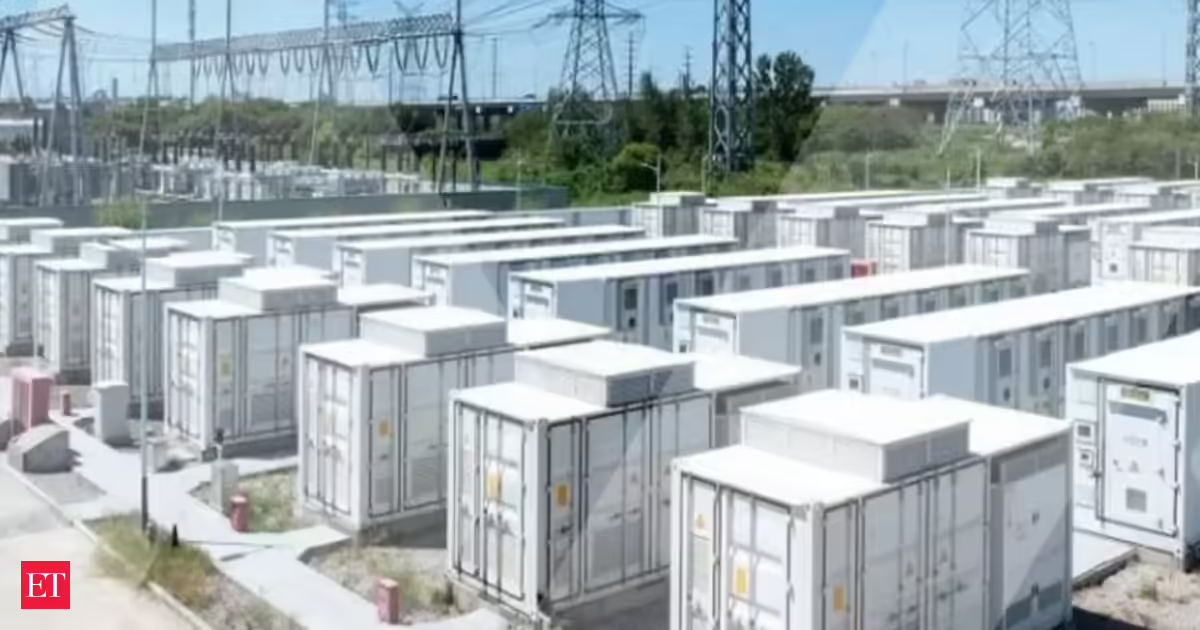
A ‘working paper’ (study) by the Prime Minister’s Economic Advisory Council (PM-EAC) has highlighted a niggling issue in the solar power industry — as solar power is meeting more and more of midday demand, it is forcing conventional power plants, such as thermal, to ramp up and down more sharply to meet the net load. The paper blames slow adoption of battery storage for this. “Battery storage is the most direct solution,” the paper notes, adding that while pumped hydro storage has nearly achieved its planned capacity, battery deployment remains well below national targets This has made India’s storage deficit “primarily a battery shortfall”. The recent pace of battery additions is encouraging, the authors note, but “a lot more is still required”. The authors, PM-EAC member, Sanjeev Sanyal and Satvik Deb, have noted that the ultra-low prices of electricity during midday (average ₹1.11 a kWhr in May) and high prices during the nights (₹9.71) shows the “stress”. Binding constraintThe study argues that the country’s rapid expansion of solar power has shifted the “binding constraint” of the power system from generation capacity to grid flexibility, requiring a major scale-up of battery storage, demand response and time-of-day tariffs. “The defining problem of the Indian grid is no longer how much electricity the country can generate, but when it can generate it and how fast it can change what it generates,” the authors write in the paper. “The binding constraint has shifted from capacity to flexibility.” Three indicatorsThe authors cite three clear indicators of the emerging problem: a widening gap between electricity prices during solar and non-solar hours, most instances of unmet demand occurring after sunset, and increasing curtailment of solar generation because it cannot be absorbed by the grid when produced. They estimate that, on an average day in May, curtailed solar energy was enough to power more than a quarter of Delhi for an entire day. The study estimates that halving the evening ramp in electricity demand would require around 130 GWh of storage discharge over a seven-hour period, whereas the country’s pumped-storage and battery fleet currently discharges only about 24 GWh a day on average. This, it says, shows that existing storage is useful “at the margin” but far from sufficient to reshape the country’s daily load curve. The paper points to California’s electricity grid as evidence that large-scale battery deployment can address the problem. There, batteries absorb excess solar generation during the day and discharge during the evening, reducing the effective evening net-load swing from nearly 28 GW to about 10 GW. “This is precisely the capability India will need as its solar fleet expands,” the authors write. The authors also welcome recent policy initiatives, including proposed amendments to electricity laws that promote demand response, time-of-day tariffs, energy storage and stronger renewable purchase obligations. They argue that these measures, together with rapid battery deployment, can help India build a power system capable of supporting its clean energy ambitions. Published on July 7, 2026