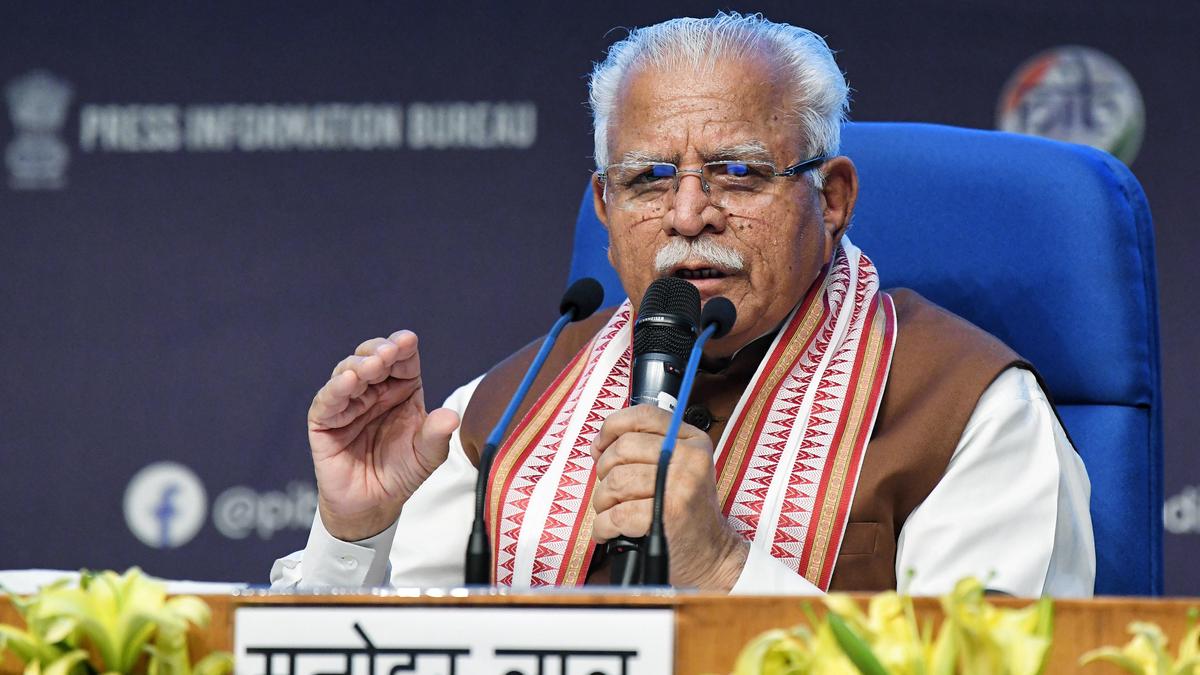
Union Minister of Power Manohar Lal (file photo)
| Photo Credit:
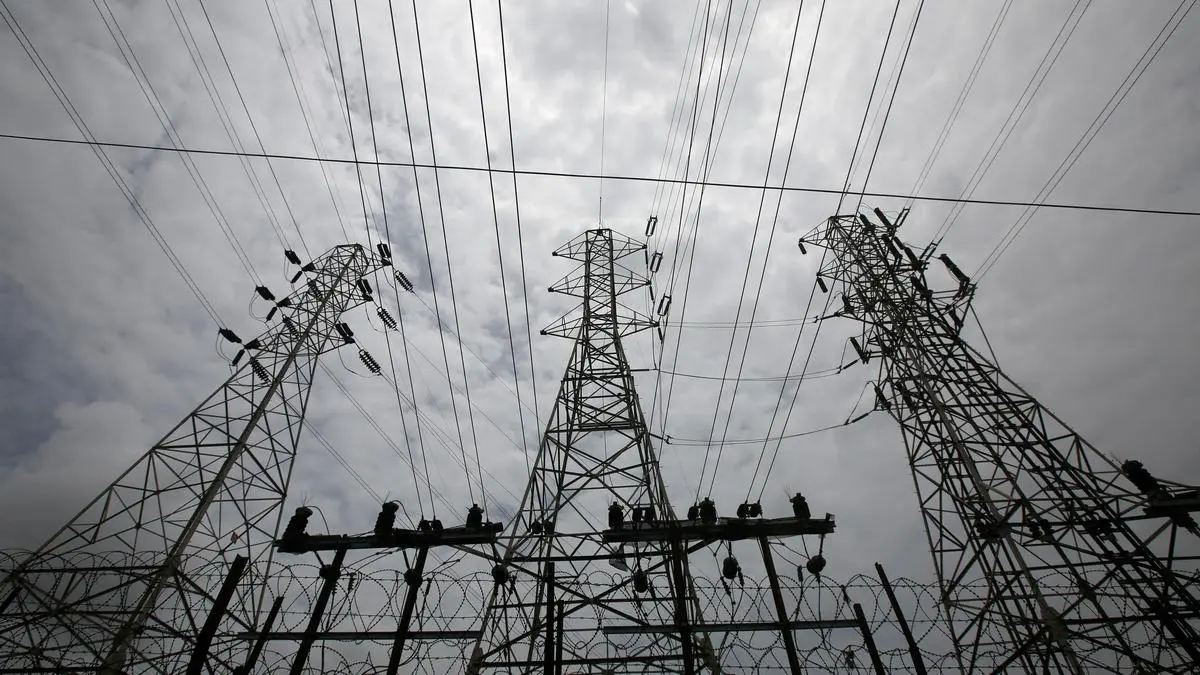
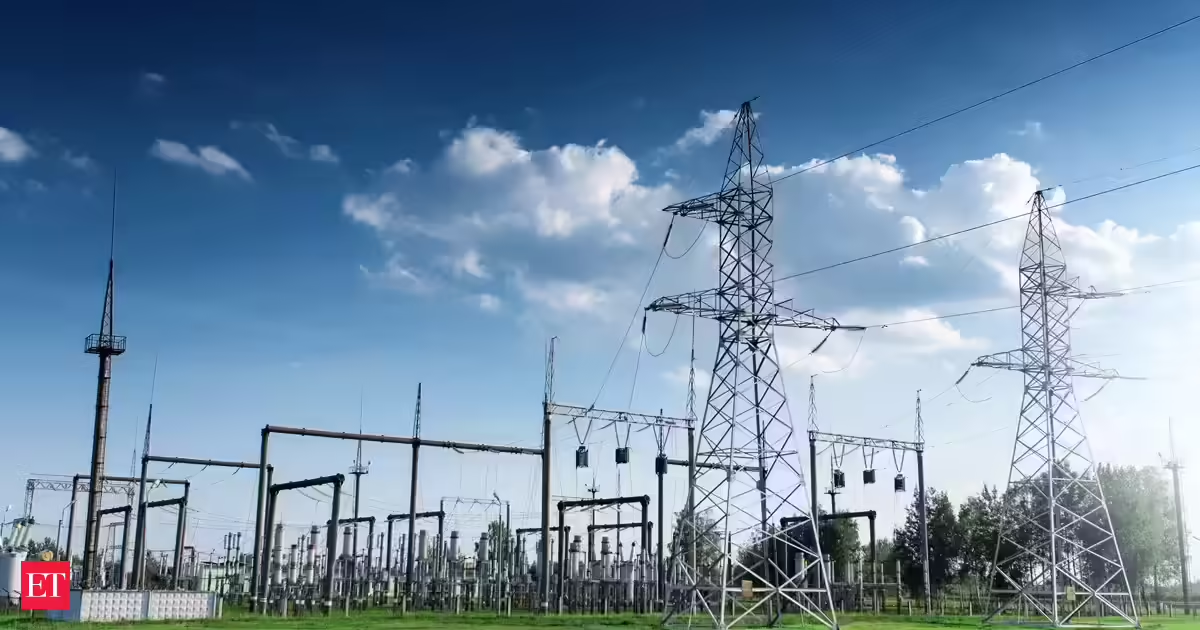
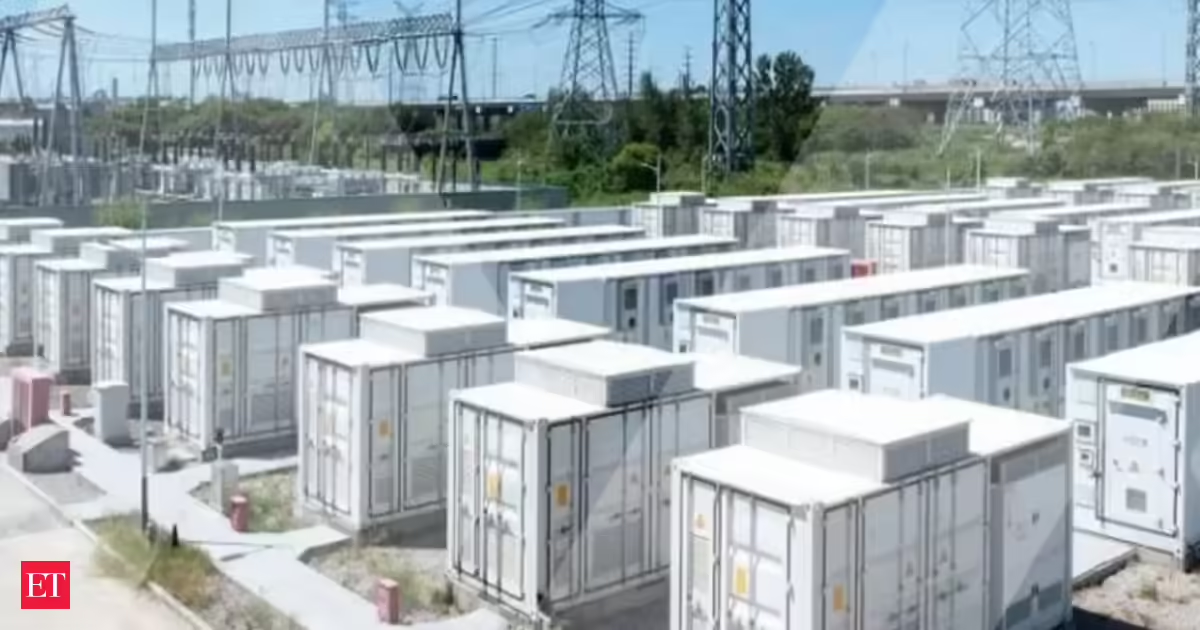
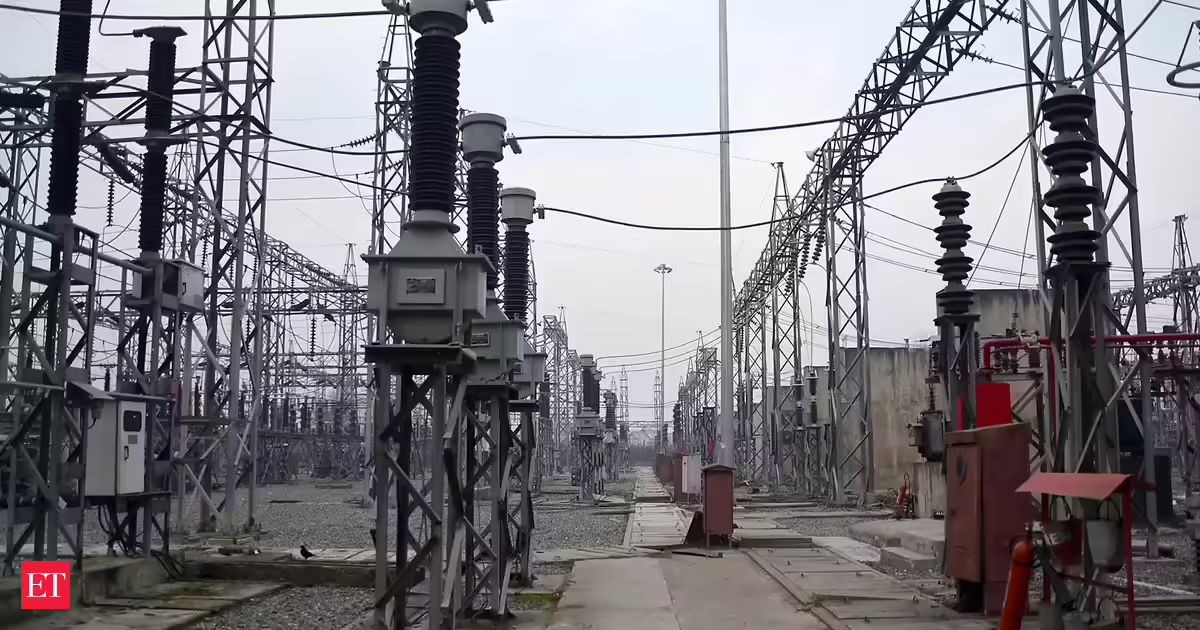
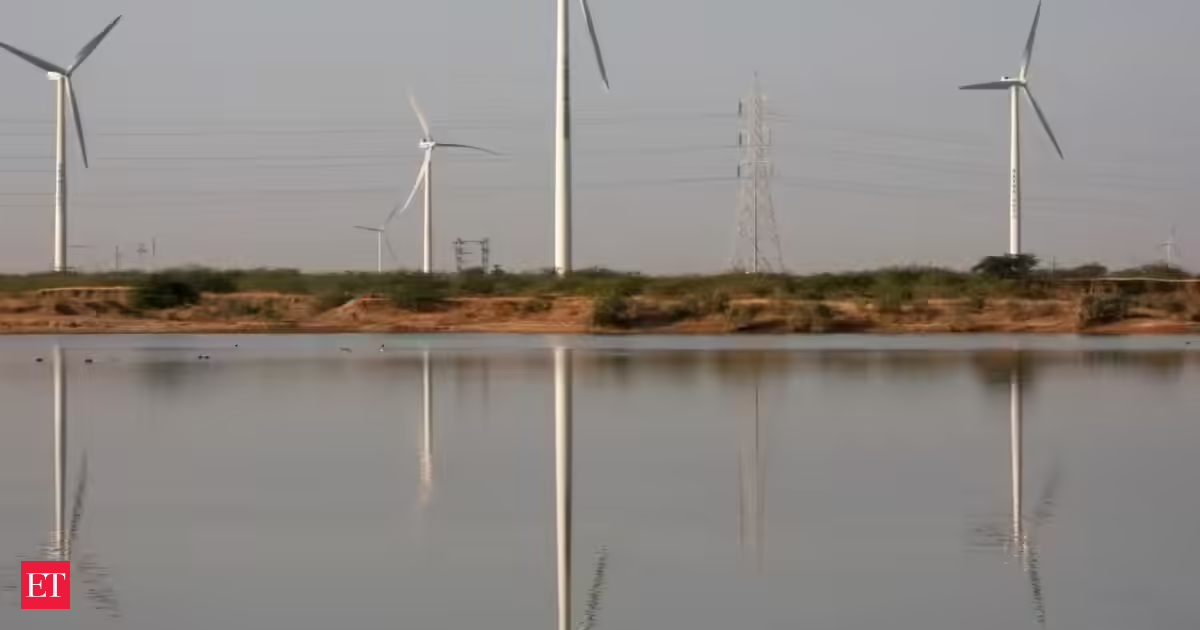
The Consultative Committee on Power met on Tuesday to discuss transmission bottlenecks as an expanding power demand amidst massive integration of renewable energy (RE) is exerting tremendous pressure on the grid.The high-level panel, chaired by Power Minister Manohar Lal, deliberated on secure RE integration, transmission strengthening, energy storage, dynamic reactive power support, grid flexibility, compliance with technical standards, forecasting, power quality and resilience of the grid, the Power Ministry said.Grid resilienceThe committee, which included MPs, the Power Secretary and senior officials from institutions such as the Central Electricity Authority, Grid Controller of India and Central Transmission Utility of India, highlighted that grid stability is central to energy security and that India’s clean energy transition must be supported by a reliable, flexible and resilient power grid.The meeting of the high-level panel comes amidst surging RE capacity additions, with slower deployment of transmission infrastructure leading to loss of RE. For instance, India lost 34 GWh of clean generation, equivalent to the daily power use of about 5 million urban middle-class households, on March 30, 2026 (as per Ember).Stability focusSpeaking to the media after the meeting, the Minister said: “Today’s discussion subject was grid stability — specifically the coordination and balancing of various modes of power generation against fluctuating demand, ensuring that the grid remains inherently stable.”If grid stability is compromised, the entire power sector could collapse or come to a complete standstill. Instances of this nature have been observed globally; when proper attention is not paid to these factors, it can occasionally result in massive shocks or significant supply gaps, he emphasised.The panel also discussed various measures for ensuring the stability of the Indian grid, which is experiencing large penetration of inverter-based generation resources and bulk loads.The measures included avoiding mismatches between commissioning of transmission lines and RE generation projects to avoid curtailment and encouraging suitable bulk consumers closer to large renewable generation complexes to optimise transmission investments.It was also felt that improving RE forecasting through better weather data, calibration and maintenance of weather stations, and installation of automatic weather stations in renewable energy plants. Another measure was enhancing grid resilience through strengthening of transmission and distribution infrastructure in weather-prone corridors, maintaining emergency restoration systems and augmenting black-start capability for faster restoration.According to a June 2026 report by Axis Securities, India added transmission line capacity of 12,139 circuit km, (5,751 ckm of ISTS and 6,388 ckm of InSTS), up 2 per cent y-o-y and against a target of 15,382 ckm in FY26.The FY26 official target for transmission line addition was revised downwards to 15,382 ckm from 24,400 ckm in August 2025, citing right-of-way (RoW) challenges, which implies a 74 per cent growth over the 8,830 ckm of actual addition in FY25.Transmission BottlenecksAs of April 2026, India’s total transmission line capacity stood at 5,07,414 ckm (2,20,773 ISTS and 2,86,641 InSTS), with 220 kV at 42 per cent, 400 kV at 42 per cent, 765 kV at 12 per cent, 500 kV at 1.86 per cent, and 800kV at 1.90 per cent, and the balance is 320 kV.Noted think tank Ember estimates that the total RE curtailment in Q1 2026 reached around 470 gigawatt-hours (GWh), of which 300 GWh stemmed directly from transmission constraints. It also found that India met only about 80 per cent of its annual transmission targets over the past five years.These issues are also hampering capacity addition. For instance, Crisil Ratings in a March 2026 report said that surging RE capacity addition amid slower deployment of transmission infrastructure poses a risk of grid curtailment for more than 35 G of capacity in FY27, owing to a lack of long-term grid access.Published on June 2, 2026