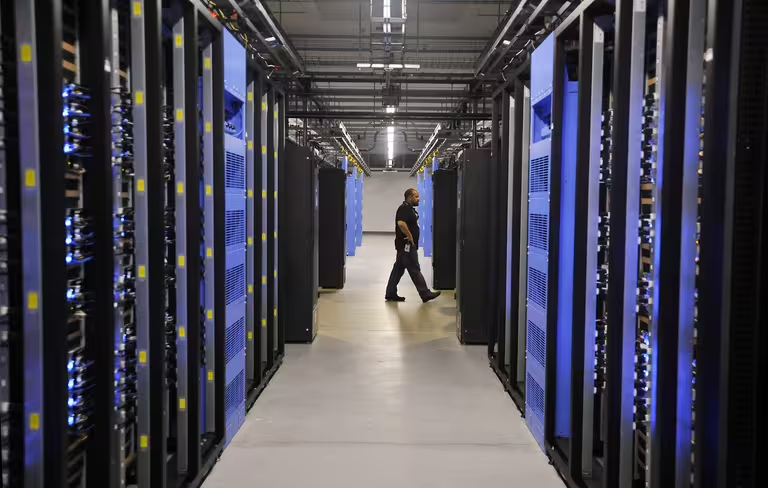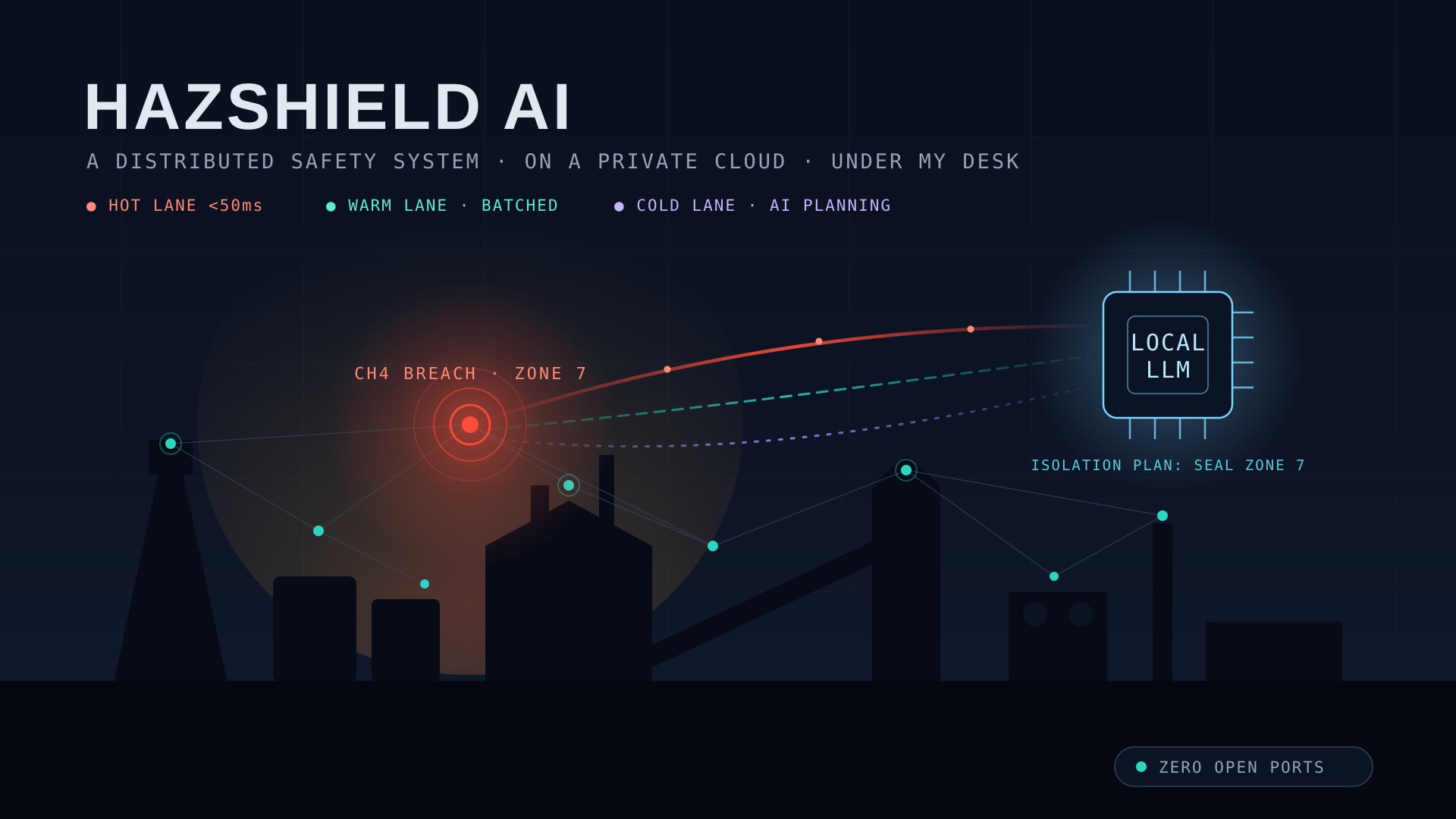
Picture a mineral processing plant at 3 AM. A methane sensor in the crusher hall starts climbing. Within 5 milliseconds, the breach is flagged at the edge. Within 50, it's glowing red on the control room screen. And within seconds, a locally hosted AI has studied the plant's layout, worked out which zones connect, what equipment is running, and where the airflow goes, and produced a step-by-step isolation blueprint: shut down conveyor C4, reroute ventilation through shaft B, seal zone 7.
No cloud bill. No third-party AI API. No open ports on the network.
That's HazShield AI, a distributed industrial safety system I'm building end-to-end, and the entire thing runs on a single mini PC under my desk. This series documents the build. Part 1 is about forging the platform: a genuine private cloud, carved out of 28GB of RAM, exposed to the world through a zero-trust tunnel.
The System in One Picture
HazShield simulates a full industrial safety ecosystem: thousands of concurrent sensor streams for gas, temperature, vibration, airflow, and seismic activity, pouring into a Rust ingestion gateway, evaluated against safety thresholds on every single reading, stored in a time-series database built for the firehose, and escalated to an AI planner when things go wrong.