Researchers in Spain developed a cyber-resilient framework to detect and identify false data injection attacks in utility-scale PV plants using EC-WLSE and EC-SHGME state estimation techniques. The proposed method improves PV plant cybersecurity by detecting sophisticated measurement manipulations, maintaining reliable state estimation.
A group of researchers from the University of Sevilla in Spain has created a new framework for the detection and identification of false data injection attacks (FDIAs) in PV plants.
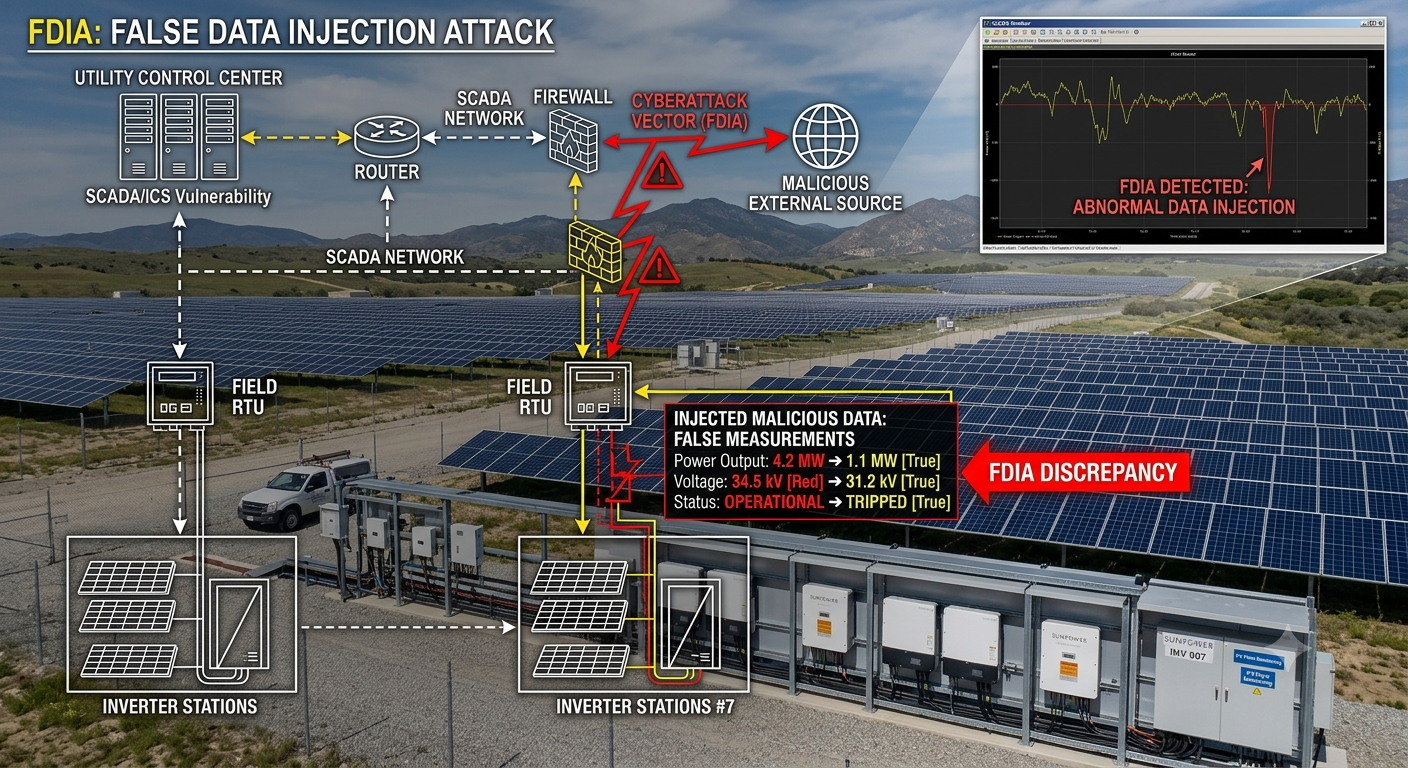
FDIAs are usually carried out by cybercriminals, malicious insiders, state-sponsored attackers, or skilled hackers who compromise communication networks, sensors, or control systems. In a utility-scale PV plant, FDIAs can manipulate measurements such as power output, voltage, or irradiance data, causing incorrect control decisions, reduced energy production, equipment stress, grid instability, and potential safety risks.
“While FDIAs have been widely investigated for transmission and distribution networks, their application to utility-scale PV plants has received very limited attention,” corresponding author Catalina Gómez Quiles told pv magazine. “Our work addresses this gap by proposing a framework tailored to the architecture and operation of modern PV plants.”