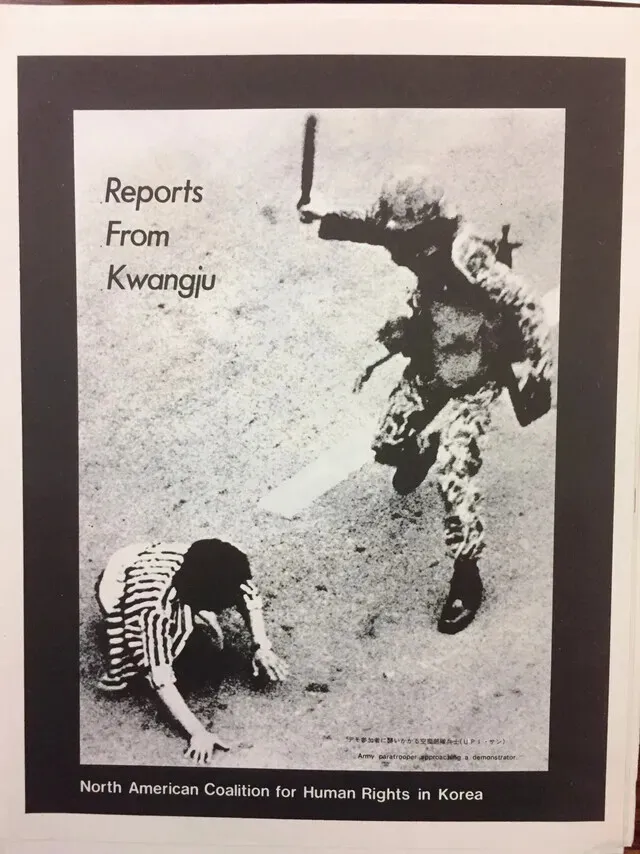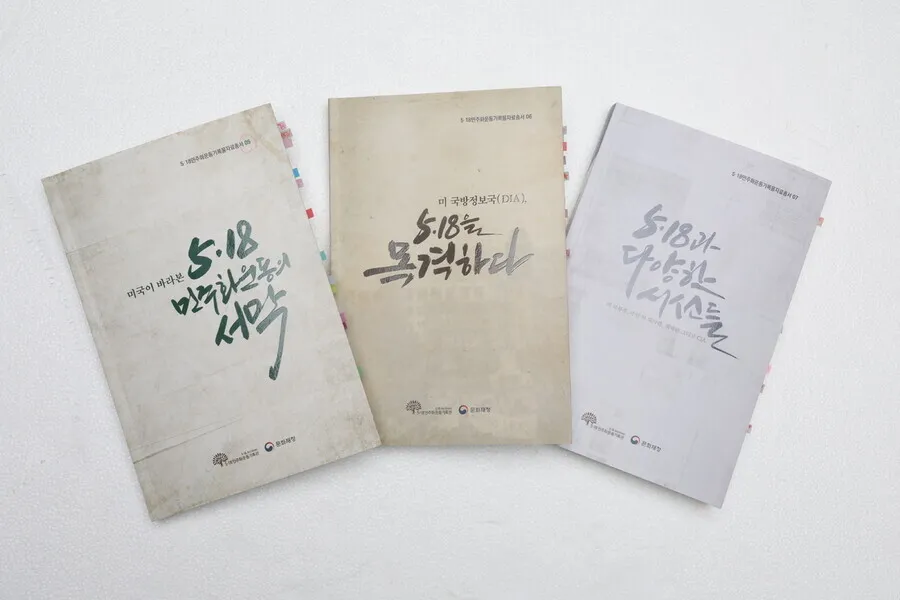
Covers of Volumes 5-7 of the Korean translations of classified US intelligence documents detailing the American perspective on the events that transpired between late 1979, when Chun Doo-hwan led a military insurrection, through the democratic uprising in Gwangju the following May. The volumes were published in late 2023 by the 5.18 Archives. (Lee Jeong-yong/The Hankyoreh)
From the fall of 1979 to the spring of the following year, South Korea was plunged into political chaos. President Park Chung-hee was assassinated on Oct. 26, concluding an 18-year dictatorship. Chun Doo-hwan led another coup less than two months later, marking the advent of a new era of authoritarianism. Under Chun’s rule, Koreans grew hungrier for democracy than ever, sparking the May 18 Gwangju Democratization Movement, which was met with slaughter and suppression by his junta. Chun’s new military regime and its supporters quickly secured power, and the government was essentially its puppet. During a national Cabinet meeting on May 17, 1980, the government, under the yoke of Chun’s regime, approved an order that declared martial law over the entire country. Nationwide, universities were ordered to suspend classes. Troops flooded onto campuses to enforce martial law. On May 17, 1980, Chun dispatched two battalions of the ROK Airborne Brigade to suppress a citywide movement of students and activists who opposed his regime. The operation, codenamed “Splendid Holiday,” was the bloody culmination of Chun’s ruthless rise to power. Outside the Korean Peninsula, an entity observed the aforementioned events as if they were unfolding in a game: the United States of America. The US Embassy in Seoul and the military intelligence agencies of US troops in Korea meticulously observed the political upheavals of South Korea, and reported updates to authorities in Washington — almost in real time. Last year, the 5.18 Archives published an anthology of documents and materials related to the massacre in Gwangju. Volumes 5-7 focus on the raw facts pertaining to America’s stance and response to South Korea’s political upheavals. After Park Chung-hee was assassination on Oct. 26, 1979, US authorities quickly moved to convene a Policy Review Committee for Korea. From then onward, the relevant agencies and entities provided sensitive intelligence on Korea to Washington. American journalist Tim Shorrock obtained declassified documents from this era and shared them with the world from 1993 to 1995. A portion of these were reported by domestic news outlets at the time, but the aforementioned anthology offers the first full and detailed translation of the documents.