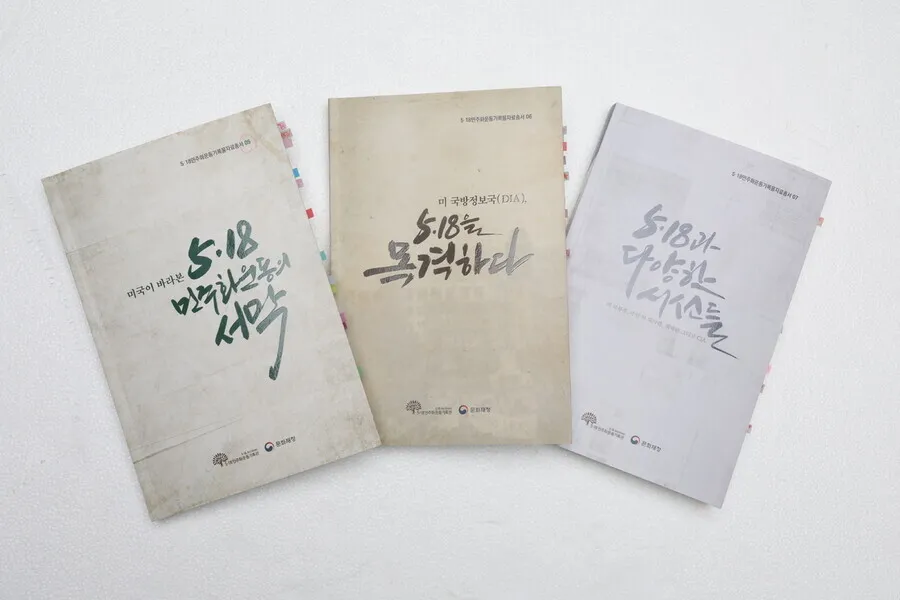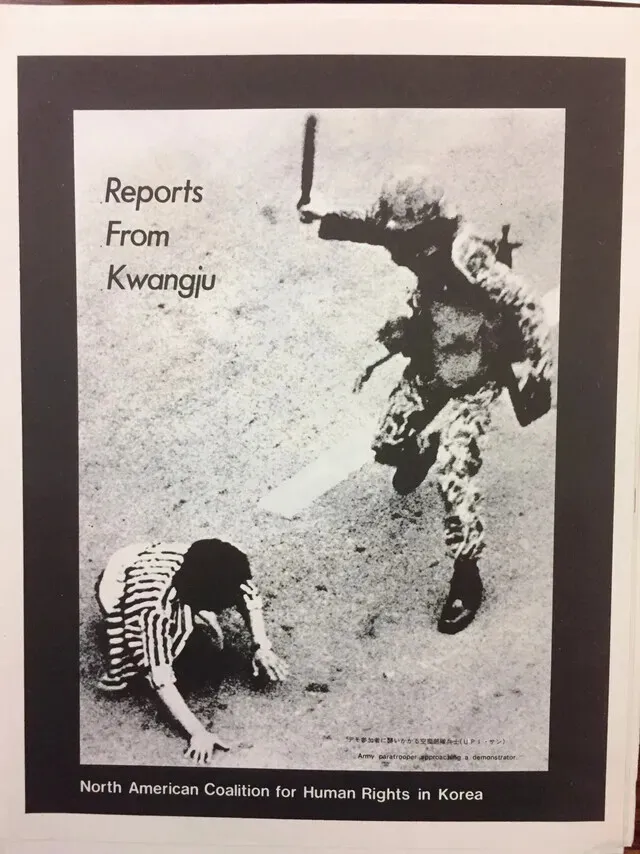
The cover page of “Reports from Kwangju,” a September 1980 report by the North American Coalition for Human Rights in Korea about the uprising and brutal massacre in Gwangju in May 1980. (courtesy Choi Yong-joo)
A report prepared by an American human rights group after Chun Doo-hwan ordered the brutal suppression of an uprising in Gwangju in 1980 has resurfaced 46 years later. The report denounced Chun’s dictatorship for its atrocities and predicted its fall, declaring that “ultimately the people will prevail.”Choi Yong-joo, a former researcher for the May 18 Foundation, gave the Hankyoreh “Reports from Kwangju” (another spelling for Gwangju), which was published by the North American Coalition for Human Rights in Korea in September 1980, shortly after the massacre that May.The 23-page report documents the Korean government forces’ brutality in Gwangju through reports by journalists, excerpts of witness accounts, a statement by students of Chosun University, a chronology of events in Gwangju and photographs of the victims.A section titled “A Korean Journalist’s Account” detailed the events witnessed by an anonymous Korean reporter who was in Gwangju at the time. The reporter said that when soldiers started firing on May 21, citizens gathered firearms from the nearby town of Hwasun in an effort to fight back.“[Claiming that students were armed first] is another thing which has been misrepresented by the Seoul newspapers. The students’ taking of guns was very clearly a response to the slaughter which had already been started by the army,” the reporter said.The same reporter describes meeting Yoon Sang-won, the spokesperson for the civilian militia who was killed during the fighting at the former South Jeolla Provincial Office. While speaking with Yoon following a press conference for foreign correspondents on May 26, the day before government forces stormed the provincial office, the reporter said he’d “complained to [Yoon] that it wasn’t Korean reporters who didn’t report things, but the government that didn’t let them be printed.”The reporter recalled feeling “very strange” after seeing Yoon’s dead body the next day and spotting the business cards of several foreign correspondents in his shirt pocket.