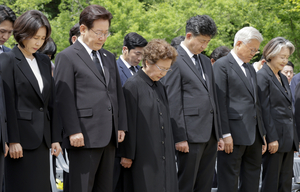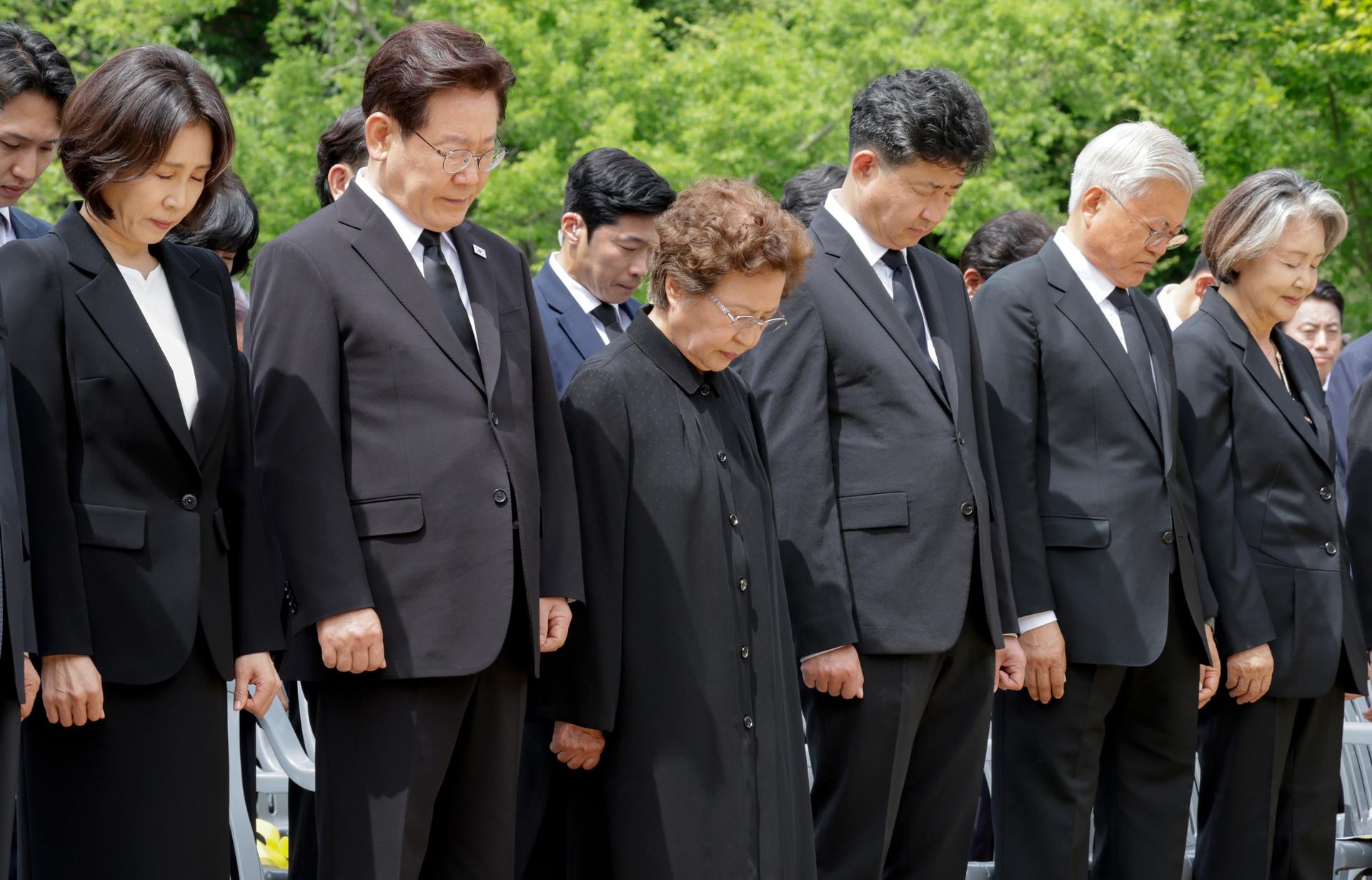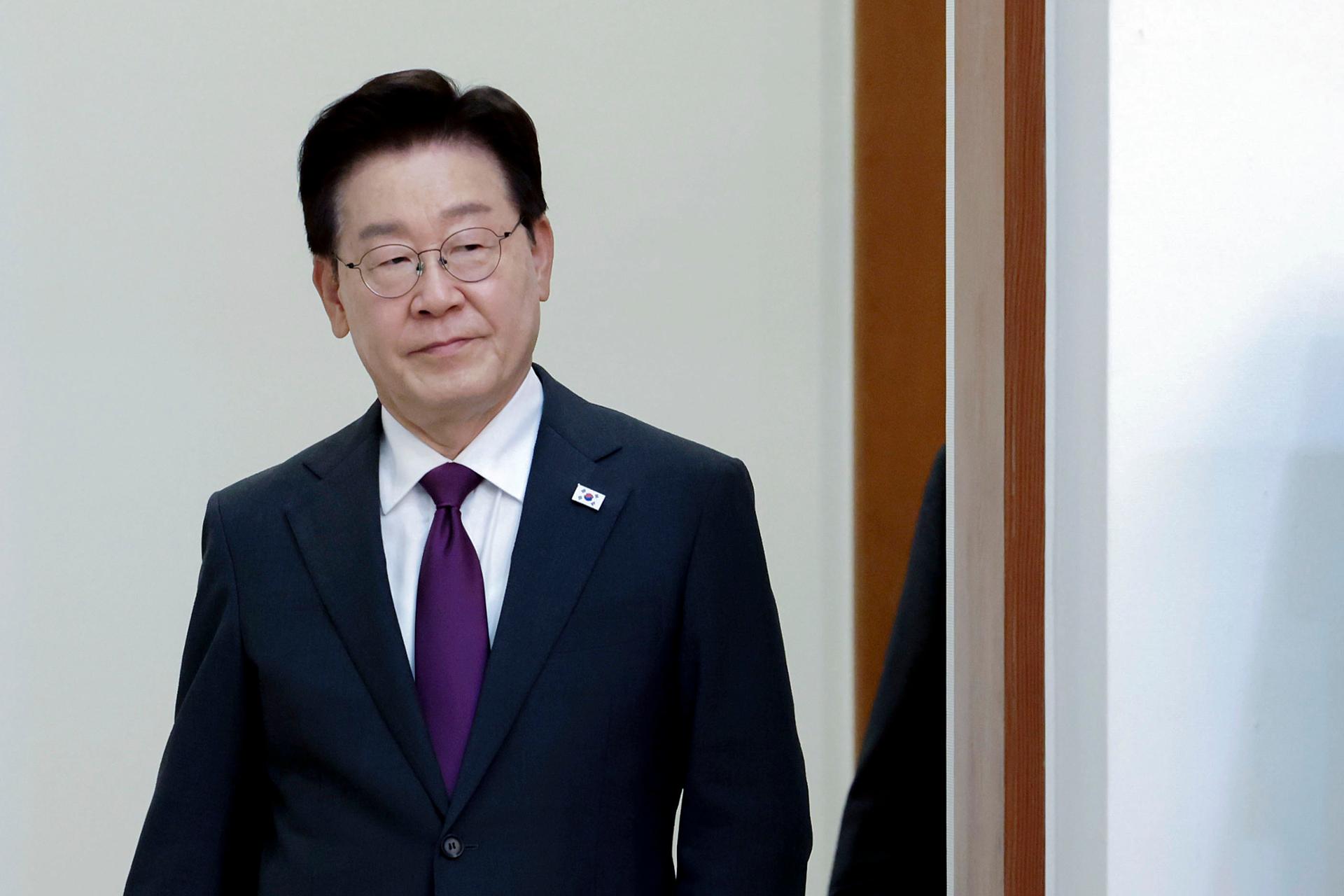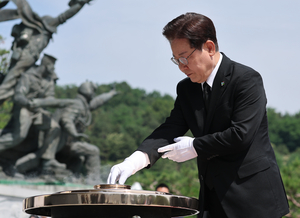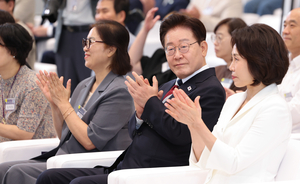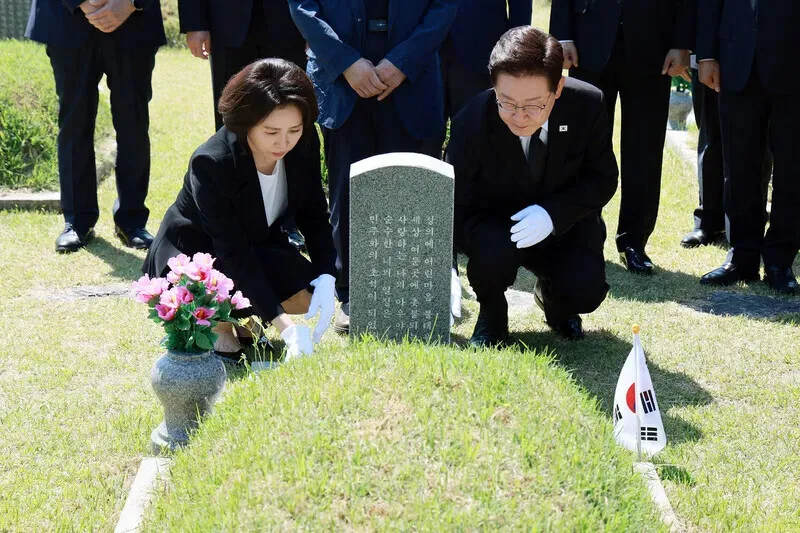
President Lee Jae Myung pays his respects at the grave of Yang Chang-geun at the May 18 National Cemetery in Gwangju. (pool photo)
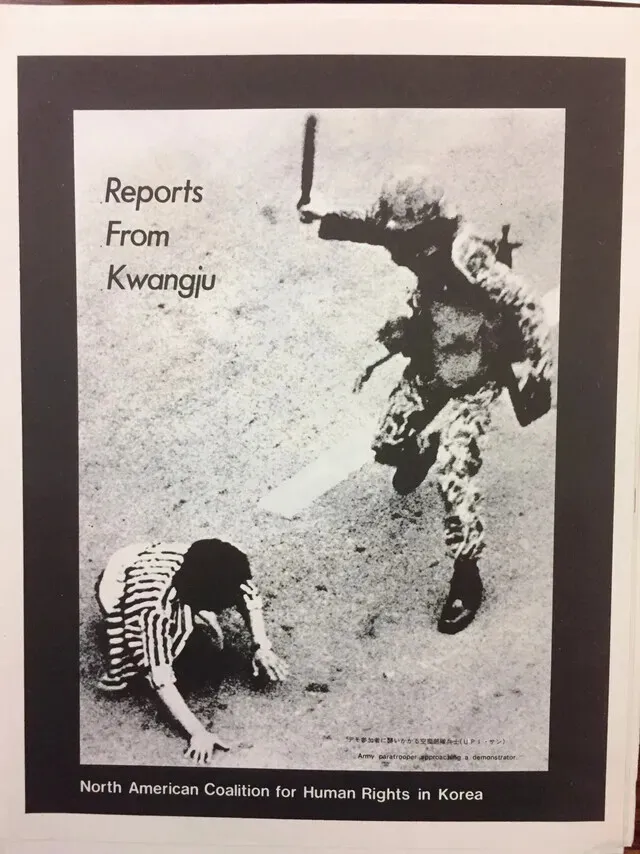
Yang Chang-geun was just 16 years old when he was fatally shot by Korean government forces during the Gwangju Uprising in May 1980. While Yang has not been officially recognized as a victim of the massacre, the government is exploring ways to rectify that omission.According to an account provided by the May 18 Democratization Movement Truth Commission, Yang, who was a freshman at Sungui Vocational High School in Gwangju, joined the protests with his friends after classes were canceled on May 19, 1980. He was shot dead by government troops in front of a store selling coal briquettes in the Songam neighborhood of Gwangju’s Nam District on the evening of May 21.Moon Jae-hak, the real-life inspiration for the main character Dong-ho in Han Kang’s novel “Human Acts,” decided to join the protests after witnessing the death of Yang, who had been his classmate in elementary school.
Yang Chang-geun, who was killed by martial law forces during the May 18 Gwangju Democratization Movement in 1980. (courtesy Gwangju Metropolitan Office of Education)
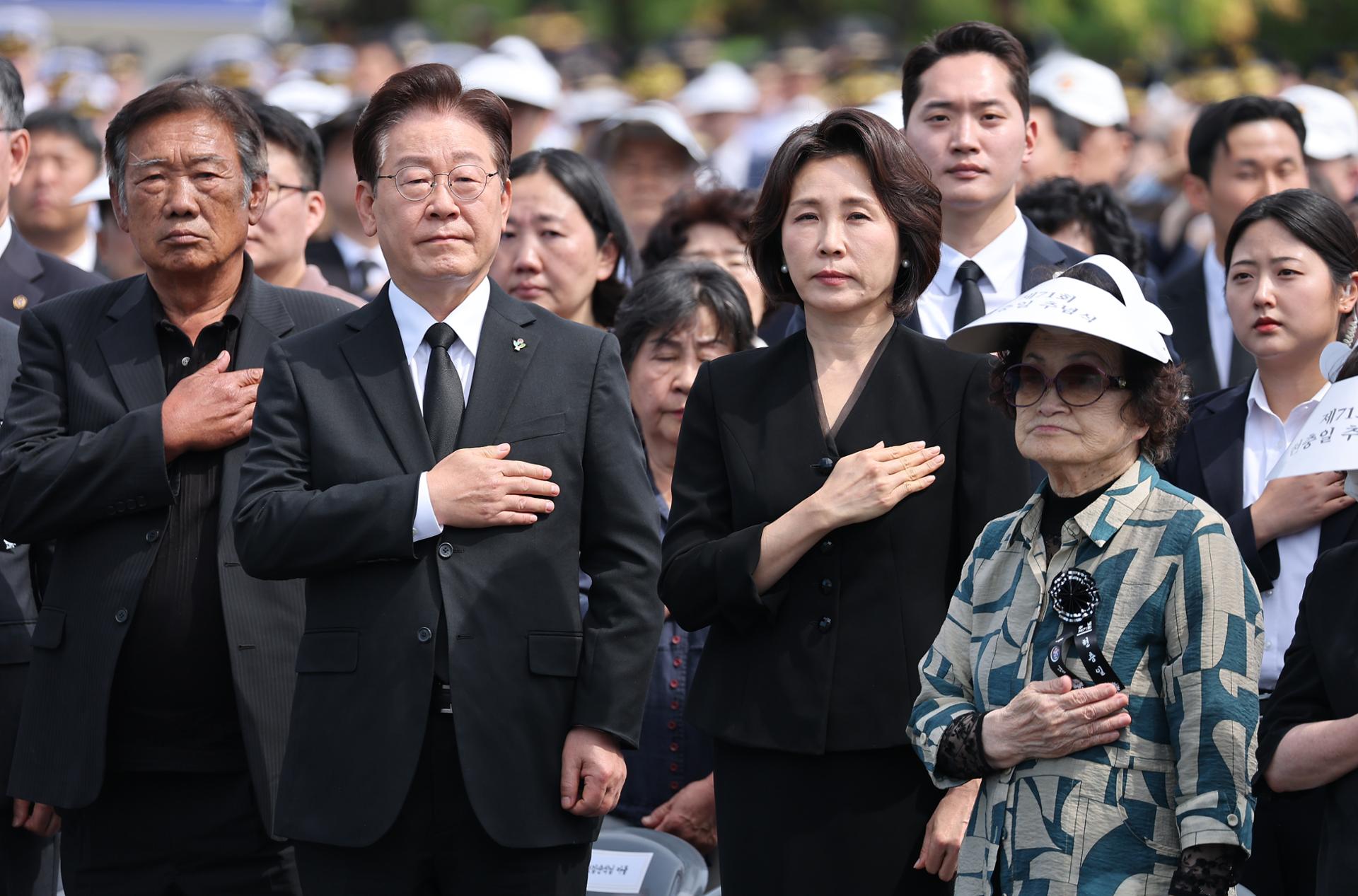
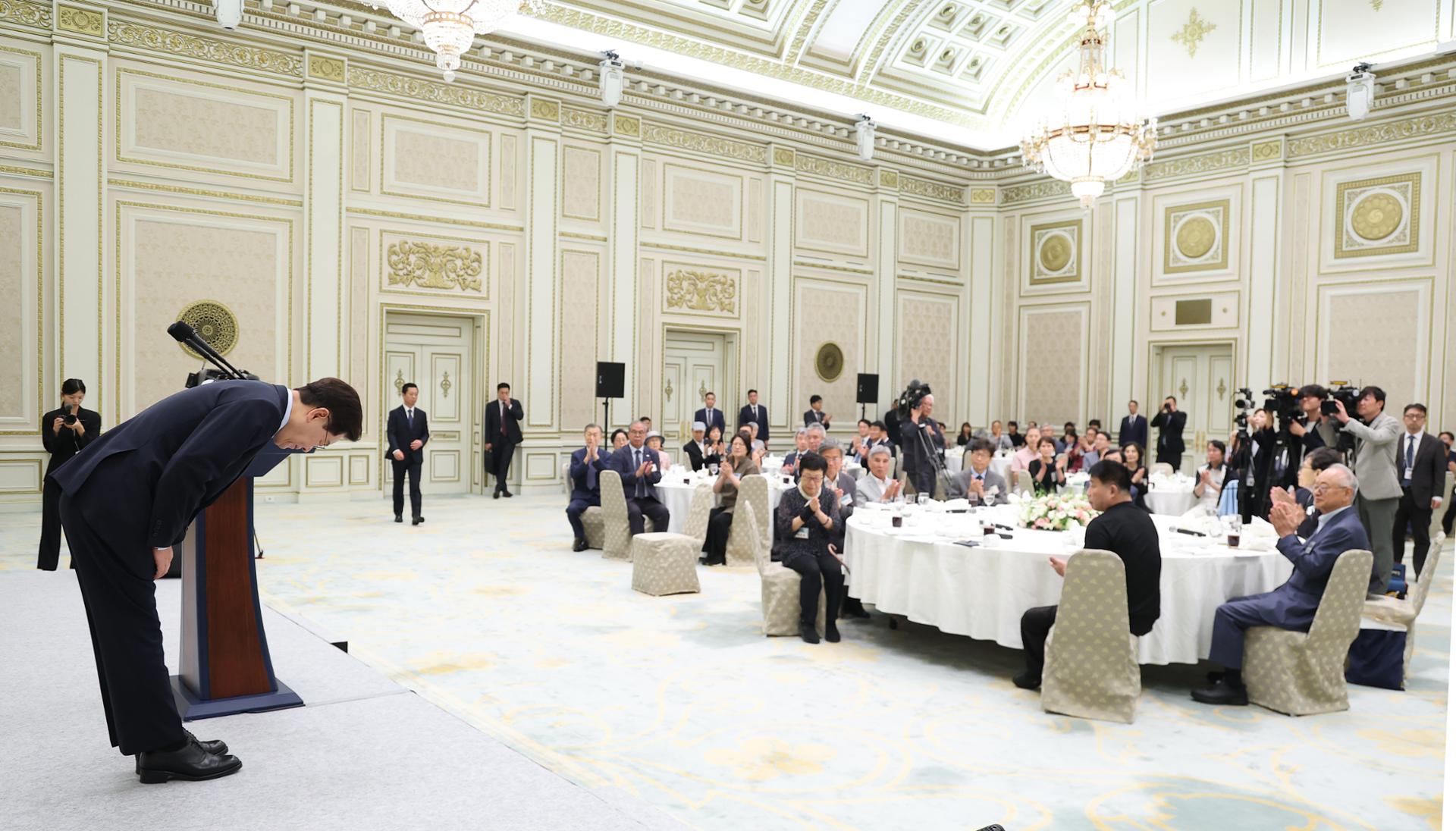
While the truth commission was studying the remains of unidentified victims in 2021, genetic testing of family members confirmed that Yang had been laid to rest in grave plot No. 4-96. But under a Korean law designed to recognize “persons of distinguished service” to the Gwangju Uprising — officially known as the May 18 Democratization Movement — Yang could not be registered as a “person of distinguished service” despite his demonstrated connection with those historical events.The law’s enforcement decree states that an application for registration can only be made by lineal ascendents or descendants (parents or children, for example) of the victim. Yang’s parents were both deceased by this point; his only living relative is apparently an older brother.The reason that Yang’s remains ended up in the cemetery for unidentified victims of the massacre was that his distraught parents had mistaken another person’s body for that of their son.Yang’s actual remains were initially buried under the name Mun Min-gyu. But after it was determined that Mun had survived the massacre, Yang’s body was moved to a cemetery for unidentified persons.In Monday’s memorial service on the 46th anniversary of the uprising and massacre in Gwangju, Korean President Lee Jae Myung promised to set up a system for direct registration of persons of distinguished service in the May 18 Democratization Movement, while mentioning Yang’s story.“Yang Chang-geun, who was shot and killed by the martial law troops, lies at rest at the May 18 National Cemetery, which I visited before coming here. A young man who was as outraged as anybody about how justice was being trampled in our country is unable to receive full recognition as a person of distinguished service in the May 18 Democratization Movement because he has no family members eligible to apply on his behalf,” Lee said.“The state will fulfill its duty to ensure we don’t forget any of the individuals who fought so indomitably to defend democracy and our country,” he added.By Kim Yong-hee, Gwangju correspondent; Ki Min-do, staff reporterPlease direct questions or comments to [english@hani.co.kr]