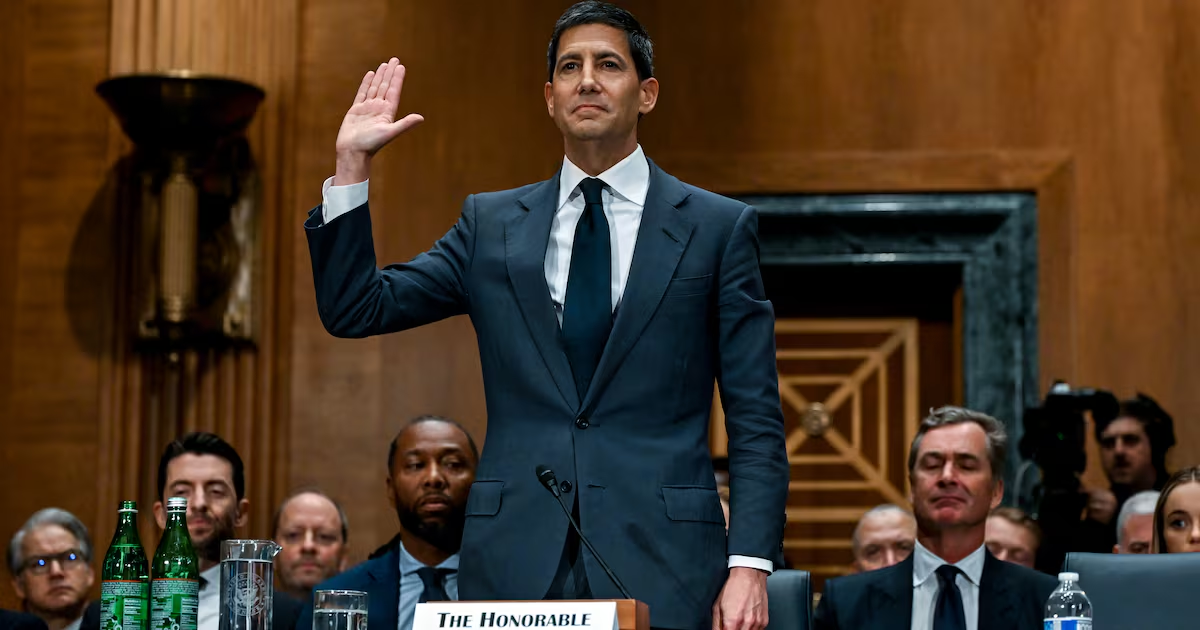
There’s a new man in charge of the US Federal Reserve and he wants to do things differently. Kevin Warsh took over chairmanship of the world’s most powerful central bank just over a month ago and is already implementing changes. Chief among them is the way the bank communicates. Warsh wants it to communicate less.At just 131 words, the latest statement from the Fed’s monetary policy committee, the Federal Open Market Committee, the first chaired by Warsh, was one of the shortest on record.Warsh wants to get rid of the so-called “forward guidance” element: the formula of words the bank uses to signal which way monetary policy is heading. The impact of this new taciturn approach is hard to weigh up. Some say it will increase market volatility. Effectively, the Fed won’t signal to markets how they should apprehend new bits of data on employment or inflation.So big shifts in these data points could see bigger market reactions.Warsh is against forward guidance because, as he has said many times, it boxes the bank in and makes it harder to shift course. European Central Bank chief economist Philip Lane said recently Frankfurt would not box itself in on the trajectory of monetary policy, suggesting it was still open to another interest rate hike to counter the effects of the current energy price spike.The 9 per cent VAT rate has been welcomed by restaurants but does the hospitality sector actually need it? Listen | 39:12Another change Warsh wants to implement is how the Fed measures inflation.During his Senate confirmation hearing, Warsh claimed, “the data that’s being used to judge inflation is quite imperfect”.In place of traditional inflation metrics, he wants the Fed to use “trimmed averages” to estimate underlying price growth.Warsh believes the price index for personal consumption expenditures, the Fed’s preferred measure of inflation, incorporates too much transitory noise. As a result, he wants a trimmed average of price growth (upon which to base Fed policy), one that removes temporary upticks in prices.Critics, however, believe this can frequently underestimate inflation and that using it might mean the Fed will be slower to react. His time in charge promises to be interesting.
New Fed chief seeks to end forward guidance
Warsh believes forward guidance boxes the Fed in and makes it harder to shift course
360 words~2 min read