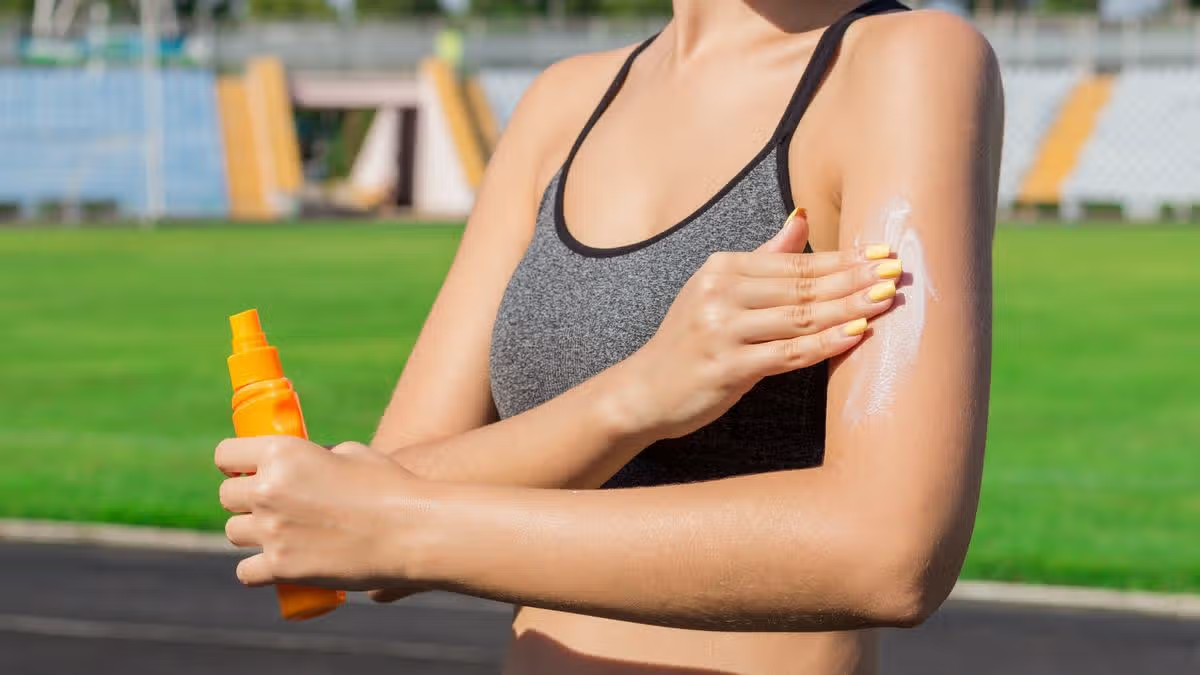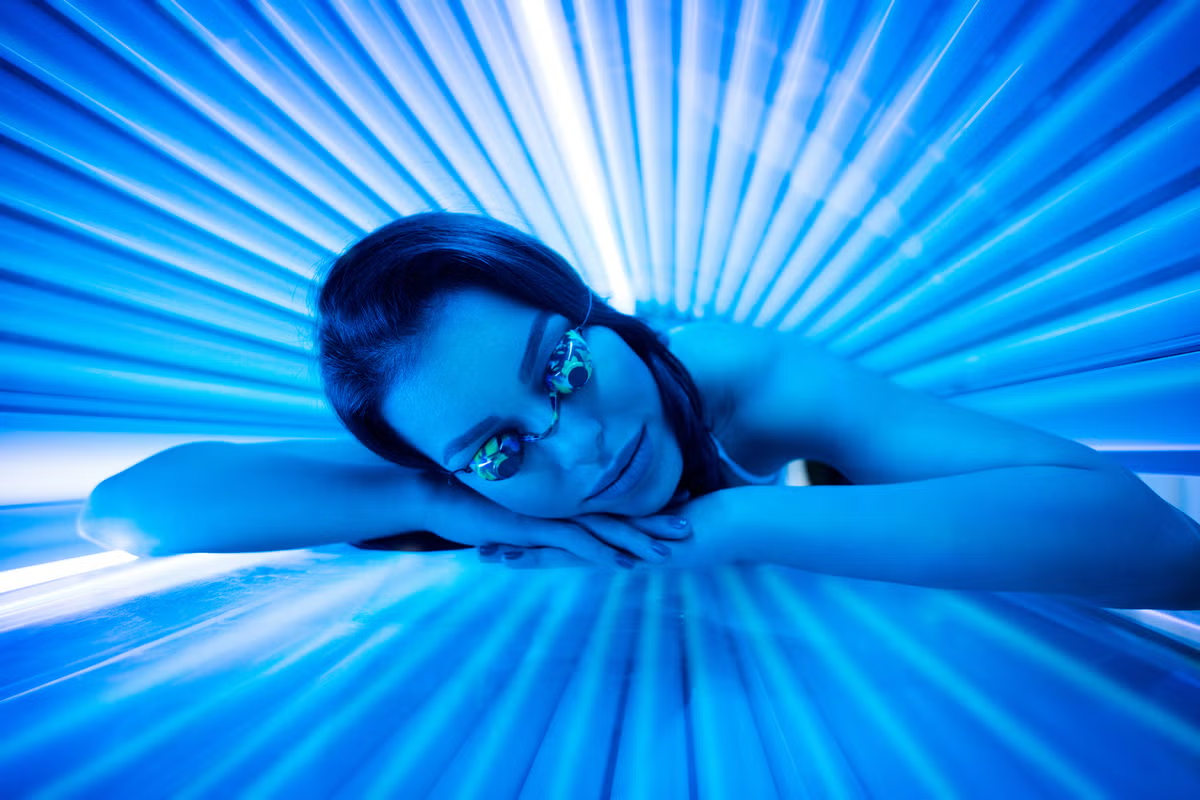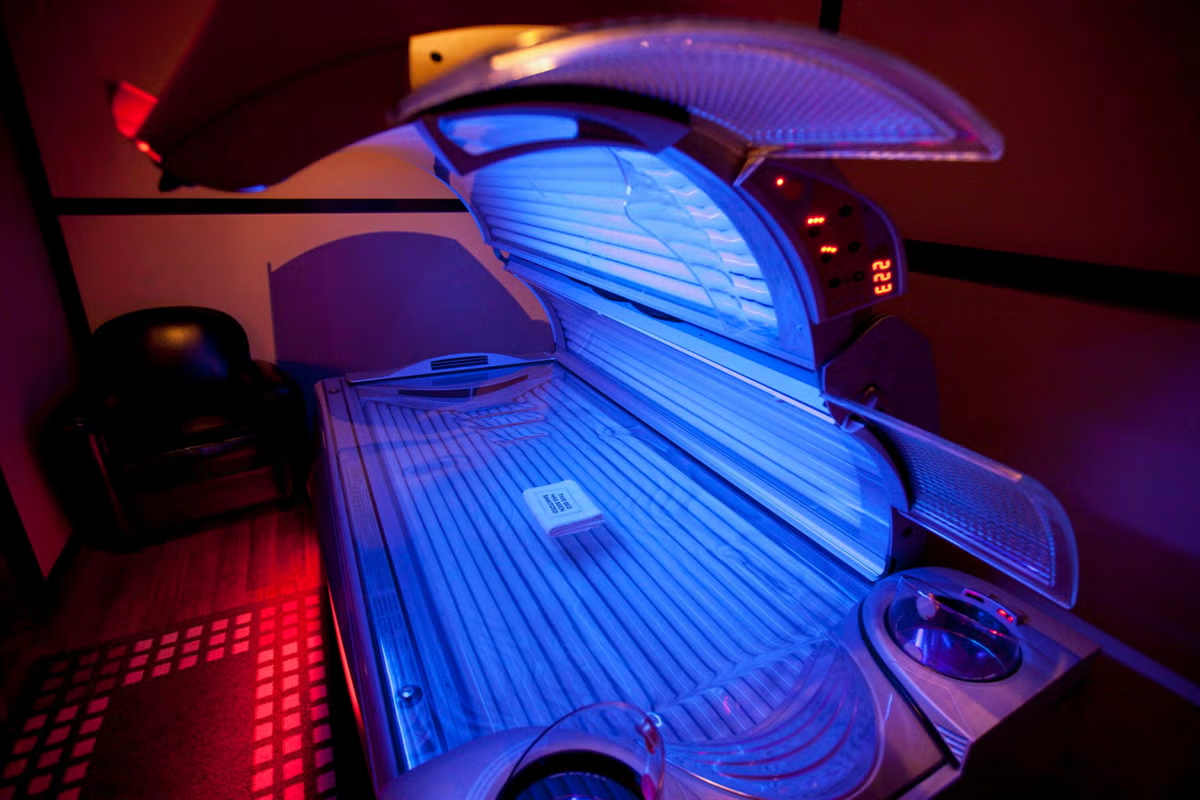
Summer holiday season is on the horizon – and for many people that involves wanting to get a good tan.For despite the well-documented risks of excessive UV exposure – from premature ageing to skin cancer – tanned skin is still associated, by significant numbers, with looking your best and even good health.Which is doubtless why one of the most common questions I’m asked as a consultant dermatologist is: what is the safest way to prepare for a beach holiday when it comes to your skin?The one thing you absolutely should not do is to book a session on a sunbed.Some influencers claim these can ‘prime’ your skin for a holiday, that sunbeds create a ‘safe’ base tan that reduces the risk of holiday sun damage. But this is a myth.In fact, sunbeds are 95 to 99 per cent UVA rays. This wavelength penetrates deep into the skin, raising the risk of malignant melanoma and accelerating skin ageing. What’s more, UVA exposure in tanning beds can be three to eight times stronger than the exposure we get from the sun itself (although the amount varies between devices).While for people under the age of 35, any use of sunbeds can, in fact, increase their relative risk of melanoma by 59 per cent, according to the most recent review of studies.This has led the British Association of Dermatologists and the British Medical Association to call for a blanket ban on their use. Meanwhile, the World Health Organisation classifies sunbeds as a class one carcinogen, putting them in the same group as alcohol and tobacco. The 'protection' that a tan offers is minimal, warns Dr Hextall, because sunbeds don’t increase the amount of UV-protective melanin Many associate tanned skin with looking your best and even good health, despite the World Health Organisation classifying sunbeds as a carcinogen (Above, a 1950s comic)Under-18s have been banned from using sunbeds in the UK since 2011 – but the Government recently began a consultation aimed at strengthening regulation and safety, following concerns that the law is being regularly flouted and not enforced.It’s also important to note that the ‘protection’ offered by sunbeds – i.e. a tan – is in fact minimal.This is because sunbeds don’t increase the amount of UV-protective melanin (the dark pigment responsible for a tan), or thicken the top layer of the skin, in the same way as UVB (responsible for most sunburn) does from sun exposure.And even a sun-induced tan offers only an SPF of around 5. Plus, the inescapable fact remains: a tan is simply a sign that you have already damaged your skin.So is it better to use a fake tan? It depends on the product.One of the most dangerous developments in the tanning industry is the ‘Barbie drug’ – the nickname for inhaled and injected melanotan that’s claimed to give users an instant glow. Melanotan, which comes as sprays and injections largely purchased online or in gyms, is a hormone that creates the pigment melanin, stimulating it to give a rapid deep tan and often darker hair colour.But these products are illegal and haven’t been regulated by the MHRA (Medicines and Healthcare products Regulatory Agency) in the UK.In a 2022 BBC investigation, Professor Tony Cass, a leading chemical biologist at Imperial College London, analysed tanning products containing melanotan and found that some contained more than 100 unknown substances. Worryingly, this synthetic hormone has widespread effects on the cardiovascular, hormonal and reproductive systems – known side-effects include severe flushing, headaches, nausea and vomiting. There have also been reports of serious heart and kidney complications.As a dermatologist, I am most concerned about the rapid changes to existing moles this product causes – many becoming darker and larger – as well as the development of new moles (in one case a 20-year-old developed a melanoma after using sunbeds and melanotan injections for three to four weeks).Artificial pigmentation changes in the skin overall also obscure the appearance of moles, making them difficult to safely and accurately assess. There have also been several cases of melanoma in people using these sprays and injections – which I advise you to avoid at all costs.But the good news is that many fake-tan products are now highly effective, and even I can struggle to differentiate the results from a real tan. Applied correctly they can last longer and fade more naturally than ever.The active ingredient dihydroxyacetone (DHA), which is both safe and effective, is now sometimes combined with erythrulose, and together they create a more natural, long-lasting appearance. Products also offer a range of concentrations, which means you can match the result more closely to your own skin tone.Fake tans work by creating a chemical reaction with proteins in the outer layer of the skin, which results in a variety of browning compounds, called melanoidins. The process creates a temporary browning colour that gives the skin a gradually deepening tanned appearance.While it makes you look tanned, it does not offer any UV protection. (And if your skin is sensitive or prone to eczema, be sure to patch test the product before using it by applying a small amount inside the crease of your elbow or on your neck 48 hours before use.) As it’s not safe to inhale DHA (it may cause inflammation in the airways), wear the masks provided when having a spray tan and hold your breath where possible.What to packIf you’re floating around the Mediterranean in high summer the best thing to invest in is a UV-swim top – I go one step further and also use a waterproof swim hat to protect my scalp.Children should ideally be in UV swimsuits, essentially, long sleeved rash vests and long shorts, as childhood sunburn is a significant risk factor for melanoma development.Each blistering sunburn suffered before the age of 15 increased the relative risk of a melanoma by 3 per cent, according to a study of 44,021 people published in the Journal of the American Academy of Dermatology in 2025. The risk reduced after the age of 15.UV-protective sunglasses are also important, and don’t forget a hat, ideally wide-brimmed to shade your neck and ears.Don’t ever underestimate the amount of sunscreen you’ll need to ensure your skin is properly protected – something that many people get wrong.The face and neck area requires a teaspoon of sunscreen and the whole body needs the equivalent of a shot glass. This should be reapplied every two to three hours – so one person will easily need 600ml of suncream for a week’s holiday. Bear in mind that one bottle of sunscreen typically contains 200ml.I recommend factor 50 with ideally 5* UVA protection, regardless of your skin type.I personally like UVMune 400 from La Roche-Posay – but for really good protection and affordability, Altruist is an excellent brand (it’s designed by a dermatologist and available online).I also recommend carrying mineral UV sticks to add an extra layer of protection to high-risk areas such as the nose and ears, especially if you’re likely to be spending time swimming or doing water sports.So enjoy your holiday – but be safe in the sun. Will using sunscreen block vital vitamin D? We all know vitamin D is vital for bone health, and for immunity – and summer is when we can build up our reserves, as our bodies make it when exposed to the sun. This leads many people to fear that wearing sunscreen will interfere with getting enough of the ‘sunshine vitamin’.But there’s no reason to worry, as an excellent study by Professor Antony Young of King’s College London, published in the British Journal of Dermatology in 2019, showed.He took two groups of volunteers on a holiday to Tenerife where there was a maximum UV index of 9 (UV6/7 is considered high).The holidaymakers were split into two groups: one was instructed to apply SPF15 regularly to maximise protection and prevent sunburn; the others were free to use sunscreen however they pleased.The vitamin D levels rose to similar levels in both groups after a week – and perhaps not surprisingly, the group without clear SPF instructions had more sunburn.This shows the protective benefits of proper application and the absence of reduction in vitamin D with regular SPF application. Dr Justine Hextall is a consultant dermatologist at Tarrant Street Clinic in Arundel, West Sussex. @drjustinehextall
How risky is YOUR tan? Expert reveals what can hide deadly melanoma
Summer holiday season is firmly on the horizon - and for many people that involves wanting to get a good tan - despite the well-documented risks of excessive UV exposure...
1,379 words~6 min read