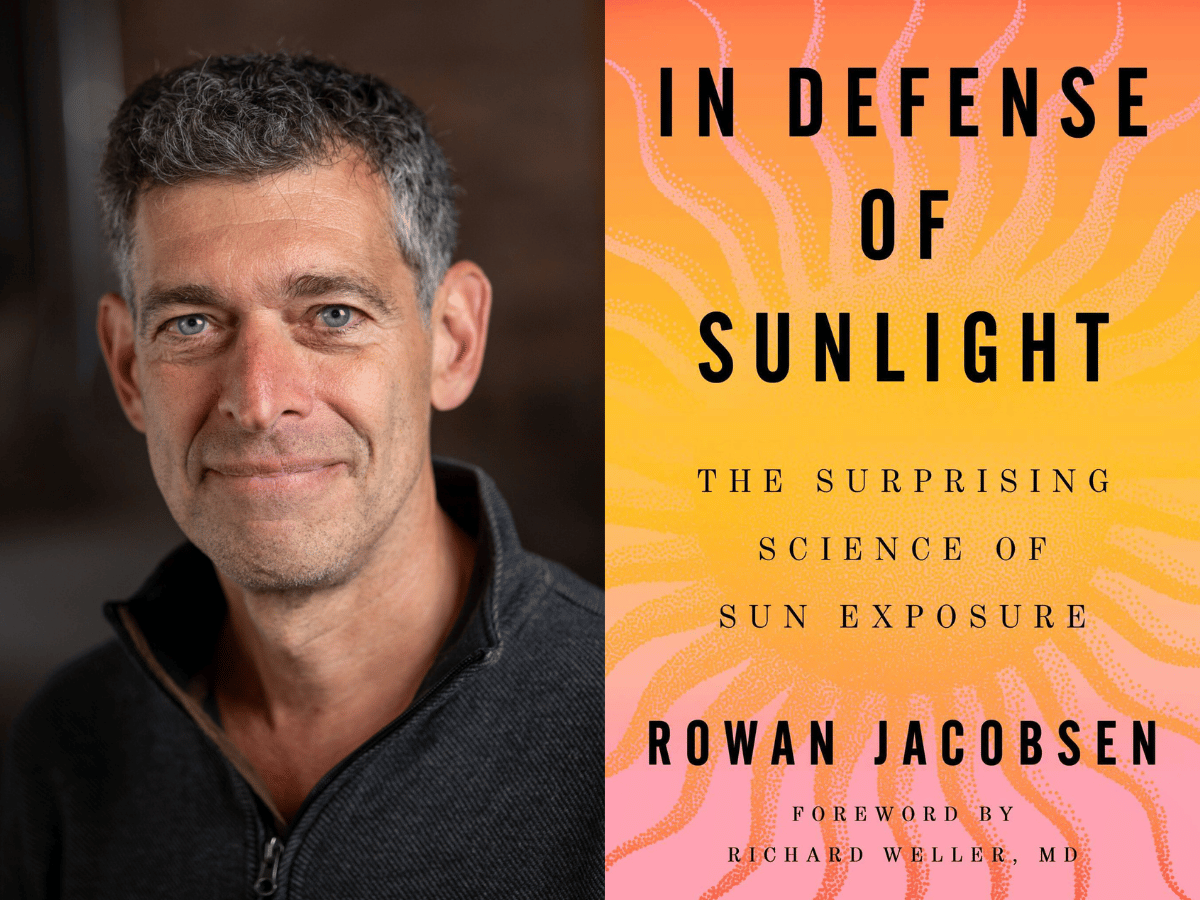
Public health messaging about the sun tends to emphasize skin cancer risk, urging everybody to cover up and slather on sunscreen before going outdoors. But although it’s come to feel counterintuitive, research suggests small daily amounts of sun exposure confer an array of health benefits that outweigh the risks for most people, according to award-winning science and cultural writer Rowan Jacobsen. In an interview edited for clarity and length, Jacobsen digs into the findings from his new book, “In Defense of Sunlight: The Surprising Science of Sun Exposure,” ahead of his upcoming talk at Harvard Book Store on Wednesday.
The research around sun exposure is complicated, which in part has led to an oversimplification of public health messaging. Could you talk about that?
Science is always more complicated than we tend to get told in a public messaging context. You can’t do nuance in a 30-second PSA. There is an effort to tailor recommendations to be as risk-proof as possible. In the case of sun exposure, the recommendations were set for the most susceptible people on earth to skin cancer: those with really fair skin. The assumption was that having everyone follow along wouldn’t cause any harm, but when you look at the science you realize those recommendations probably are harmful to people who are less sensitive to skin cancer.