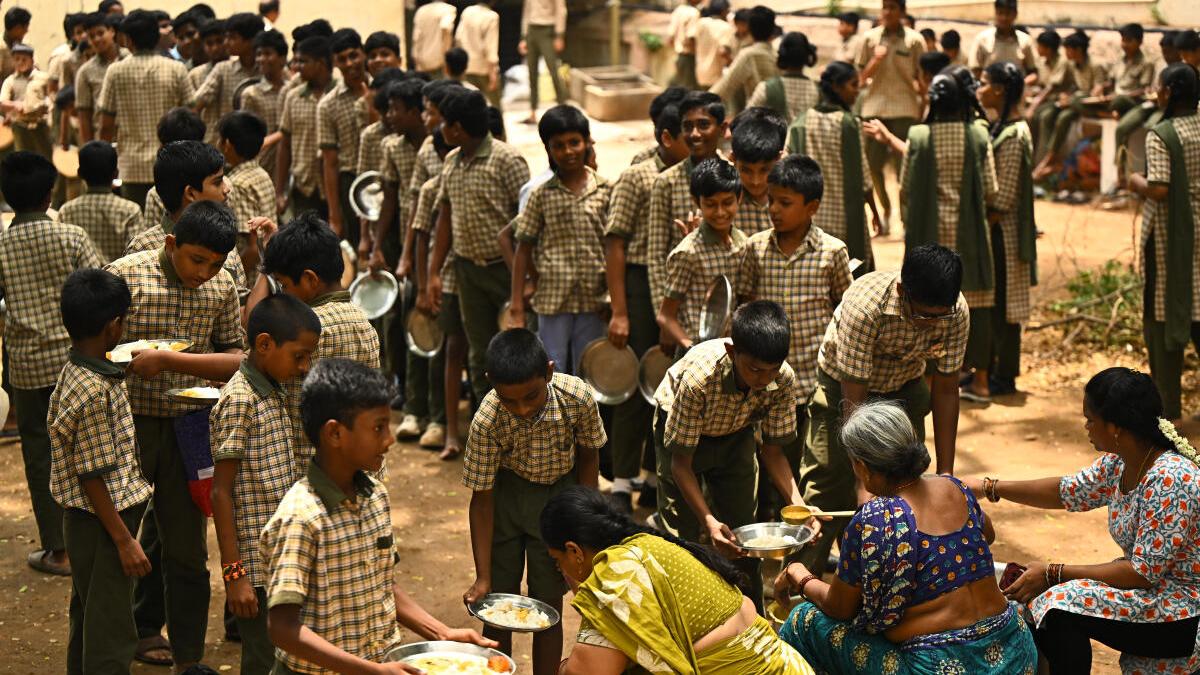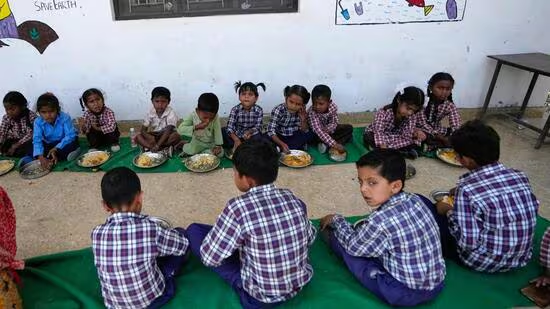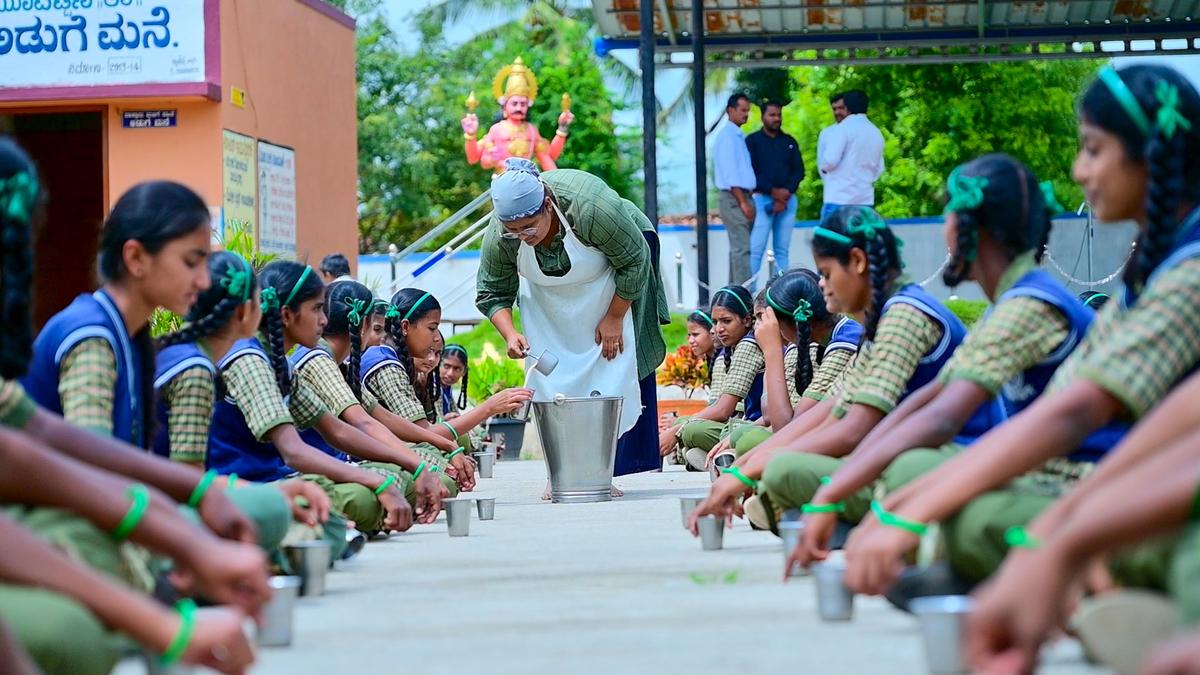
By the time seven-year-old Roshni reaches her government primary school in Rajapur, Uttar Pradesh, she already knows what she is looking forward to. Before classes begin, she joins her classmates for a glass of fortified SaiSure nutrition drink served with milk. For many children in her school, it is the first nutritious meal of the day.“We all feel it is tasty and nutritious,” she says. “Children’s attendance in my school has increased because of this. It has also helped in improving our height and overall growth.”Hundreds of kilometres away in Thadigol village in Karnataka’s Kolar district, Class VII student Manoj Kumar speaks less about nutrition and more about what it allows him to do.”It keeps us healthy, helps us listen to our classes with interest and play with enthusiasm,” he says.The words are simple, but they point to a much larger challenge confronting India.For decades, policymakers have debated how to improve learning outcomes in government schools. Better classrooms, trained teachers, digital learning and curriculum reforms have all been part of the conversation. Yet one of the biggest obstacles often begins long before the first lesson starts — a child arriving at school hungry.It is this problem that the Annapoorna Morning Nutrition Programme, an initiative of the One World One Family Mission, is trying to solve.What started 13 years ago by serving breakfast to just 50 children has quietly evolved into one of India’s largest school nutrition initiatives outside the government’s own programmes. Today, the programme says it provides a fortified morning nutrition drink to more than 10 million government schoolchildren every day across 25 States and four Union Territories. The ambition is to eventually reach nearly 80 million children, making morning nutrition as integral to schooling as textbooks and classrooms.More than just breakfastFor Sadguru Sri Madhusudan Sai, Founder of the One World One Family Mission, the programme has always been about much more than feeding children.“Our vision that no child should go to school hungry naturally aligns our work with the global Sustainable Development Goals,” he says. “Nutrition and education are two sides of the same coin. A well-nourished child is far more likely to learn, stay in school, complete education and grow into a responsible citizen.”He believes the objective is not merely to fill empty stomachs but to nurture confidence, dignity and opportunity.“A child who begins the day nourished has a far better chance of participating in class, learning with confidence and building a healthier future,” he says.That philosophy has shaped every aspect of the programme.Unlike conventional food supplementation programmes that primarily address calorie intake, Annapoorna’s intervention focuses on what nutritionists’ call “hidden hunger” — micronutrient deficiencies that often remain invisible but significantly affect physical growth, immunity and cognitive development.At the centre of the programme is SaiSure, a scientifically formulated multi-nutrient health supplement fortified with vitamins and minerals. Mixed with milk or milk powder and jaggery, and often combined with naturally grown ragi, it is served to children before classes begin.The breakfast gapIndia’s Mid-Day Meal Scheme, now known as PM POSHAN, has transformed school nutrition over the past two decades.But lunch, many educators argue, cannot compensate for children who begin the day without breakfast. Teachers often notice the difference before nutrition surveys do.At Government Model Higher Primary School in Pillenahalli in Karnataka, Headmaster Suresh says many students come fromLambani and nomadic communities, where parents leave early to work in nearby coffee estates.“Our school serves children from migrant families,” he says. “This programme is playing a vital role in supporting children’s nutrition and improving their concentration during the early school hours. It is making a meaningful difference in their daily learning experience.”Rather than replacing existing government nutrition schemes, the Annapoorna initiative complements them.In Karnataka, for instance, SaiSure Multi-Nutrient Health Mix is blended with milk supplied under the State government’s Ksheera Bhagya programme, creating a fortified breakfast before classroom teaching begins.From fifty children to ten millionScaling a nutrition programme to over 10 million children requires far more than good intentions. According to Anand Kadali, CEO of Annapoorna Trust, collaboration has been central to its growth. “We are currently serving a morning nutrition drink to over 10 million people every day across 25 States and four Union Territories,” he says.“Our goal is to reach nearly 80 million government schoolchildren affected by malnutrition. This mission can only be achieved through the combined efforts of governments, society and institutions.”The programme today operates through partnerships involving State governments, schools, volunteers, corporates and local communities.Its expansion reflects a growing recognition that improving child nutrition cannot be left to governments alone.An ecosystem of partnershipsSuchetan Reddy Kotta, CEO of Global Outreach and Communications at the One World One Family Mission, believes the programme has evolved into something much larger than a charitable initiative.“What started thirteen years ago with fifty children has grown into a national movement,” he says. “That conviction is shared not just by one organisation, but by governments, institutions, volunteers and farming communities who have each brought their own irreplaceable contribution.”He believes every partner plays a distinct role.State governments provide administrative support and school infrastructure.Teachers ensure the nutrition reaches children consistently.Corporate partners contribute funding and volunteer support.Communities help implement the programme on the ground.The result, he says, is a model built on shared responsibility rather than charity.It begins in the fieldsLong before children drink their morning nutrition, the story begins in the farms around Tiptur in Karnataka. Members of the Subhiksha Organic Farmers Association cultivate ragi using natural farming methods before it is fortified into SaiSure Health Mix and distributed to schools across the country.For many farmers, supplying grain for schoolchildren has become a matter of personal responsibility.One woman farmer says she has never used chemical fertilizers on her fields.“I say this with full conviction — I have not used any chemical fertilizers in growing my crop.”Another farmer explains why.“The Annapoorna Trust procures ragi from us and provides ragi malt daily to over a crore children. For such a noble cause, I cannot betray those children by supplying ragi grown with chemical fertilizers.”It is an unusual supply chain — one that connects farmers directly with classrooms through a common purpose.Government endorsementThe programme has steadily gained support from policymakers. Vice-President CP Radhakrishnan, after visiting the organisation’s facilities, described its integrated work in nutrition, healthcare and education as an example of service without discrimination.He noted that malnutrition continues to affect vulnerable communities across India and observed that fortified millet-based nutrition could become an important tool in addressing the challenge.Former Karnataka Chief Minister Siddaramaiah, while in office had launched SaiSure Ragi Multi-Nutrient Health Mix for 55.6 lakh government schoolchildren. He had then emphasised the close relationship between nutrition and education.“Every child must be healthy and free from anaemia and malnutrition,” he said.“Sharp academic skills arise from physical and mental fitness. Therefore, nutrition is key for every school-going child.”Volunteers who keep it movingBehind the numbers lies a vast network of volunteers. R.S. Naik, a retired school principal from Goa, has spent years working with the initiative. “I retired in 2010, and soon after my retirement I started serving here,” he says.“In our rural areas many poor children go to school without breakfast. Providing SaiSure has brought a marvellous change for them. There is now a huge demand for it in our schools.”Corporate employees have also become regular participants.During a recent school outreach programme, Amazon employee Latha M described the experience as deeply fulfilling. “It created a meaningful impact on everyone involved.”Her colleague Gopinath Gantyala, himself a former government school student, said the programme resonated personally. “I experienced firsthand the lack of access to these services. I am grateful this initiative helps level the playing field for government school students.”Private-sector partners echo similar sentiments.“It was a pleasure visiting schools,” says Sanjeev Kumar, Assistant General Manager at Karnataka Bank. “I personally tasted the ragi malt — it was excellent. Please continue this noble work.”Nutrition as nation buildingDevelopment economists have long argued that investments in child nutrition produce returns that extend far beyond health.Better nourished children are more likely to attend school regularly, perform better academically, enjoy improved health as adults and contribute more productively to the economy.Viewed through that lens, nutrition becomes an investment rather than an expense. The Annapoorna programme is built around that premise.Its objective is not simply to distribute food but to strengthen the foundation upon which education rests. Every morning, millions of children across government schools begin their day with a fortified nutrition drink before opening their textbooks.For most, it is simply breakfast.For teachers, it often means more attentive classrooms.For parents, it offers reassurance that their children have at least one nutritious meal before the day begins. For policymakers, it demonstrates how government schemes can be strengthened through partnerships with civil society and the private sector.Whether the programme eventually reaches its ambitious goal of serving 80 million children remains to be seen. But its central message is both simple and compelling.As Sadguru Sri Madhusudan Sai says, “Nutrition and education are two sides of the same coin.” In India’s classrooms, where the future is shaped one child at a time, that coin may well begin with a warm glass of fortified ragi malt served before the first bell rings.Published on July 6, 2026
The breakfast that could change India’s future: Inside One World One Family’s nutrition mission
Discover how One World One Family's breakfast initiative aims to combat malnutrition and transform education for millions of Indian children.
1,524 words~7 min read