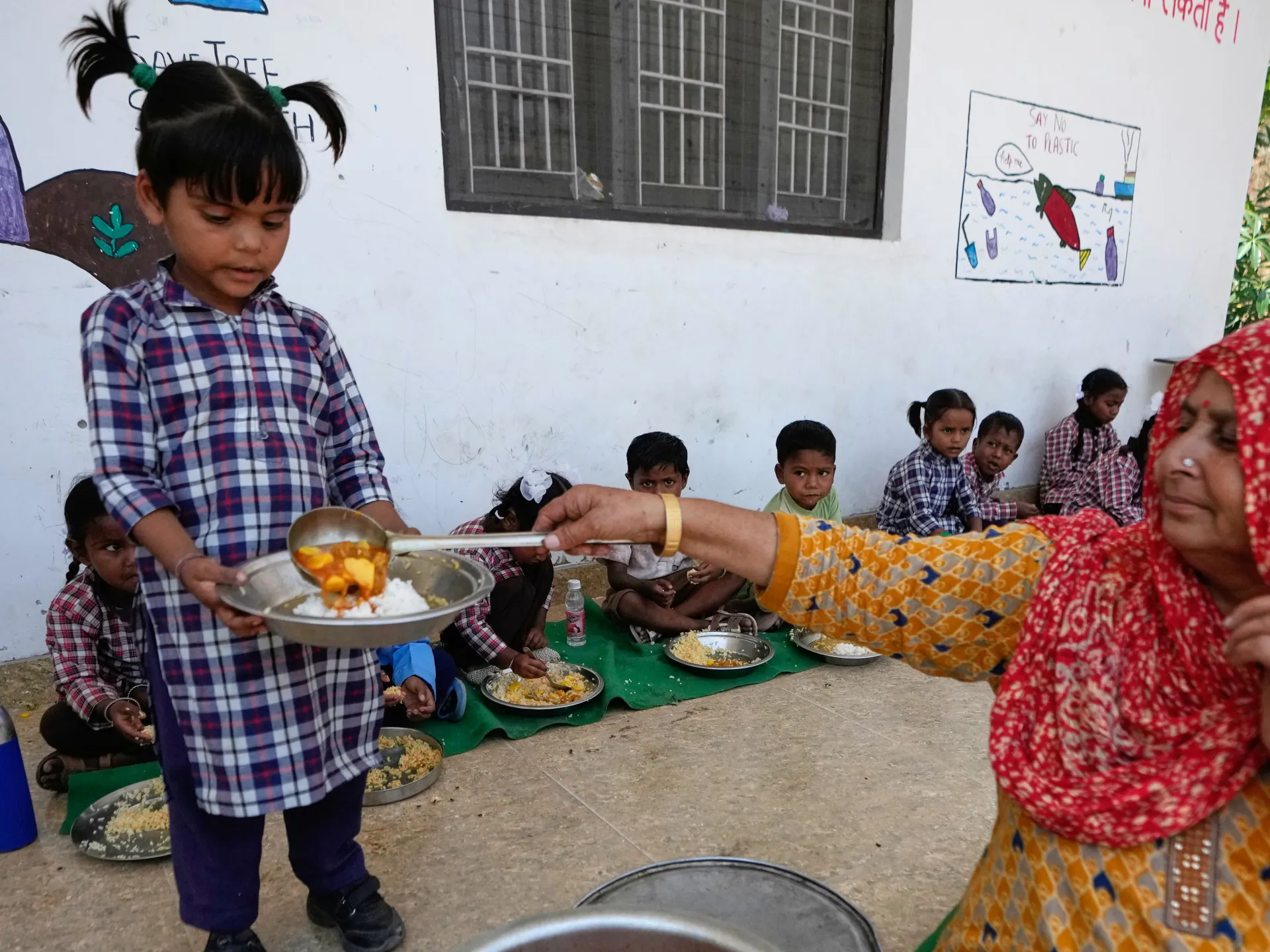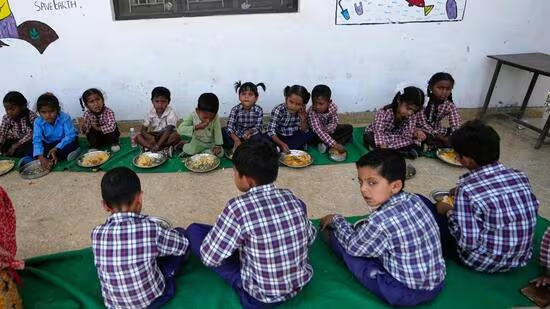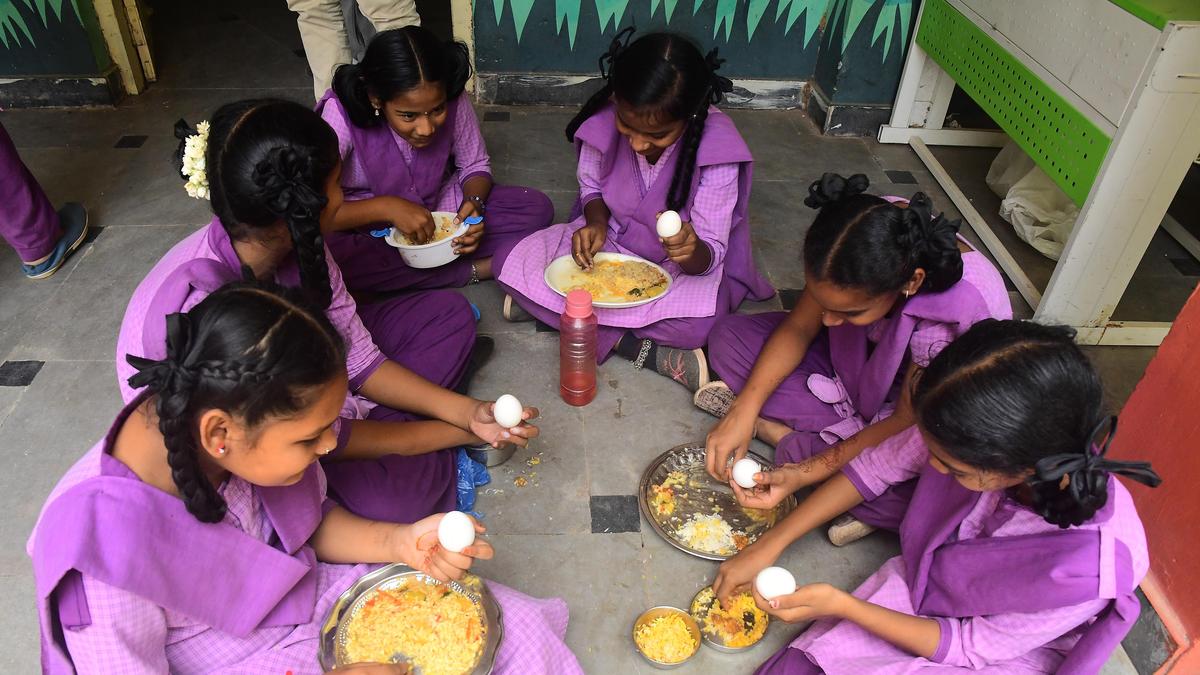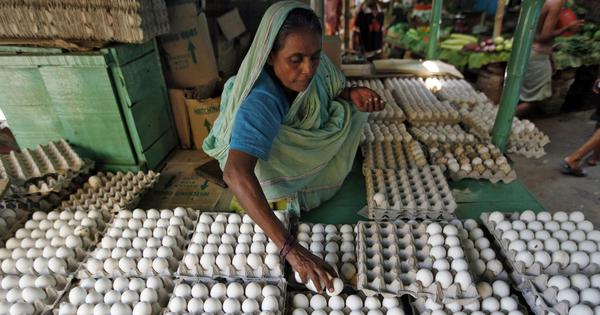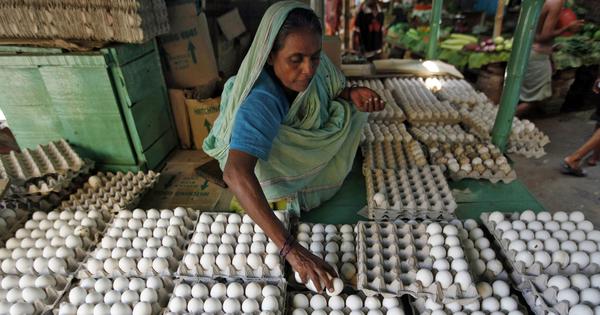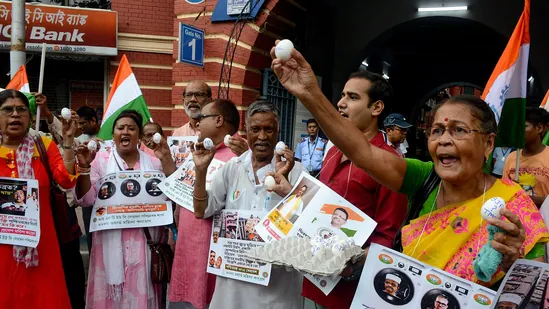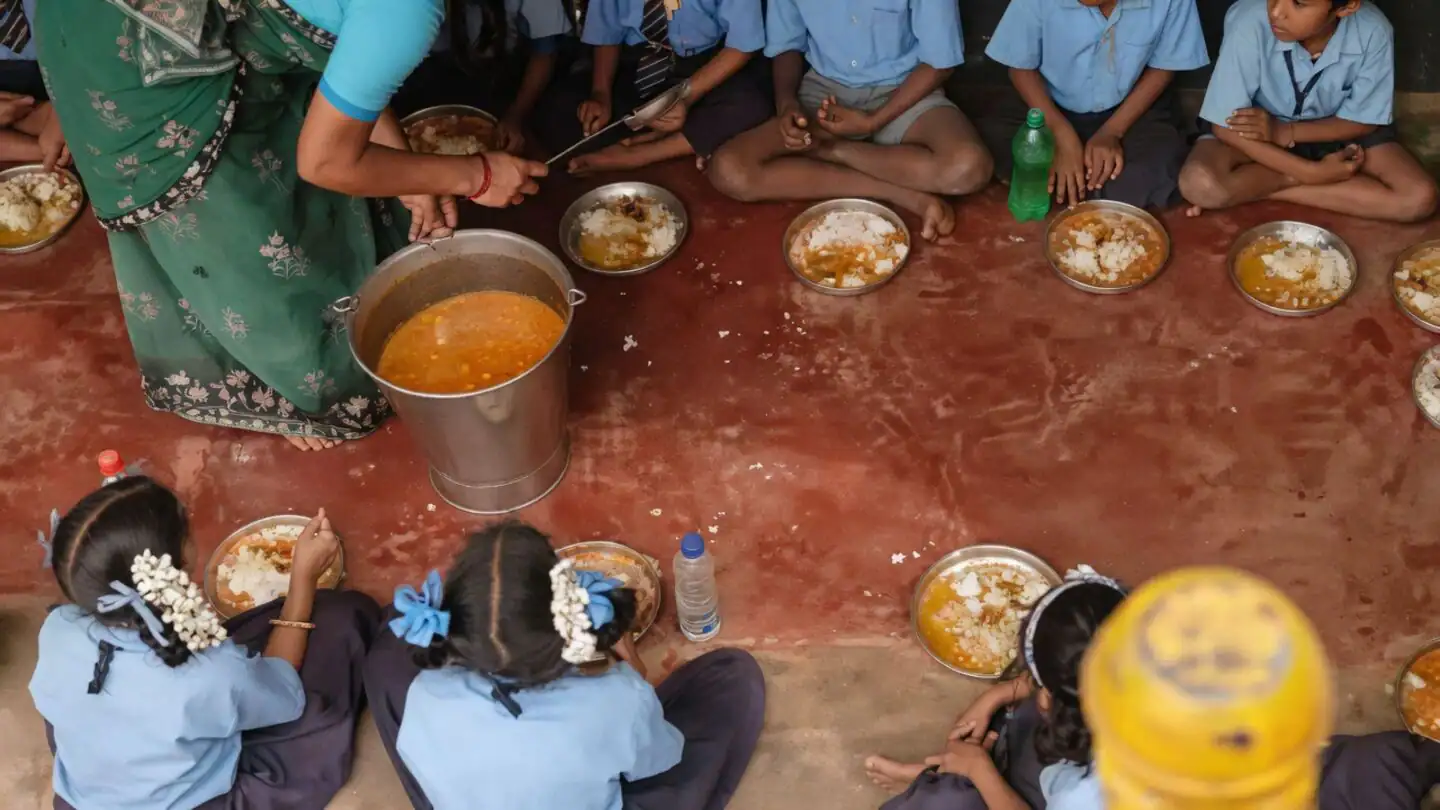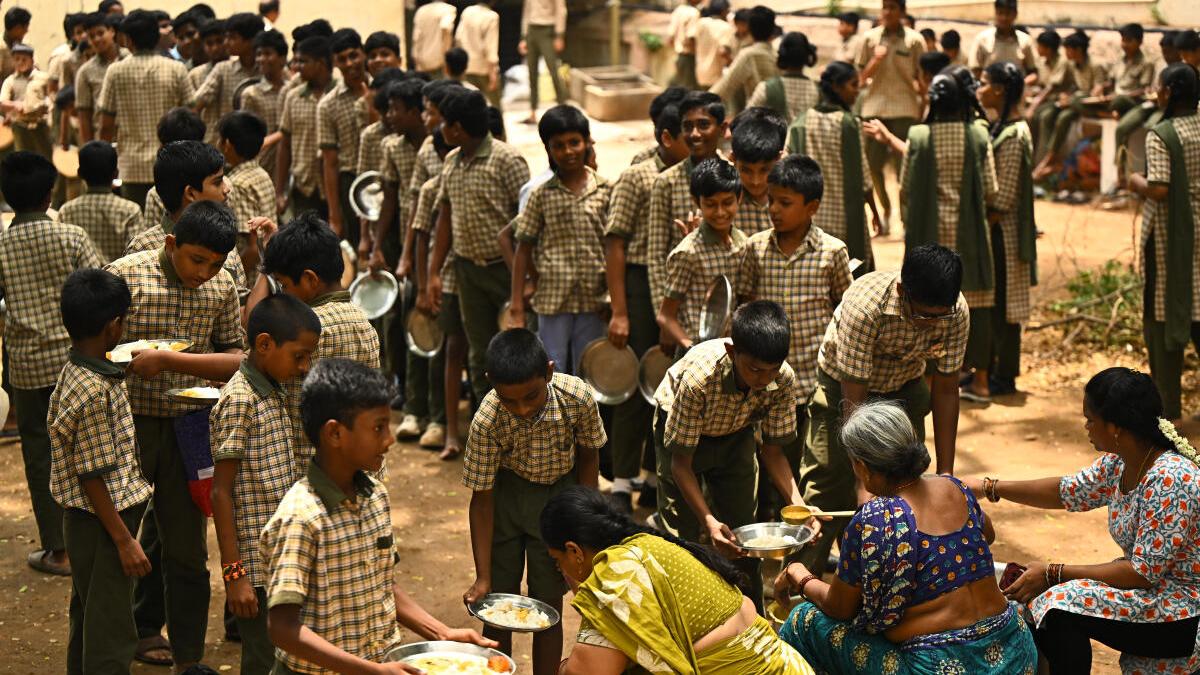
In India, the mid-day meal has long been more than food. Since its expansion under the National Programme of Nutritional Support to Primary Education and, later, the PM POSHAN scheme, the plate handed to a child at noon has functioned as a state guarantee that schooling would come with at least one reliable meal. It has also made the classroom a space where the state’s concern for children is registered materially, through nutrition, attendance, and retention.(Sign up for THEdge, The Hindu’s weekly education newsletter.)The newly elected BJP government in West Bengal, which won 206 of 294 assembly seats in May 2026, announced that the International Society for Krishna Consciousness would supply cooked mid-day meals to about 1,800 government and aided schools in the Kolkata Municipal Corporation area. ISKCON’s kitchens operate on satvic Hindu principles that exclude eggs, onions, and garlic. Under the new arrangement, a vegetarian menu of khichdi, paneer, rajma, soybeans, and pulses will replace the weekly egg that children earlier received alongside rice and dal.
Upcoming webinar: Toppers, ICAI explain how to crack CA examThe T.N. modelTamil Nadu offers a useful benchmark here. The state’s school feeding system has a much longer history, with the noon meal programme tracing its origins to the Justice Party era in the 1920s, expanding under K. Kamaraj in the 1950s, and being scaled up dramatically under M.G. Ramachandran in 1982. It is widely regarded as one of India’s most successful social policy interventions because it linked classroom participation to nutrition without surrendering control of the menu to external actors. The state now serves meals to more than 51 lakh children through a largely public system.The PM POSHAN guidelines place overall responsibility for the scheme on state governments and school authorities. They allow agreements with NGOs, but the meal is framed as a nutritional and educational entitlement, not as a service to be organised around a partner organisation’s internal rules. Annamrita Foundation, earlier known as ISKCON Food Relief Foundation, says it serves more than 1.2 million school meals daily from centralised kitchens in 21 locations across eight states. That scale matters because it allows the food philosophy of one organisation to travel across multiple public school systems.Wider patternThe conflict is not unique to Bengal. In Karnataka, civil society groups petitioned the Union government to terminate Akshaya Patra’s contract, citing a Comptroller and Auditor General report that found nutritional shortfalls in sampled meals. In Chennai’s corporation breakfast scheme, Akshaya Patra’s involvement prompted criticism that a satvic food code was entering civic schools through a welfare programme. In Telangana too, the expansion of NGO-run meal delivery has raised questions about whether centrally designed menus can accommodate local diets and nutritional needs. Bengal is therefore not an isolated case. It is the latest instance of a wider pattern in which outsourced school feeding opens the door to religiously shaped menu control.Tamil Nadu’s egg policy shows that another route is possible. M. Karunanidhi’s 1989 decision to introduce eggs into the noon meal scheme did not erase vegetarian preferences. Children who did not consume eggs were offered bananas as an alternative. That distinction matters. The state did not remove eggs from the common menu in order to respect vegetarians. It retained eggs as a default nutritional intervention and built accommodation into the programme itself.Food in school does more than nourish. It tells children what the state considers ordinary, acceptable, and legitimate. India is often described as a vegetarian nation, although survey-based work suggests only around one in four Indians identify as vegetarian, with strong regional variation. West Bengal is overwhelmingly non-vegetarian in everyday food culture. For children from Dalit, Adivasi, Muslim, and working-class households, eggs, fish, and meat are ordinary foods. The school meal had been one of the few public settings where those diets appeared unremarkable.Organising public responsibilityThere are also examples of states finding compromises without removing eggs. In Odisha, where Akshaya Patra catered school meals, the government still made arrangements for eggs to reach children through separate provisioning. That is a useful contrast with Bengal, where the move has been framed more directly as substitution. The policy choice, then, is not between outsourcing and nutrition. It is between different ways of organising public responsibility.The Devex investigation into India’s school meal programme captured the broader problem. Faith-based providers do not only distribute food. They also extend dietary and cultural norms into spaces that are meant to remain institutionally neutral. The school kitchen can then become a site where a particular idea of purity is normalised through repetition.The BJP’s arrival in West Bengal makes this episode especially significant. This is the first time a right-wing government has administered a state that historically resisted this kind of cultural reshaping in public institutions. The speed with which ISKCON was brought into school kitchens suggests how quickly educational infrastructure can be used to reorganise the terms of welfare. Tamil Nadu’s experience points to a different lesson. A state can expand school feeding, include eggs, accommodate vegetarians, and still keep menu control within the public system. Bengal now has to decide whether its classrooms will follow that model or allow the school plate to carry a different politics.(Rahul Verma is a sociologist and independent researcher who writes on education, labour and social inequality in India.)