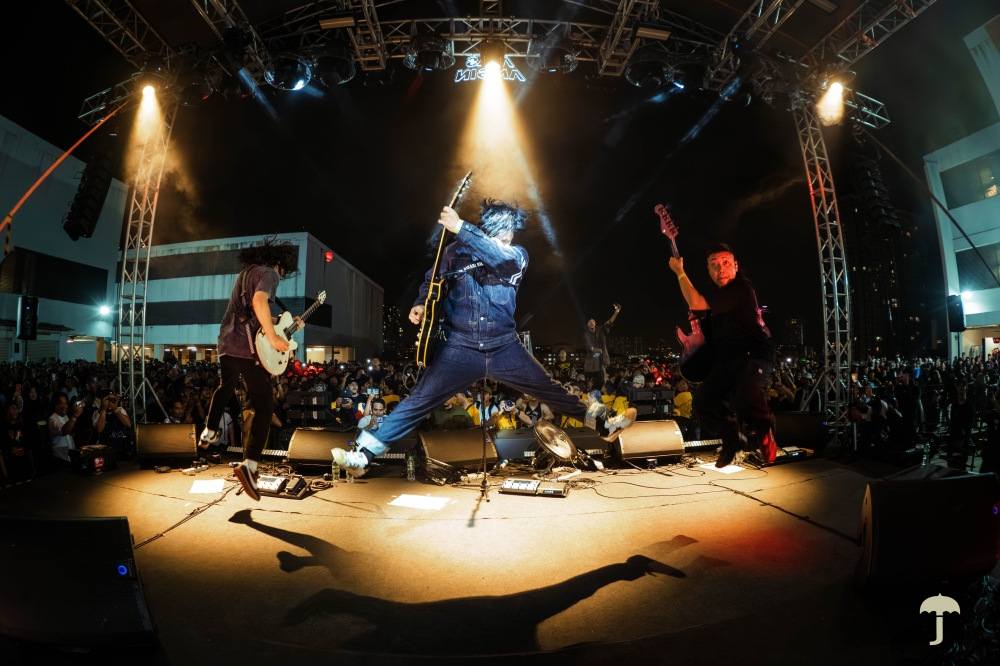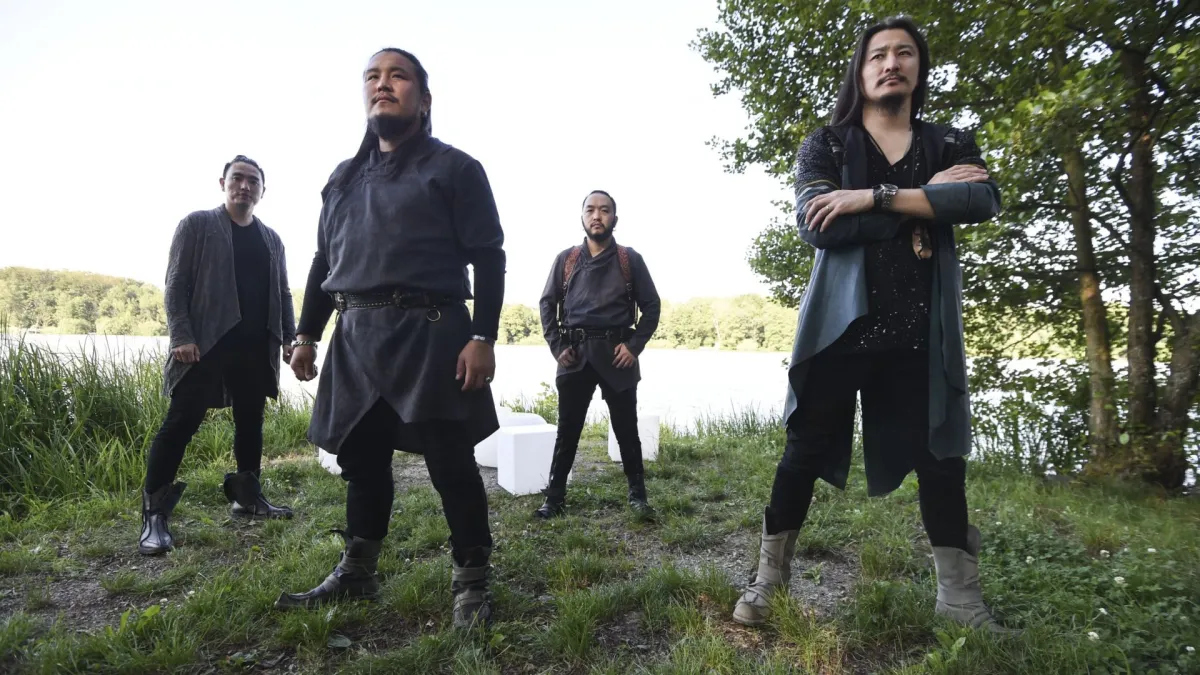
The lead singer of the Mongolian rock band The Hu, Galbadrakh Tsendbaatar, aka Gala, is outlining the band’s purpose. “We use our traditional instruments in our own way, and we focus on leaving this piece of our culture to the younger generation,” he says. “But at the same time, we spread it to the generation of right now. Sharing the Mongolian perspective to the world is essential.”
He’s telling me this on video call via an interpreter – Gala’s English is limited, though not as limited as my Mongolian – which is a new experience for me. But then The Hu – meaning “human” in Mongolian – are unlike any band I’ve ever interviewed. Ostensibly a heavy rock band, the four-piece (Gala, Jaya, Emkush and Temka) have become a worldwide sensation – 900 million streams and counting – with a developed sound, all of their own making, which they have named “hunnu rock.” Their third album, Hun, is highly anticipated.
Influenced by Western hard rock and metal, The Hu sing in their native tongue using an ancient art of throat singing known as khoomei, and play traditional Mongolian instruments: the morin khuur, or the “horse’s head fiddle”; a guitar known as an tovshuur; and the tumur khuur (a jaw harp). The pounding drum beats in their music resemble Western metal, but also replicate the gallop of the horse, which has been an emblem of Mongolian spirit and identity since the days of Genghis Khan in the 13th century.