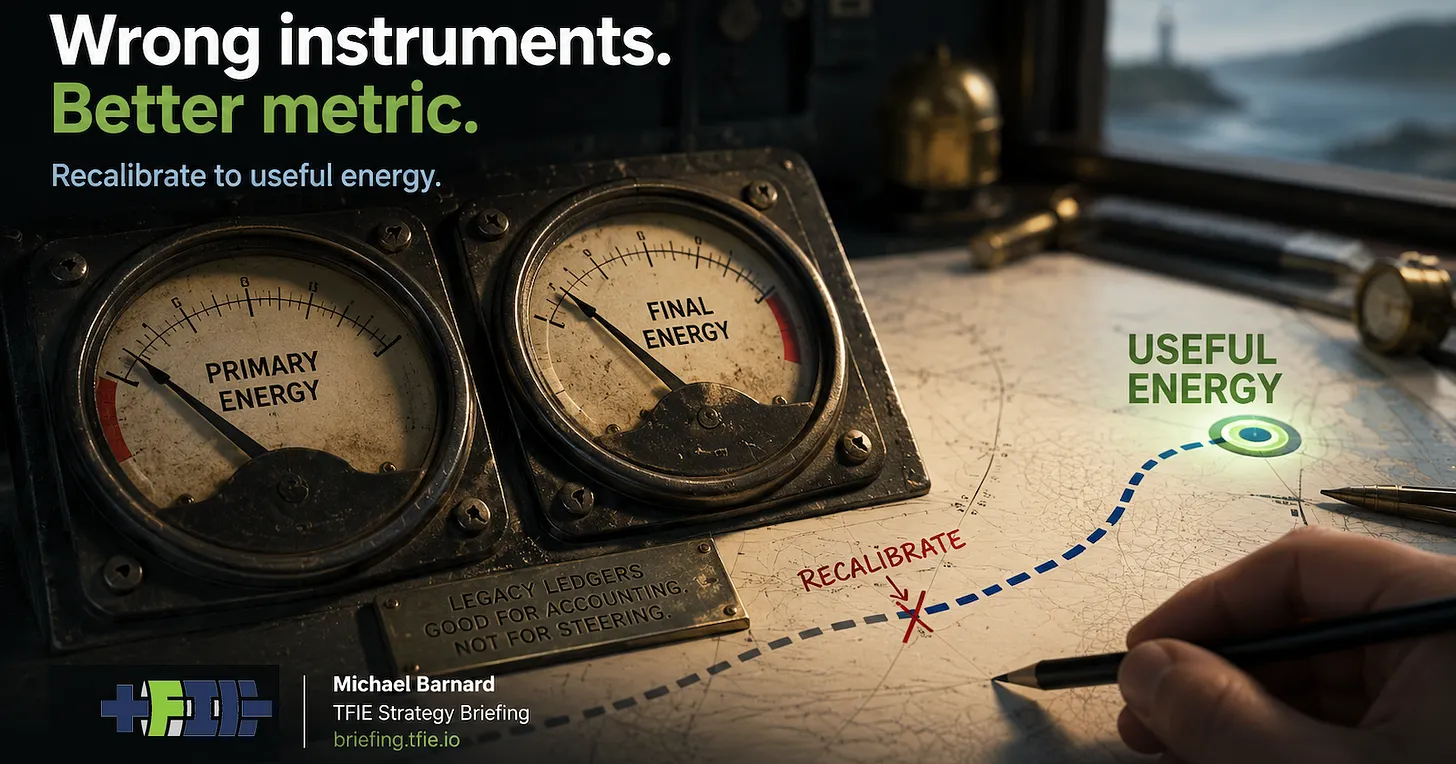
Primary and final energy are accounting ledgers; useful energy shows what the economy actually gets.
Support CleanTechnica's work through a Substack subscription or on Stripe.
The COP31 proposal for electricity to supply 35% of global final energy demand by 2035 is useful, ambitious and better than a renewables target on its own. It pushes the climate conversation beyond power generation and into vehicles, buildings and industry, where fossil fuels remain embedded. It also exposed a mistake in my own thinking.
In a recent RenewEconomy article, I got the COP31 target right in one sentence and wrong a few paragraphs later. The target was final energy, but I treated it as if it were close enough to useful energy to apply the primary-energy correction I have used for years. That framing was wrong because final energy and useful energy sit on different sides of the customer’s equipment.
Michael Liebreich helpfully pointed out the final/useful confusion, and both Liebreich and Jan Rosenow have published excellent work on this distinction. Liebreich’s question about the COP31 target — electrification of what? — is the right one. Rosenow’s framing of electrification as electro-efficiency is the right complement, because electrification is not simply fuel switching. In many major end uses, it reduces the amount of delivered energy required to provide the same service.