Australia has endorsed a useful COP31-era number: 35% of global final energy demand supplied by electricity by 2035. The target is directionally right, and it is easy to under-read. If it is treated as another energy-share statistic, it will miss what electrification actually does.
The better reading is that 35% electricity is a test of whether countries are moving useful energy services onto the efficient energy carrier. A litre of diesel in a haul truck, a gigajoule of gas in a boiler and a kilowatt-hour of electricity in a motor can all be converted into units on an energy chart, but they do not deliver the same amount of useful work.
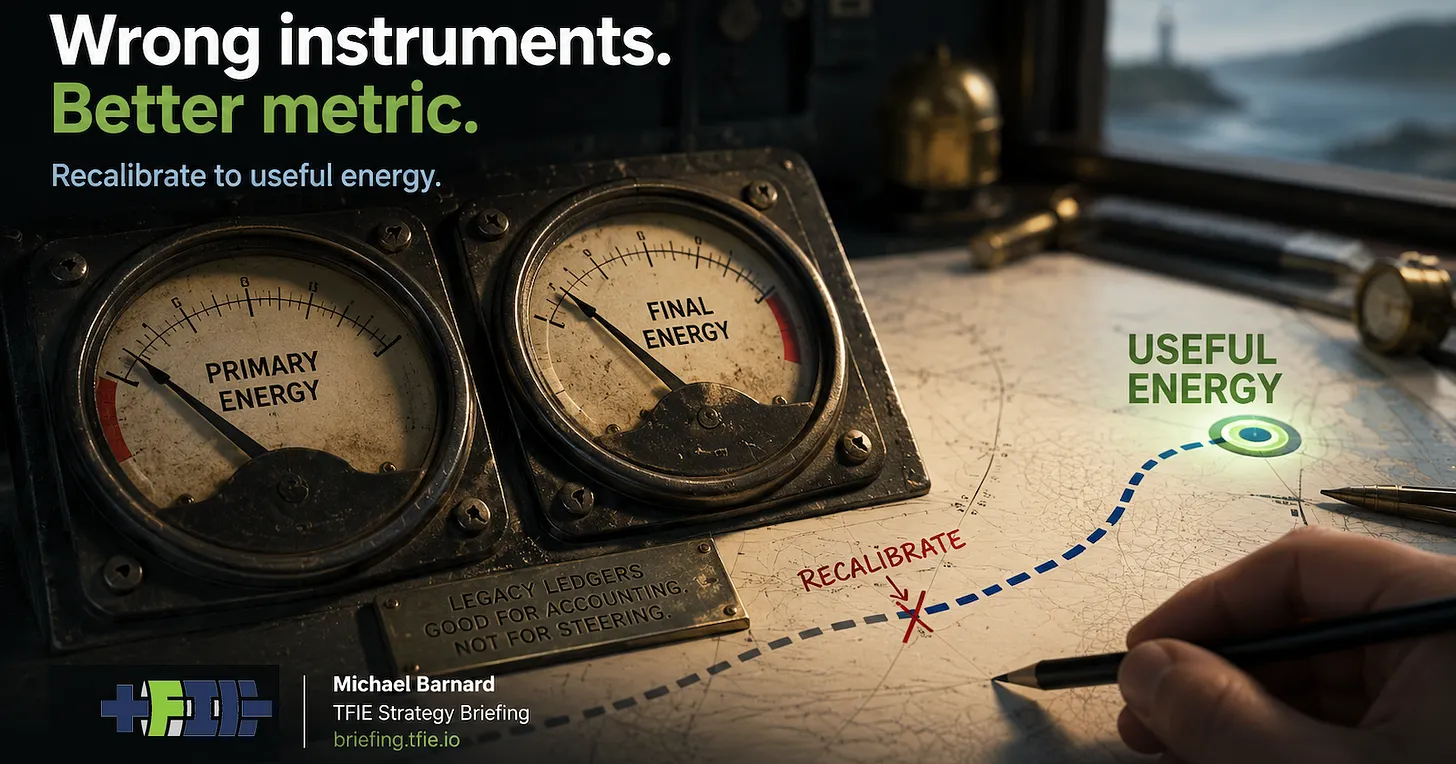
Fossil energy systems throw away a lot of what official statistics count. Electric systems waste much less. That is the primary-energy trap, and it makes electrification look slower than it really is while making the remaining task look larger than it really is.
Marco Möller, an energy analyst whose recent LinkedIn curve on the primary-energy fallacy has been circulating in energy circles, has a useful way of showing this.
Michael Liebreich, of BNEF and hydrogen-ladder fame, and Paul Martin, of primary-energy-fallacy and hopium fame, have amplified the same basic point: primary energy is a poor way to judge electrification progress when the comparison is between waste-heavy combustion and efficient electric pathways.