AI-native startups tend to hire senior-level talent that skews male.
Maskot/Getty Images
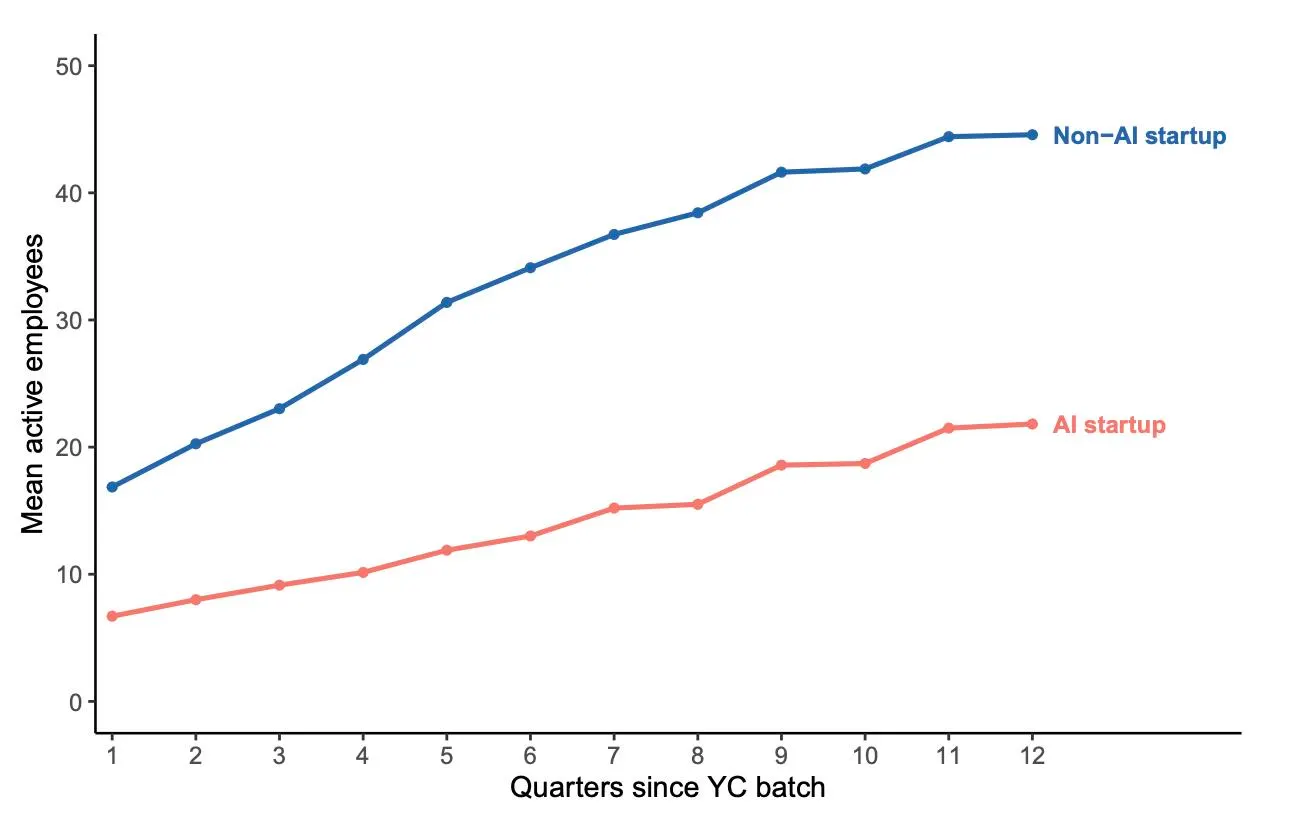
AI, it seems, is for the experts.In a new working paper, researchers at Harvard Business School and the nonprofit business school, INSEAD, found that AI-native startups are building smaller, flatter teams with fewer entry-level workers than their non-AI peers.The study, titled "AI-Native Firms," examined Y Combinator startups from 2020 to 2024 and a broader set of US venture-backed startups whose first financing closed during the same period.The paper defines a new category of "AI-native startups" characterized by two shifts in productivity. The first is the process channel: They use AI inside the company to make employees more productive, such as helping them code, sell, design, or coordinate work faster. The second is the product channel: They embed AI directly into what the company sells, so customers can use the product to perform work that once required human teams.AI-native startups are 25% smaller, with about 13% more engineers, and their shares of entry-level workers and managers are each roughly 15% lower than non-AI-native startups.The findings test a broadly accepted premise of the AI boom: AI is reshaping the bottom rungs of the career ladder. Entry-level workers are using it to take on bigger responsibilities sooner and automate routine tasks. This comes as vibecoding has also made it easier for non-engineers to turn ideas into prototypes, blurring the threshold and need for technical talent.However, the paper found that the AI is creating a greater demand for expert-level talent. The share of senior workers at AI-native startups is 20% higher, and these companies tend to attract a specific type of worker.