TL;DRA Harvard Business School and INSEAD working paper finds AI-native startups are 25% smaller, employ 13% more engineers, and carry roughly 15% lower shares of entry-level workers and managers than non-AI peers. Their hires skew senior, elite-educated, Silicon Valley-based, and male, suggesting AI is concentrating rather than democratising opportunity.
Startups built around AI hire fewer entry-level workers than their peers, according to a working paper from Harvard Business School and INSEAD, first reported by Business Insider. The firms are leaner, flatter, and heavily weighted towards senior technical talent.
Researchers Rembrand Koning and Hyunjin Kim examined Y Combinator startups from 2020 to 2024 alongside a broader set of US venture-backed firms. They define AI-native startups by two shifts: using AI internally to make employees more productive, and embedding it in products so customers can automate work that once required human teams.
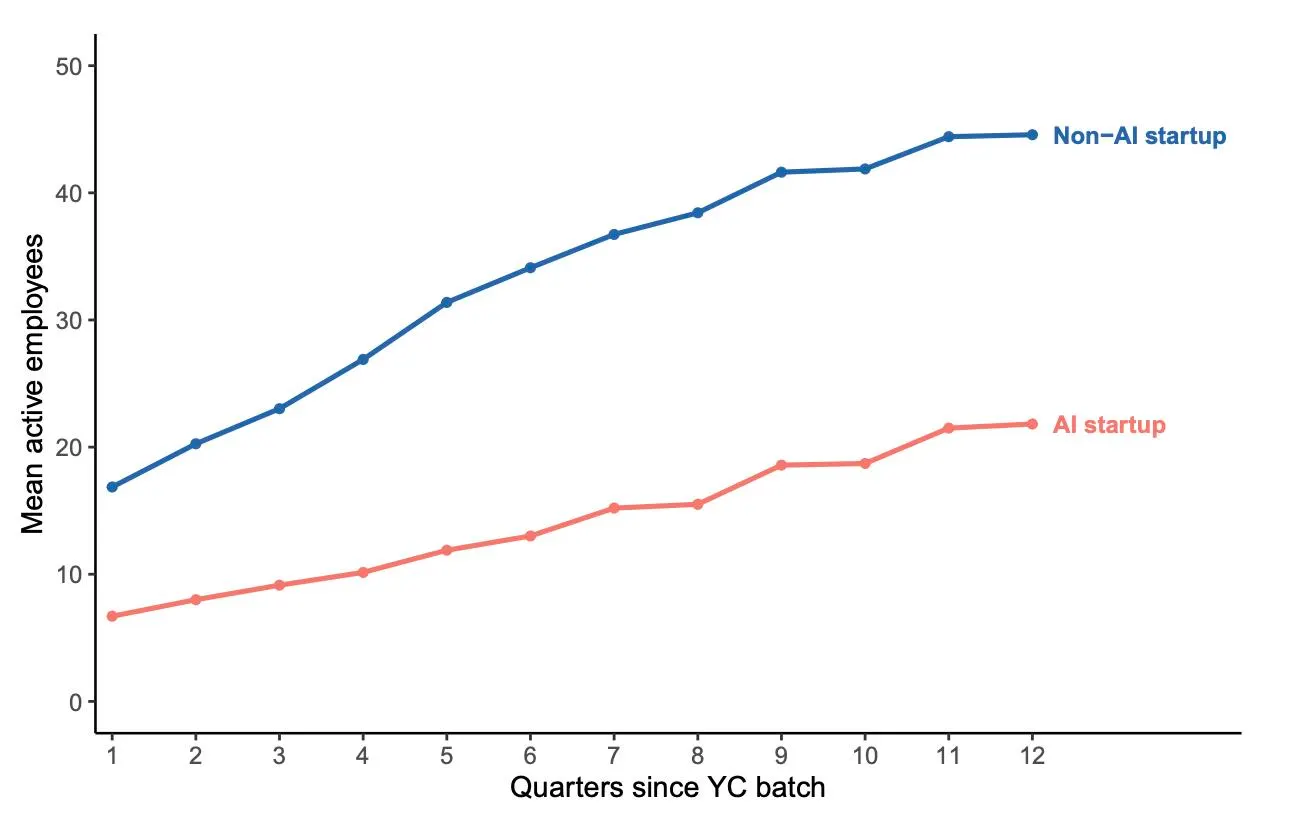
The numbers are stark, with AI-native startups 25% smaller, employing 13% more engineers, and carrying roughly 15% lower shares of both entry-level workers and managers. The share of senior workers runs 20% higher, and valuations are comparable to non-AI peers, implying more value created per employee.