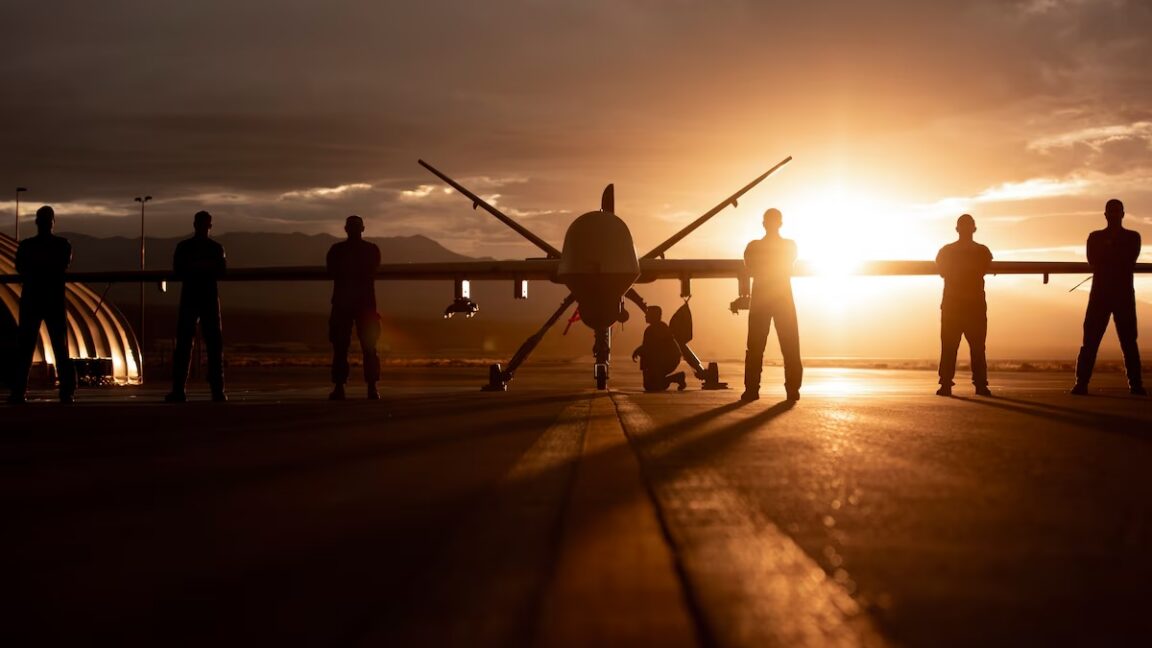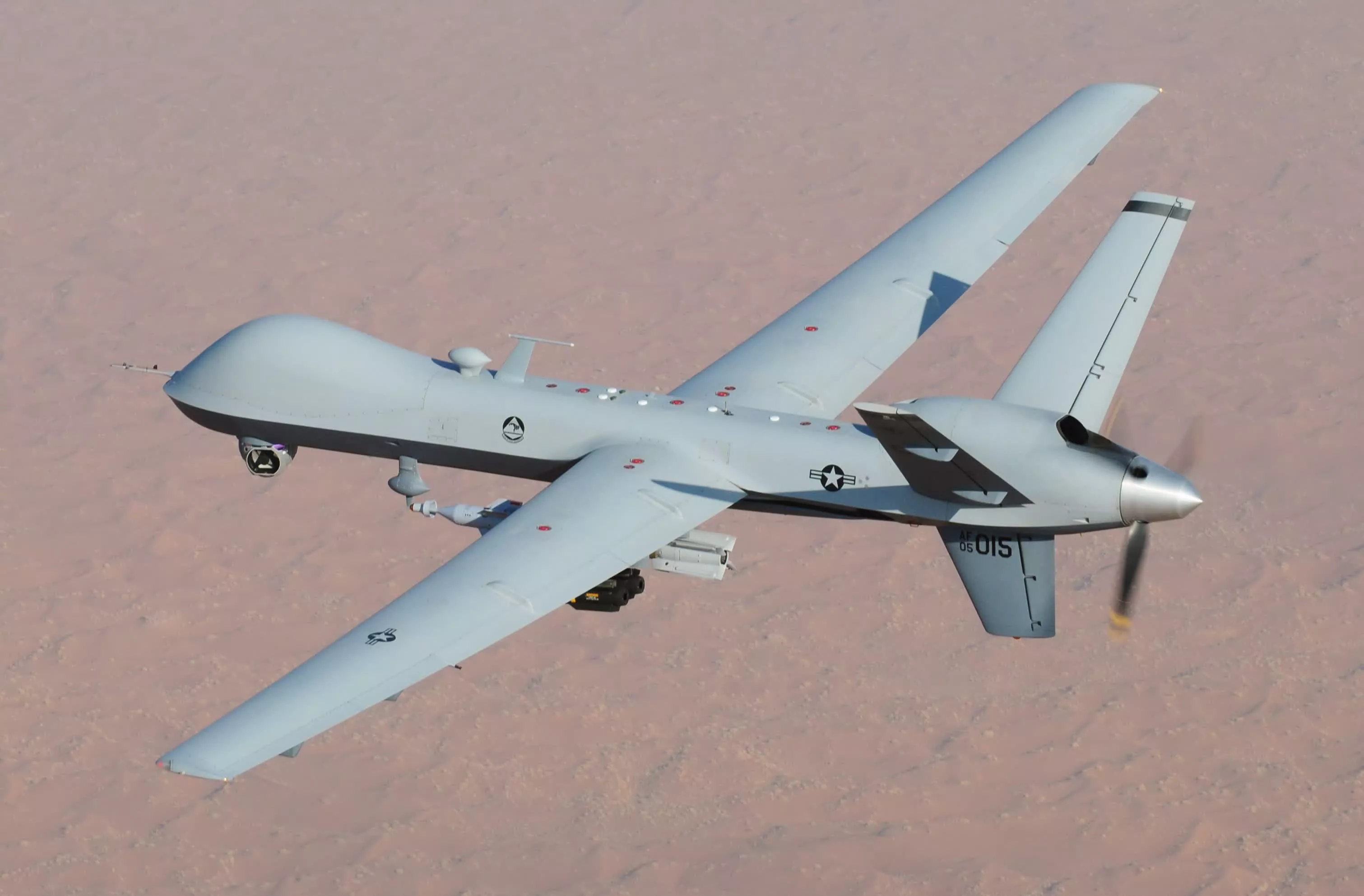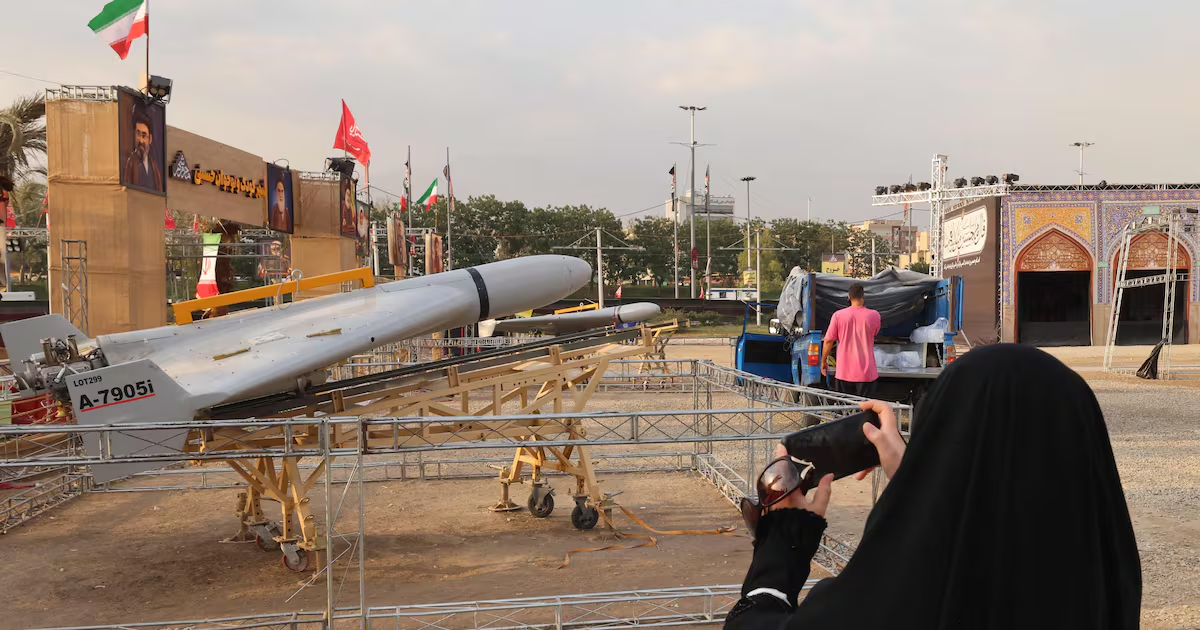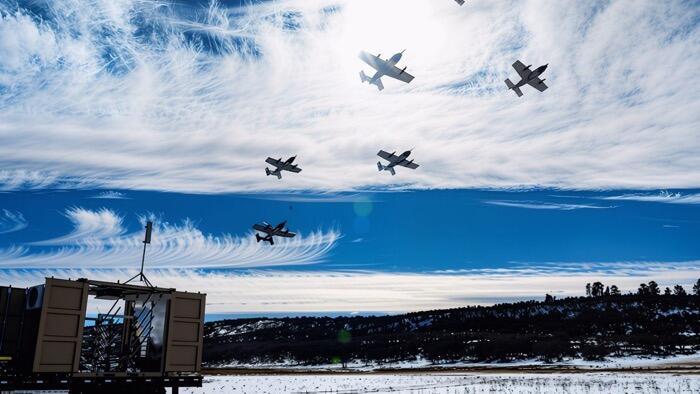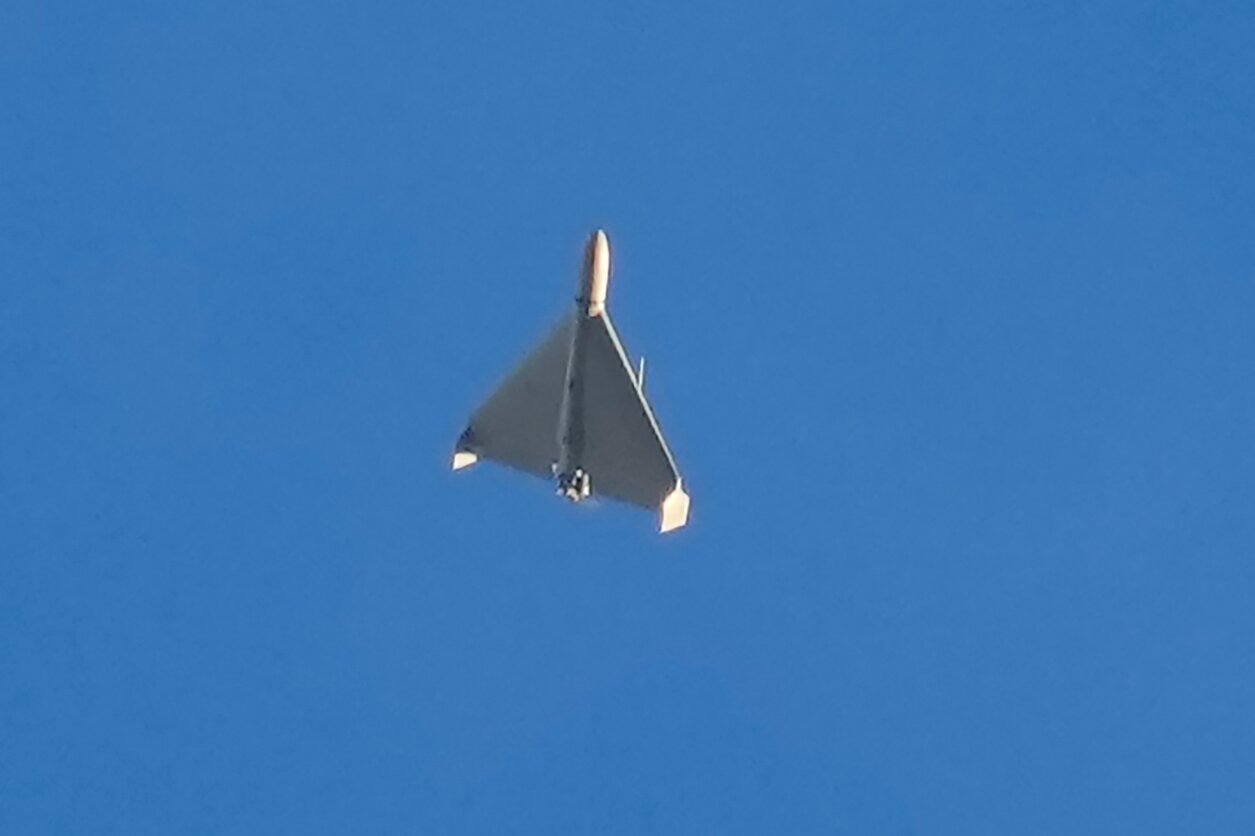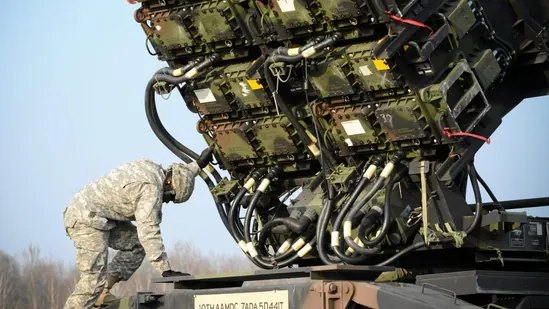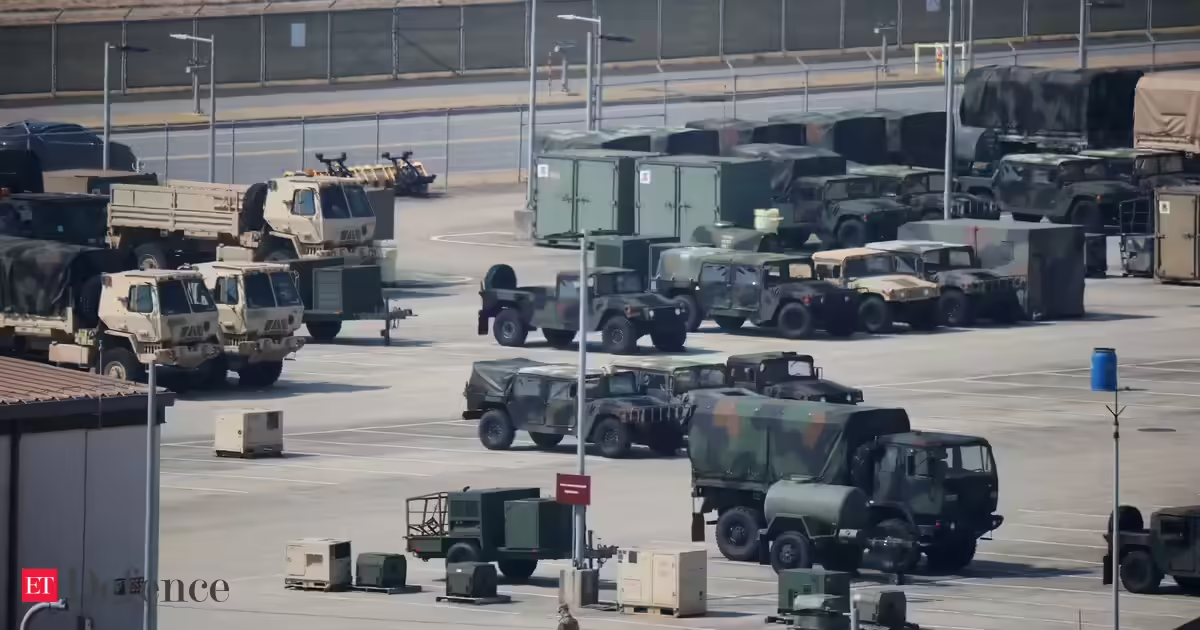
The US Army buys 50,000 drones a year, set to increase in 2027 to 340,000. Sounds like a lot? Yeah, but Ukraine is producing and launching 4 million a year. Meanwhile, an Iranian missile landing on a Gulf air base destroyed a $300 million E-3 Sentry early-warning aircraft. America can afford it? Well, maybe, but it was one of a US fleet of just 16 such aircraft, now down to 15.At the same time, Ukraine’s $300,000-a-pop kamikaze drone boats have displayed in the Black Sea an ability to destroy warships costing hundreds of millions of dollars — they have sunk 13 Russian vessels and damaged many more. As for artificial intelligence, experts believe that this threatens to wipe out the technological lead the US has possessed over actual and potential enemies since World War II.Warfare, strategy and weapons systems are morphing at extraordinary speed. The US still possesses by far the most capable military. But its ability to dominate a battlefield, never mind an entire region, is under threat in a fashion that military men and women understand better than do many national leaders.Iran is still standing, after enduring the heaviest fire America and Israel could unleash upon it. Since 2022 Ukraine has fought Russia almost to a standstill. A while back, I was among those who feared that its defenses would collapse as President Donald Trump cozied up to Russia’s Vladimir Putin and slashed supplies of arms to Kyiv, especially air-defense missiles.Instead, we are witnessing an extraordinary Ukrainian fightback, driven by domestically produced weapons largely funded by Europe. The embattled people’s ingenuity and passion have turned the tide on the frontlines, teaching us much not only about this war, but about the likely face of all future war.Ukrainians are killing Russian troops at an estimated 10,000 a month, almost half a million in total since 2022, at least five times Ukrainian losses. Drones are overwhelmingly responsible for Russian casualties. No sensible analyst suggests that these low-tech incomers make all big-ticket weapons systems redundant. US and Israeli aircraft have been able to pound Iranian targets, delivering more than 13,000 strikes, while suffering a very low loss rate. Both Russian and Ukrainian air defenses are porous.But the sheer scale of response necessary to meet an incoming drone swarm or missile barrage frightens nations with limited resources. The US has used up about half of its Patriot missile inventory since it and Israel attacked Iran on Feb. 28, together with most of its THAAD interceptors, and it will take years to replenish stocks. If an enemy launches a new offensive anywhere in the world, most obviously China against Taiwan, Trump’s war of choice against the Islamic Republic leaves his armed forces ill-prepared to counter it. There is a great 1880s poem by Rudyard Kipling entitled Arithmetic On The Frontier. This remarked wryly on the disconnection between the expense of Queen Victoria’s officers and that of the weapons of the Afghan tribesmen which often killed them: “A scrimmage in some border station/a canter down some dark defile/two thousand pounds of education drops to a ten rupee jezail/the squadron’s boast, the crammer’s pride/shot like a rabbit in a ride.”America pays an estimated $4 million every time a Patriot missile shoots down an Iranian Shahed drone, which costs Tehran something between $7,000 and $35,000. The US Navy shows extreme caution about permitting its big carriers — cost $13 billion, plus another $10 billion each for the air wings — anywhere within range of Iranian fire in the Strait of Hormuz.And AI is, of course, the monster in the room. The technology is advancing so fast that it is hard for even the most nimble defense-procurement departments to figure out what to buy. Because the US and its allies are open societies, espionage against their cutting-edge corporations is scarily easy.Such Chinese companies as DeepSeek, Moonshot and Minimax are shameless about shadowing every advance made by US pioneers headed by Anthropic PBC, OpenAI and Google, then producing their own models at a fraction of the expense. Attempts to agree international regulation of AI seem bound to fail. Because of the obvious perils, some of those working in the US AI industry seek to prevent its military exploitation. The Pentagon is demanding unrestricted access to Anthropic’s technology for what it deems “any lawful use,” but we know how flexibly the Trump administration interprets such words. More than a thousand Google and OpenAI employees signed an open letter calling on their companies to “continue to refuse the Department of War’s current demands.” But it is hard to deny the Pentagon access to AI technologies when America’s real and potential enemies, especially China, are laboring around the clock to exploit their own versions for military purposes. Whatever our fears about the irresponsibility of Trump’s government, the AI arms race is a reality, and few of us want the West to lose it. Today’s situation reminds me of 1906 Anglo-German competition. In that year the Royal Navy, guided by the brilliant admiral John Fisher, launched the revolutionary HMS Dreadnought, the first all-big-gun battleship. Then it dawned upon the British and German governments that Dreadnought rendered all existing battleships obsolete, fit only for the scrapyard. The Royal Navy and Kaiser Wilhelm II’s fleet embarked from scratch upon a contest to outbuild each other before they came to blows, as finally they did in 1914. The Germans lost because their navy was granted only such resources as were left after funding a huge army. The British won, at the cost of lavishing a quarter of all state expenditure on warships, and woefully neglecting land forces which the Kaiser characterized as Britain’s “contemptible little army.”Nobody knows what the outcome of the military AI contest will be, except that the losers will be sorry. It has been widely reported that some misplaced Israeli air strikes on Gaza, which killed many Palestinian civilians, were directed by AI targeting. Though this has never been officially confirmed, the episode illustrates the potential malignity of AI, if licensed to kill. America, China and Russia are today the only nations which can afford to deploy large forces across the complete military spectrum. Every other country is obliged to make hard choices about where to invest finite resources. Britain has just published a pitiful “Defence Investment Plan,” which promises a big drone commitment at the cost of scrapping more warships. The Labour government fantasizes about future maritime forces based on seagoing drones. This might indeed be the future, but the technology remains almost untried, undeveloped and unfunded.Meanwhile, the Royal Navy continues to sail two giant aircraft-carriers, of which I have been a critic since the turn of the millennium. We cannot afford a credible force of aircraft to fly off them, and they break down with humiliating frequency. Such is their totemic status, however, that no British government can bring itself to act rationally and sell or scrap them. Other medium-sized nations have comparable problems about making brutal defense choices at a time of revolutionary geopolitical change.If I was making procurement decisions for any European government, I would emphasize technology for detecting and countering undersea threats to our pipelines and communications links. Russian submarines are already probing constantly. In 2022, the destruction of the $20 billion Nord Stream pipeline carrying Russian gas across the Baltic, almost certainly by Ukrainians using bargain-basement technology, provided a glimpse of infrastructure’s inherent vulnerability. When we already face cyberattacks from Russia and China, together with terrorism directed by the former, we should anticipate low-intensity hostilities which persist indefinitely.The only certainty, as always in human experience, is that we shall meet entirely unexpected threats, from ever-evolving technology. Our consolation should be that, against widespread predictions, we have survived 81 years of the nuclear age. If we can prevent nuclear weapons from becoming linked to AI, humankind has a fair chance of getting through the next eight decades, likewise. But should we fail to do this, the odds against Western civilization become a lot shorter.(The views and opinions expressed in this article are solely those of the author and do not necessarily reflect the views of this publication.)
America’s battlefield dominance is under serious threat
The article argues that warfare is undergoing a rapid transformation driven by drones, artificial intelligence and cheaper technologies that can neutralize far more expensive military assets. It highlights how Ukraines mass use of drones and drone boats has inflicted heavy losses on Russia at a fraction of the cost of traditional weapons, while a single Iranian missile reportedly destroyed a $300 million US surveillance aircraft.
1,350 words~6 min read