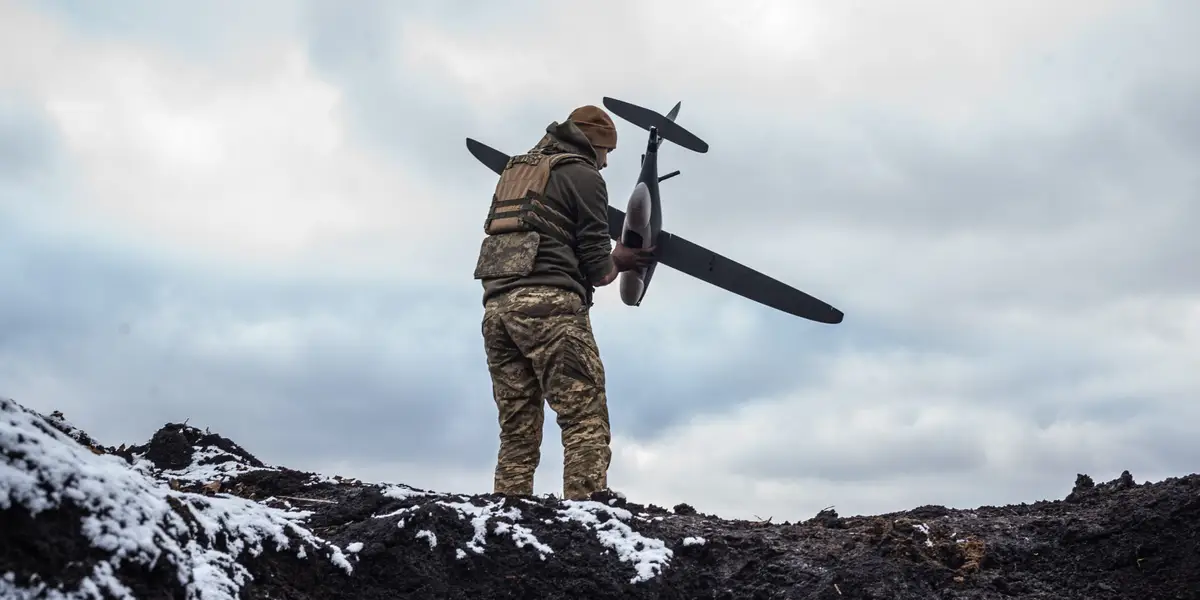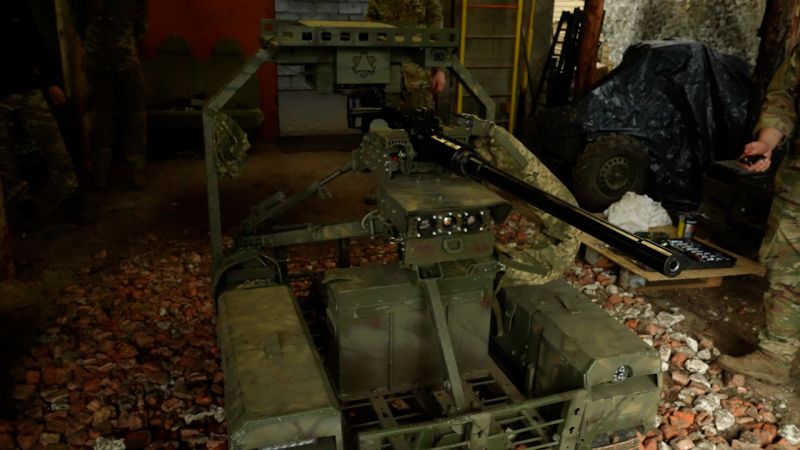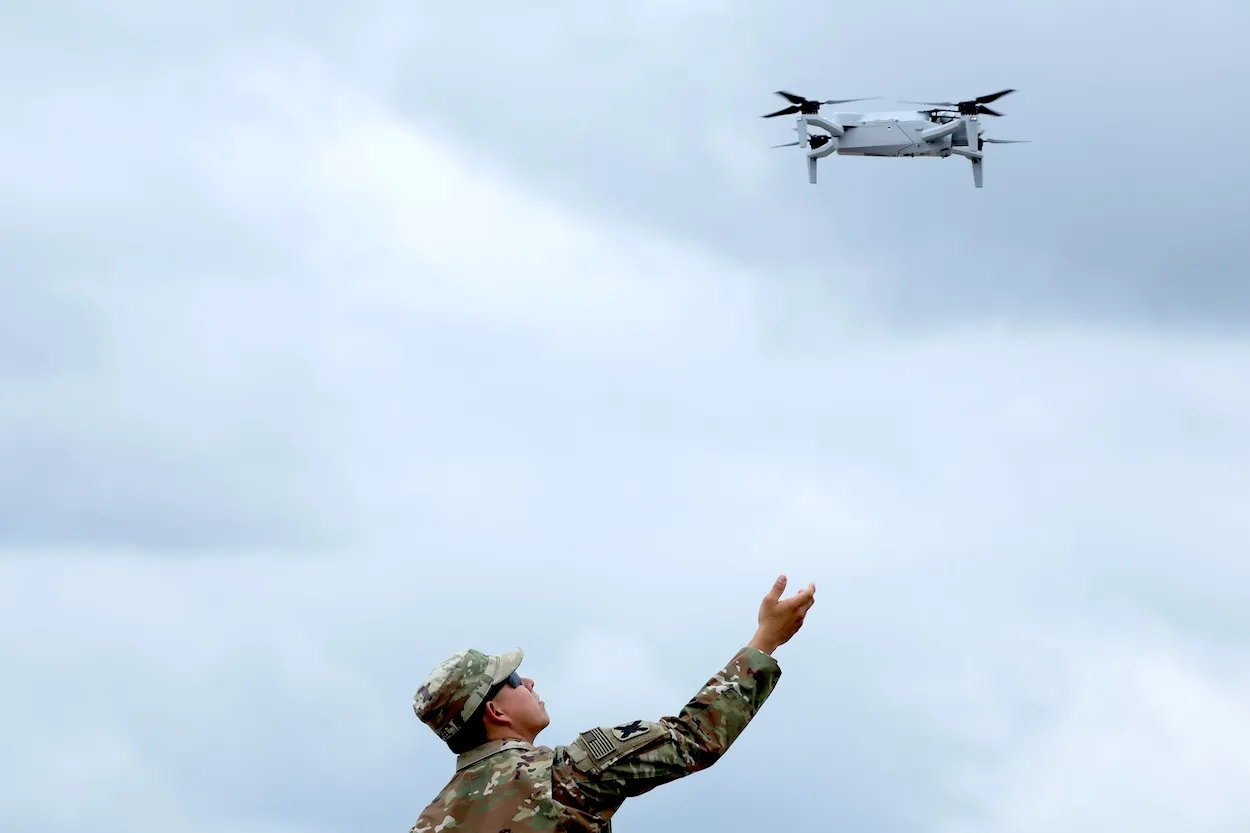
In March, Russia suffered 35,000 casualties in the war in Ukraine. It’s estimated 33,600 of those, an extraordinary 96 percent, were caused by drones. Attacks by drones equipped with bombs, machine guns and even flamethrowers are now responsible for most of the casualties on both sides of the conflict. Therein lies a potential trap for militaries across the globe. It would be a catastrophic mistake to believe that victory can be bought cheaply and quickly with a single technology.
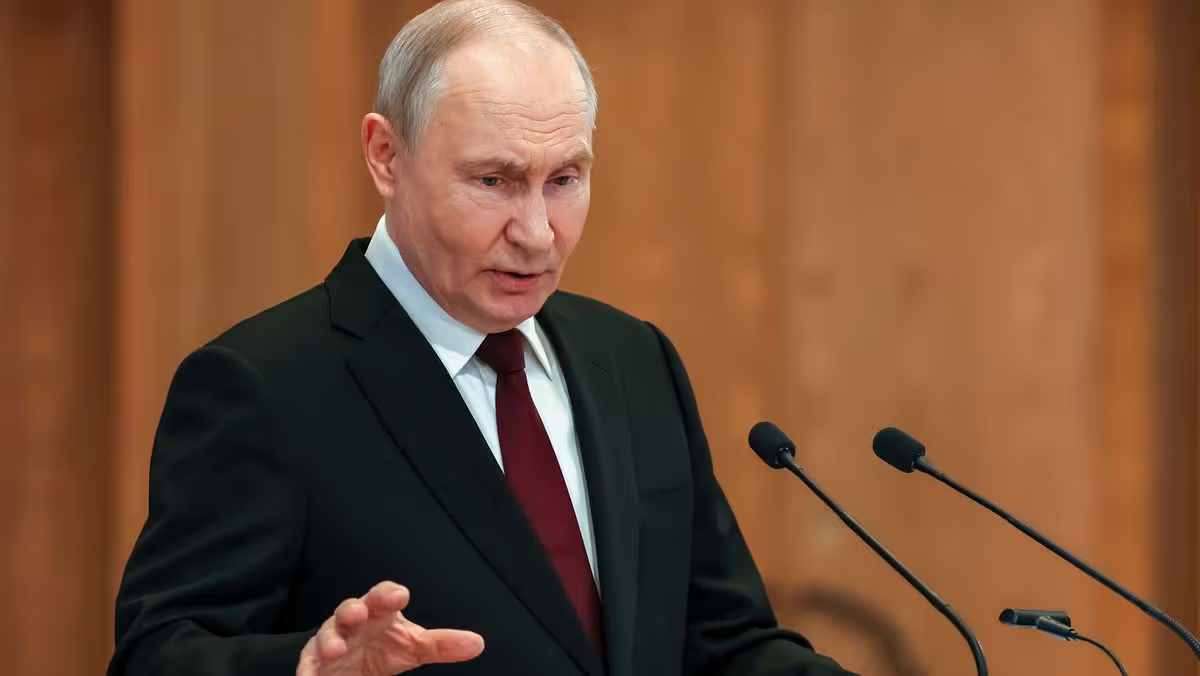
The great lesson of Ukraine is that armies are punished for relying too heavily on one strategy. President Putin made precisely that mistake. He believed Russian vast tank regiments and precision artillery would bring Ukraine to its knees. Instead, Russia’s army was left wanting by poor leadership, corruption, low morale and a failure to adapt to the rapidly changing battlefield. The West risks making the same mistake if it believes drones are the new wonder weapon of the future.
Drones are unable to do the most important part of war: they cannot physically hold ground
“The danger is an over-correction,” Phil Ingram, a former colonel in British Army Intelligence, told me. “The danger is we over-learn the lessons of the Ukraine war and we treat drones as a convenient solution to more expensive problems. It would be very easy to look at Ukraine and say ‘this is the future of warfare’ and run the risk of putting all of our eggs in one basket. It would only take a breakthrough in counter-drone technology – and then what?”