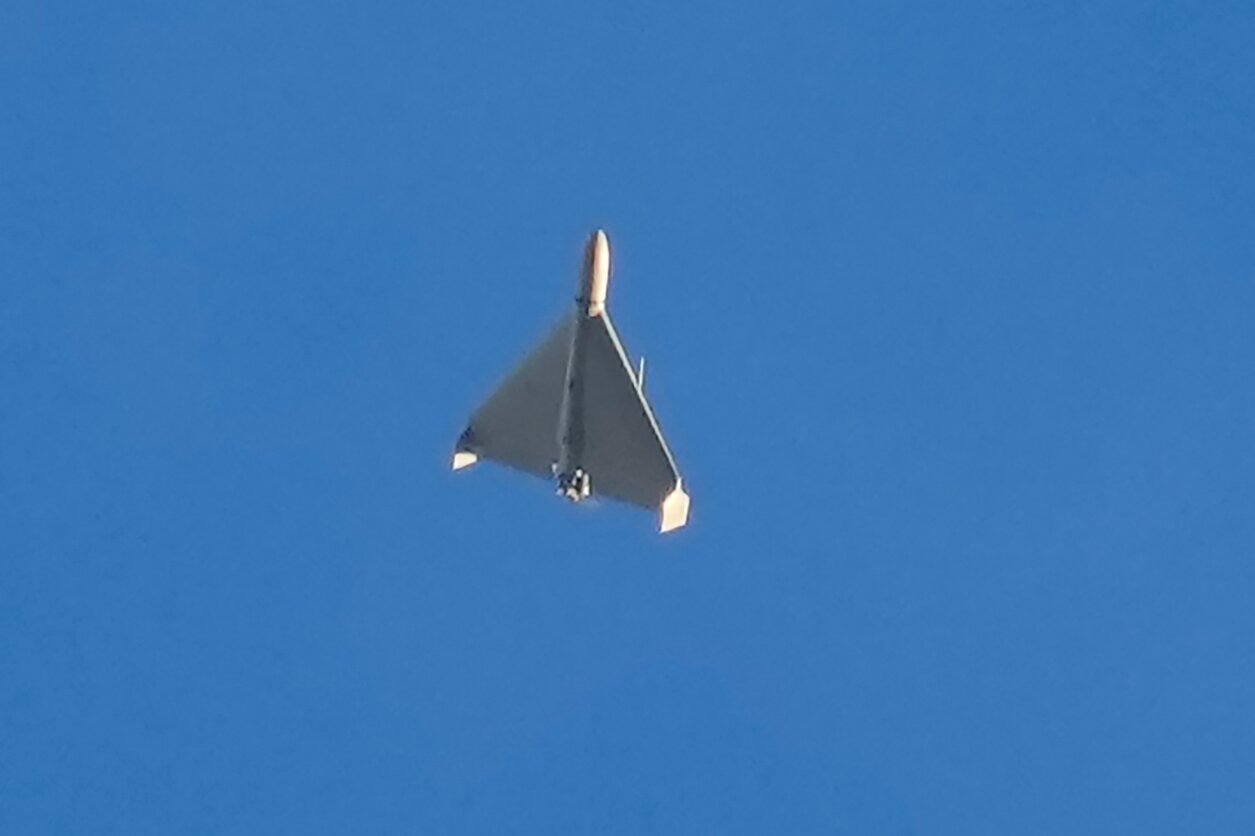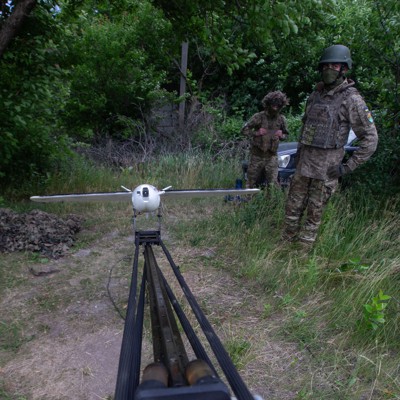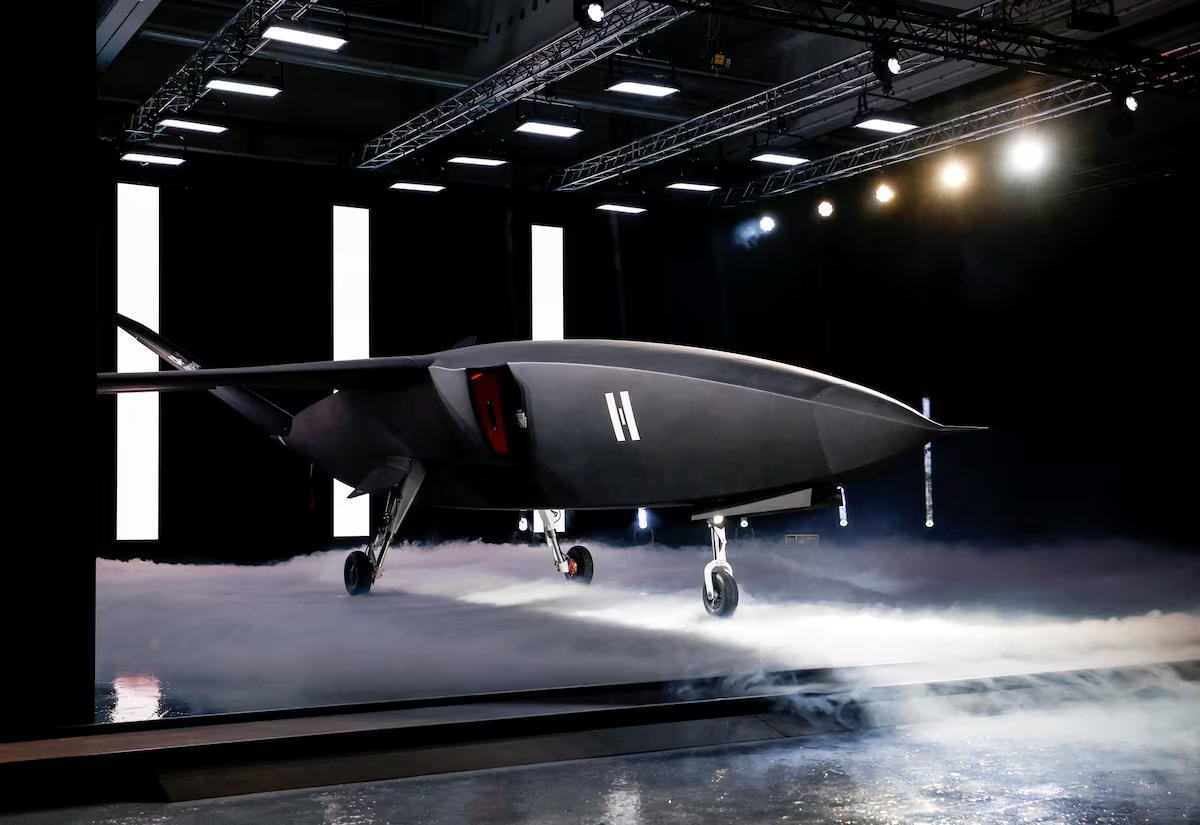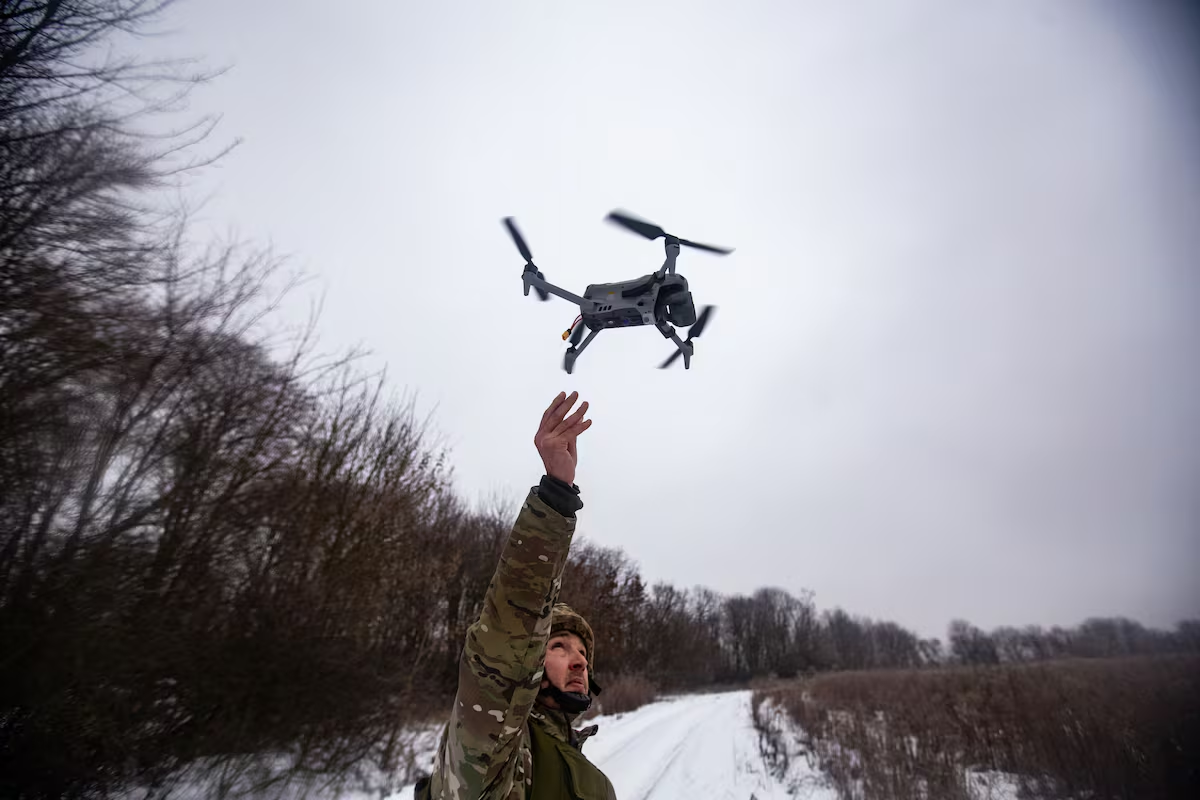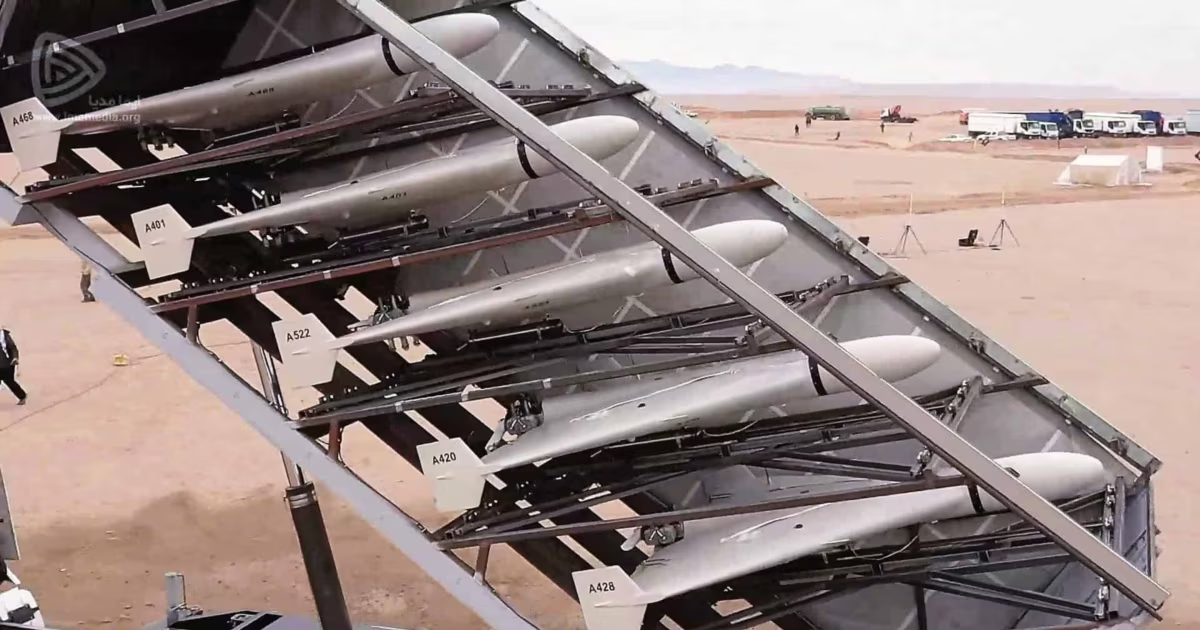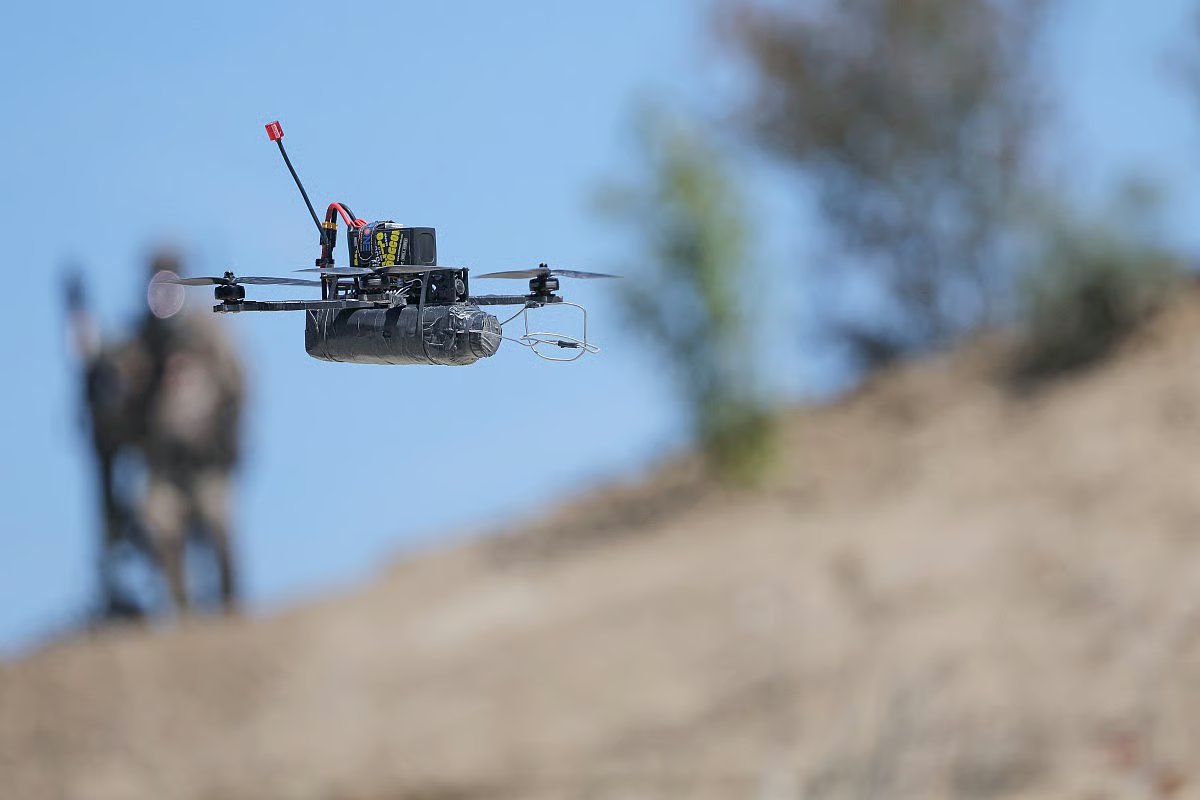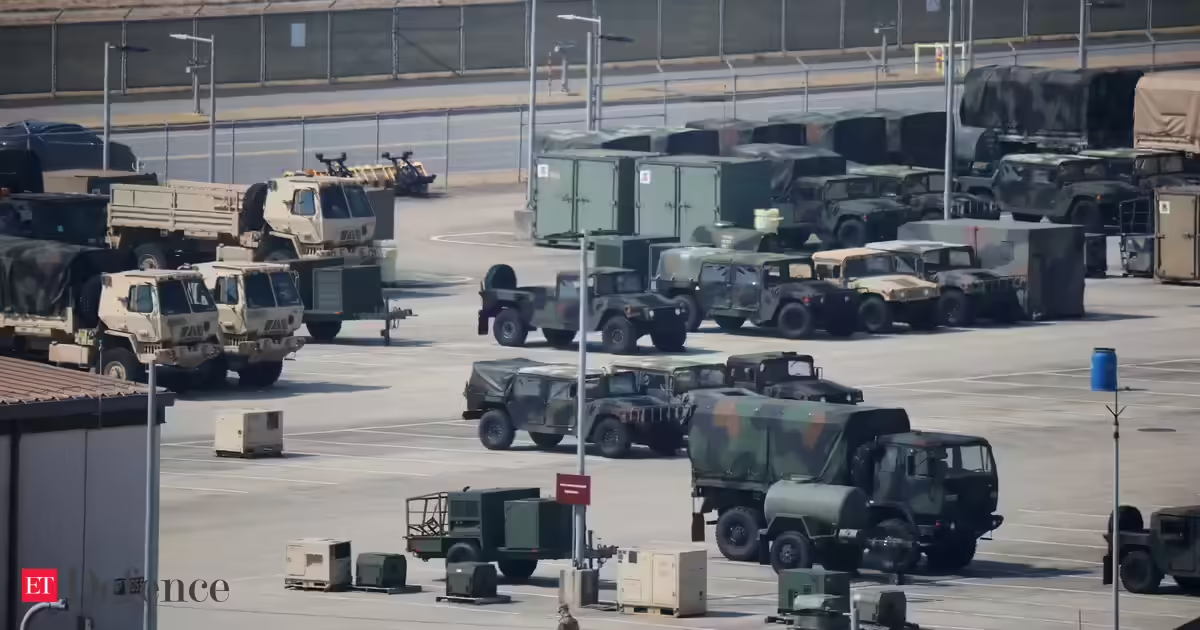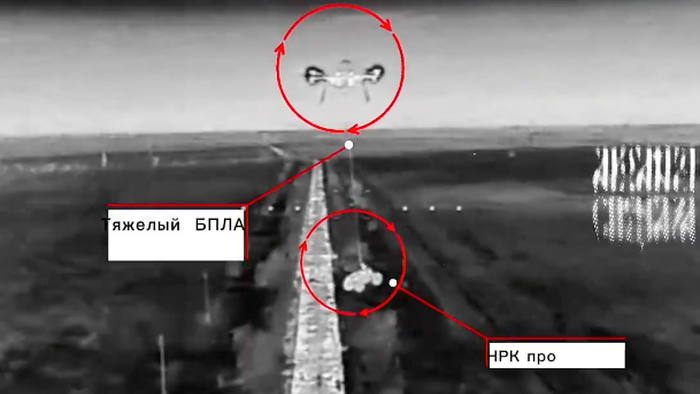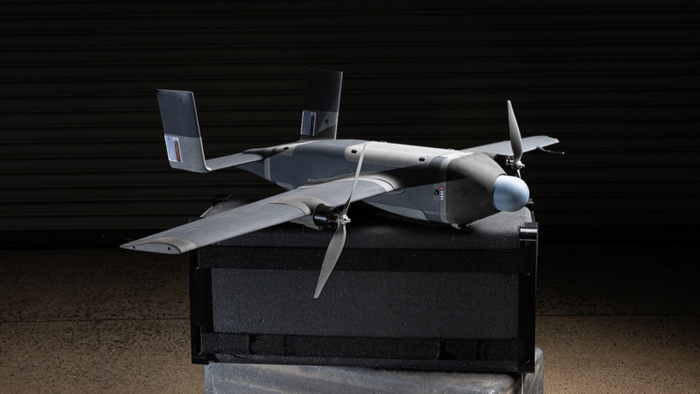
Our focus on the rise of the "war unicorn" theme over the last four months, shaped by technological innovation seen in the war in Ukraine and the conflict in the Middle East, has allowed us, in countless notes, to inform readers very early that 2030s warfare has already arrived. In fact, hyperinnovation in Ukraine, now the world's AI weapons laboratory, is what pulled forward these extremely advanced, low-cost weaponry.Modern battlefields are now defined by low-cost robotics, whether on the ground, at sea, or in the air, as well as drones, other autonomous systems, and AI-enabled kill chains. Meanwhile, the Department of War's shift toward funding and procuring from defense startups, rather than solely from big defense primes, thanks to DOGE, has accelerated the U.S.'s ability to spur a boom in the defense universe as President Trump's broader war economy ramps up, mainly for stockpiling reasons. Let's not forget our view in late January, when nearly all of Wall Street was misguided on alleged water and climate threats from data centers, completely missed that with hundreds of billions of dollars in data center buildouts by hyperscalers, now around $800 billion this fiscal year, these facilities had, and still have, a missing layer of air defense against FPVs and fiber-optic one-way attack drones.We warned at the time:Explosion In AI Data Center Buildouts Will Demand Next-Gen Counter-Drone SecurityThen noted:"Detect, Track, Neutralize": Autonomous Turrets With Low-Cost Firepower To Counter Kamikaze DronesIn fact, it only took two Iranian attacks targeting Gulf-area data centers with Shahed drones to become a major wake-up call to Wall Street and private equity about the urgency of understanding this threat and how to capitalize.More importantly, it triggered the urgent need for private equity to begin raising capital for war unicorns that will eventually become major suppliers of interceptors, counter-UAS products, and much more, because much of America's critical infrastructure, data centers, and the list goes on and on, remains entirely exposed to FPVs.We understand that multiple private equity funds, each with billions of dollars in AUM, have sent personnel to Ukraine to assess the investment landscape across FPV drone, counter-drone, passive acoustic threat detection, and battlefield AI companies. That alone underscores how quickly the "war unicorn" theme is being adopted on Wall Street, one set to surge in the coming quarters.Going mainstream on Wall Street: JPM Call With Axon Reveals Race To Fortify U.S. Data Centers Against Kamikaze Drone SwarmsGoldman Sits Down With Anduril As 'War Unicorns' Reshape Defense TechThis leaves us with the innovation question: the "evolve or die" moment now confronting America's military-industrial complex. The focus must shift away from high-cost weapon systems built around titanium, carbon fiber, and decade-long procurement cycles, and back toward what made the U.S. an industrial powerhouse during World War II: the ability to mass-produce low-cost weapons at scale, rapidly, repeatedly, and in volumes that overwhelm foreign adversaries.Answering the innovation question above, deep inside America's drone industry is California-based DZYNE Technologies, a company building one-way attack drones from the same material used in beer coolers.The wings are formed by steam chest molding. That's the process behind beer coolers, bike helmets, and the packaging your TV arrived in. Hot steam, expanded foam, a mold, done. No autoclaves. No exotic supply chain. No aerospace machinists charging aerospace rates."We joke that it's a flying beer cooler, and honestly, we lean into it," said CEO Matt McCue. "If your airframe costs almost nothing and pours out of a mold by the thousands, you've solved the problem Ukraine has been screaming about for three years."That problem is mass: cheap, expendable, attritable mass. Every report from the Black Sea to the Red Sea to the Hormuz chokepoint points to the same conclusion: the side that can afford to lose drones wins. Firing a $2 million missile at a $1,000 drone is a losing trade.DZYNE's Blitz drone fits in the standard-issue rucksack. It assembles in under two minutes. A new operator is mission-ready in a couple of hours. Range runs 80 to 150 kilometers, with swappable payloads for surveillance or jamming, or it can be easily converted into a one-way attack drone.Notice what Blitz is not. It's not one of those quadcopters filling your X feed from Ukraine. Those are real and they work, and nobody will say otherwise. But they're one layer of a bigger stack. Multi-rotors burn through batteries just to stay airborne, which makes them deadly in a close fight and spend a lot of energy before the fight gets deep.A fixed wing gets its lift for free, so Blitz extends the same expendable logic out to 150 kilometers, loiters for hours instead of minutes, hauls heavier payloads, and keeps flying in wind that grounds FPVs. Picture the FPVs owning the last mile while waves of cheap fixed wings seek targets, jam radars, and strike staging areas far behind it. That's not a rivalry. That's a kill chain.Blitzing is a bet that pressure is cheaper than coverage. NFL football fans understand that, and so does every air-defense crew that has watched a million-dollar interceptor chase a cheap Iranian or Russian drone. That brings us to DZYNE's BlitzBox, a nondescript shipping-container system designed to autonomously launch up to 100 Blitz drones into the air for a coordinated swarming raid.The American company Dzyne has introduced the BlitzBox system, a container for covertly launching a swarm of attack drones. On the outside, it looks like an ordinary cargo box, but inside, it can hold up to 100 Blitz drones, ready to launch in minutes.#DroneWars #UAS #UAV pic.twitter.com/w9aRaZYrCZ
"Flying Beer Cooler": Pentagon's Next Kamikaze Drone Ushers In Era Of Cheap Mass-Produced Airpower
"If your airframe costs almost nothing and pours out of a mold by the thousands, you've solved the problem Ukraine has been screaming about for three years."
1,044 words~5 min read