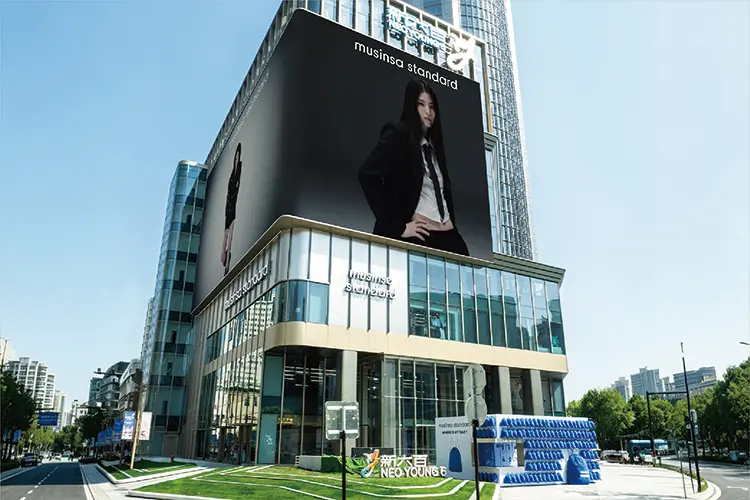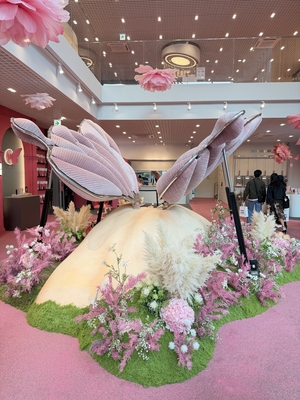
Medicube Seongsu (Hong Yoo/The Korea Herald) Once an industrial district of flour mills and handmade shoe shops, Seongsu in eastern Seoul has become one of the city's most closely watched neighborhoods for K-fashion and beauty. Factory buildings that once turned out footwear now house design studios and flagship stores, and the area draws a steady mix of foreign visitors and young locals.The shift picked up in the 2010s, when repurposed warehouses such as Daelim Changgo were reborn as cafes and cultural spaces. It accelerated after the pandemic, as brands from Dior to Tamburins turned Seongsu into a testing ground for pop-ups and experiential retail. Today, the district reads like an open-air showroom for brands that are hard to find anywhere else."Unlike traditional shopping districts like Myeongdong or Gangnam, Seongsu offers a differentiated shopping experience with many emerging designer brands and local boutiques. Foreign tourists are actively seeking brands that can only be found in Korea, making it a must-visit shopping destination," an industry insider said.Most of the buzziest stops are lined up along Yeonmujang-gil, the street that functions as Seongsu's main shopping artery. To find it, take Line 2 to Seongsu Station, renamed Seongsu (Musinsa) Station, leave through Exit 4, turn left and walk straight down. What follows is a loose walking order.Medicube SeongsuFirst up for K-beauty fans is Medicube, the skincare and home-device label operated by beauty-tech company APR. Its Seongsu flagship occupies two floors under a pink fairy concept, with a large pink butterfly sculpture greeting shoppers at the center of the space.This is the place to try Medicube's home beauty devices in person before buying. Because the testers are stocked in quantity, there is rarely a wait to try the popular Booster Pro and other Age-R devices, and staff run customization events for shoppers who want to personalize their own. Limited and collaboration editions are on display alongside the full skincare range, and there is a photo booth for keepsake shots. Tax refunds are handled on-site. Double Lovers flagship store in Seongsu (Hong Yoo/The Korea Herald) Double LoversA short walk on is Double Lovers, part of the wave of homegrown eyewear labels that have made the area Korea's unofficial launchpad for glasses. Founded in 2015 by street-fashion-editor-turned-creative-director Jang Suk-jong, the brand opened a three-story Seongsu flagship last year.The store leans into its heart motif, with a large heart sculpture anchoring a gallery-like interior. Frames are laid out within easy reach, and staff hold back rather than hover, leaving shoppers to browse and try on freely. Prices run well below the neighborhood's marquee eyewear names, at roughly 49,000 to 99,000 won ($31 to $64), and the label offers higher-spec touches such as titanium frames and light-adaptive lenses. For trendy glasses or sunglasses at an accessible price, this is a strong first stop. Ader Error Space Seongsu (Hong Yoo/The Korea Herald) Ader ErrorFurther along is Ader Error, the cult Korean label best known for menswear but also carrying unisex and women's lines. New-collection pieces are displayed at the entrance, with ready-to-wear pieces deeper inside, and the brand's signature electric blue turns up across its logos and labels.Weekends usually mean a wait, a deliberate move to keep the floor uncrowded and the browsing comfortable. In summer, that line is fully in the sun, so bring a parasol or sun protection. Prices are on the higher side, but the label's steady-selling signature T-shirts are a lighter way in and make an easy souvenir. Nyunyu Seongsu (Nyunyu) NyunyuFor accessories that will not dent the budget, Nyunyu is the neighborhood favorite. The fashion-goods select shop grew out of a wholesale-market model, trimming distribution markups to keep prices low. Earrings run around 4,000 won, sleeveless summer tops around 11,000 won, and bags around 16,500 won.The Seongsu store is roomy, with a wide array of colorful beaded pieces, hairpins, hair ties, tanks and plain white tees. It is the place for seasonal, trend-driven items you would rather not splurge on, and it has become a reliable stop for both younger Korean shoppers and foreign visitors. Musinsa Megastore Seongsu (Hong Yoo/The Korea Herald) Musinsa Megastore SeongsuSlightly off Yeonmujang-gil sits the neighborhood's biggest new draw. Musinsa, the country's leading fashion platform, opened Musinsa Megastore Seongsu in April, and the roughly 6,600-square-meter space runs from one basement level to the fourth floor with about 1,000 brands under a single roof.The appeal is efficiency. Most of the popular local labels that Koreans in their 20s and 30s follow, from Glowny to The Barnnet, are gathered here to try on in one place, which cuts both shopping time and the walking between stores.The second floor holds the first offline Musinsa Beauty store, stocking roughly 7,500 items from some 700 brands. It carries celebrity labels not found at Olive Young, including Glyf from K-pop singer Jeon Somi and Two Slash Four from makeup artist Risabae. Musinsa's own makeup brand Whizzy and its color-lens curation platform Ponpish both draw more foreign than domestic buyers, landing among the store's top-selling brands. The fourth-floor Food Garden offers shoppers something to eat with renowned brands such as Fuglen for coffee and Tteoksan for bunsik fare of Korean light meals and snacks."Musinsa Megastore Seongsu is becoming a must-visit destination among tourists to Korea, where they can experience Korean lifestyle ranging from K-fashion and K-beauty to K-food in one place," a Musinsa official said.Beware, weekends get crowded. The layout is dense and the aisles are tight, so travelers who dislike shopping in a crush may want to visit on a weekday. Global-store sign-ups come with a welcome gift, passport verification unlocks an extra discount, and scanning a product's QR code pulls up reviews and details translated into the shopper's language. Haus Nowhere Seoul in Seongsu (Hong Yoo/The Korea Herald) Haus Nowhere SeoulThe showpiece of the Seongsu shopping walk is Haus Nowhere Seoul, the 14-story headquarters and flagship that Iicombined, the company behind Gentle Monster, opened last year. Its first five floors are open to the public, and the spaceship-like building sets the tone before you step inside.The lobby is guarded by a giant, gently breathing dachshund tied to the fragrance house Tamburins. From there, kinetic art and a dystopian, sci-fi mood carry across floors that gather all of Iicombined's brands: Gentle Monster eyewear, Tamburins fragrances, Atiissu headwear, Nuflaat tableware and Nudake, whose fifth-floor teahouse serves surreal desserts.The Gentle Monster floor currently features the brand's 2026 Veggie Collection, which launched on June 5, a line of folding eyewear inspired by the shapes and colors of vegetables. Cartoonish Veggiemon characters fill the space, centered on a broccoli figure and joined by eggplant, radish, mushroom and lotus root, turning the floor into a photo-friendly vegetable garden that introduces the collection's world.A few tips: Book the Nudake Teahouse early at the first-floor kiosk, expect queues and set aside a good chunk of time, since the installations reward slow exploration. Salt bread from Jayeondo Salt Bread Seongsu (Jayeondo Salt Bread) A sweet detourShopping burns through energy, and Yeonmujang-gil has two dessert shops worth the pause.Jayeondo Salt Bread is famous for freshly baked, buttery salt bread. It is the only item on the menu and takeout only. A set of four costs 12,000 won. Each batch is baked fresh six times a day, capped at 7,000 pieces daily, and the bread is best eaten warm, crisp on the outside with melted butter running through the middle. Weekends bring longer lines. Strawberry mochi from Hanjungsun Seongsu (Hanjungsun) Hanjungsun has become a fixture on food-review feeds for its fruit-filled rice cakes, or chapssaltteok, which wrap whole pieces of fresh fruit in soft glutinous rice cake. The lineup runs from fresh strawberry to whole tangerine, mango and pineapple, along with a Dubai-chocolate-style version. The newer yogurt varieties, tangy and sweet against the fruit, make a good mid-shopping snack. Each piece is individually wrapped in colorful hanji, or traditional Korean paper, and styled like a fortune pouch, which makes them an easy gift. It is takeout only, and the rice cakes taste best chilled, so if they are not for eating right away, buy them at the end of the day.Go-go-ssing: Explore Korea is The Korea Herald's guide to lesser-known destinations, local stories and distinctive travel experiences. -- Ed.
The only Seongsu shopping guide you need
Once an industrial district of flour mills and handmade shoe shops, Seongsu in eastern Seoul has become one of the city's most closely watched neighborhoods for
1,362 words~6 min read