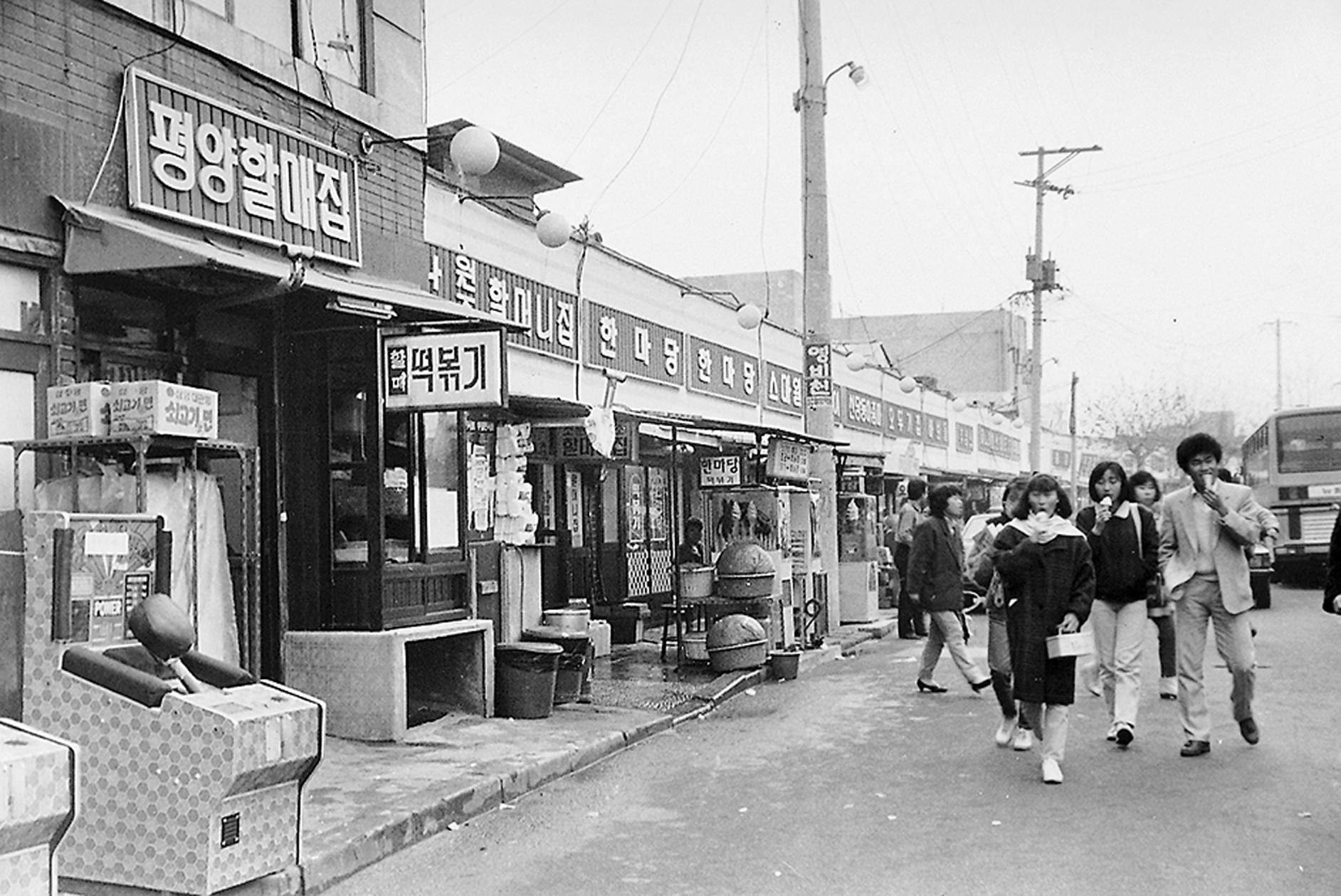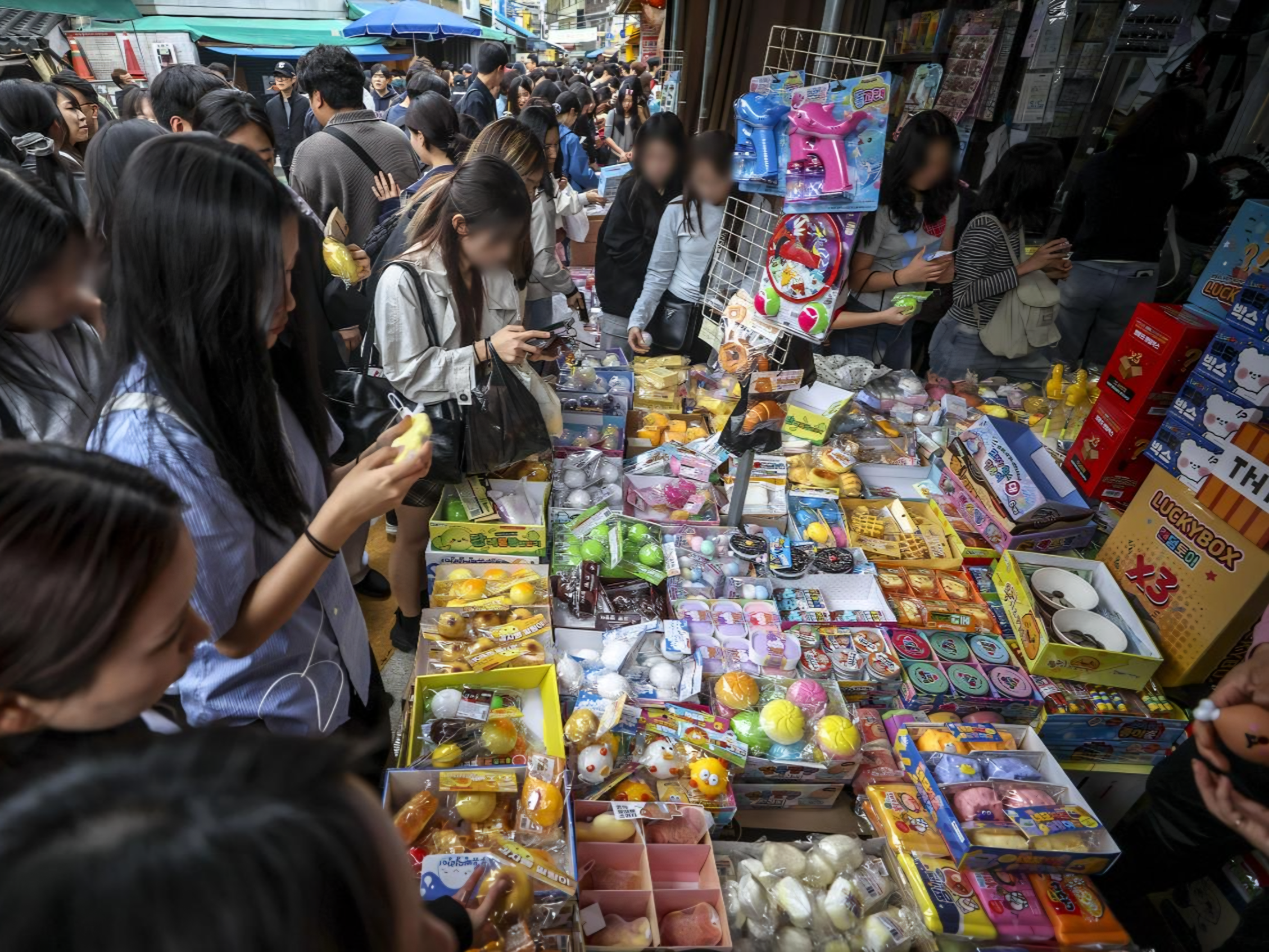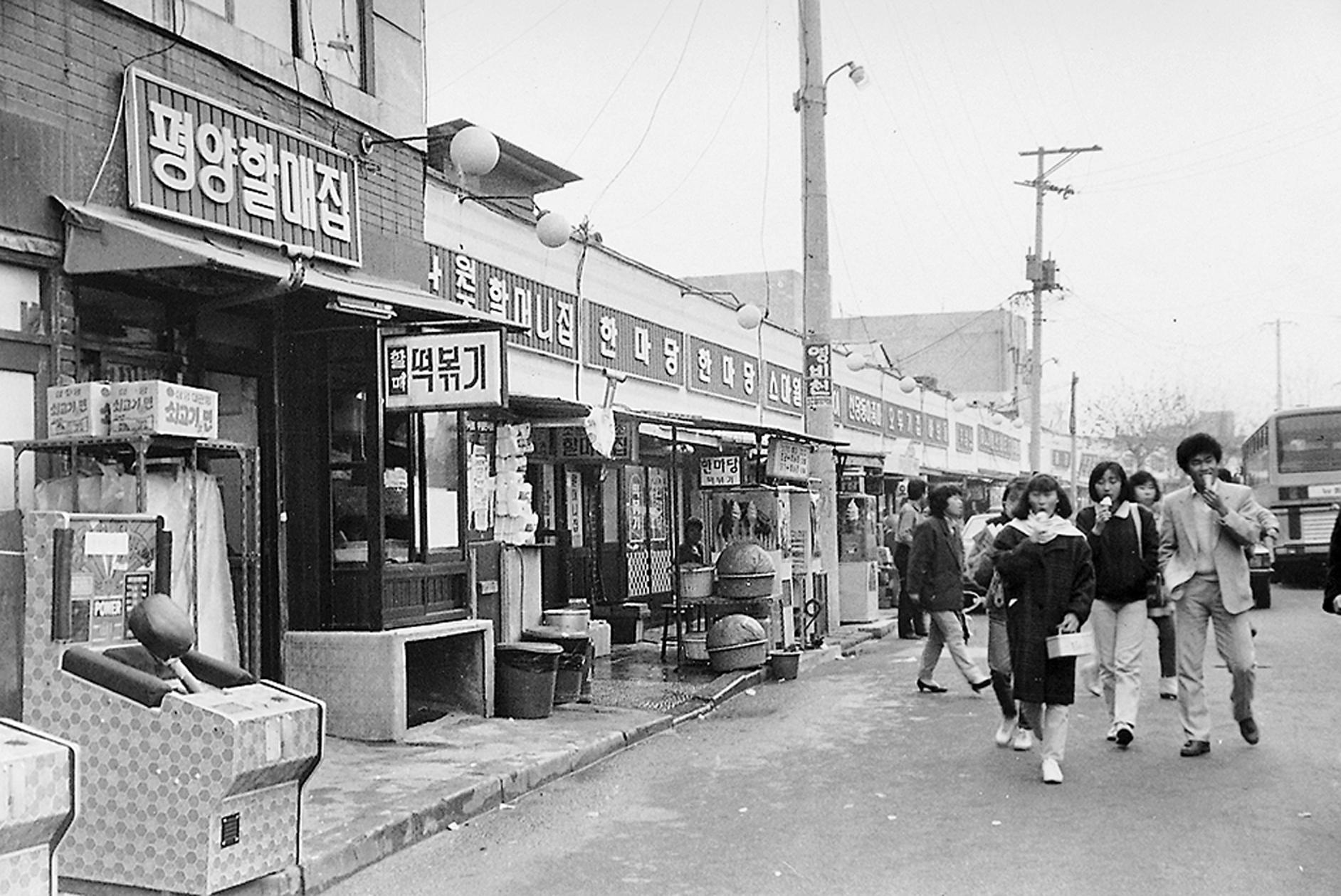
Young pedestrians stroll past the tteokbokki stalls that laid the groundwork for the neighborhood's legendary food alley during a bustling afternoon in Sindang-dong during the late 1970s. Yonhap
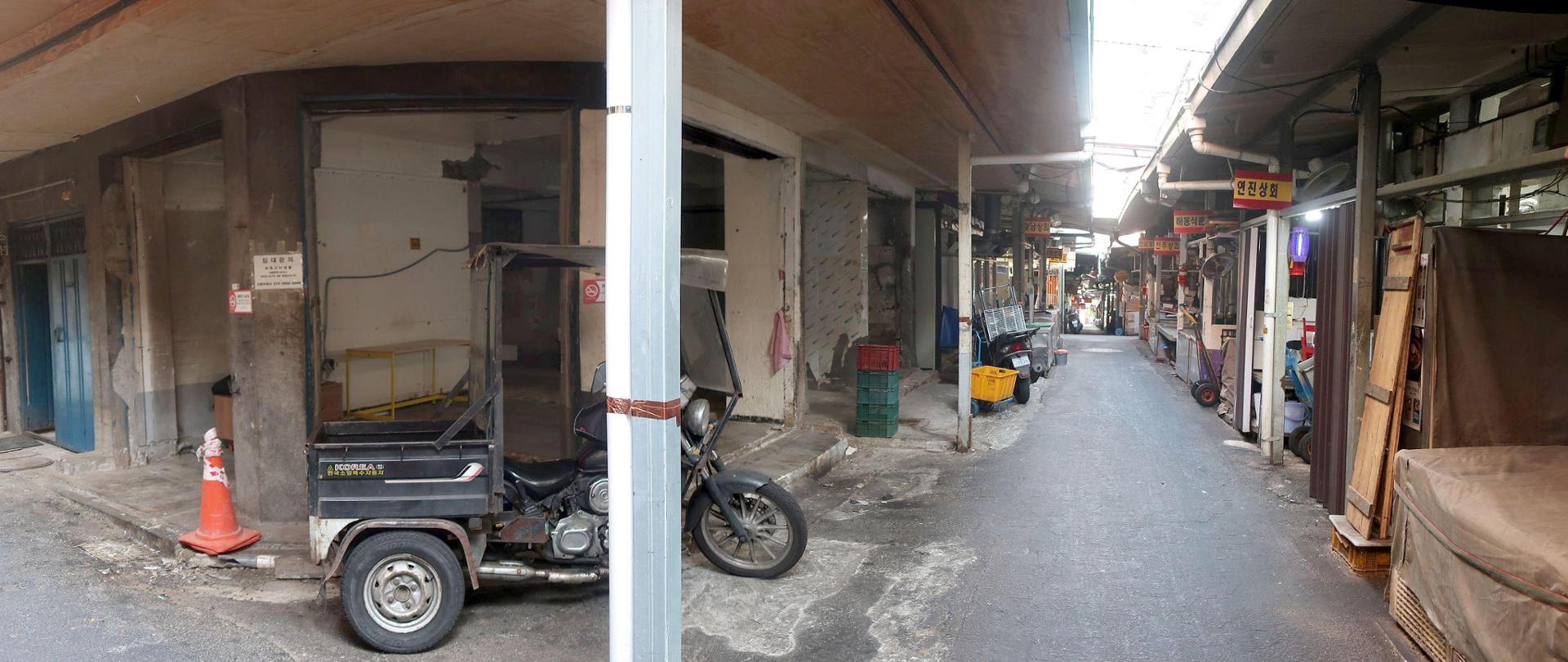
To the casual visitor to central Seoul, the neighborhood of Sindang-dong is both the birthplace of one of the most recognizable styles of Korea’s iconic tteokbokki (rice cakes in sweet and spicy sauce) and more recently, a buzzing enclave of minimalist espresso bars, boundary-pushing design studios and musical venues, giving the area the affectionate nickname of “hip-dang-dong” among young Seoulites.
But beneath this contemporary veneer lies a densely layered urban history that spans centuries of transformation.
The Seoul Museum of History published a comprehensive cultural survey report Tuesday, titled “Sindang-dong: Shin, Shin, Hip,” illuminating how a village once dedicated to comforting the dead has evolved into one of the country's most dynamic examples of modern urbanism.
The report structures the neighborhood's complex trajectory through three distinct linguistic and cultural eras.