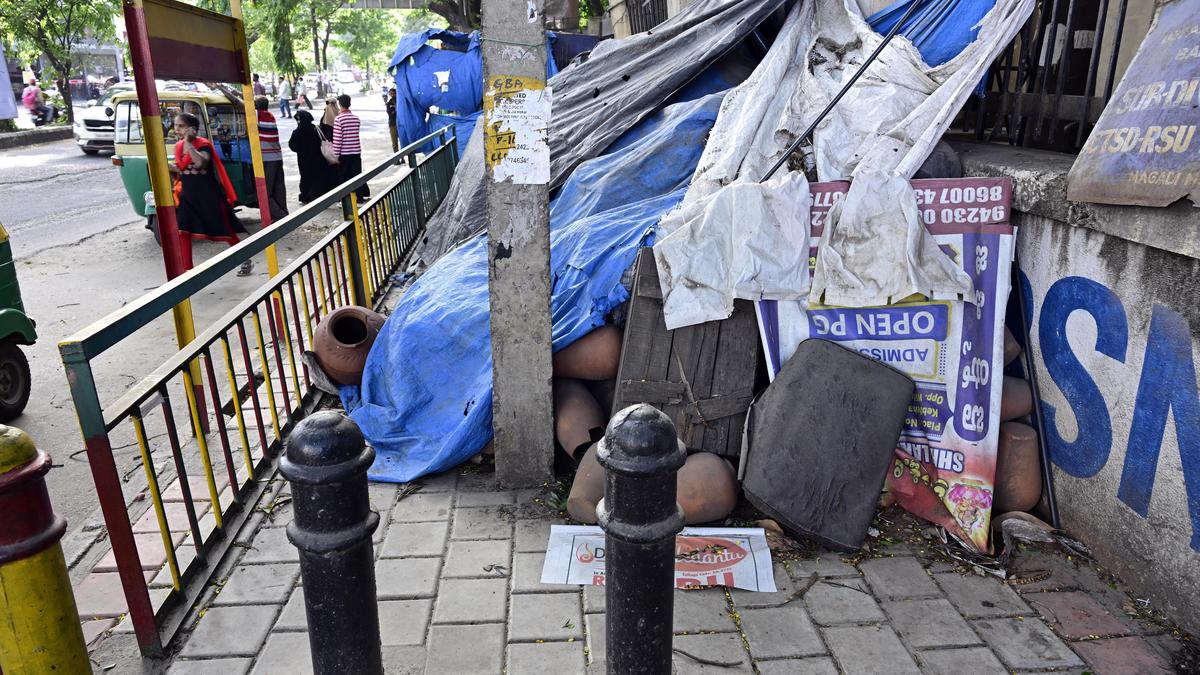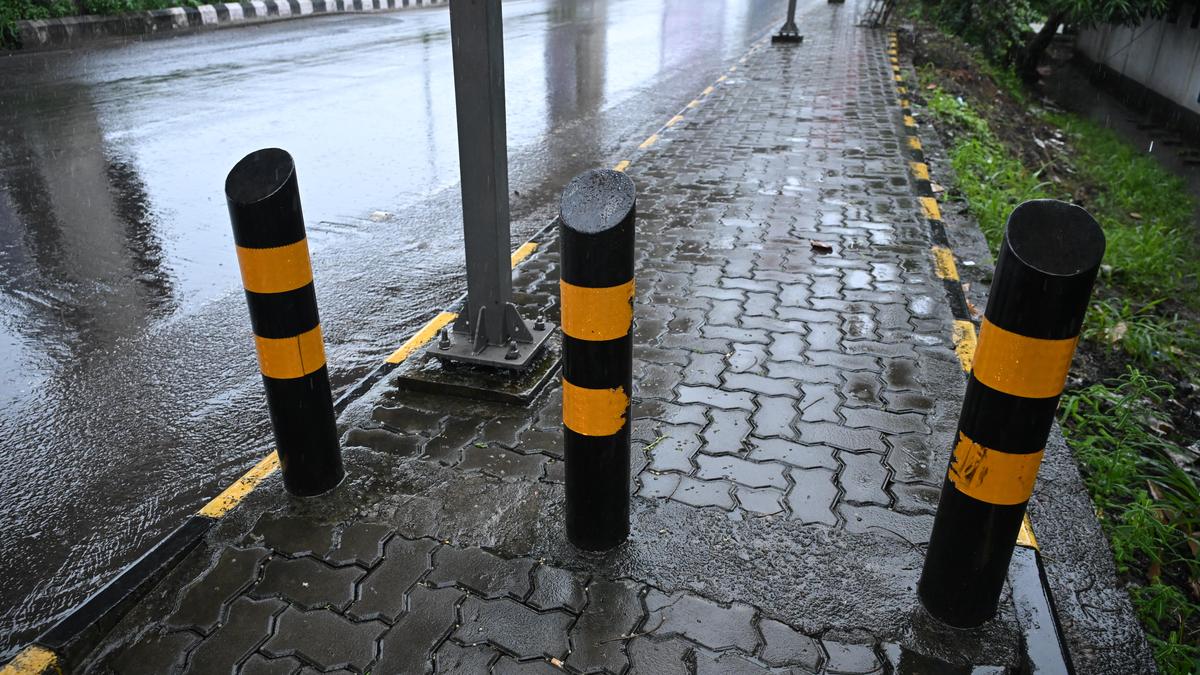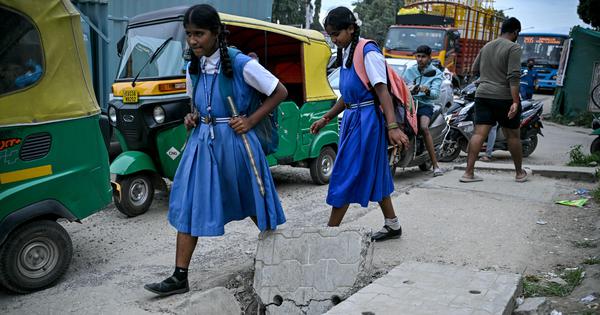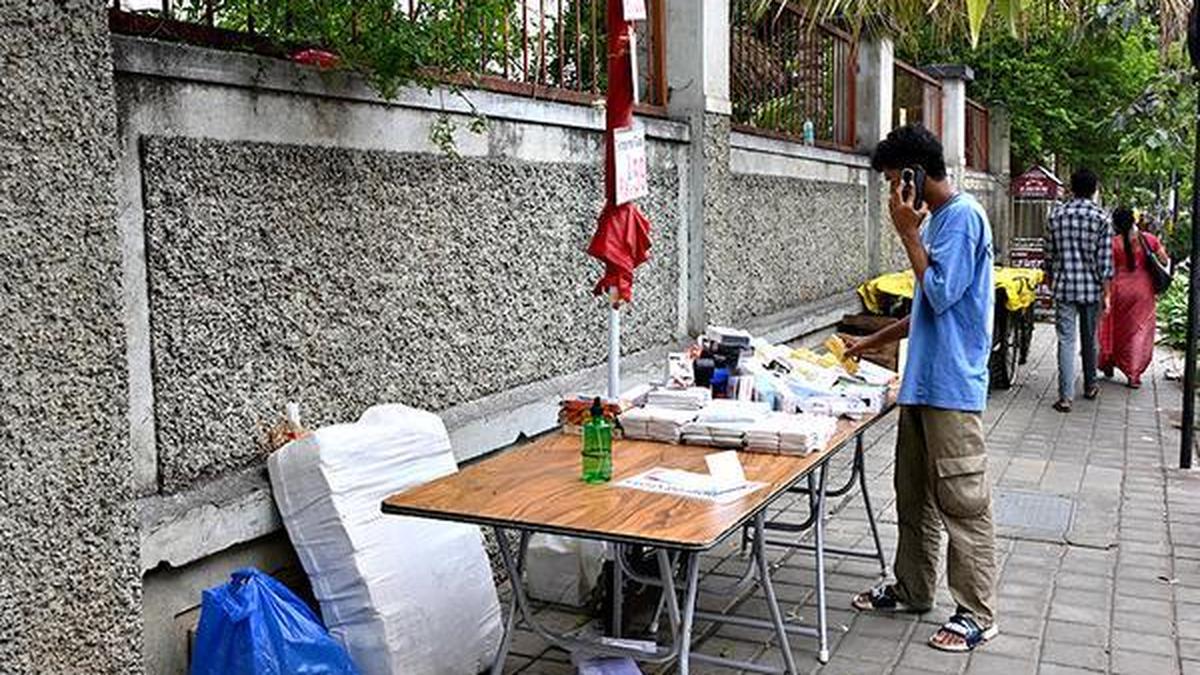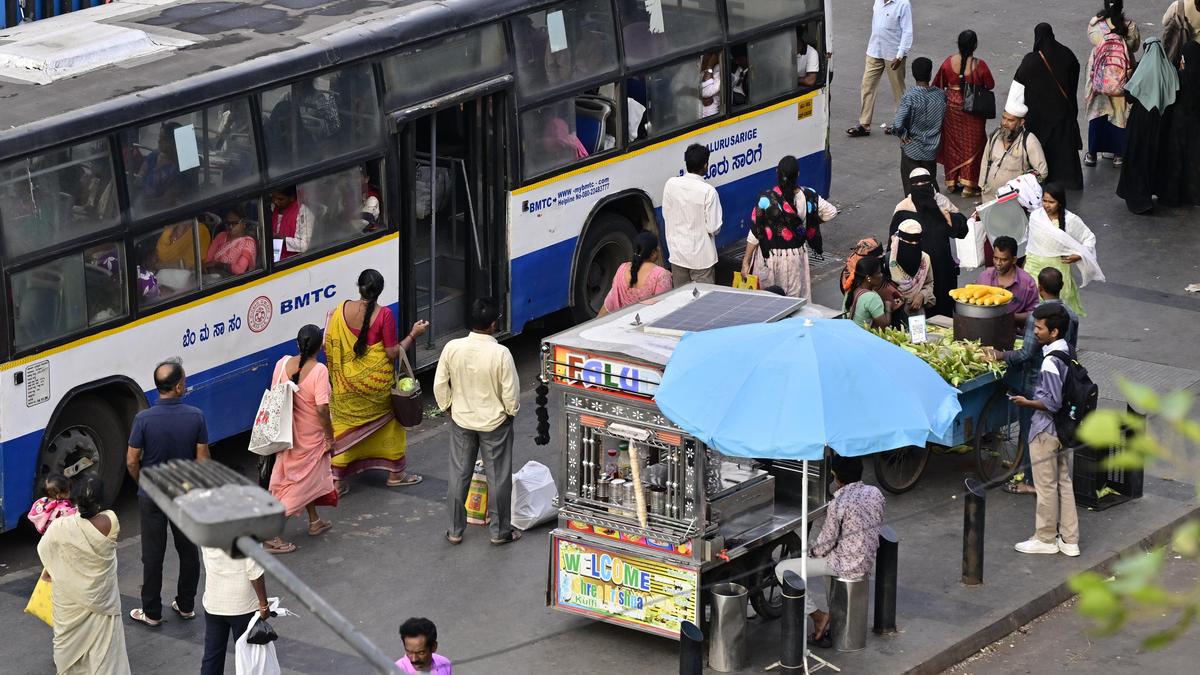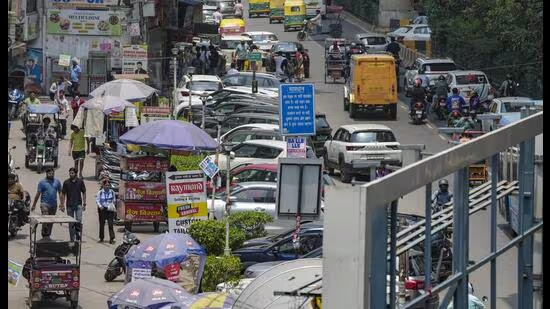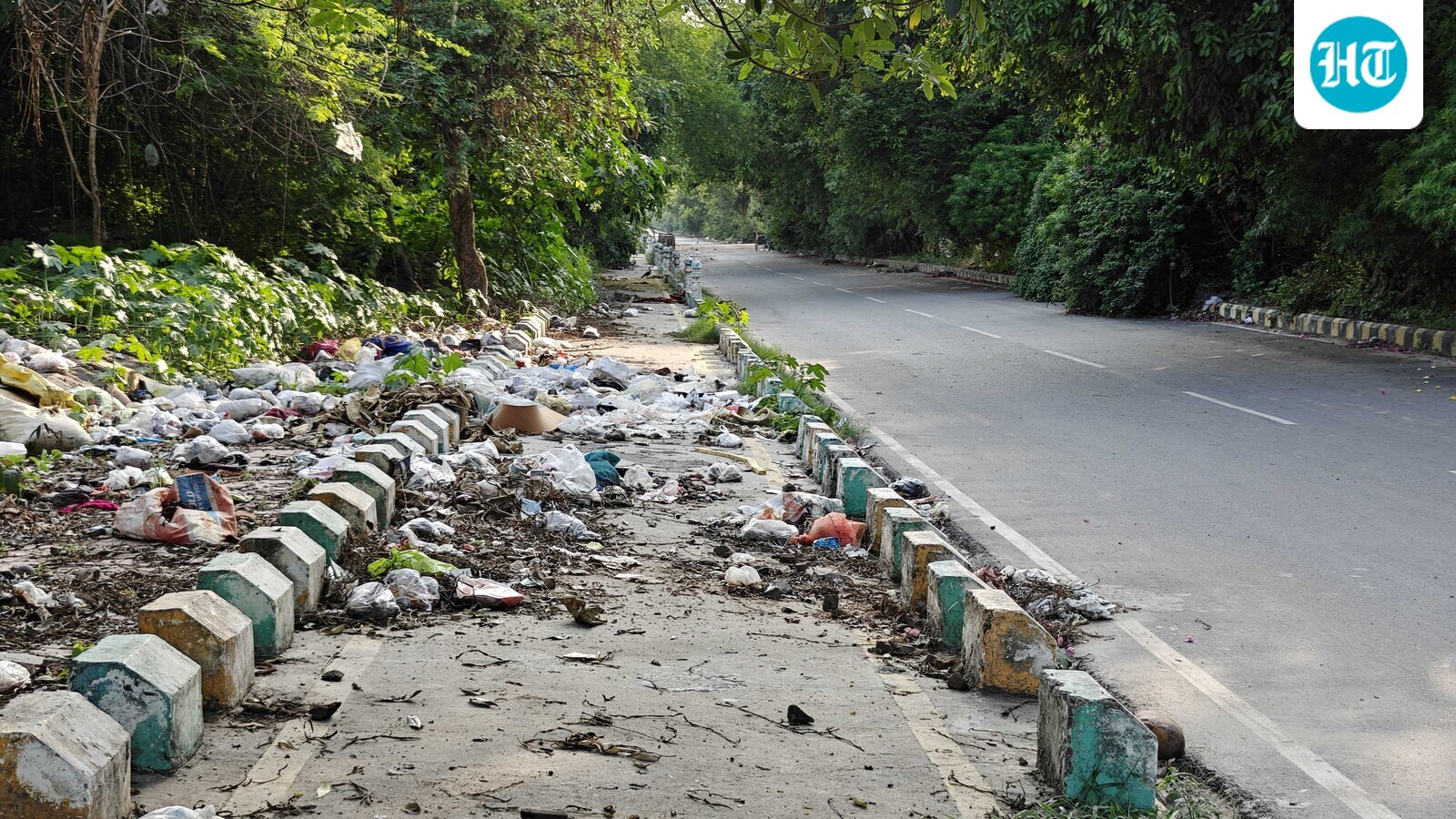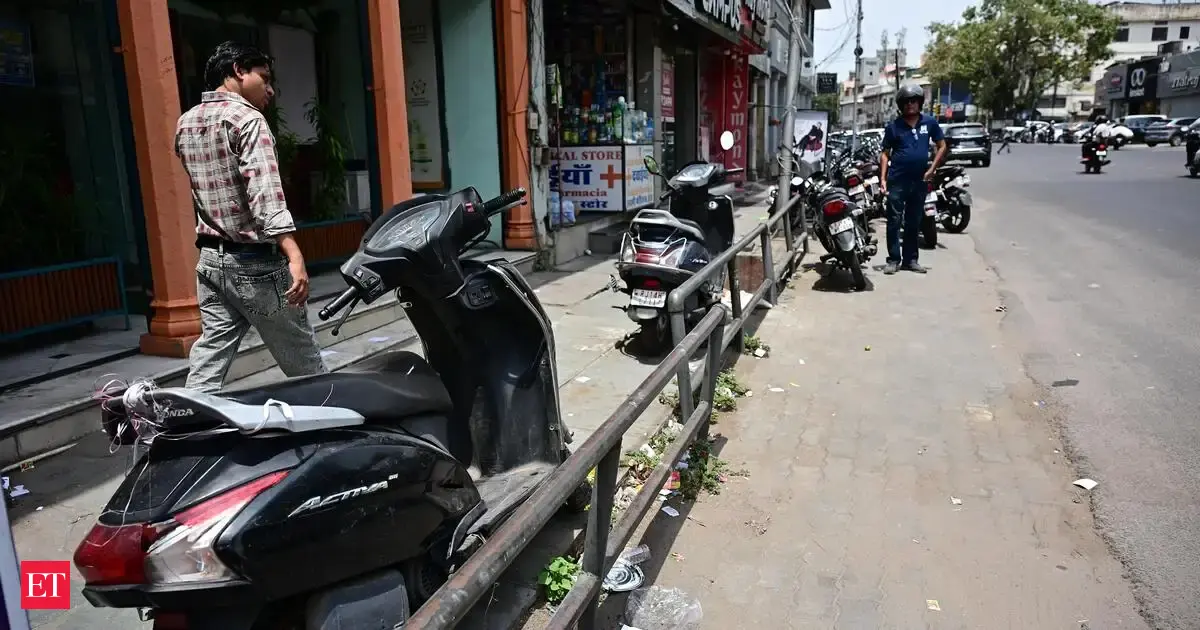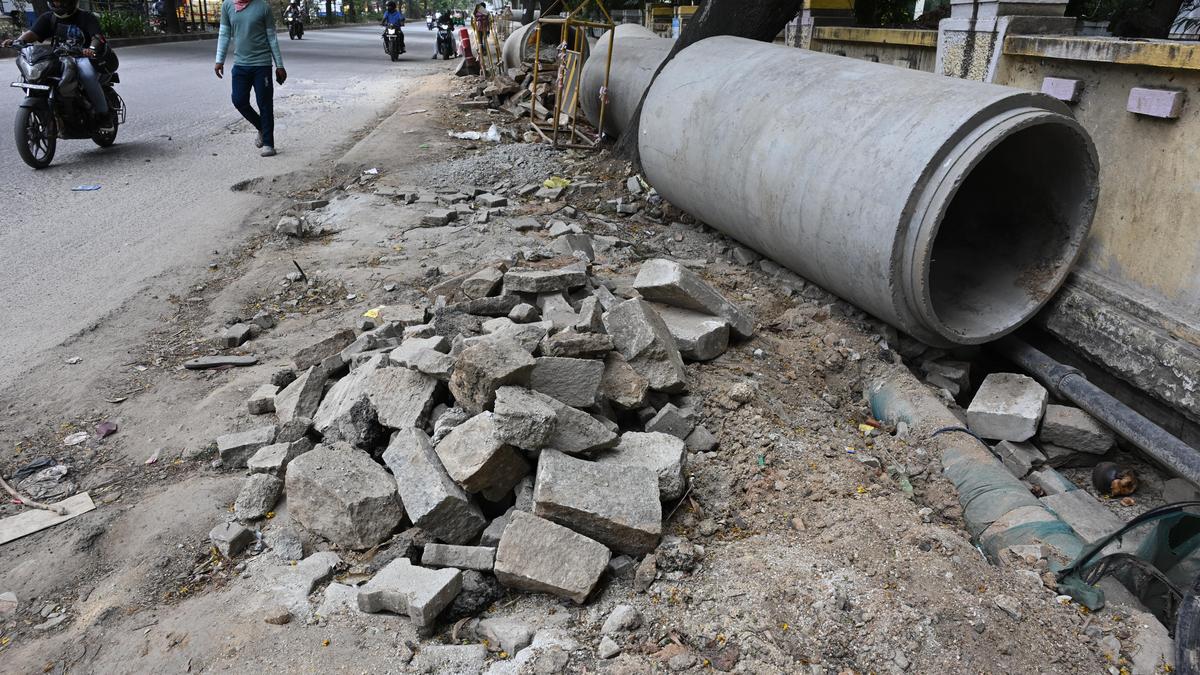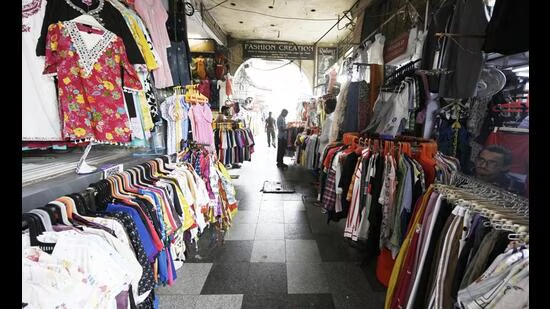
LUCKNOW Days after the Supreme Court declared the right to walk on safe and demarcated footpaths a fundamental right, an on-ground survey by Hindustan Times has found that pedestrians in Lucknow continue to negotiate a maze of encroachments, parked vehicles, broken pavements and civic neglect even in some of the city’s busiest commercial and institutional areas.Pedestrian walkways occupied by clothes vendors in Hazratganj (below), leaving little space oom to walk, and (above) the actual space available for walking. (Deepak Gupta/HT Photo)The survey, conducted as part of HT’s campaign on pedestrian rights, covered Hazratganj, Civil Hospital, Indira Nagar, Kapoorthala, Aliganj and Lalbagh. It found that in many places, footpaths either do not exist, are discontinuous or have been rendered unusable due to encroachments and poor maintenance, forcing pedestrians to step onto busy roads.The Supreme Court declared that every citizen has a fundamental right to walk on a demarcated footpath, holding that this right is primary and takes precedence over the movement of motorised vehicles, as it delivered a far-reaching judgment that could reshape urban planning and road design across the country.The court also held that urban local bodies and civic authorities have a corresponding duty to construct, maintain and protect pedestrian infrastructure.Ironically, the heart of Lucknow and also a premier shopping destination - Hazratganj - often promoted as one of the city’s most walkable public spaces, offers little by way of an uninterrupted pedestrian experience.A walk across the market revealed that it is nearly impossible for a pedestrian to traverse the entire stretch using only the footpath. At almost every few metres, walkers encounter an obstacle that forces them either to change direction or descend onto the carriageway.Large permanent structures occupy portions of the walkway at many locations. Elsewhere, motorcycles have taken over sections of the footpath despite parking restrictions, while vendors have spread their stalls across pedestrian space. The result is a fragmented walking corridor where continuity is repeatedly broken.At one location within the market, a permanent structure occupies almost the entire width of the footpath, reducing the available walking space to a narrow passage. During evening hours, when Hazratganj witnesses heavy footfall, the bottleneck becomes particularly difficult for pedestrians, many of whom are forced to spill onto the road.Another irony is visible outside the office of the Divisional Railway Manager, Northern Railway. Although the stretch is designated a no-parking zone, the footpath itself has effectively become a parking bay, occupied by vehicles instead of pedestrians.Maintenance of pedestrian infrastructure is equally poor across several stretches. At some places, garbage has been dumped directly on the walkway. Elsewhere, broken tiles and damaged pavement leave no usable surface, forcing people to walk alongside moving traffic.One of the most prominent obstructions was found immediately outside Gate no 1 of the Hazratganj Metro station. Commuters exiting the station are greeted by a large cemented structure standing almost in the middle of the footpath. The remaining space has gradually evolved into an informal vending zone, leaving only a narrow strip for people to pass through.Outside Civil Hospital, the situation is no different. The recently developed pedestrian pathway running along the roadside has lost much of its intended purpose as vendors and parked vehicles occupy substantial portions of the walkway. At several places, makeshift shops have become semi-permanent establishments, leaving patients, attendants and visitors with no option but to walk on the road.In the area particularly around Munshipulia, pedestrian infrastructure exists only in fragments. Several stretches have isolated patches of footpath, while others have none at all, forcing pedestrians to alternate between pavement and roadway.Even near Kapoorthala market, footpaths have largely been taken over by parked vehicles and roadside vendors. During evening peak hours, even designated no-parking zones witness rows of parked vehicles, reducing pedestrian space further and pushing walkers into fast-moving traffic.In Aliganj, the challenge is different. Narrow roads leave little scope for constructing continuous footpaths. Similar conditions prevail in parts of Lalbagh and adjoining localities, where road geometry and years of unplanned development have left pedestrians without dedicated walking infrastructure.Urban planners have long argued that footpaths are not merely an urban amenity but an essential component of safe mobility. However, the HT survey indicates that pedestrian infrastructure continues to receive lower priority than vehicle movement, with civic agencies struggling to protect even existing walkways from encroachments and misuse.
Little room for walkers: Vendors and vehicles hijack footpaths
A survey across Ganj and other key localities in Lucknow finds broken walkways, permanent structures, vendors and vehicles leaving pedestrians with very little space to walk
714 words~3 min read