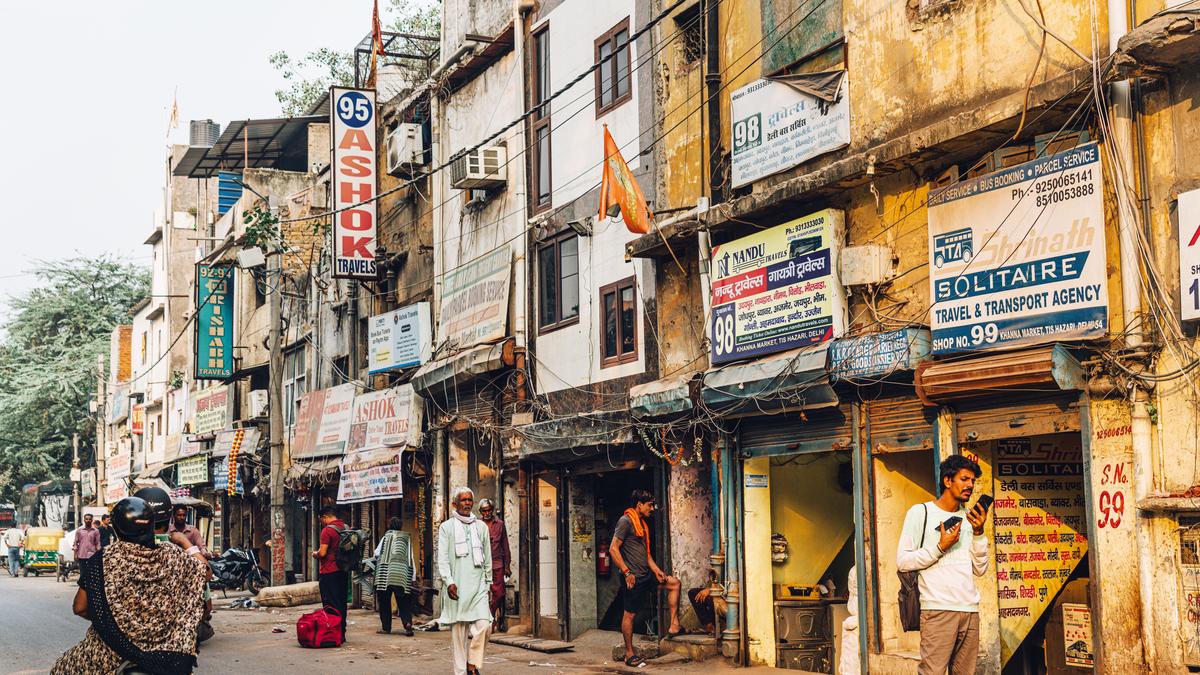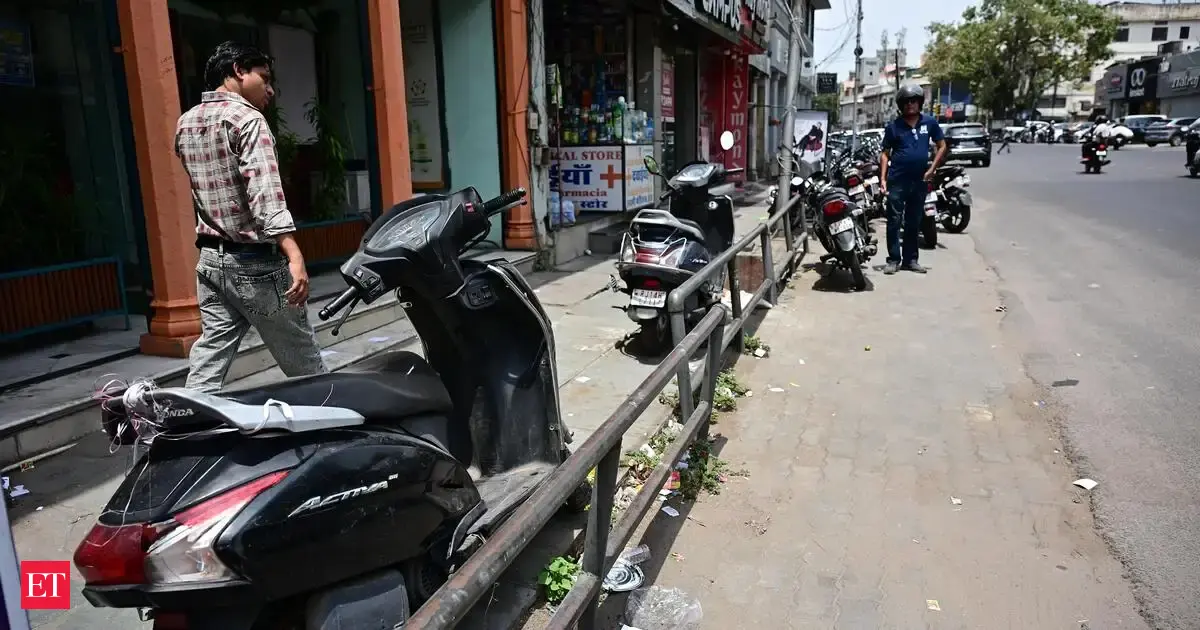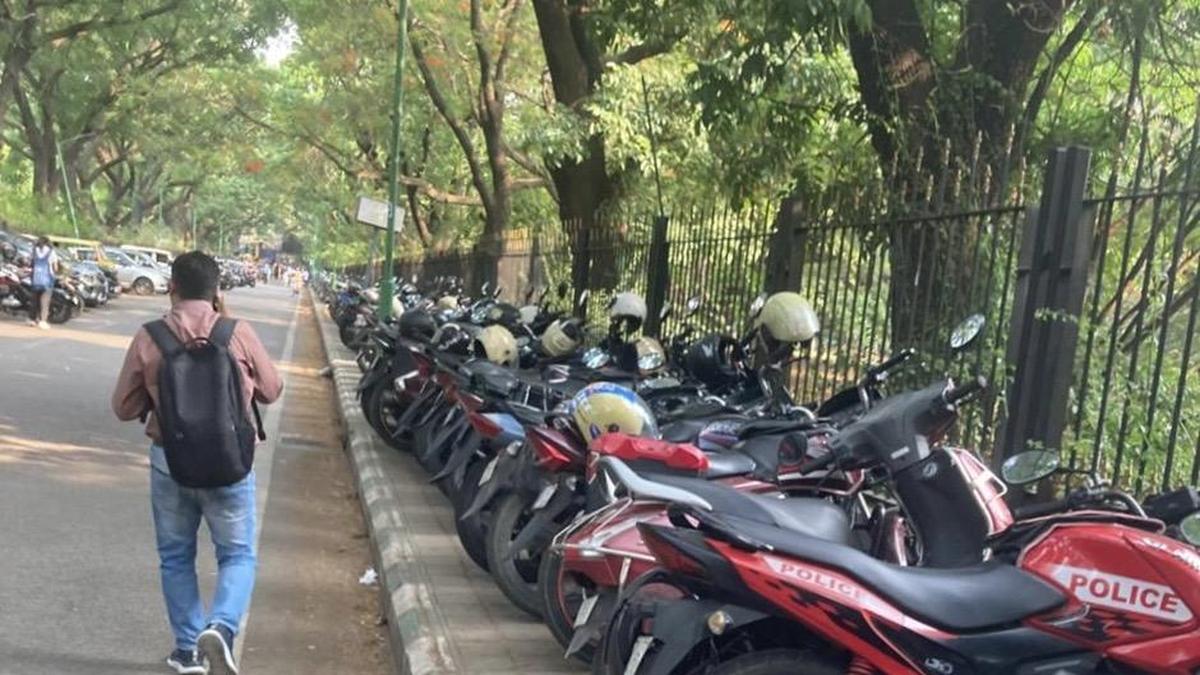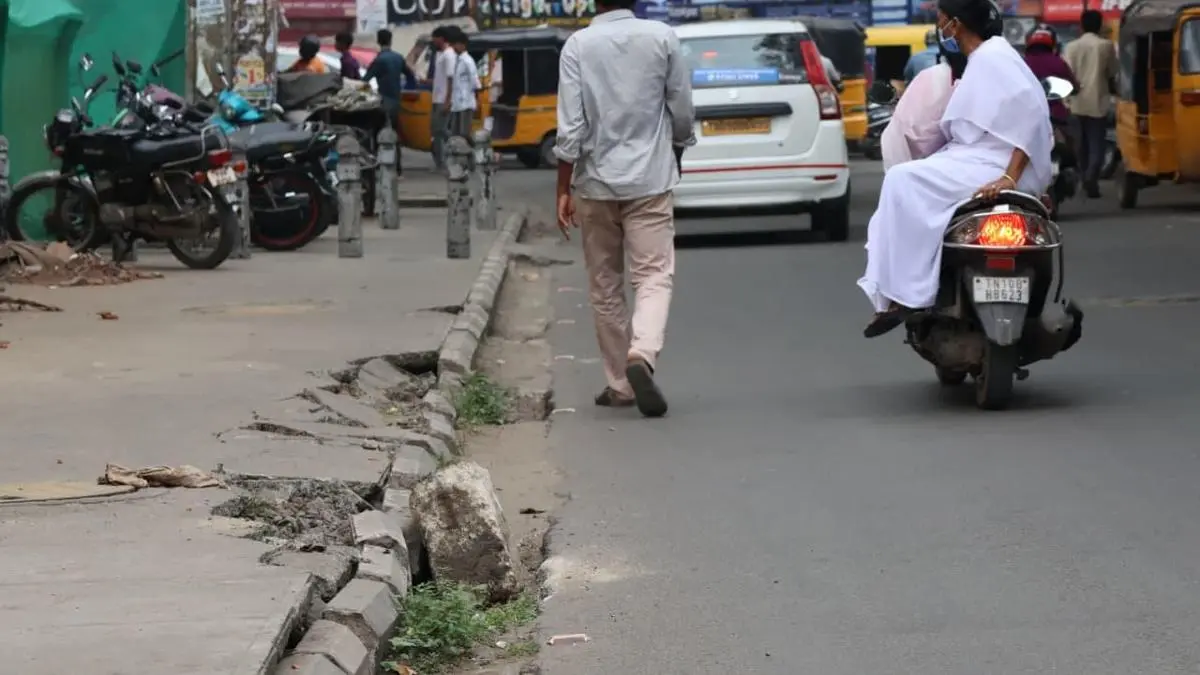
Experts say the poor state of footpaths reflects decades of prioritising vehicles over pedestrians.
| Photo Credit:
Umesh Kumar V
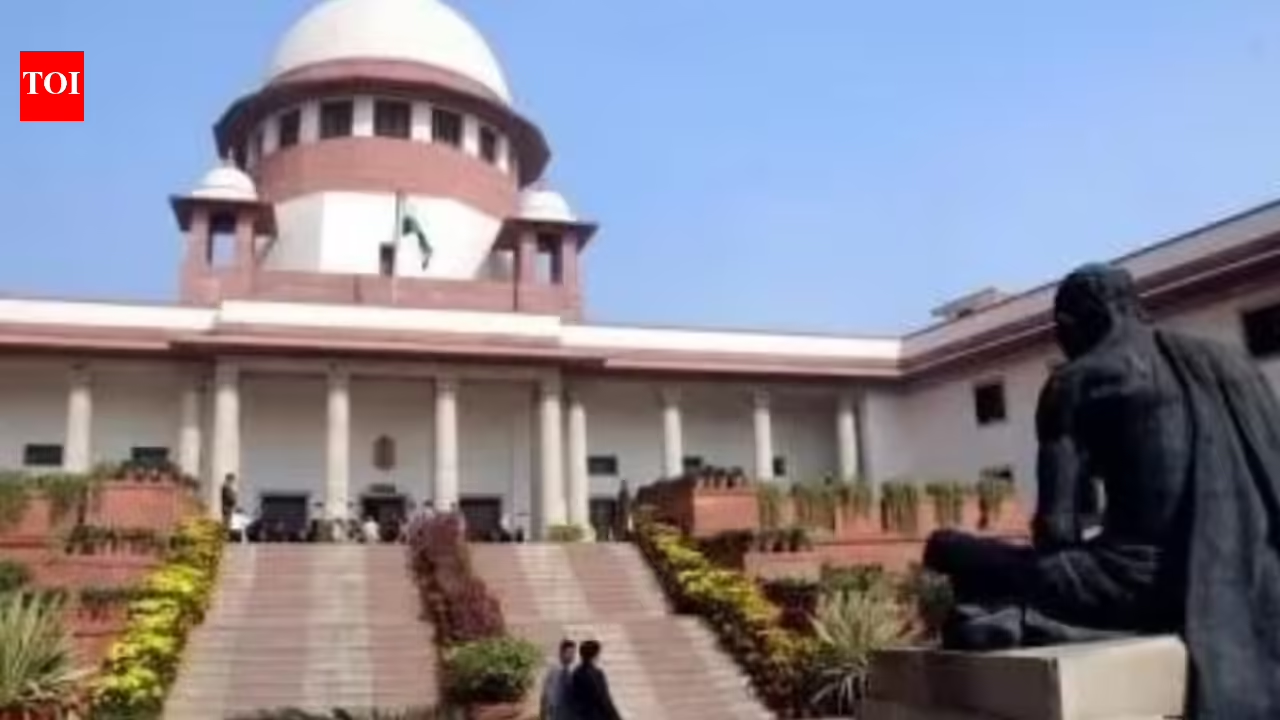
The Supreme Court’s recent judgment declaring access to well-maintained footpaths a fundamental right has brought renewed attention to India’s pedestrian infrastructure.In its June 19 ruling, the Court held that the freedom to walk on demarcated footpaths forms part of the right to life under Article 21 and should take priority over movement by motorised vehicles.Yet data from Indian cities suggest that the reality on the ground remains far removed from that vision.Data from the Council for Active Mobility show that only 9-20 per cent of footpaths in major Indian cities comply with official standards. Delhi, despite having the country’s largest footpath network at 4,200 km, has only 18 per cent compliant footpaths. Mumbai fares worse at 12 per cent, while Kanpur records the lowest compliance at 9 per cent.The findings are particularly striking because walking remains a major mode of transport. Around 34 per cent of all trips in Kolkata are made on foot, followed by Chennai at 33 per cent, and Mumbai and Indore at 31 per cent each.Vehicles over pedestriansRoad safety data paint an equally concerning picture. Pedestrians and cyclists account for more than half of all road fatalities across the cities analysed, ranging from 56 per cent in Kanpur to 64 per cent in Chennai and Indore.Nationally, pedestrian deaths have risen sharply over the past decade. According to data cited in India’s Road Safety Roadmap whitepaper by Road Safety Network, fatalities among pedestrians increased from 15,746 in 2016 to 35,221 in 2023, a rise of 124 per cent.Experts say the poor state of footpaths reflects decades of prioritising vehicles over pedestrians.“Everybody is looking at their own convenience- corporations, authorities, and road users. The broader issue of pedestrian safety is ignored,” said Dr Kumar Rakshe, Trustee, UnM Foundation (India...Walk Right).He argues that pedestrian space is often sacrificed for motor vehicles. “The way vehicles are increasing on the roads, corporations are removing footpaths so that people can park. People think roads belong to them because they pay for them,” he said.Low walkabilityAccording to Neural City’s State of Indian Streets 2026 ranking, no surveyed city crossed the halfway mark on walkability. Gurgaon, the highest-ranked city, scored 49 out of 100, while Delhi scored 46, and Mumbai 44.3.For Rakshe, the Supreme Court’s intervention itself highlights the scale of the problem. “We are talking about moon missions and satellites, and yet we are still discussing whether people should have space to walk,” he said.The judgement gives constitutional recognition to a right long taken for granted. But experts caution that safer streets will require more than just better infrastructure. Alongside continuous and obstruction-free footpaths, they point to the need for greater public awareness of pedestrian safety norms, including using footpaths where available, and walking facing oncoming traffic when footpaths are absent.Published on June 24, 2026