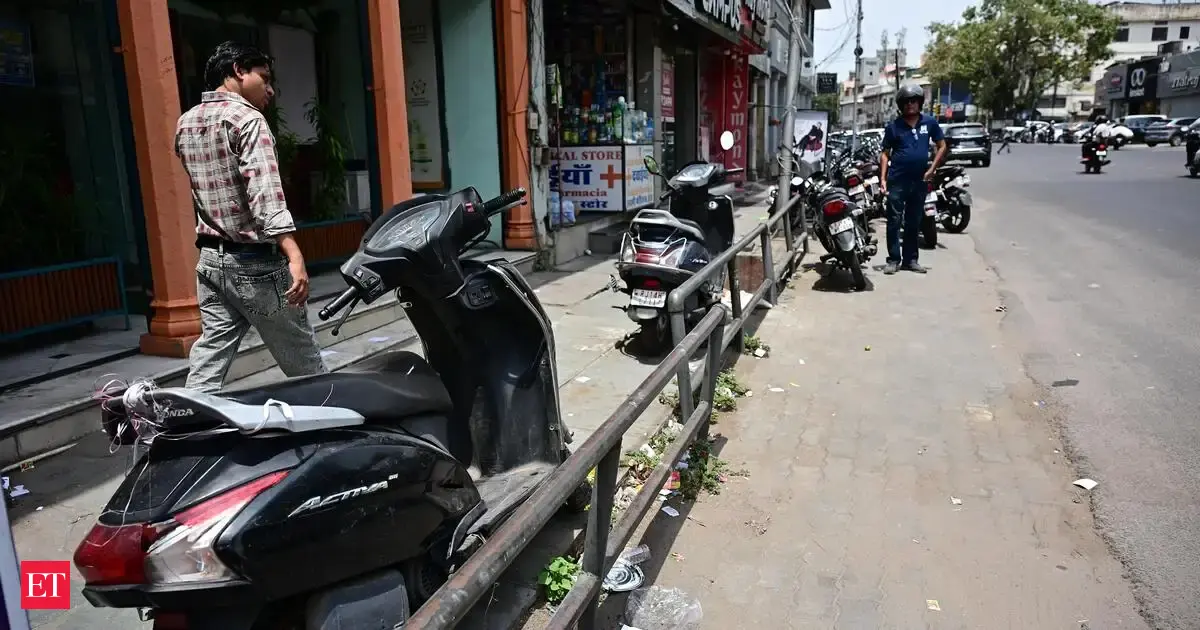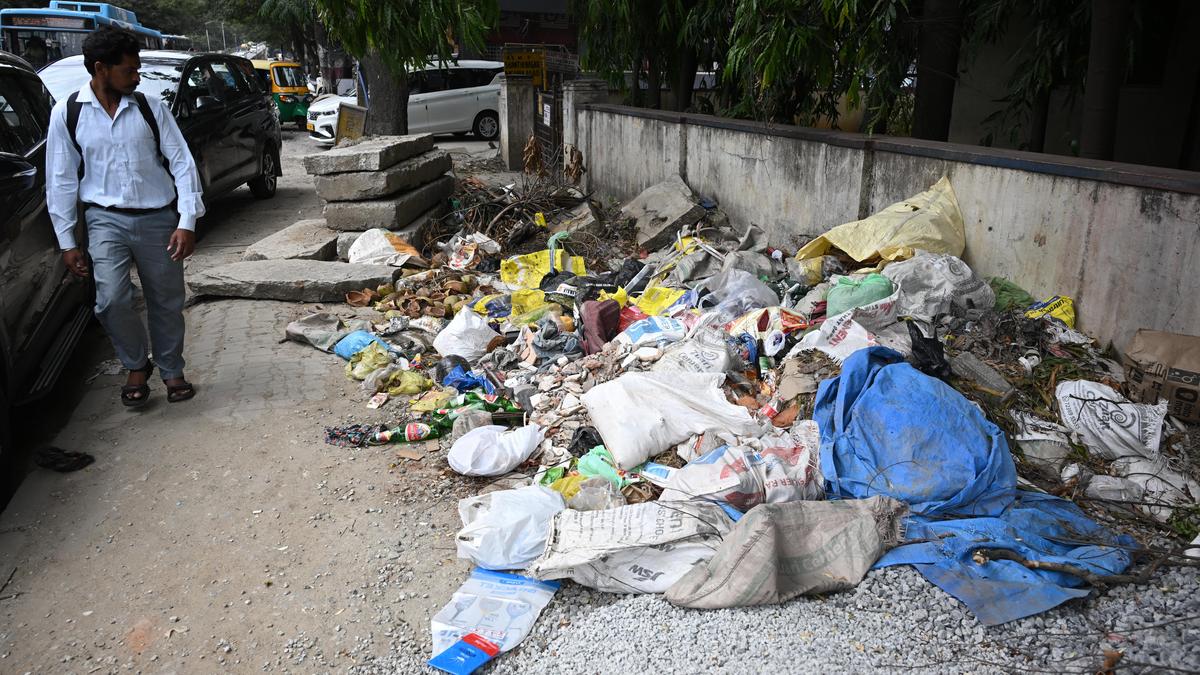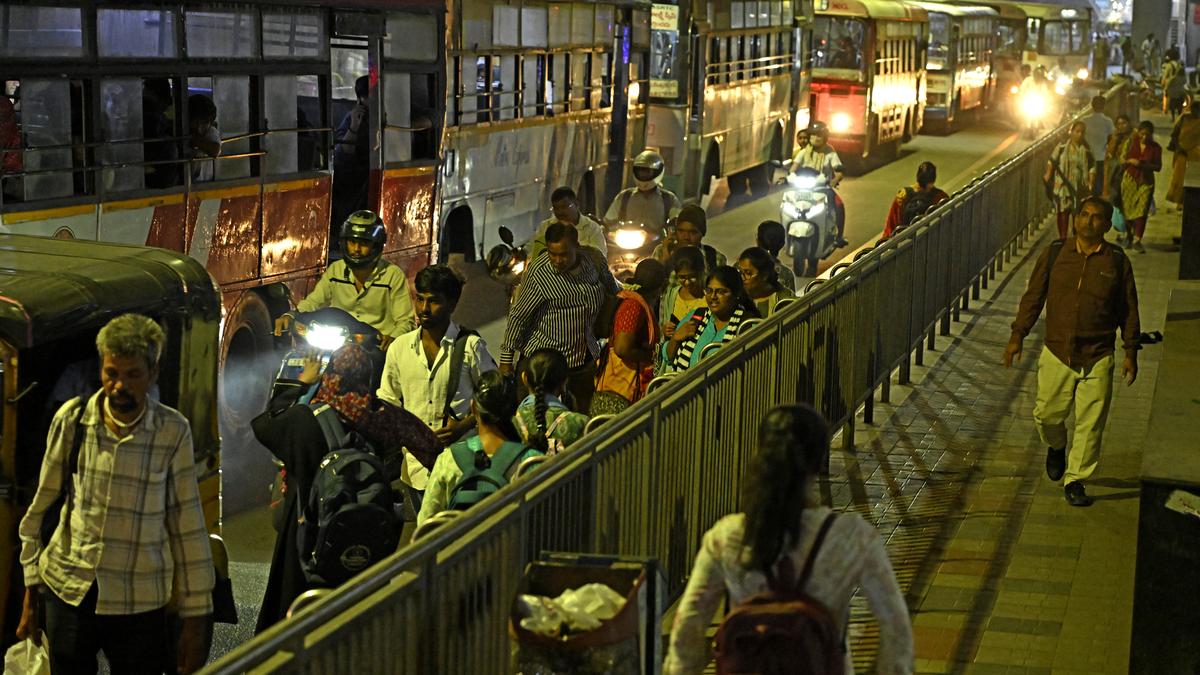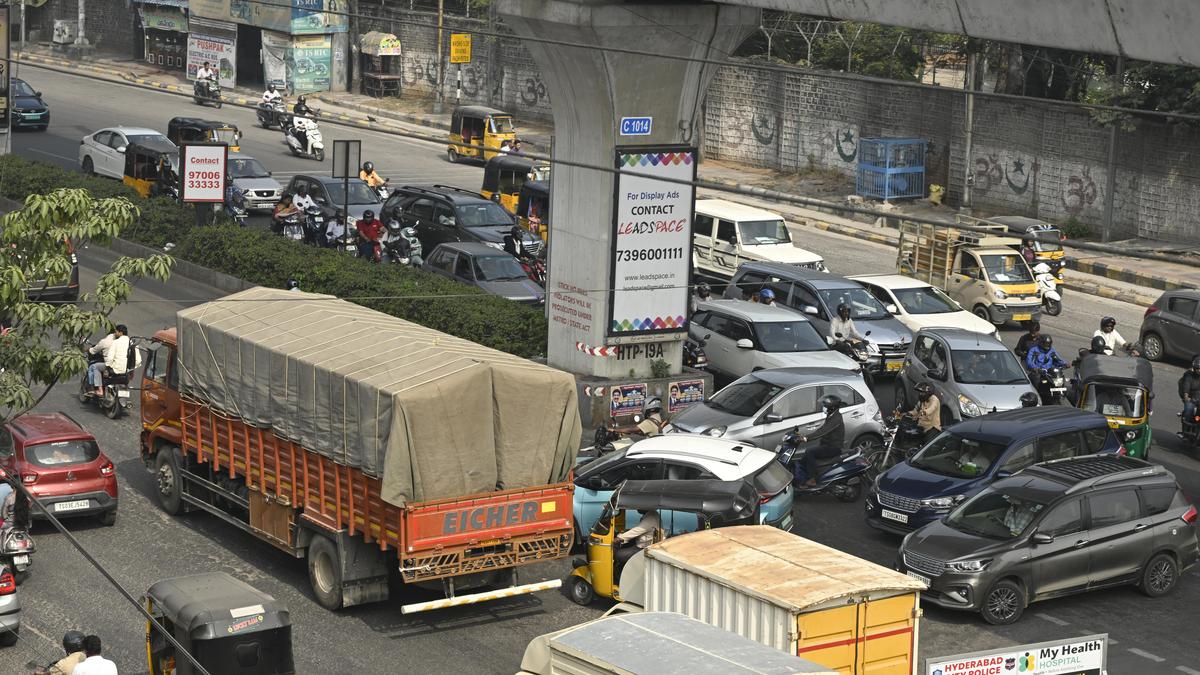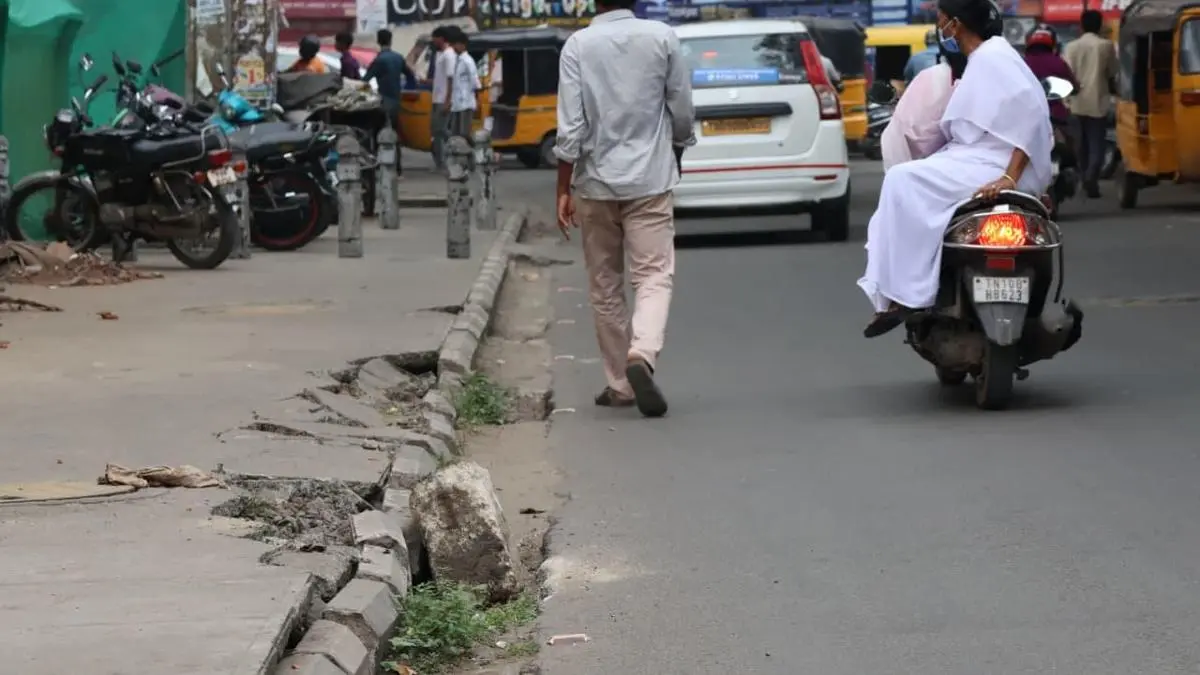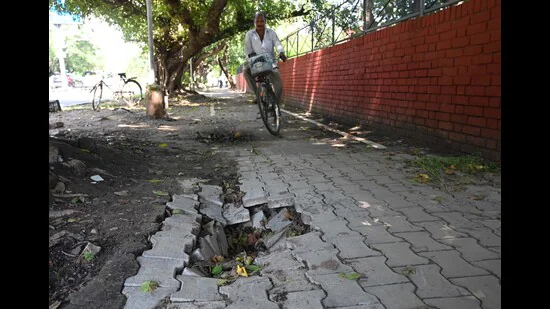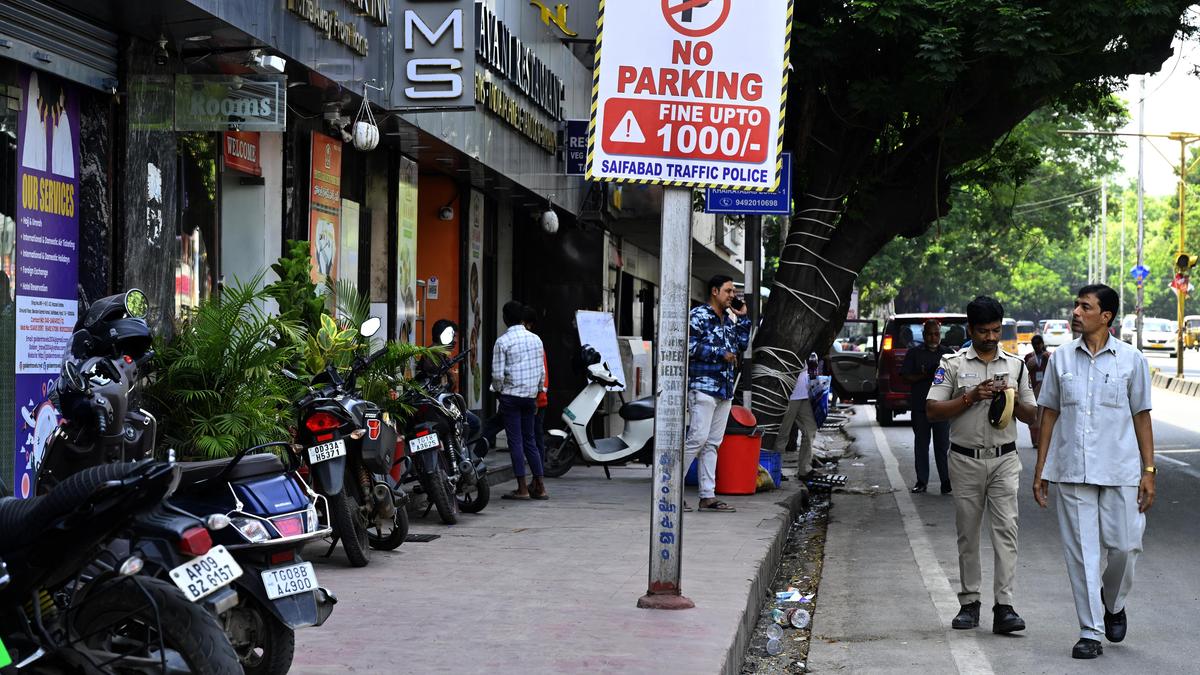
You step out of a Metro station in Hyderabad and set off on a routine one-kilometre walk. Within minutes, the footpath disappears beneath a succession of obstacles. Parked SUVs block the way and broken pavement demands careful footing while poles, cable wires, signboards and construction material crowd the route. At several points, pedestrians are left choosing between negotiating the clutter and stepping into road traffic.On the stretch between the Jubilee Hills Checkpost Metro Station and the entrance of KBR National Park, a simple walk often becomes an exercise in vigilance.The sidewalk is repeatedly interrupted by metro structures, utility infrastructure, commercial encroachments and construction debris. Near the junction, a maze of poles, cables and scaffolding leaves little room to pass. Across the road, barricades, food trucks, a public toilet, bus shelters, trees and other obstacles break up the pathway before it abruptly ends near the park entrance. Nearby, sections of demolished pavement are being cleared to create additional road space for a flyover intended to ease congestion.Such is the state of what is considered one of Hyderabad’s better footpaths, a reality that sits uneasily with the Supreme Court’s recent ruling recognising the ‘Right to Walk’ as a fundamental right. The apex court held that freedom to walk on demarcated and well maintained footpaths takes precedence over motorised vehicles. Walking safely and carefree along footpaths without danger lurking at every turn, Justice P.S. Narasimha observed, is among the most basic of rights and inextricably connected to life itself.The court also suggested policy measures, including the establishment of a regulatory body with a legal and statutory framework to protect the right to walk.For Telangana government to implement the judgment in letter and spirit, it may have to fundamentally rethink its urban mobility priorities and place pedestrian infrastructure at the centre of road development planning.No footpaths in power corridorsAs things stand, footpaths and pedestrian facilities feature nowhere among the city’s major infrastructure initiatives. Even roads surrounding Hyderabad’s legislative and administrative hubs remain devoid of basic pedestrian amenities, putting hundreds of lives at risk every day.Major junctions close to the State’s legislative and administrative hubs in the city are devoid of footpaths and other pedestrian facilities, putting hundreds of lives at risk.A walk from the Lakdikapul Metro Station to Aranya Bhavan in Saifabad offers another example. Along a stretch that passes the police headquarters and the State Legislative Assembly, pedestrians are forced to navigate a narrow, stinking space between roaring traffic and the elevated grounds of Ravindra Bharathi, the State’s cultural centre, for about 50 metres. Across the junction, the footpath next to the Assembly remains closed in the name of VVIP security. Further ahead, a popular restaurant has effectively converted the sidewalk into a two-wheeler parking area through a makeshift ramp.“I walk well over two kilometres every day, and less than 20% of the distance has usable footpaths. For most part, roads don’t have anything that resembles a footpath. Then you have footpaths which exist in name only, but the surface is broken down and dangerous,” says Natasha Ramarathnam, a citizen-activist from the city.“There are other footpaths which are completely encroached by stalls and showrooms. Wherever a new construction is coming up, it encroaches a foot into the footpath. So, basically when Supreme Court talks about the right to walk on pavements, it is the biggest joke here, because there are literally no pavements in Hyderabad,” she points out, adding that Kolkata and Mumbai, where she resided earlier, were comparatively more walkable.Miles of roads, missing walkwaysThe problem is not confined to a few stretches. Within the limits of the erstwhile Greater Hyderabad Municipal Corporation (GHMC), the city had more than 800 kilometres of four-plus lane roads that should have had pedestrian walkways on both sides. For a requirement of roughly 1,600 kilometres of footpaths, only about 430 kilometres existed, many too narrow or encroached to be of practical use. Though the government launched an initiative in 2019 to build footpaths along major roads, the effort fell far too short.Since then, the city has expanded up to the Outer Ring Road (ORR) and the civic body has been trifurcated. Hyderabad now has 886 km of four-lane roads, 242 km of six-lane roads and 65 km of eight-lane roads, all of which require well designed and well maintained pedestrian infrastructure.Indian Road Congress standards mandate safe, continuous and accessible footpaths on roads where vehicle speeds exceed 15 kmph. The guidelines envisage that footpath width should be planned in three different zones: pedestrian or walking zone, frontage or dead zone, and multi-utility zone, with footpaths wide enough to accommodate pedestrians, street furniture, bus stops, trees, vendors and other public amenities. Such standards, however, remain far removed from the reality on most city roads.
In Telangana, the right to walk derailed by design
Explore how Hyderabad's vehicle-centric planning undermines the Supreme Court's fundamental right to walk safely on footpaths.
1,684 words~8 min read