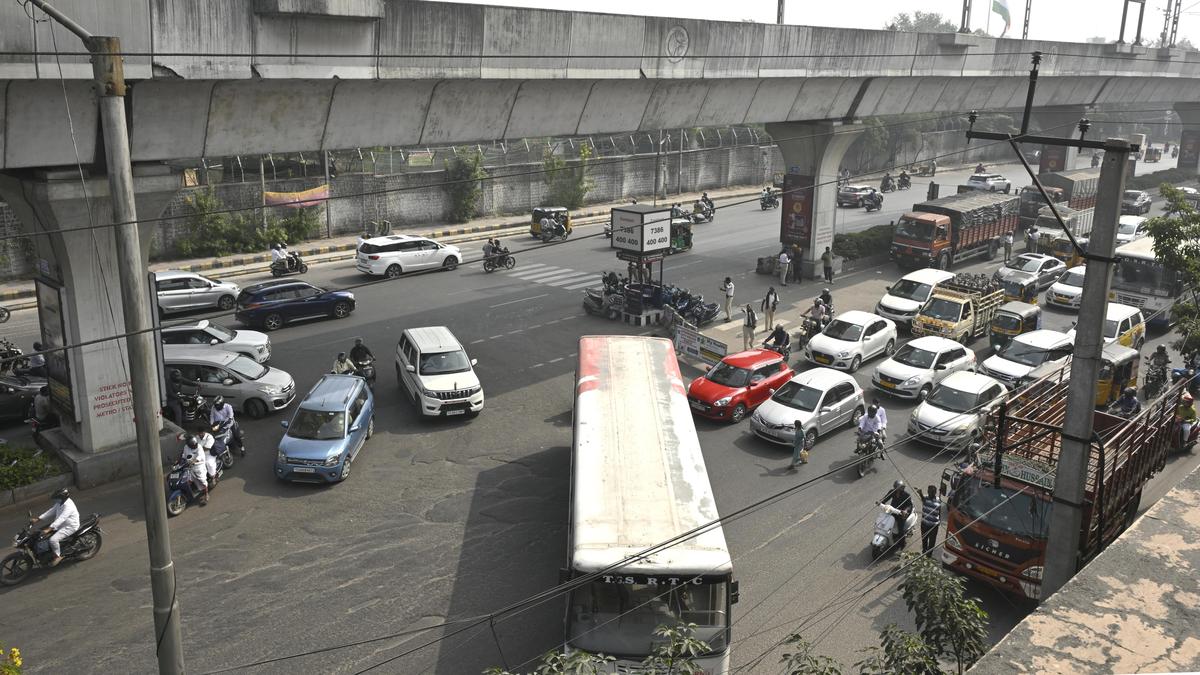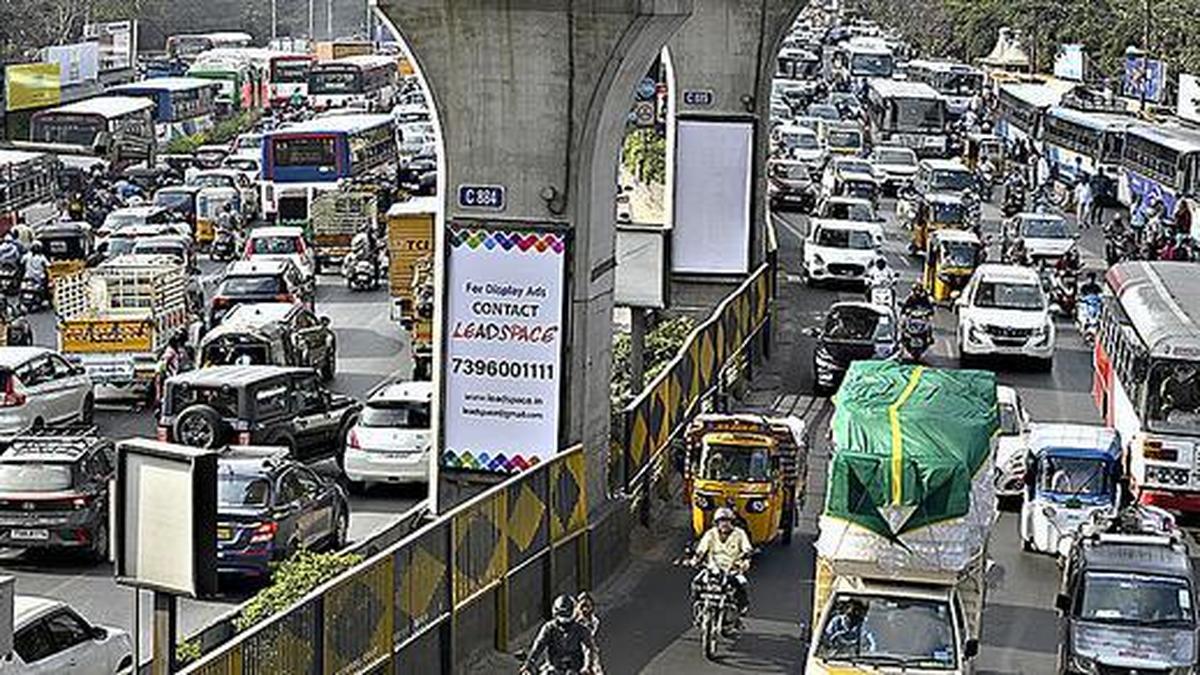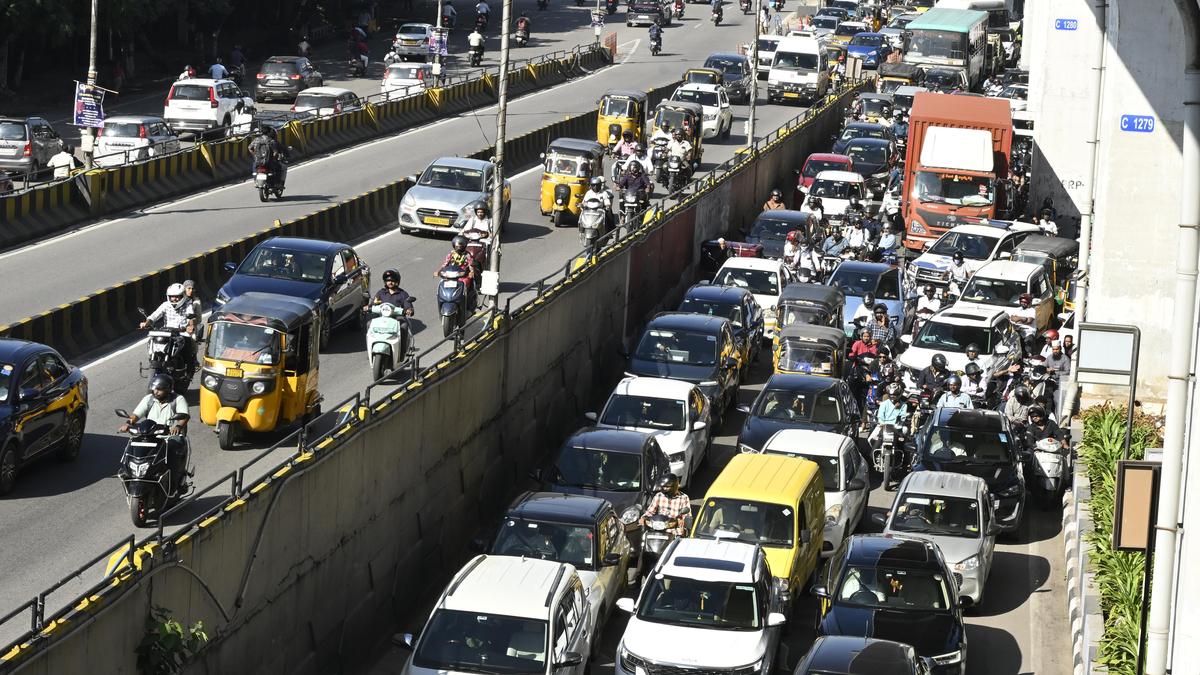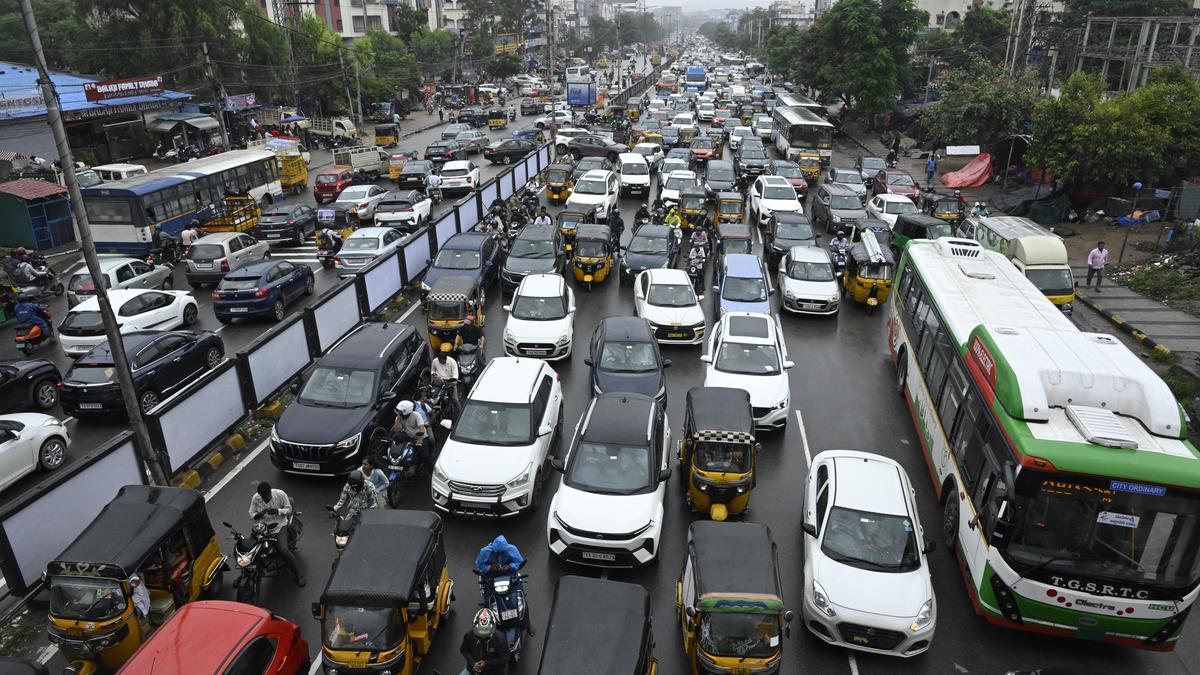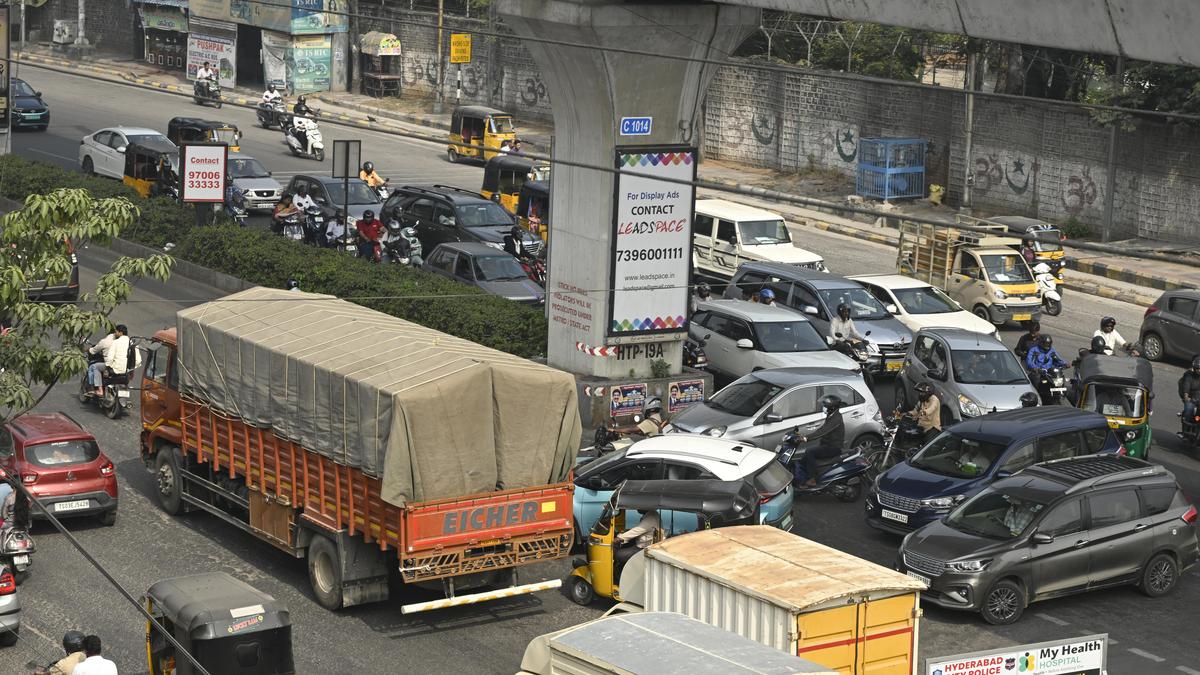
A little before 8 a.m. on a weekday, Dinakar Kumar Rao stays perched on his two-wheeler at the edge of Uppal junction, watching traffic crawl in slow motion. The skywalk above him may tower impressively, but the chaos below feels like a road network stuck mid-thought — cars edging forward, stopping, shuffling sideways, building pressure that bursts into honks.
Rao, 47, has lived in Boduppal for over a decade and has learnt to mark time by these rhythms. What he once assumed was temporary inconvenience on his long commute to Gachibowli has now settled into a daily test of patience. “What should have become easier has somehow become more complicated,” he says. “It is not just being stuck in traffic; it is the sense that movement itself has stopped making sense.”
Uppal junction embodies that confusion. One approach road is closed, forcing thousands of commuters into a long U-turn loop before they can rejoin the main road. The diversion adds only a few minutes, yet the irritation accumulates far beyond the number. “You take a loop, lose five minutes and end up exactly where you started,” he says.
Across the city, the pattern repeats. At Jubilee Hills, a car trying to beat a U-turn curve smashed into a bus in July, flinging its driver onto the bonnet. In Rasoolpura in September, a man was thrown off his scooter when a speeding vehicle cut through a U-turn near the NTR statue. Such incidents, buried in FIRs and routine police reports, say more about the city’s design anxieties than any traffic dashboard ever does.