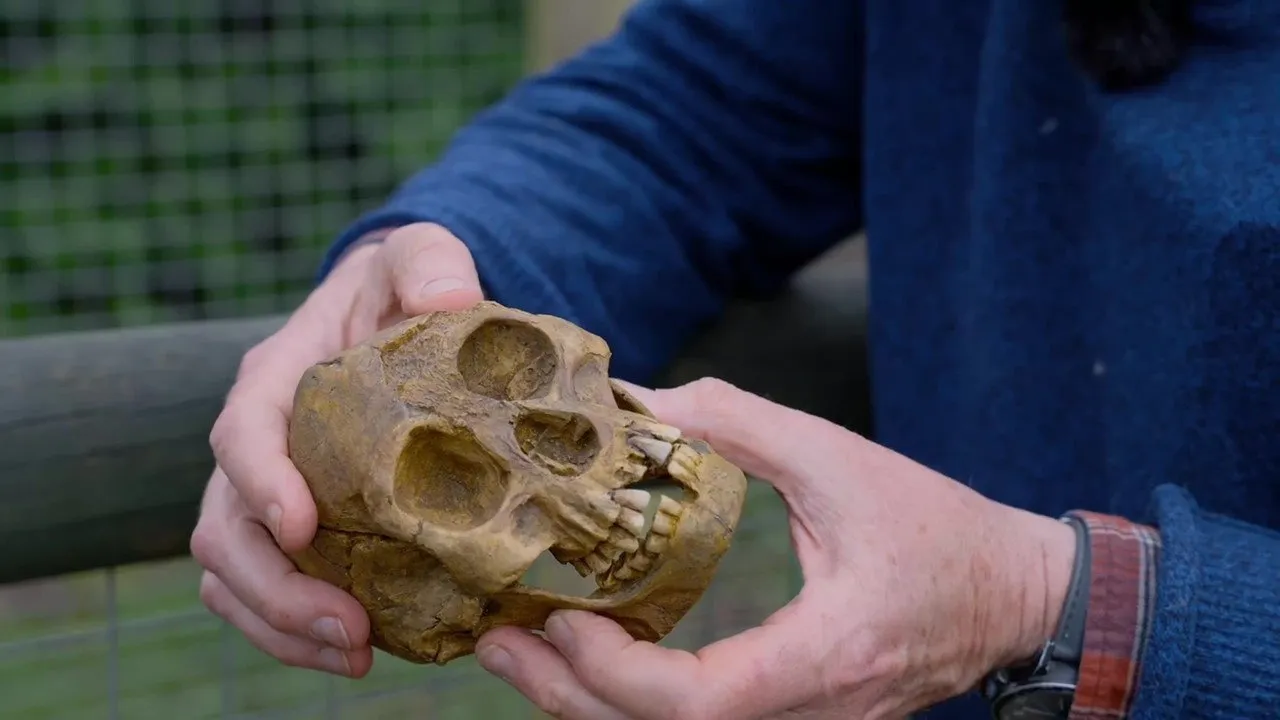
Prehistoric human relatives, nicknamed “hobbits” due to their short stature, may have been scavengers, rather than skilled hunters capable of taking down big game or building cooking fires, according to new research.
The study adds to growing evidence that Homo floresiensis, which had a brain only slightly bigger than that of a chimpanzee, wasn’t as advanced as scientists previously believed.
Fossils unearthed by archaeologists in the Liang Bua cave on the Indonesian island of Flores in 2003 led to the discovery of the diminutive hominin. The creature had a skull the size of a grapefruit and likely stood about 3.3 feet (1 meter) tall.
Excavators uncovered stone artifacts and bones of Stegodon florensis insularis, a bison-size extinct relative of elephants, near the Homo floresiensis fossils. The find suggested the hobbits had hunted with tools to take down the large animals. Burned bones of smaller animals also hinted that the hobbits could wield fire.
Such advanced behavior is considered a key evolutionary trait associated with large-brained hominins such as Neanderthals, Homo sapiens or modern humans, and Homo erectus, an early human that lived between 1.89 million and 110,000 years ago. The potential connection between hunting tools and fire use in Homo floresiensis has even led some researchers to believe that the hobbits were closely related to Homo erectus.