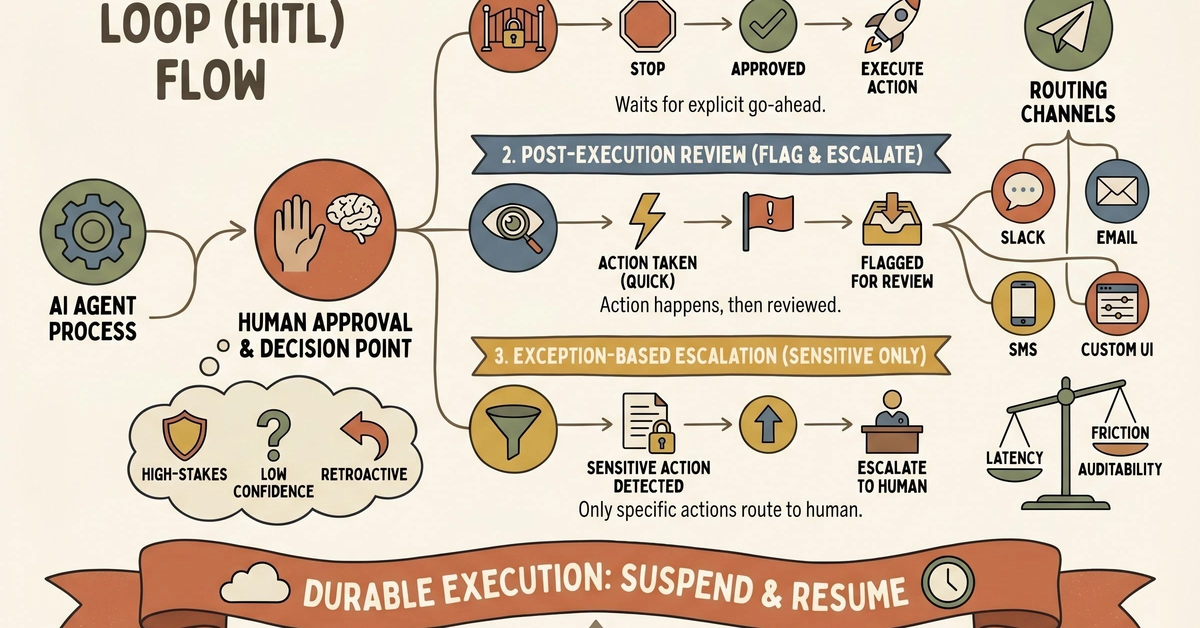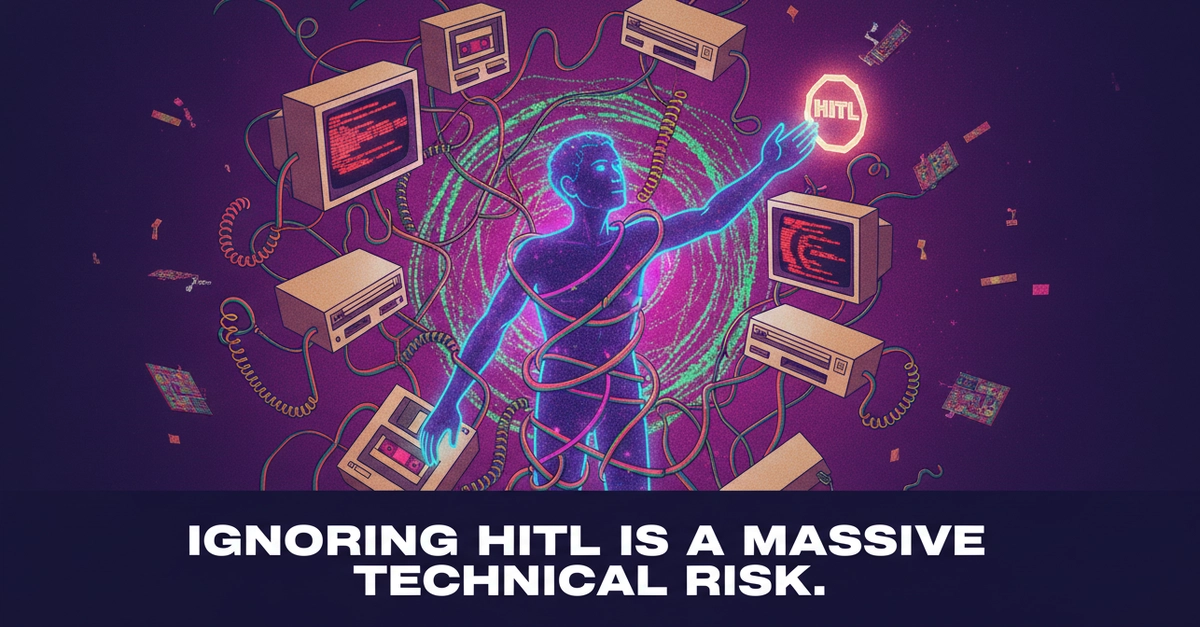
The explosion of generative AI and autonomous agents has completely flipped the script on how we develop software. Today, having tools that can write, refactor, and test code in seconds gives engineering teams an insane speed boost. But the more complex tasks we offload to these systems, the more critical the concept of Human-in-the-Loop (HITL) becomes. To put it simply—as big tech players like IBM emphasize—HITL i*s all about keeping a human actively involved in supervising and validating what the system does*. AI is there to scale our efforts, but we are still the ones calling the final shots.
For anyone in software engineering, ignoring HITL is a massive technical risk, especially when you consider how these models actually work. No matter how impressive the latest LLM is, it operates by crunching statistical probabilities based on past data. This means that when the system hits a bizarre edge case, an ambiguous business rule, or a highly customized architecture, it chokes. It can hallucinate, introduce security vulnerabilities, or use outdated patterns. It’s our clinical eye during code reviews that keeps those ticking time bombs from hitting production.
Beyond just raw code, building software requires a level of context and judgment that no machine possesses. Decisions involving user privacy, accessibility, or compliance with strict regulations (like the EU AI Act) are rarely black and white. They require empathy, ethics, and the nuance to understand cultural and business landscapes. Keeping developers "in the loop" ensures that responsibility for critical architectural shifts stays with a conscious human who can navigate the gray areas that algorithms simply cannot parse.