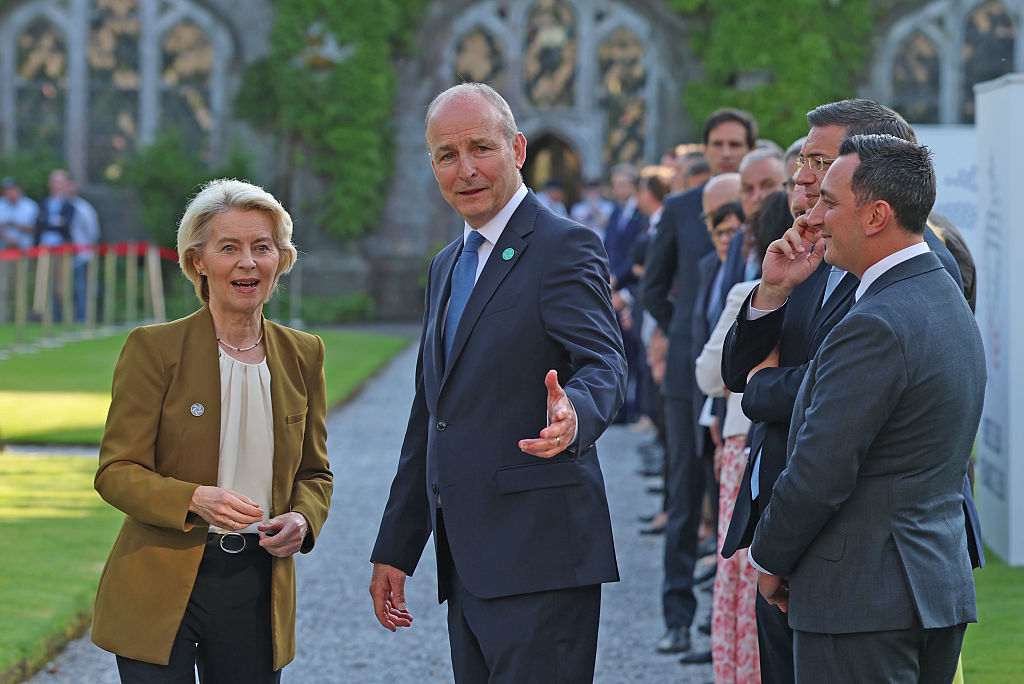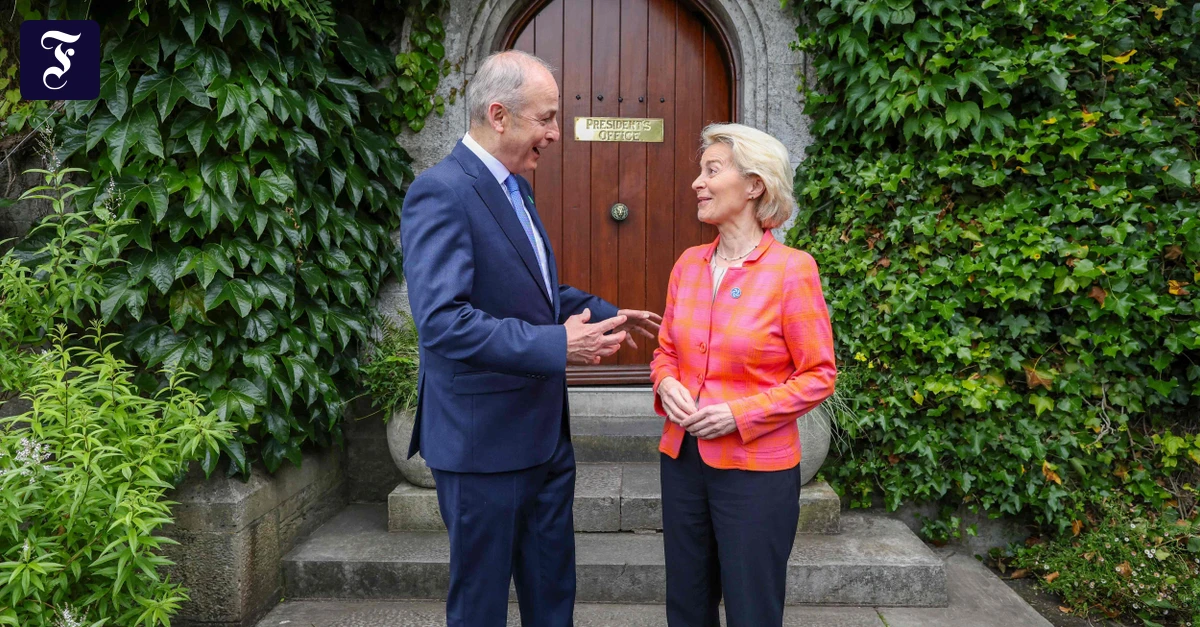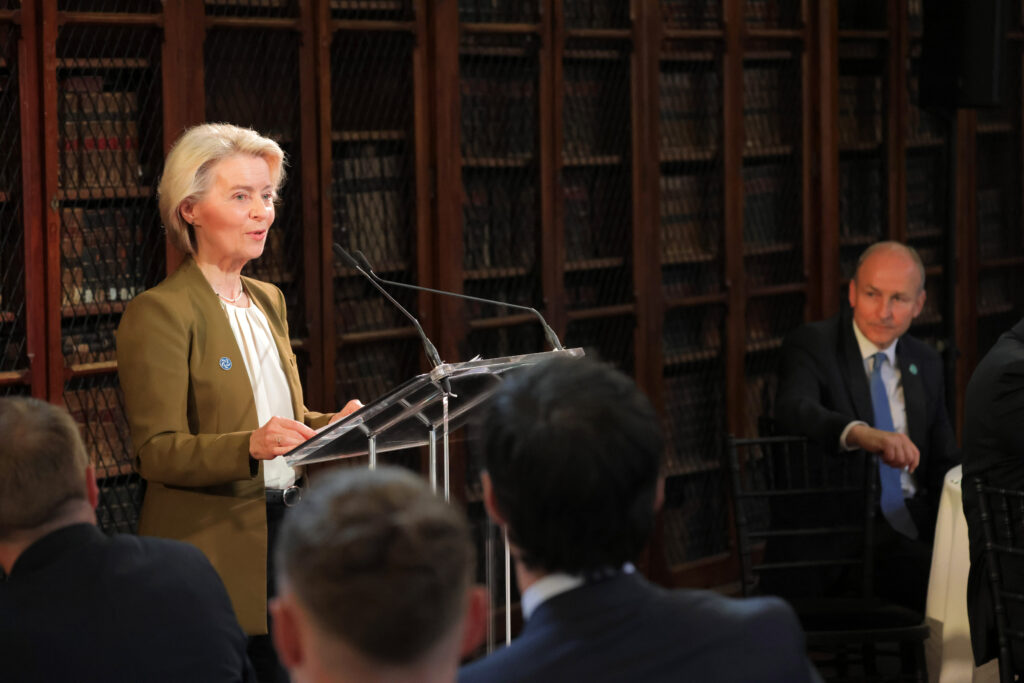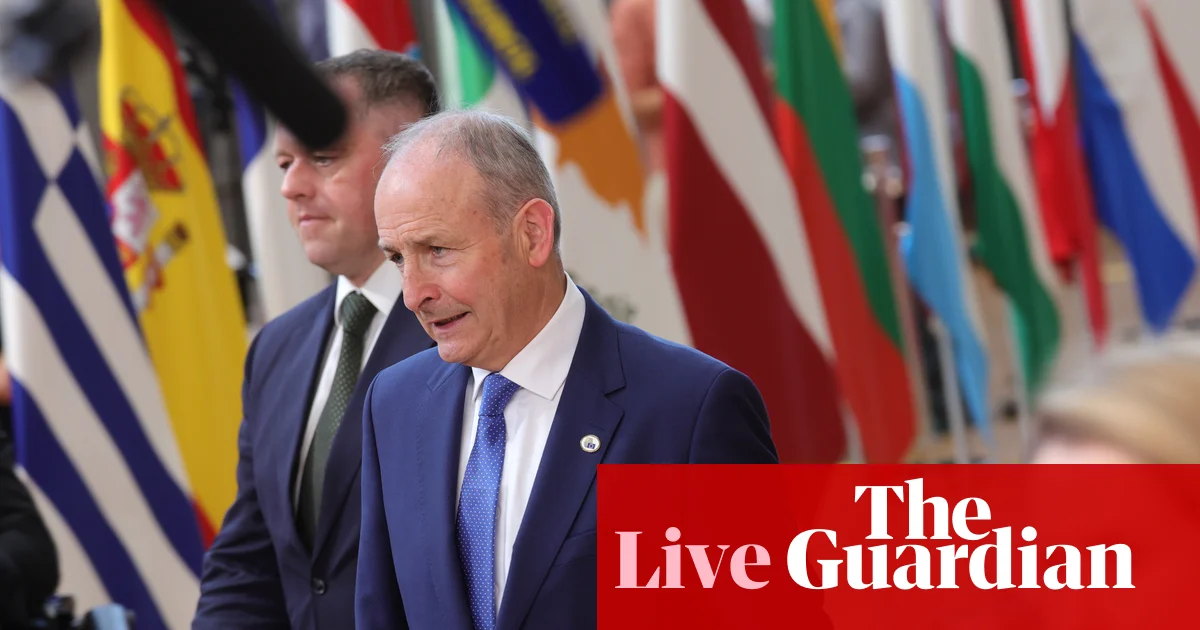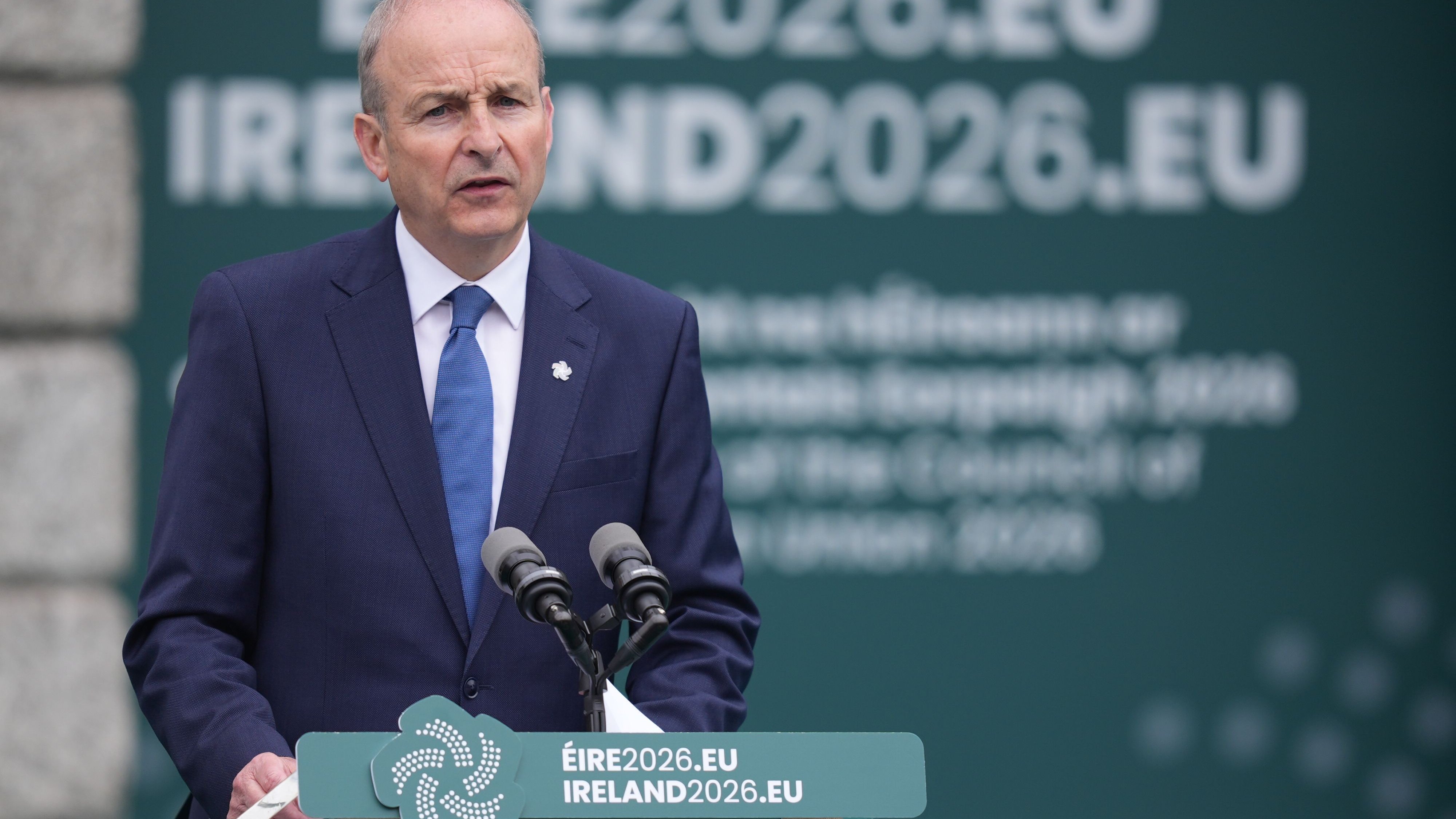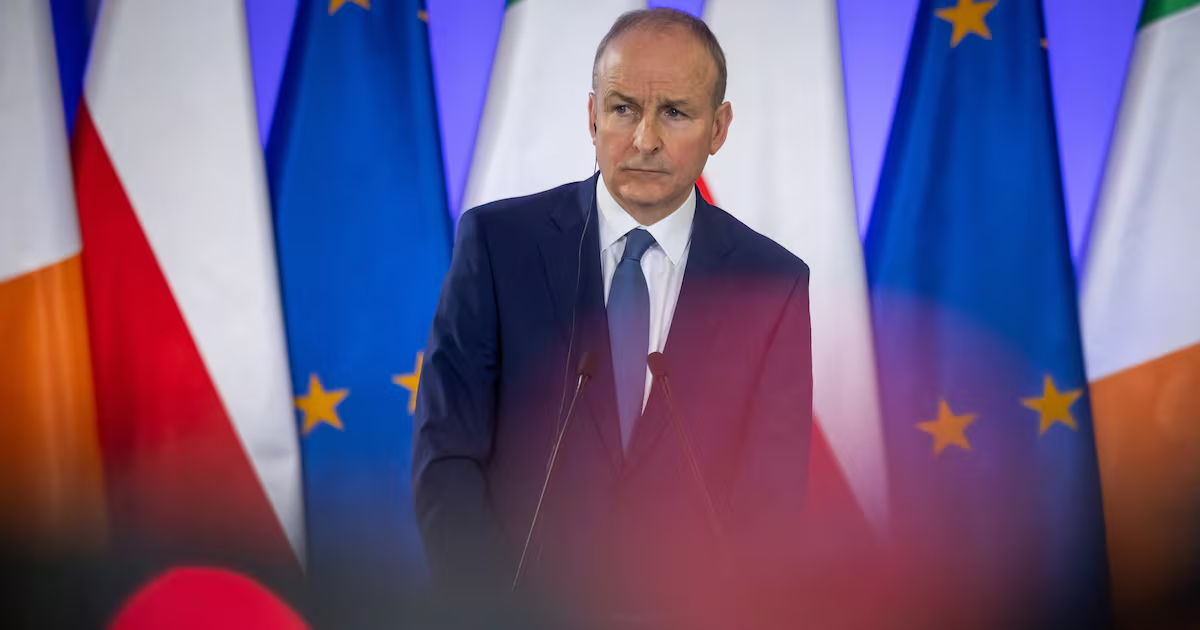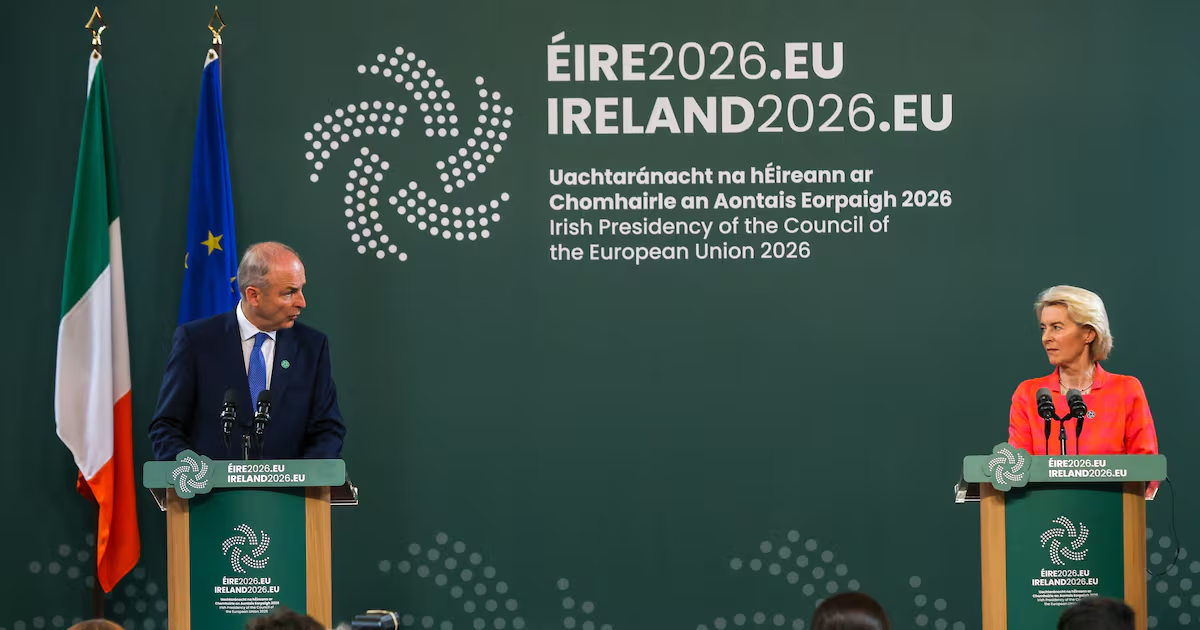
Ireland’s story of European Union membership was the most convincing argument for the continued expansion of the bloc, European Commission president Ursula von der Leyen said on Friday during a visit to Cork. “When Ireland joined the European Community in 1973 the GDP [gross domestic product] per capita was around half of the European average, today it is roughly double the European average,” the German politician said, standing beside Taoiseach Micheál Martin.Von der Leyen said she welcomed the focus the Irish Government has placed on pushing forward the membership bids of candidate countries. Martin and the Cabinet were hosting von der Leyen and the other 26 EU commissioners in Cork, for a visit marking the start of Ireland’s presidency of the Council of the European Union. The council represents the member states in the Brussels system and the presidency, or chair, rotates between countries every six months. Irish Ministers will, as part of the presidency, lead EU-level meetings for the rest of the year.Montenegro, a small Balkan state of 620,000 people, hopes to complete all the required internal reforms by the end of this year, opening the door to its EU entry by 2028. Dublin has targeted the signing of an accession treaty between the EU and Montenegro as a symbolic win it wants to get over the line during the six-month presidency. Albania is also well along the journey towards accession. There has been a fresh push to advance talks with Ukraine and Moldova, which are still at a very early stage in the years-long process. There needs to be unanimous agreement among the existing 27 member states to allow new countries into the bloc, which can be politically tricky. Ireland’s position on future EU enlargement was motivated by its own transformative experience after joining, Martin told a group of visiting Brussels-based journalists in Cork.[ EU presidency comes with opportunity – but also opportunity costOpens in new window ]“We were the poorest country in Europe, many people felt we were too poor to join. It has had a transformative impact on Irish economic development, but societal transformation as well,” he said. “Morally how could we deny somebody else the potential of that experience?” Ireland’s EU presidency will largely be judged on the progress it makes putting together a deal on the union’s next seven-year budget. At present, Martin said, EU states hold “diametrically opposing positions” about the subject. A camp of fiscally conservative countries want to substantially trim back a proposed €1.9 trillion funding pot. Others want a more expansive budget, though there are disagreements on where extra money should be spent. Speaking on Friday, von der Leyen said there were high expectations for Ireland’s stint holding the presidency.There is a desire in Brussels to land a deal where all national governments agree on a compromise budget before the end of this year, to leave enough time for the extensive technical work that has to follow a political agreement. The existing EU budget, which includes Common Agricultural Policy funding, regional development grants and a huge range of other funding schemes, runs out after next year. [ No Queen Elizabeth moment for Ursula von der Leyen during Cork visitOpens in new window ]During a joint press conference with von der Leyen, the Taoiseach said many of his fellow European leaders seem to want to clinch a budget deal by the end of this year. “We are both under no illusion as to how much work is required to achieve this,” he said.Asked to rate the chances out of 10 of a deal being agreed, Martin said he would put the odds at “seven or eight”. Von der Leyen said the ongoing investigation into Aughinish Alumina’s role exporting raw materials to Russia was “for Ireland to lead”.“We are waiting for the finishing of the investigation, and then we will discuss together the results,” she added.
Ireland’s EU membership story a compelling argument for expanding union, von der Leyen says
Taoiseach says Ireland could not ‘morally’ deny other countries the chance at EU membership
644 words~3 min read