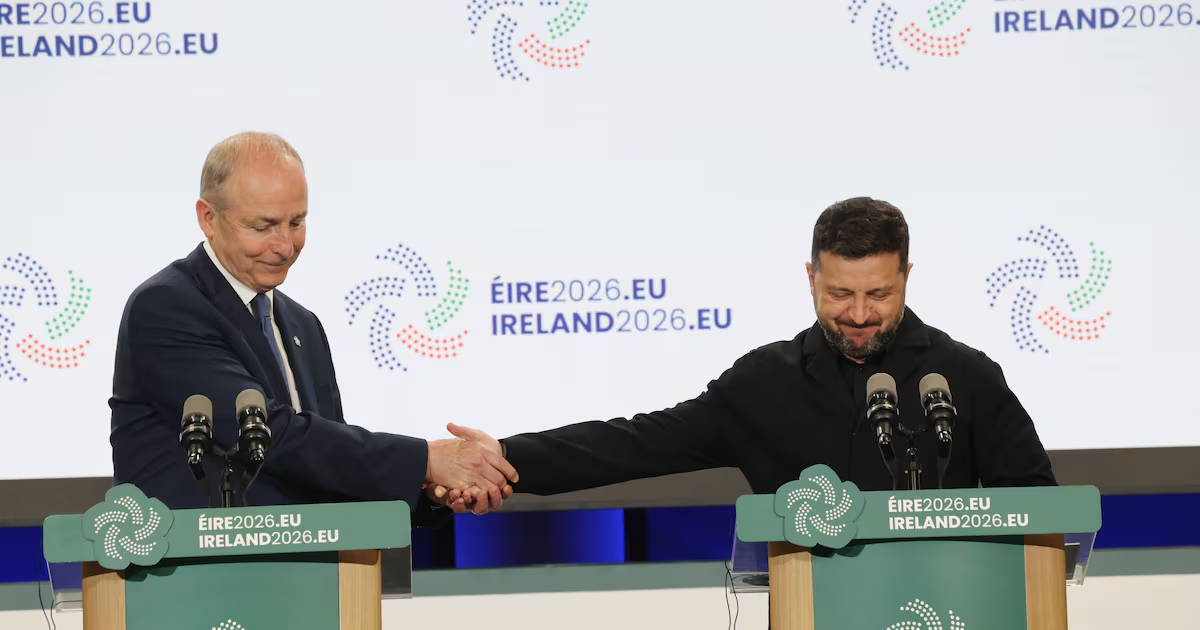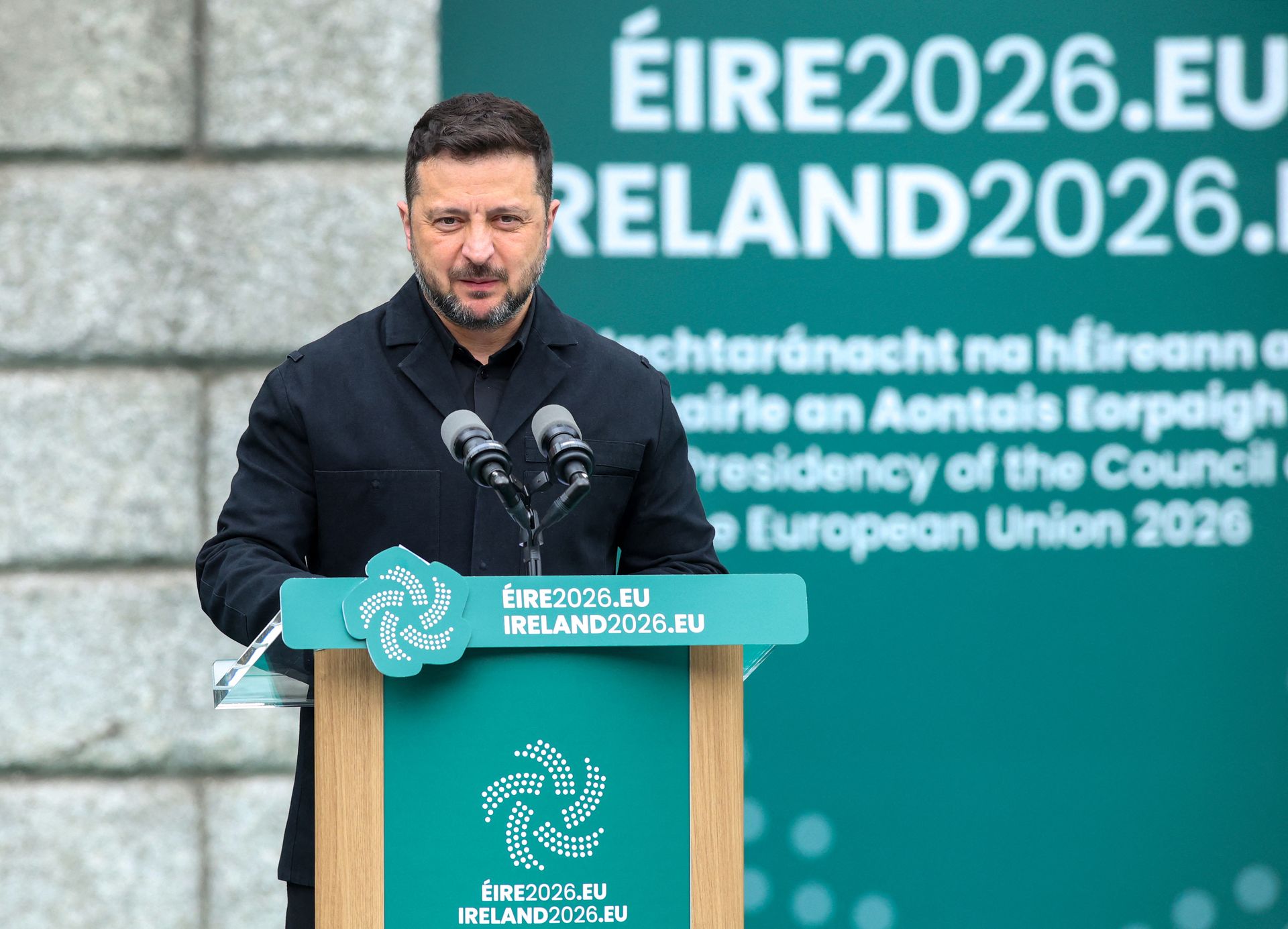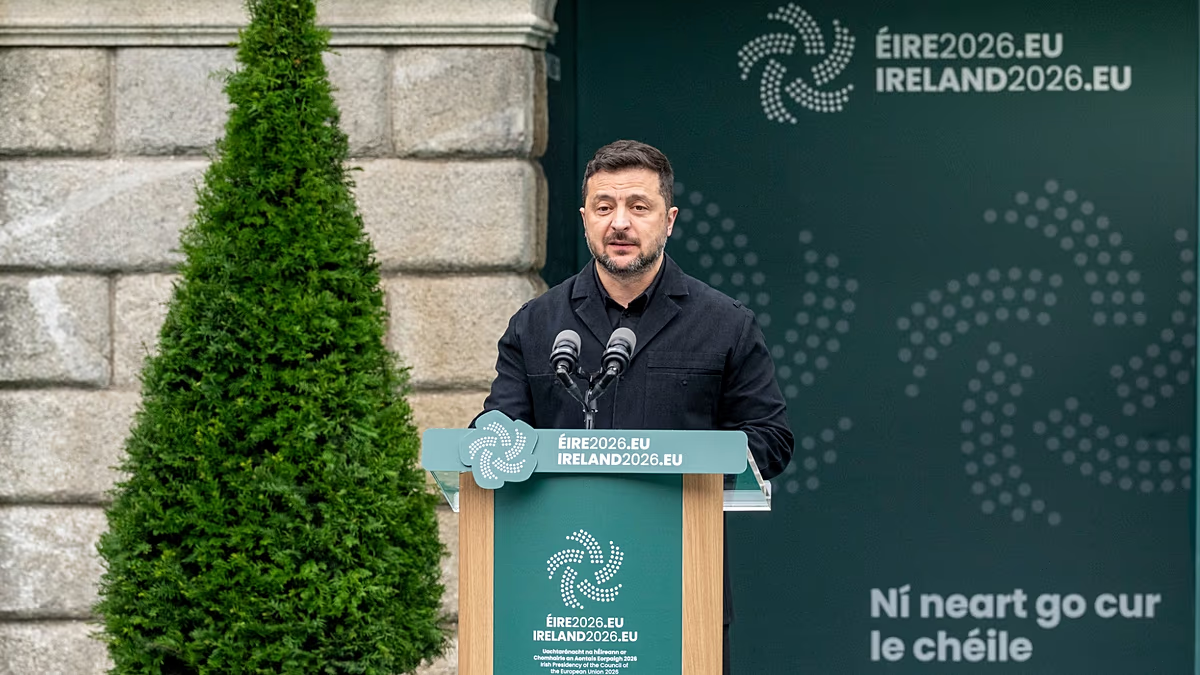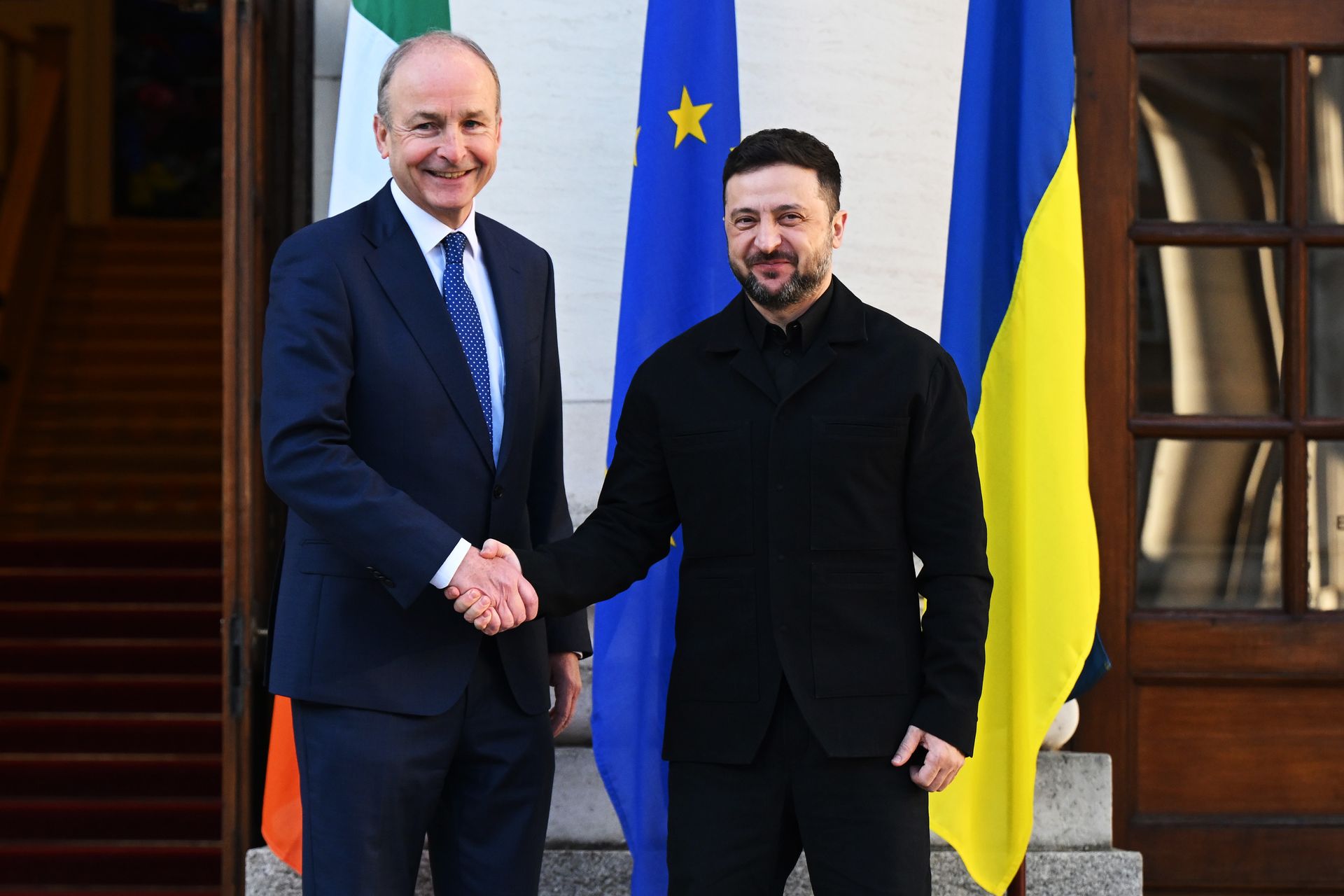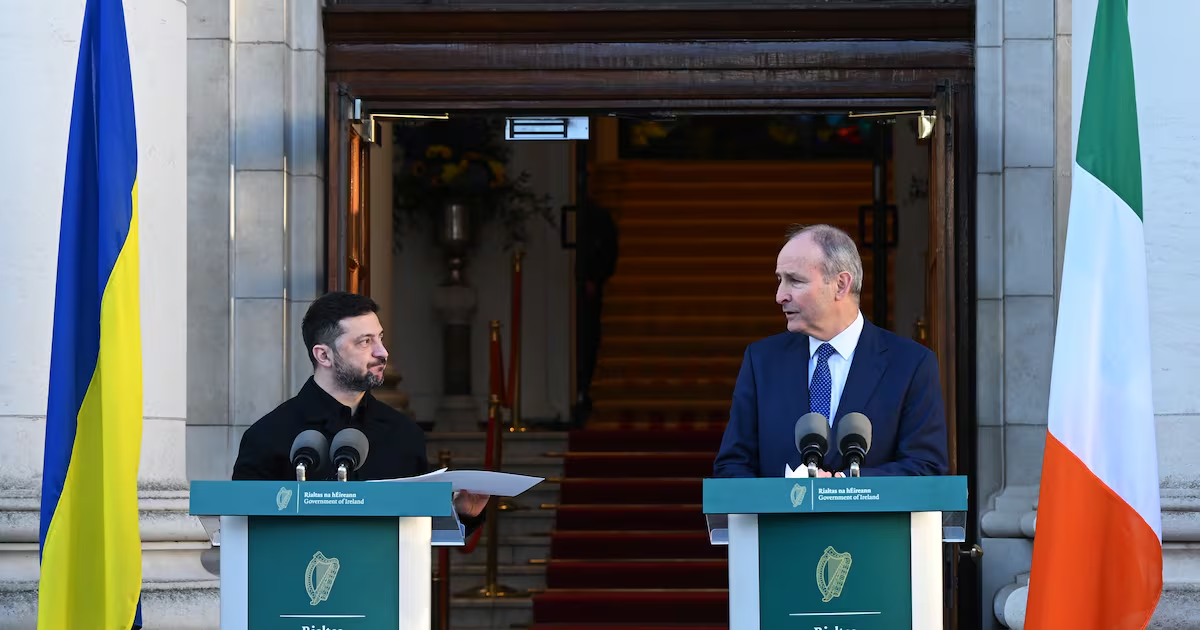
When Ukrainian president Volodymyr Zelenskiy made his historic address to the Oireachtas at the end of last year, he spoke about the need to “protect the unity” that had existed since 2022 – “a unity of different nations united in the protection of life and justice”.“We are speaking about the future. There is no good future for Europe without this unity,” he said. “Ukraine wants to stand together with those whose history, values and struggle reflects our own. We want to stand alongside Ireland in the European Union as equals, and I am confident that this will happen. Europe cannot run away from its own values. It must stand up for them, and Ukraine is doing exactly that today on Europe’s behalf.”In his own remarks earlier that day outside Government Buildings, standing next to the battle-weary and heartsore Ukrainian president, Taoiseach Micheál Martin had reiterated that Ireland “stands with Ukraine”. He said Ukraine “is part of our European family, it shares the same values”. “It belongs in the EU, and we will continue to work, including when we hold the EU presidency next year, to advance negotiations on its membership as much as we can,” the Taoiseach said. As 2025 turned to 2026, the nature of Ireland’s support for Ukraine started to change dramatically. The Government began unravelling the temporary supports it had rushed to put in place after the Russian invasion in 2022. Hotel accommodation is returning to tourism, a payment for Irish families hosting Ukrainians in their own properties is ending, the right of Ukrainians to stay in State-provided accommodation has been stripped back. As recently as this week, Ministers approved a plan to set new rules for Ukrainians who want to stay in Ireland after the EU-wide protection scheme ends. Those who want to stay in Ireland will have had to have lived here for at least one year already and be earning a salary of almost €30,000.Right at the same time that our domestic support for individual Ukrainians is waning, our international support for the country under siege is stepping up. Jack Power is reporting this morning that the Government hopes to make “swift progress” pushing forward negotiations on Ukraine’s stalled bid to join the European Union when Ireland holds the union’s rotating presidency in the second half of this year. When Minister for Foreign Affairs Helen McEntee visited Ukraine and met Zelenskiy at the end of March in Kyiv, Ireland’s upcoming EU presidency was one of the main topics of discussion. Zelenskiy told McEntee that Ukraine wanted the EU to formally open what are known as “clusters” – the six different negotiations that are required between a country and the EU before it can formally join the bloc. Ukraine has long said it has upheld its side of the bargain in preparing for membership, and that it is now up to the EU to move things forward. As recently as this week, Ukrainian deputy prime minister for European and Euro-Atlantic Integration Taras Kachka said he believed all six clusters could be open as soon as next month. Other timelines have suggested it will be July. Either way, this would mean the process would be ongoing right when Ireland holds the presidency. As Jack writes this morning, Ireland’s finalised EU policy programme will be published in early June. A number of Ministers have already hinted at what they will be trying to prioritise during the six-month presidency from July to December. From farming to online safety, there will be a long list of ambitions from Ministers and a short time frame in which to achieve them. ‘A little out of order’ Speaking of the Russian invasion of Ukraine, Conor Gallagher has a story this morning that reveals that Ireland has granted more than 14,000 visas to Russian citizens since the full-scale invasion of Ukraine in 2022, according to new figures that an MEP says raise a concern that “hostile” intelligence agents could be entering the State. Gallagher writes that Department of Justice figures show the vast majority, almost 97 per cent, of visa applications from Russian citizens are approved by Irish officials.Dublin MEP Barry Andrews has written to Minister for Justice Jim O’Callaghan asking him to “re-examine” the number of visas being issued to Russian and Belarusian citizens as the war in Ukraine continues into its fifth year.Elsewhere in the paper, Orla Ryan has been covering Minister for Media Patrick O’Donovan’s appearance before an Oireachtas committee, where the Limerick native was holding forth on his confidence in RTÉ management in his usual inimitable style. “Do I have confidence in the chair and the board and the director general? I do, and I do on the basis that they inherited a bag of you know what,” he told the Oireachtas Media Committee on Wednesday. On the subject of RTÉ, the most recent episode of Inside Politics features an interview with Shane Ross on his book – which is a rollicking read on the history and legacy of scandals at the State broadcaster. Separately, Jack Horgan-Jones has a yarn that featured at the Oireachtas Health Committee yesterday. Jack writes about how the Rotunda Hospital is in a stand-off with the HSE and the Minister for Health over a decision to allow consultants on public-only contracts do work for private patients. And Miriam Lord details how the usual verbal tennis between Micheál Martin and Sinn Féin leader Mary Lou McDonald featured an unusual charge from the Opposition leader towards the Taoiseach. As Miriam explains, their sparring was interrupted when the Taoiseach heard McDonald say something about not being able to hear him properly. “You mumble. You don’t enunciate,” McDonald said before adding: “You don’t enunciate clearly. I didn’t hear what you said.” Much offence was taken on the Government benches, but Miriam points out that “frazzled Dáil reporters can attest that the Taoiseach can be a terrible mutterer when taking questions. There may even have been some quiet applause in certain quarters when she launched her assault on his enunciation, even if it was a little out of order.”Best Reads As a search continues near the shore of Lough Neagh in Co Armagh this week for Seamus Maguire, one of the Disappeared, Gerry Moriarty is writing about who Maguire was and why he was murdered and secretly buried in the 1970s. Returning to the subject of Ireland’s upcoming EU presidency and the many important issues that will be competing for time and attention during our six-month stint, Tom Arnold has a piece on why food security must be a priority. Newton Emerson’s column today is about how puzzling he found it to watch us all wondering where Sinn Féin sits on the political spectrum. Emerson is arguing that, based on its experience in government in Northern Ireland, Sinn Féin is “quite clearly on the centre left, with the emphasis on centre”. He says Sinn Féin is lucky none of us in the Republic are paying attention, otherwise it would become clear to us that the party’s most natural coalition partner would be Fianna Fáil. Playbook Here is today’s Dáil schedule: 8.47am: Parliamentary Questions: Oral – Minister for Public Expenditure, Infrastructure, Public Service Reform and Digitalisation10.23am: Parliamentary Questions: Oral – Minister for Education and Youth12pm: Leaders’ Questions (Sinn Féin, Labour Party, Social Democrats, Independent Technical Group)12.34pm: Other Members’ Questions12.42pm: Questions on policy or legislation1.52pm: Government Business: Broadcasting (Amendment) Bill 2026 – second stage5.26pm: Topical Issues6.26pm: Private Members’ Bill: Public Health (Alcohol) (Amendment) Bill 2025 – second stage8.26pm: Dáil adjournsThe Seanad schedule is: 9.30am: Commencement Matters10.30am: Order of Business11.30am: Government Business: Arbitration (Amendment) Bill 2025 – committee stage 2.30pm: Private Members’ Business: Motion regarding the EU-Israel Association Agreement4.30pm: Seanad adjourns
Ireland steps up for Ukraine in EU as domestic support wanes
Inside Politics: Ministers hope to make ‘swift progress’ on Ukraine’s bid to join the EU
1,279 words~6 min read