Economists and industry groups welcome Indonesia's plan to export rice to Singapore as a way to ease excess stocks but caution that quality upgrades and careful supply management will be key to securing a foothold in export markets.
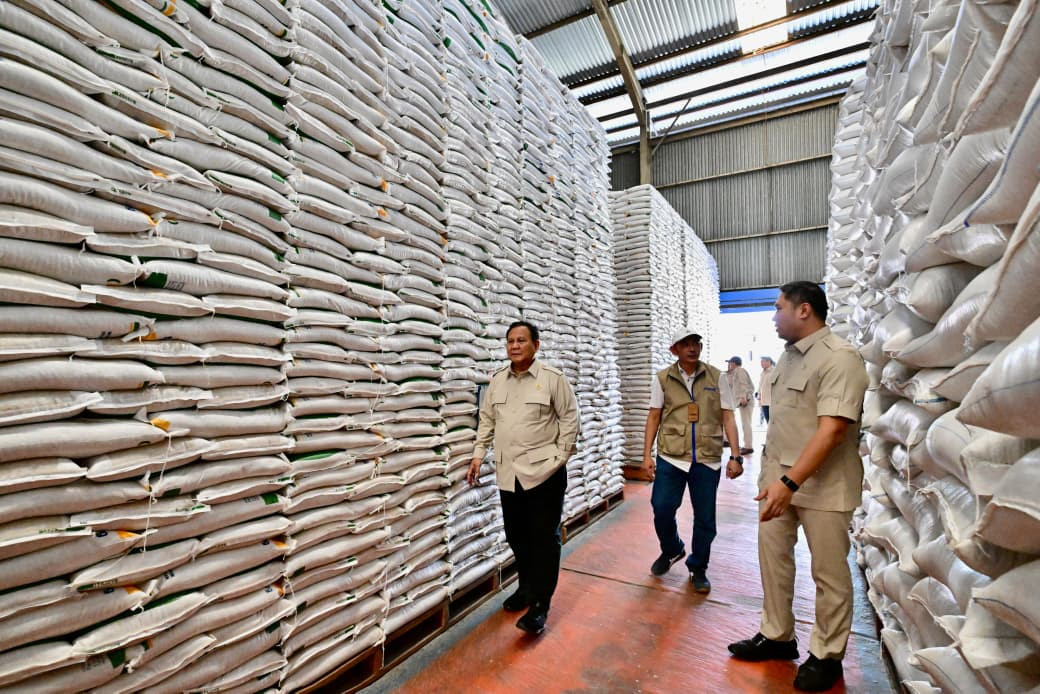
President Prabowo Subianto inspects the Bulog Danurejo warehouse complex in Magelang, Central Java, on April 18, 2026. (BPMI Setpres/Rusman)
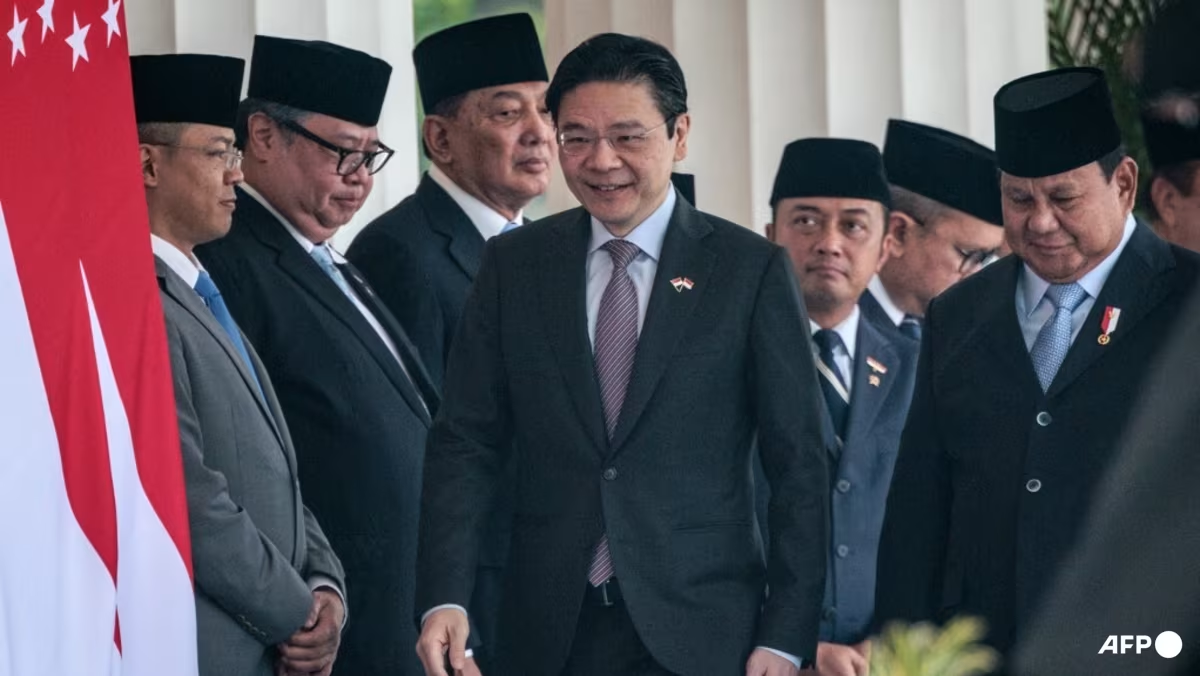
Indonesia's plan to export rice to Singapore could help absorb domestic surpluses and strengthen bilateral cooperation on food security, economists and industry groups say, though they cautioned that success would depend on maintaining sufficient domestic supplies, improving grain quality and remaining competitive in the global market.The assessment follows a bilateral meeting on Monday between government representatives from Indonesia and Singapore, where the two sides discussed the possibility of exporting at least 10,000 tonnes of Indonesian rice to the city-state as part of broader agricultural cooperation.
Indonesia has long been striving for self-sufficiency in common consumption rice but continues to import specialty varieties, such as basmati and japonica.
Executive director of the Institute for Development of Economics and Finance (Indef) Esther Sri Astuti told news agency Antara on Thursday that the export plan offered an opportunity to reduce excess domestic stocks while reinforcing regional food security.