Insider Brief
As artificial intelligence drives an unprecedented buildout of power-hungry data centers, researchers are exploring computing architectures that move beyond the graphics processing units (GPUs). One new proposal to address this is a probabilistic computer built from conventional transistors that researchers say could perform certain AI tasks with a fraction of the energy required by today’s hardware.
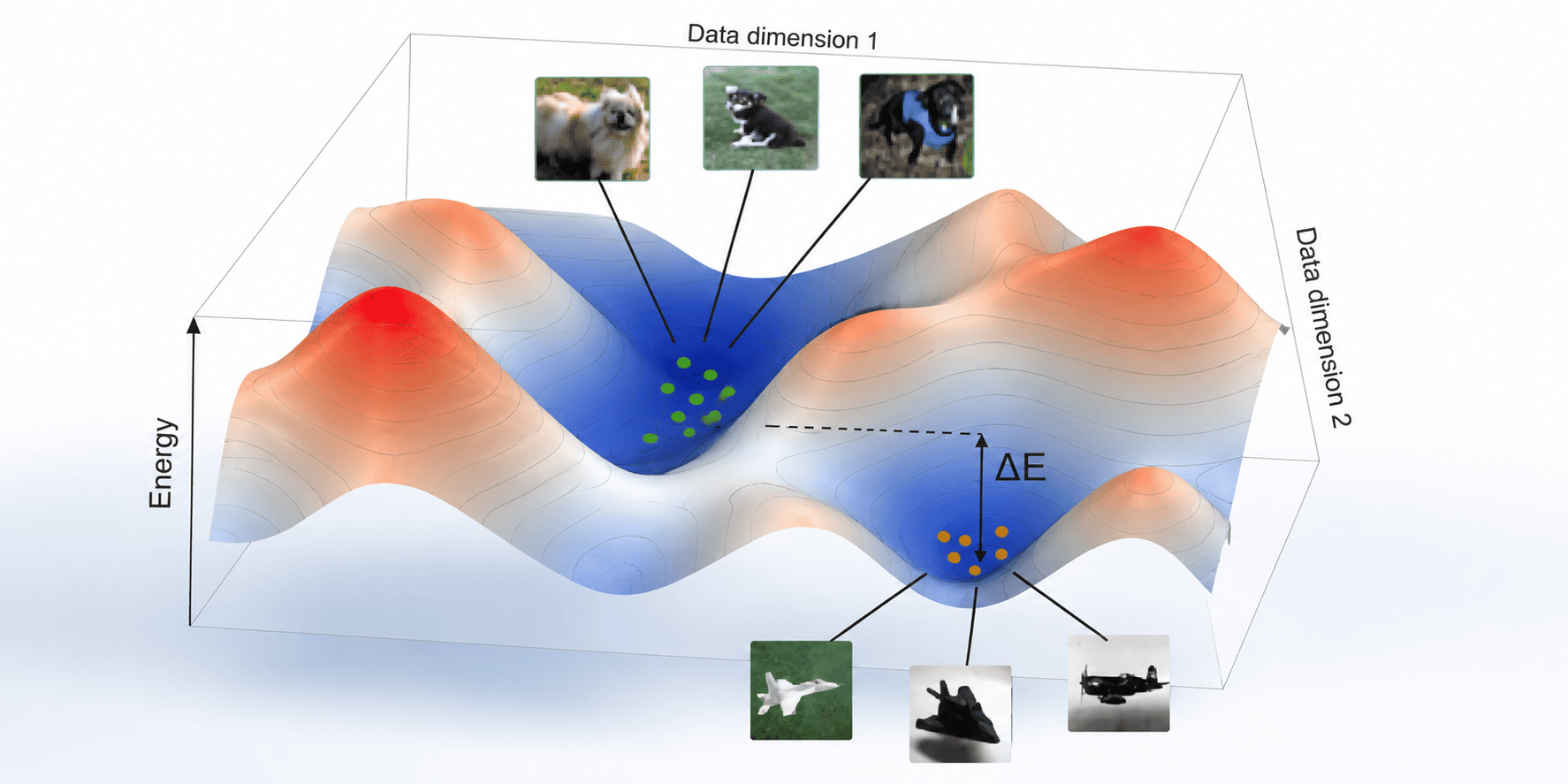
The study, published in npj Unconventional Computing, describes what the researchers call a Denoising Thermodynamic Computer Architecture, or DTCA. Rather than relying on deterministic calculations like conventional processors, the proposed architecture uses controlled randomness to perform probabilistic computations directly in hardware. The authors estimate that, on a simple image-generation benchmark, such a system could match GPU-based performance while consuming roughly 10,000 times less energy per generated sample.
The work was led by researchers from Extropic Corp. and the Massachusetts Institute of Technology, including quantum information scientist Isaac Chuang.
Although the proposed computer is entirely classical and does not perform quantum computation, its underlying concepts will be familiar to many in the quantum computing community. The architecture draws on ideas from statistical mechanics, Boltzmann machines and Ising models — mathematical frameworks also used in quantum annealing and quantum-inspired optimization.