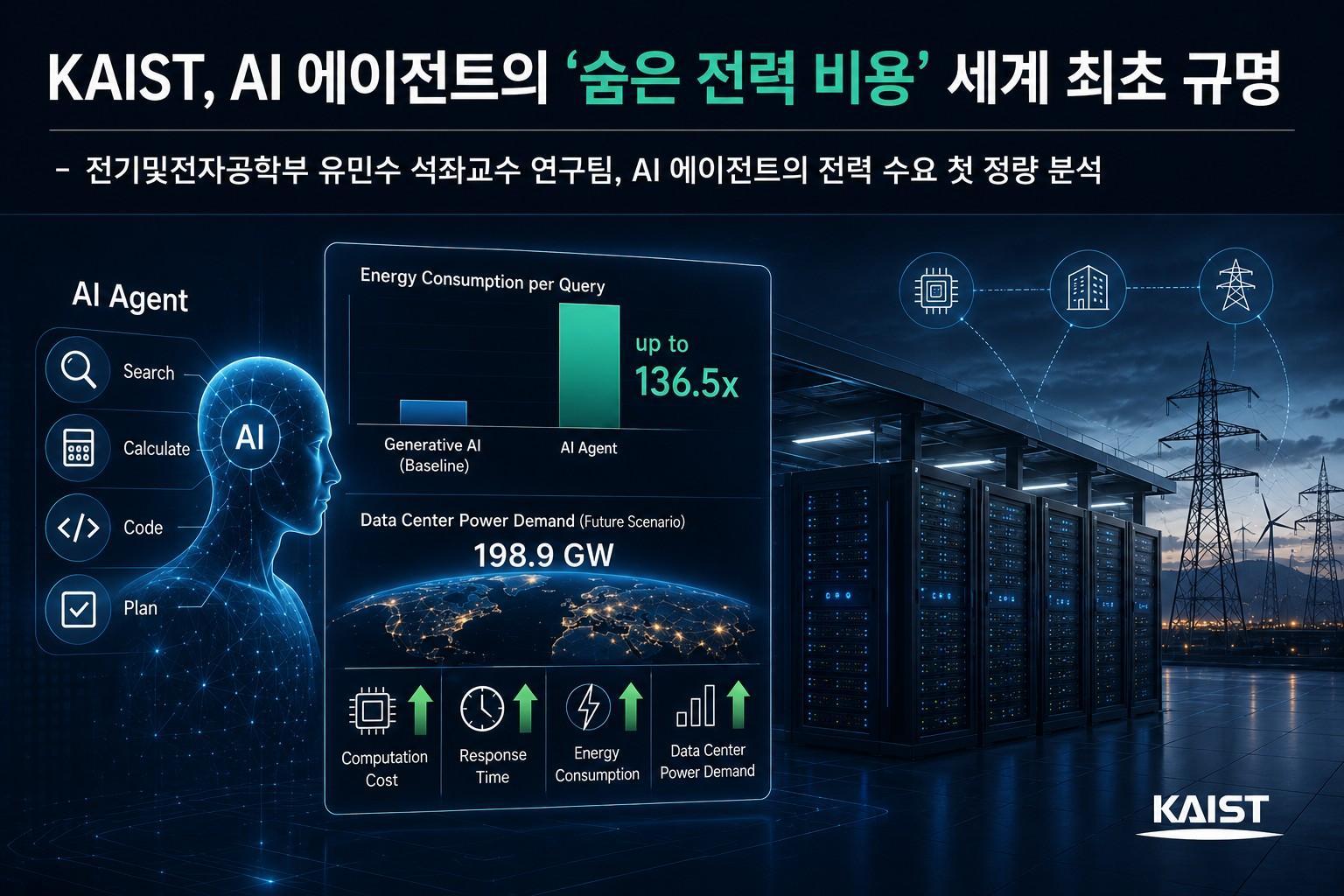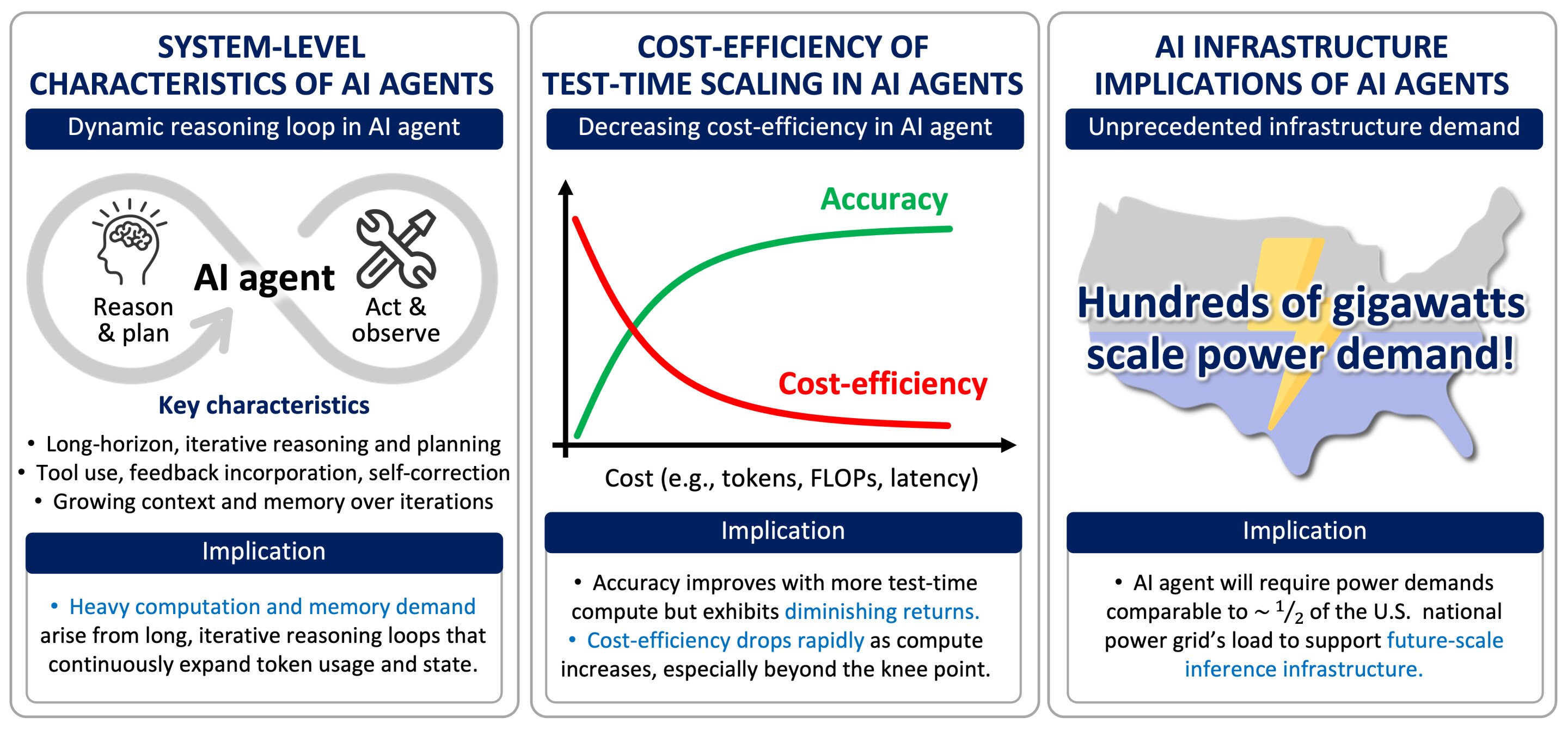
Key characteristics of AI agents and their infrastructure implications. Credit: KAIST
As the era of AI agents—systems that can reason and act autonomously—begins, the power consumption of data centers is emerging as a critical challenge. A KAIST research team has, for the first time, analyzed the computational cost and energy consumption of AI agents, finding that they can consume up to 136.5 times more energy per query than conventional generative AI.
The study, published in the 2026 IEEE International Symposium on High Performance Computer Architecture (HPCA), shows that competitiveness in the AI era is expanding beyond model performance to include the efficiency of data centers and power infrastructure. The paper was presented in February at the 32nd IEEE International Symposium on High-Performance Computer Architecture.
KAIST announced that a research team led by Professor Minsoo Rhu of the School of Electrical Engineering has systematically analyzed, for the first time, how much computational power and energy AI agents require in real-world service environments.
Large language model (LLM)-powered applications such as ChatGPT have rapidly evolved beyond simply answering questions. They are now developing into AI agents: next-generation AI systems that can plan, use external tools such as web search, calculators and code execution environments, and solve complex tasks by coordinating multiple steps on their own.