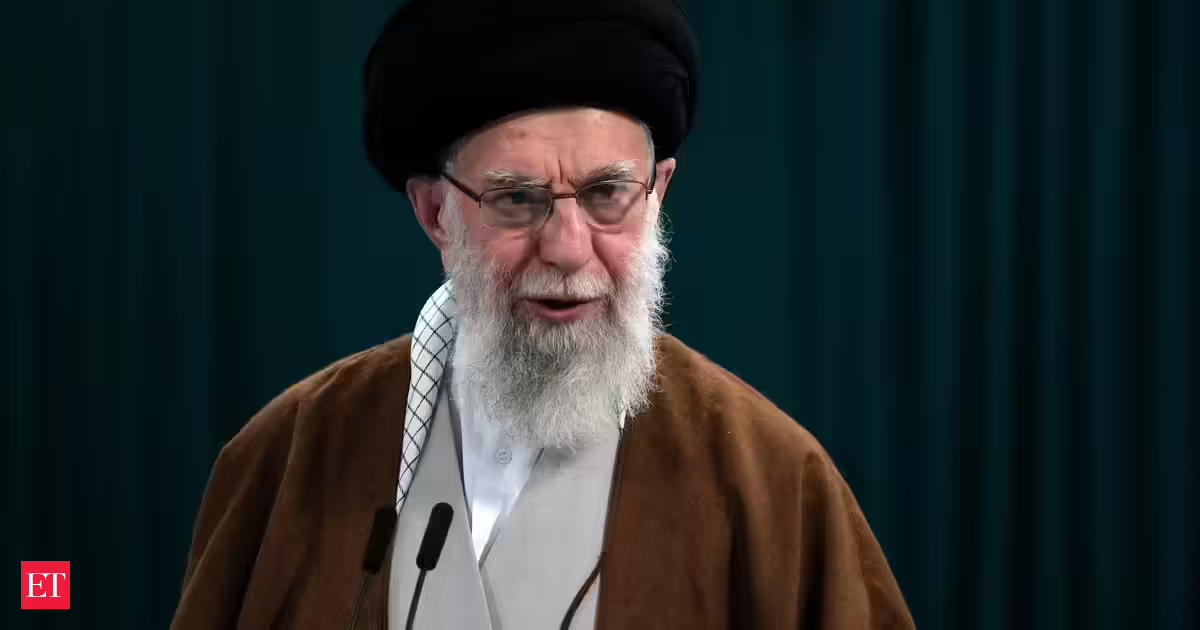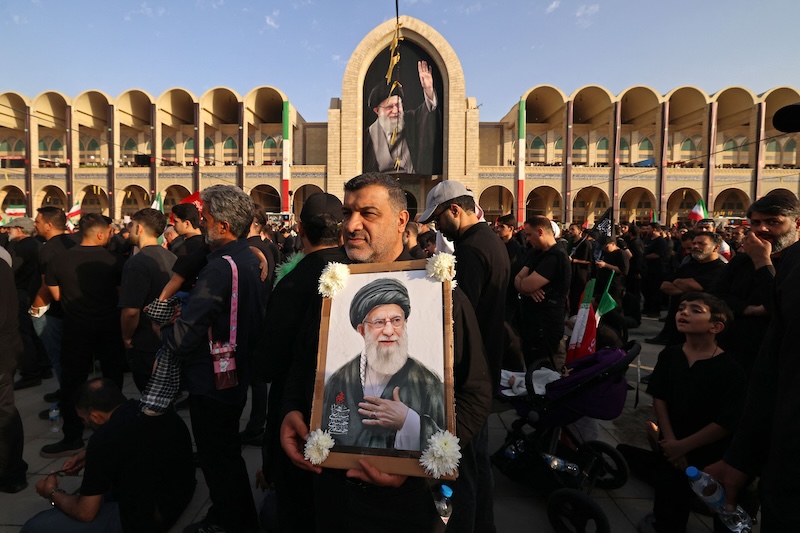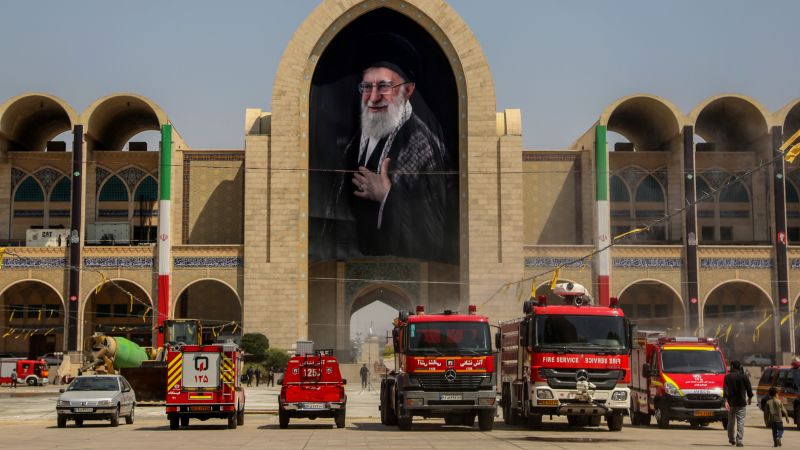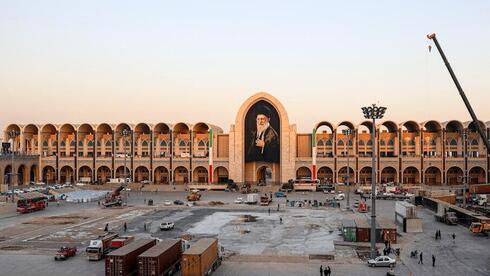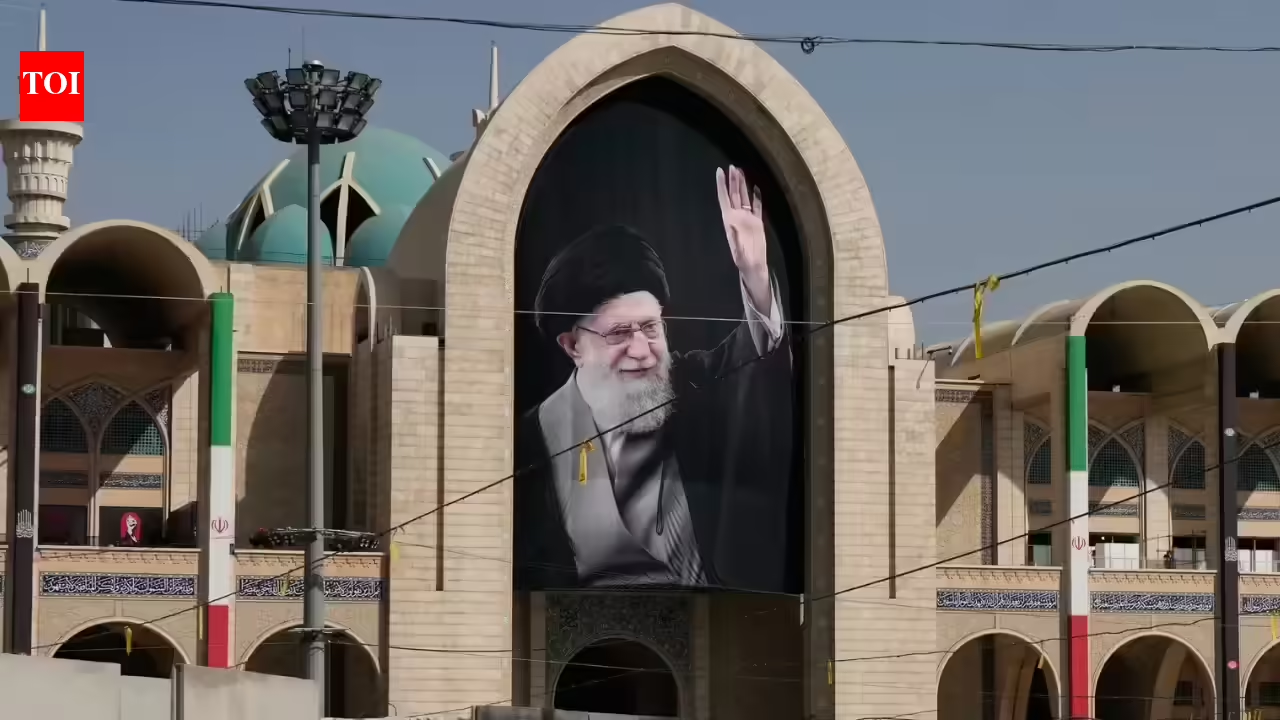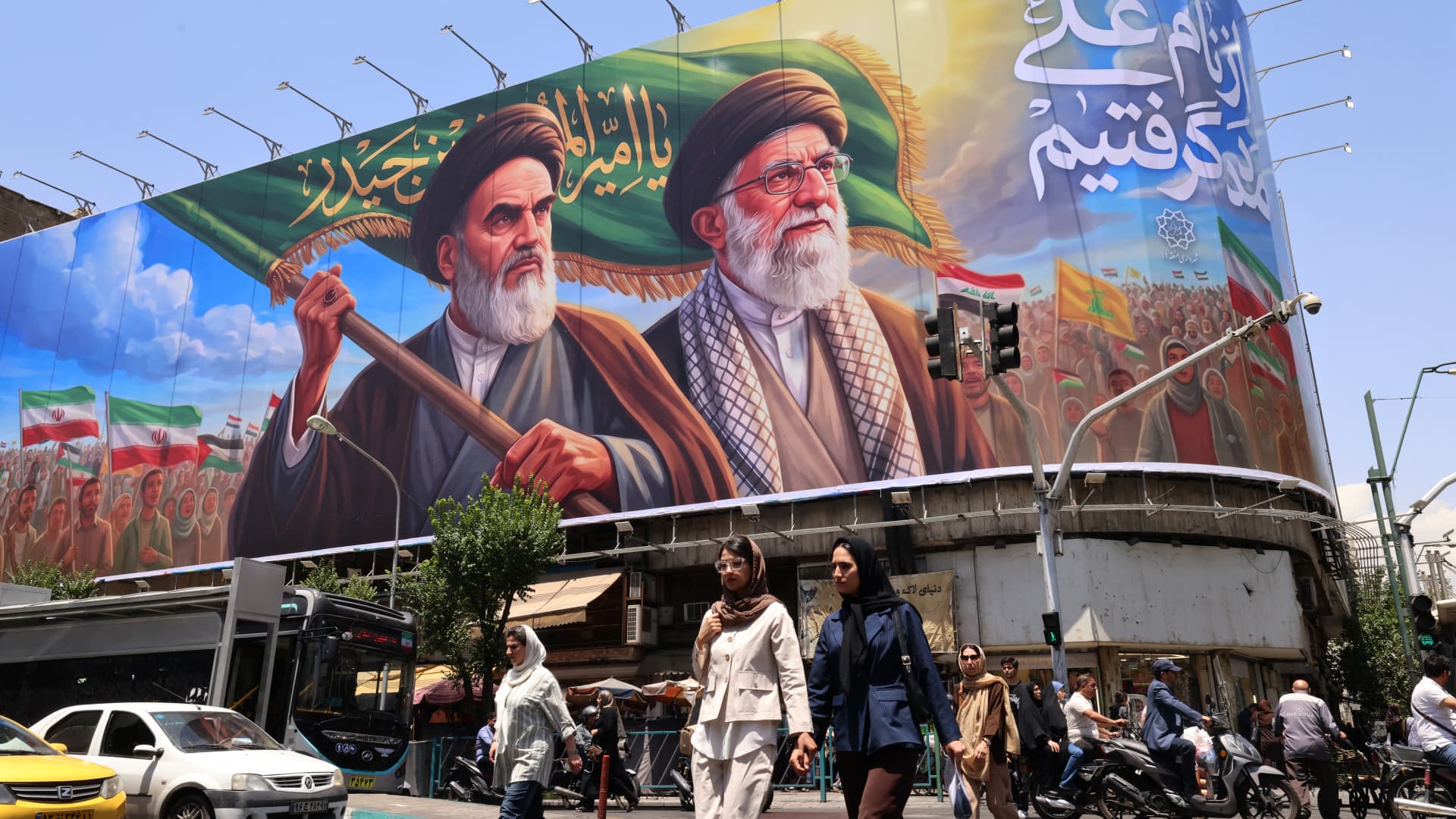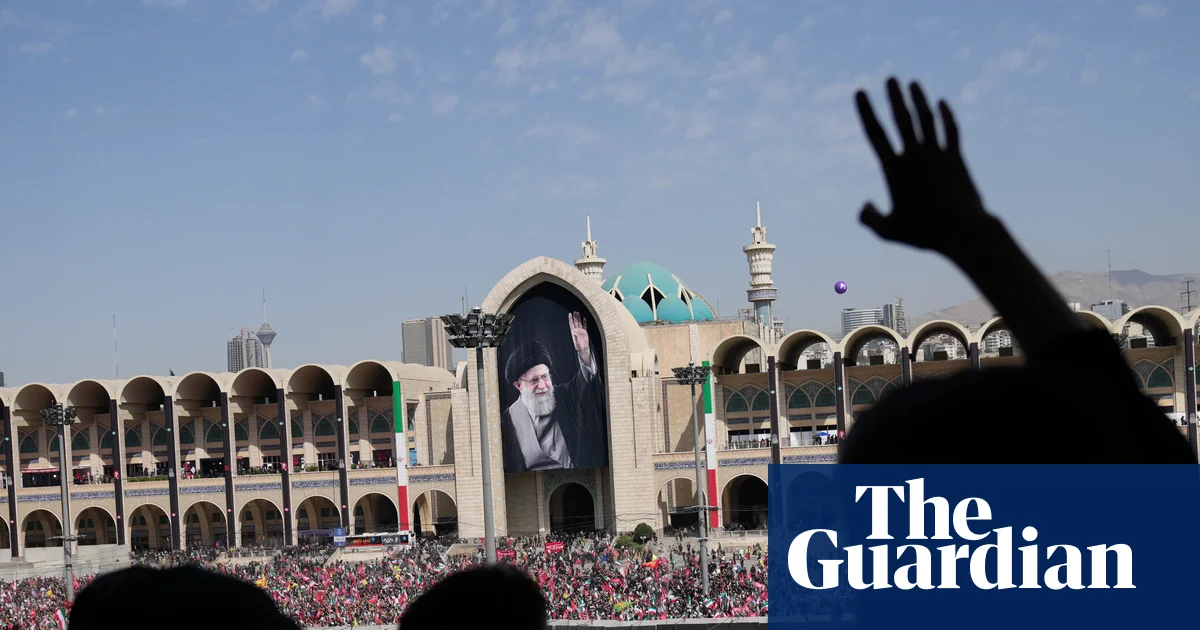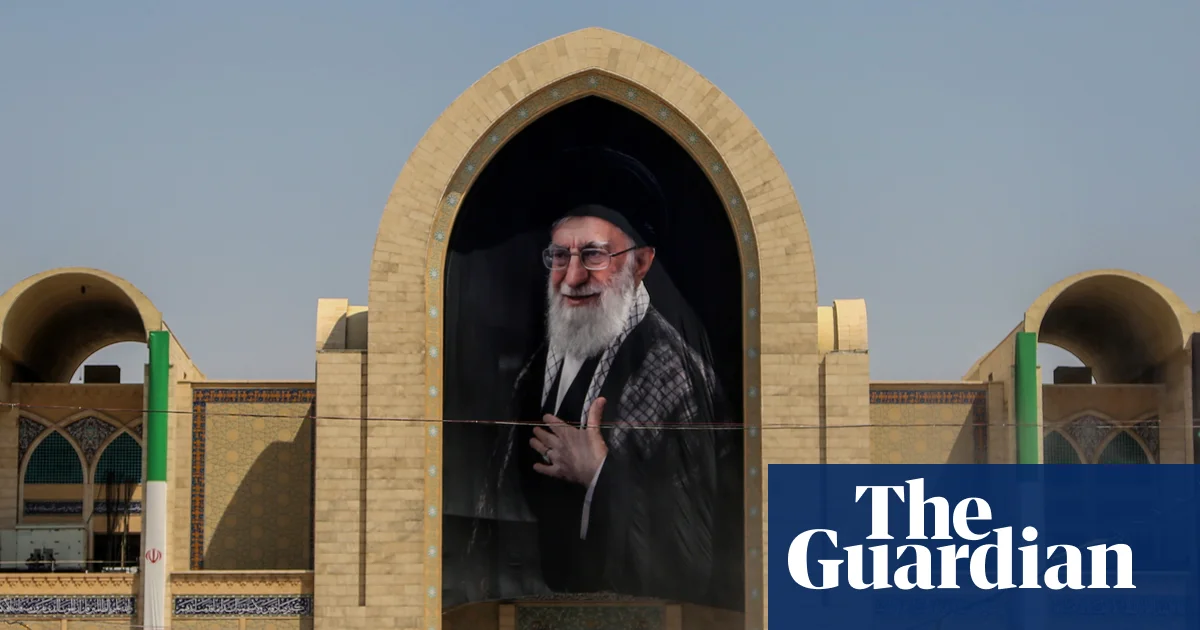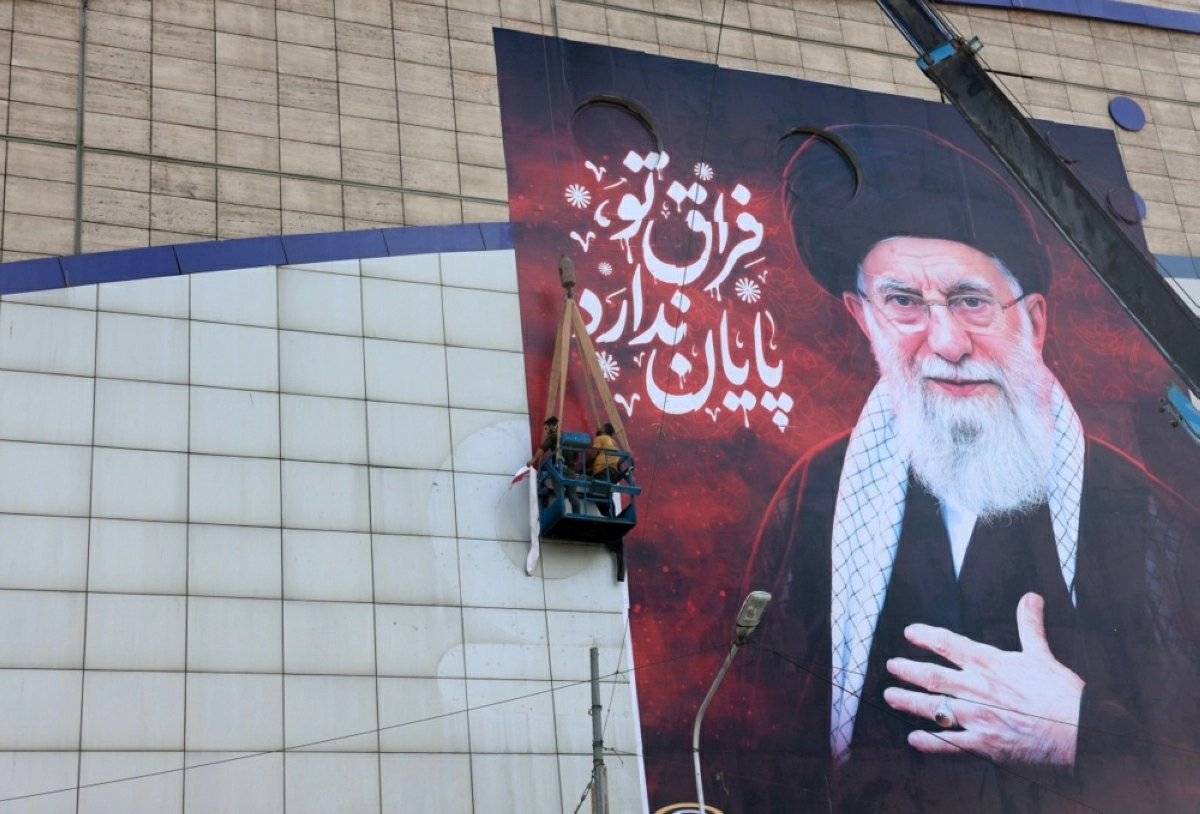
TEHRAN — Four months after Iran's Supreme Leader Ali Khamenei was killed in the opening salvo of the US-Israeli attack on the country in February, he is being memorialized in a weeklong funeral ceremony stretching across five cities in two countries, with millions of mourners expected to attend.In the small hours of Friday police roadblocks, stalls, posters and army vans were starting to appear across Tehran as millions of Iranians prepared to attend the long-delayed ceremony.The funeral is intended to be an epic display of personal mourning, national power, resilience and social cohesion. Small groups of mourners carrying flags were gathering along the roads festooned with the red fist, the symbol of the funeral alongside the slogan “We must rise”. At a ceremony dedicated to the families of martyrs, Khamenei’s coffin was displayed.Iran’s first vice president, Mohammad Reza Aref, who is the lead funeral organizer, described the ceremony, which begins on Saturday in Tehran and will end with Khamenei’s burial on Thursday in Mashhad, as “the most important event of this century” and the most attended event since the 1979 revolution.Despite a costly war against two of the world’s strongest militaries and decades of crushing economic hardship, Tehran is sparing no expense to send off Khamenei in a grand ceremony shrouded in religious symbolism that overlaps with the 250th US Independence Day celebrations, according to a CNN report.Authorities say they’ve launched one of the largest logistical efforts in the Islamic Republic’s history, mobilizing government employees, universities, labor unions, firefighters, soldiers, aid workers and even religious “mourning groups” to organize the funeral and manage the millions people expected to travel to cities and holy sites across Iran and Iraq to bid the ayatollah farewell. Authorities in neighboring Iraq, where Shiite Muslims are a majority, say millions of mourners are expected to pay respects.For more than ten days, the overwhelming coverage across Iranian media has been building up to this moment, with tribute songs and documentaries on Khamenei’s life overtaking news of talks with the US that had previously dominated headlines.The scale of the spectacle is designed to send a message to the world and to the Islamic Republic’s enemies: The regime not only survived an existential war, but will stubbornly immortalize its slain leader as a symbol of its resilience.“We must rise and raise the cry for the nation’s blood to the world so that the world knows that the honorable and noble nation of Iran does not remain silent in the face of oppression… and will not let go of the blood of its Imam (Khamenei),” Mohammad Bagher Ghalibaf, the powerful parliamentary speaker who is leading Iran’s negotiations with the US, wrote in a message published by state media on Thursday.“An epic feat that will show the greatness of a nation’s spirit to the world.”It may also mark the moment when Iran’s new Supreme Leader Mojtaba Khamenei makes his public debut after remaining in hiding since his father and family members were killed.Not to be lost in the ceremony is the apparently deliberate symbolism of the chosen dates. Khamenei’s body is scheduled to lie in state on the 250th American Independence Day, while another key day in the procession coincides with a major Shiite commemoration of a historic religious figure’s death.The entire spectacle unfolds during the Islamic month of Muharram, a period deeply associated in Shiite Islam with mourning, betrayal and martyrdom – specifically the 7th century martyrdom of Imam Hussein, one of the Shia imams to whom Khamenei traces his lineage.Khamenei, whose 37-year rule was defined by stubborn defiance and deep skepticism of the West, was killed on the first day of the US-Israeli war, on February 28. Yet his funeral is being orchestrated as a victory parade across three Iranian cities and two holy sites in neighboring Iraq, showing supporters that the cleric still hasn’t lost, even in death.The leader, whose assassination by the US and Israel has elevated his status, presided over some of the largest anti-regime protests in Iran’s history, brutally crushing demonstrators who often chanted for his death. In the process, he empowered the regime’s hardline base despite intense domestic and international opposition.“The assassination has made Khamenei far more powerful symbolically in death than he was in life,” Sina Toossi, a senior nonresident fellow at the Center of International Policy, told CNN. “Khamenei is now being framed as a martyred religious authority, akin to revered Shia saints who were martyred, whose worldview was vindicated by the manner of his death.”Iran’s only previous experiences with funerals on this scale were those of the Islamic Republic’s founder, Ayatollah Ruhollah Khomeini, in 1989, and Quds Force commander Qassem Soleimani in 2020. Both processions descended into chaos and ended in deadly crowd crushes.Khomeini’s body, displayed in the very same location where his successor Khamenei is scheduled to lie in state for two days, had to be removed by helicopter after frenzied mourners tore at the coffin’s shrouds.Safeguarding the leader’s body, managing the millions of mourners while hosting foreign dignitaries, and orchestrating major events across five cities in two countries is a colossal undertaking. It will require an unprecedented security operation for a country that has only just emerged from internal unrest and war with the US.The first event where the coffin will be displayed starts at 6 a.m. local time on Saturday, when Khamenei’s body will be placed on an elevated stage erected inside Tehran’s Imam Khomeini Mosalla, a massive mosque complex. Firefighters have installed more than 6,000 overhead water sprinklers across the square to keep the crowds cool under the scorching July sun.The capital’s international and domestic airports will be shut over the days during the funeral and national holidays have been declared across the cities which Khamenei’s body will pass through. Tehran, a city of 17 million, will undergo the largest traffic operation in its history, banning private vehicles near the procession and opening up more than 700 parking areas to free up space for the millions expected to simultaneously descend on the city.Fifty million pieces of bread will be baked to feed the mourners, with 16 mobile bakeries deployed in the capital, the Basij paramilitary volunteer force said, according to Iranian media.Tehran and other major cities have been readied for incoming mourners, according to the Red Crescent. Authorities have mobilized 2,500 ambulances, 21 helicopters, 100 drones, and thousands of rescue personnel, while more than two dozen hospitals, 500,000 liters of IV fluids and 20,000 classrooms stand prepared, Iranian media report.The government has mounted a national campaign asking people to volunteer their homes to host mourners visiting Tehran, Mashhad and Qom, while mosques, sports halls, parks, and cultural centers in the capital have also been prepared to accommodate the millions expected to attend the funeral ceremony.On the third day, a funeral procession is expected to wind from the east of the capital to its western edge. Khamenei’s body will then be taken for more ceremonies in the holy city of Qom before being flown to Shiite holy sites in Iraq’s Najaf and Karbala.It will then be transported to its final burial site at the Imam Reza shrine in Mashhad – Khamenei’s birthplace.Transporting the former supreme leader’s body to Iraq serves as a symbol of the Islamic Republic’s self-image as a borderless revolutionary force, a message it is eager to amplify after years of projecting its power in the region.“His religious following extended into Iraq, Pakistan, Bahrain and other Shia communities, which is why planned processions in Najaf and Karbala are so significant,” said Toossi. “They deepen the sense that this is not just an Iranian state funeral, but a transnational moment.”Iranian officials have provided ambitious estimates of attendance figures, ranging from 4 million to 15 million mourners – which could make it the largest funeral in modern history – and boasted that 14,000 journalists, including 900 foreign reporters, will cover the event.State media outlets have spent the past week listing expected foreign dignitaries. But aside from Georgian President Mikheil Kavelashvili, Pakistani Prime Minister Shehbaz Sharif, and Russia’s security council deputy Dmitry Medvedev, few world leaders are expected to attend. Iranian authorities say eight heads of state and 12 parliament speakers will be present; Western officials were excluded from the invitation list.Ali Akbar Pourjamshidian, a Revolutionary Guards commander designated to lead the committee supervising the events, said the funeral will seek to project the Islamic Republic’s “power to the international community.”A central question looming over the funeral is whether Mojtaba Khamenei, the new supreme leader and son of the slain ayatollah, will appear at the procession for his father, mother and wife, who were all killed in the same US-Israeli strike.Wounded in that attack, Mojtaba has remained in hiding since the war began in late February, communicating with his supporters only through written statements, never showing his face or using his voice. Iranian officials have worked to project an image of full recovery, claiming he is directing Tehran’s negotiations with Washington.When asked this week whether he would attend, the funeral’s organizer deflected, saying the “matter is not within our domain and the decision lies entirely with the Leader’s office.”Motjaba’s appearance would be momentous, marking his first public emergence, and helping establish his legitimacy. Non-attendance is likely to fuel doubts at home and abroad about his well-being, as well as questions over who is running the country. This week, the leader failed to appear for a private farewell ceremony for his wife.The Iranian military has warned against any “miscalculation” during the funeral processions and Foreign Minister Abbas Araghchi said on Wednesday that Tehran would deliver an immediate and powerful response to any threat against its leadership after Israeli Defense Minister Israel Katz said that Mojtaba Khamenei was “marked for death.”But despite the regime’s push to turn the funeral into a massive display of power and popular support, some Iranians remain indifferent.“I haven’t even been able to get petrol for two days because the queues are insane,” one Tehran resident told CNN. “And let’s be real, most people aren’t going to the funeral, they’re going on holiday.”
Six-day funeral for Iran's slain Supreme Leader expected to draw millions
Four months after Iran's Supreme Leader Ali Khamenei was killed in the opening salvo of the US-Israeli attack on the country in February, he is being memorialized in a weeklong funeral ceremony stretching across five cities in two countries, with millions of mourners expected to attend.
1,667 words~8 min read