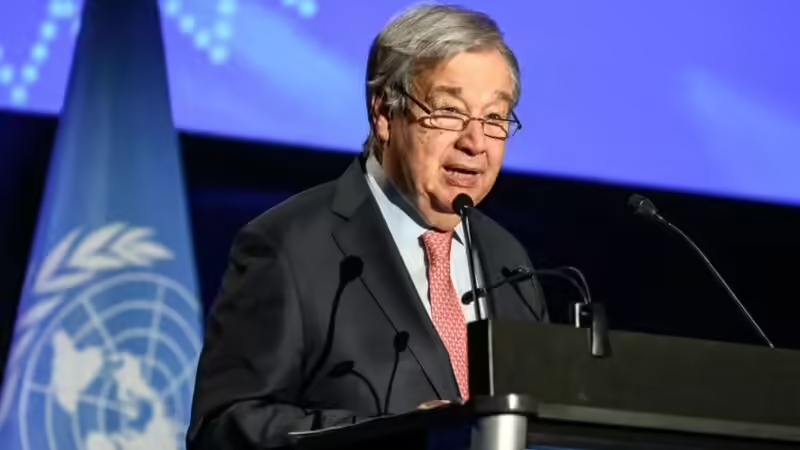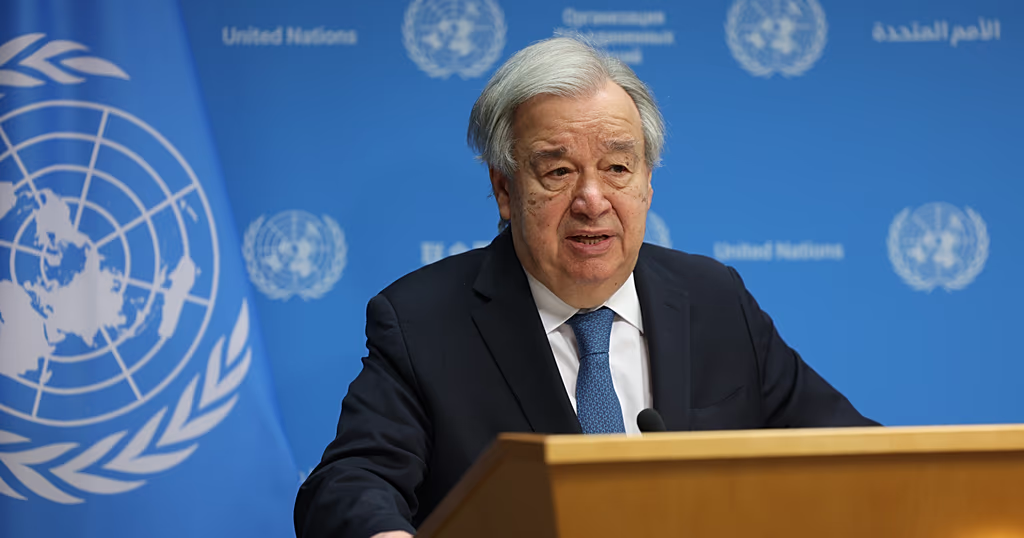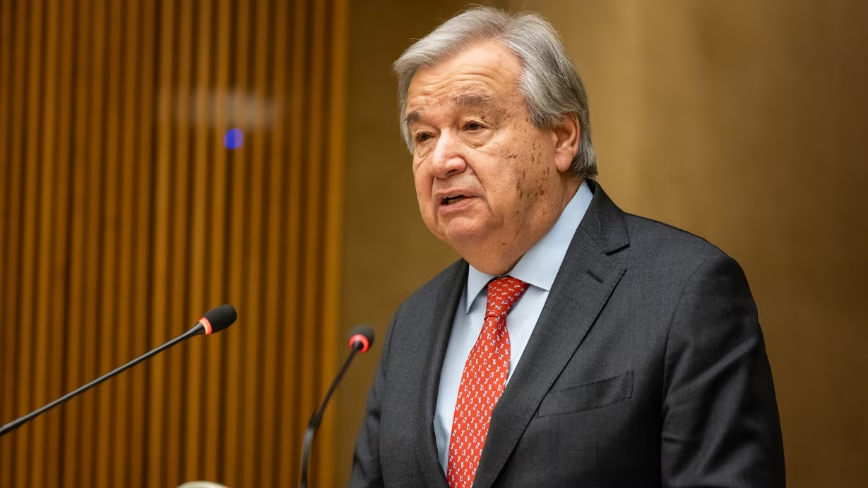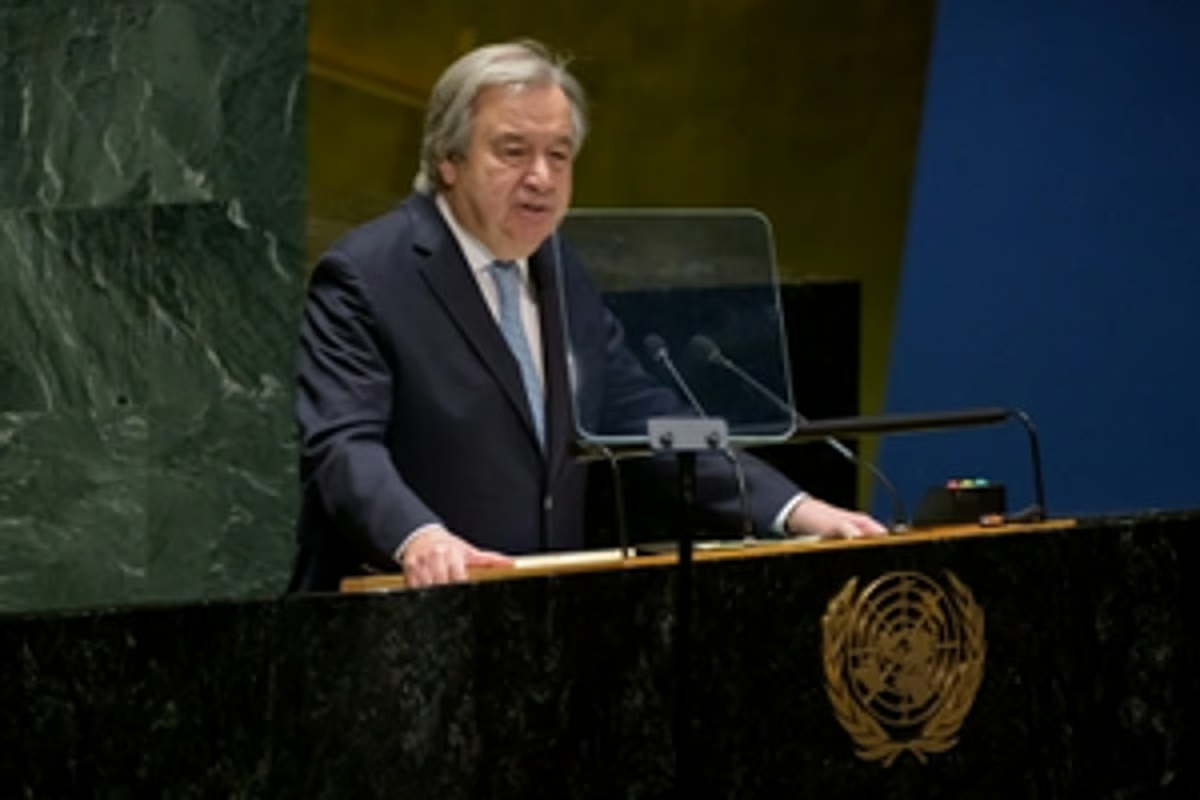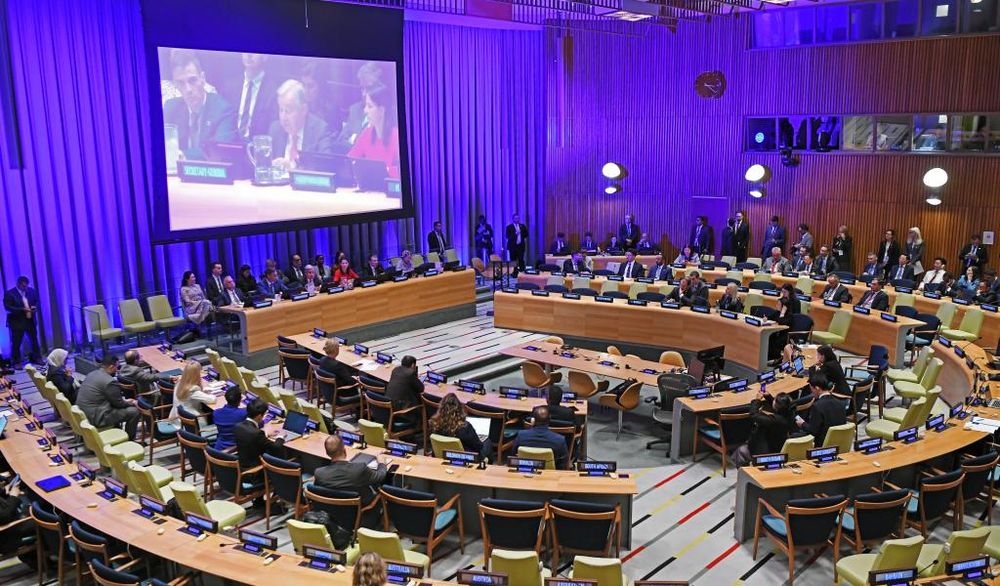
UN Secretary-General Antonio Guterres (C, on screen) speaks at the High-level Multi-Stakeholder Informal Meeting to Launch the Global Dialogue on Artificial Intelligence (AI) Governance, at UN headquarters in New York.
The world today is very different from what many of us know. Technological advances have not only transformed economies and industries but have also altered the way people understand events, engage with politics and participate in society. The rise of digital platforms has accelerated the flow of information across borders, creating a world where ideas, movements and opinions can spread almost instantaneously. As a result, global society is being reshaped by new forms of communication that are redefining power, influence and public participation.
For much of modern history, information flowed through a relatively small number of institutions. Governments, broadcasters and major media organisations largely determined which stories reached the public and how those stories were presented. While this system provided structure, it also concentrated influence in the hands of a few powerful gatekeepers.
Today, algorithms have disrupted that model. Although often viewed as simple tools that recommend content, algorithms are highly adaptive systems that continuously respond to public interest and behavioural patterns. Social media has become increasingly fragmented, producing multiple information streams rather than a single dominant narrative. Information now moves faster than traditional institutions can often manage, creating an environment where competing perspectives can emerge and gain traction almost immediately.