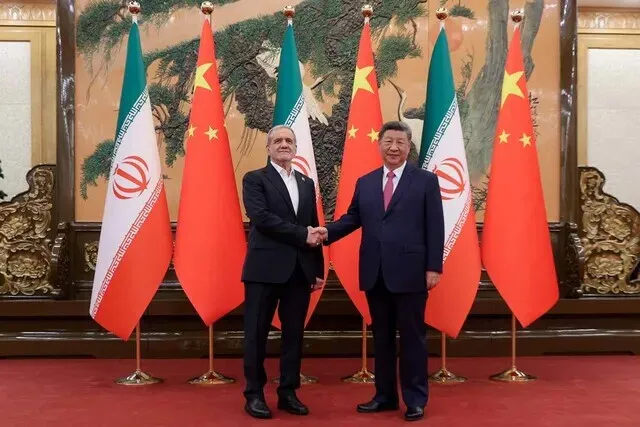
Iranian President Masoud Pezeshkian and Chinese President Xi Jinping shake hands as they meet, in Beijing, China, on Sept. 2, 2025. (courtesy PRC Ministry of Foreign Affairs)
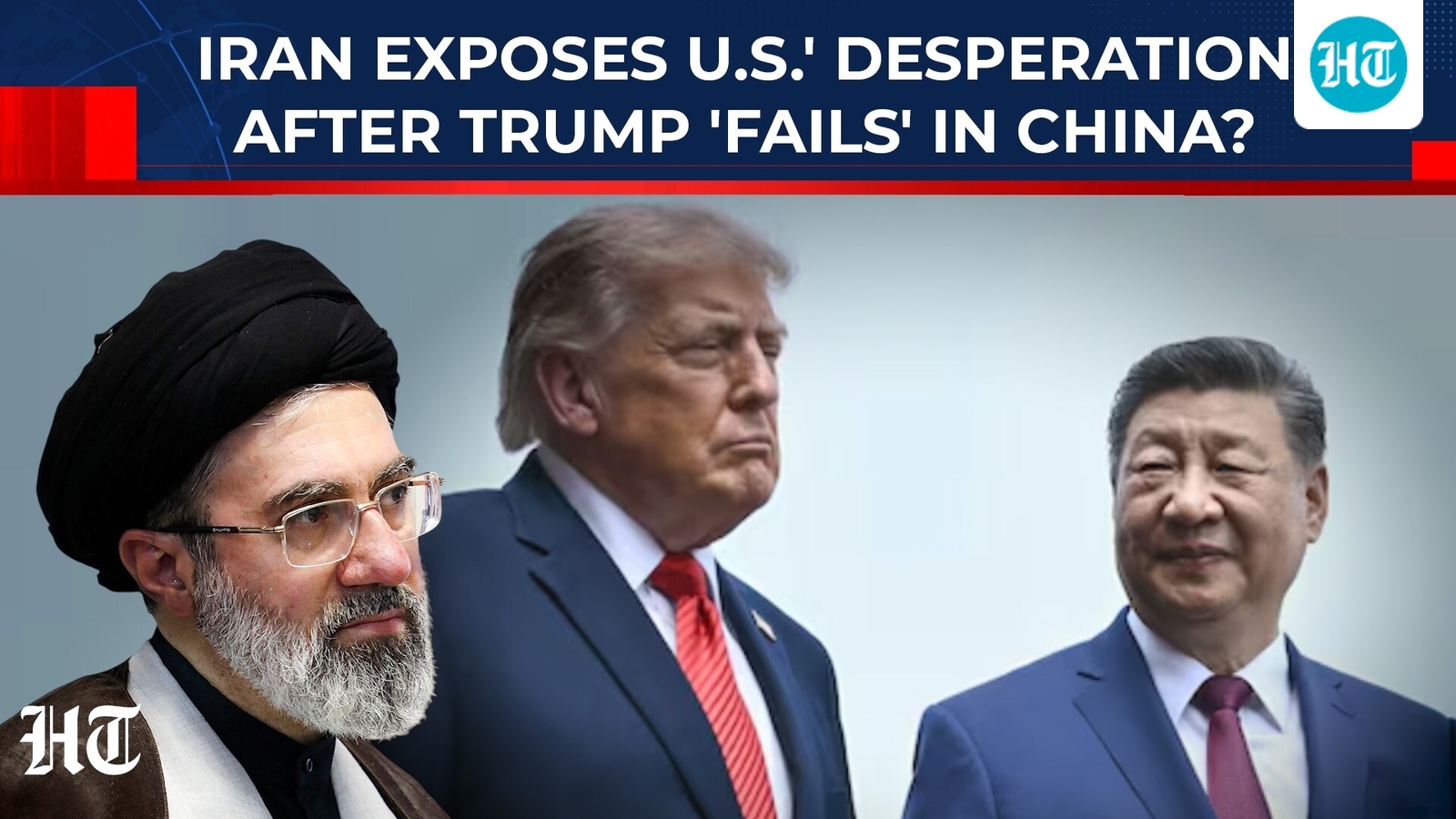
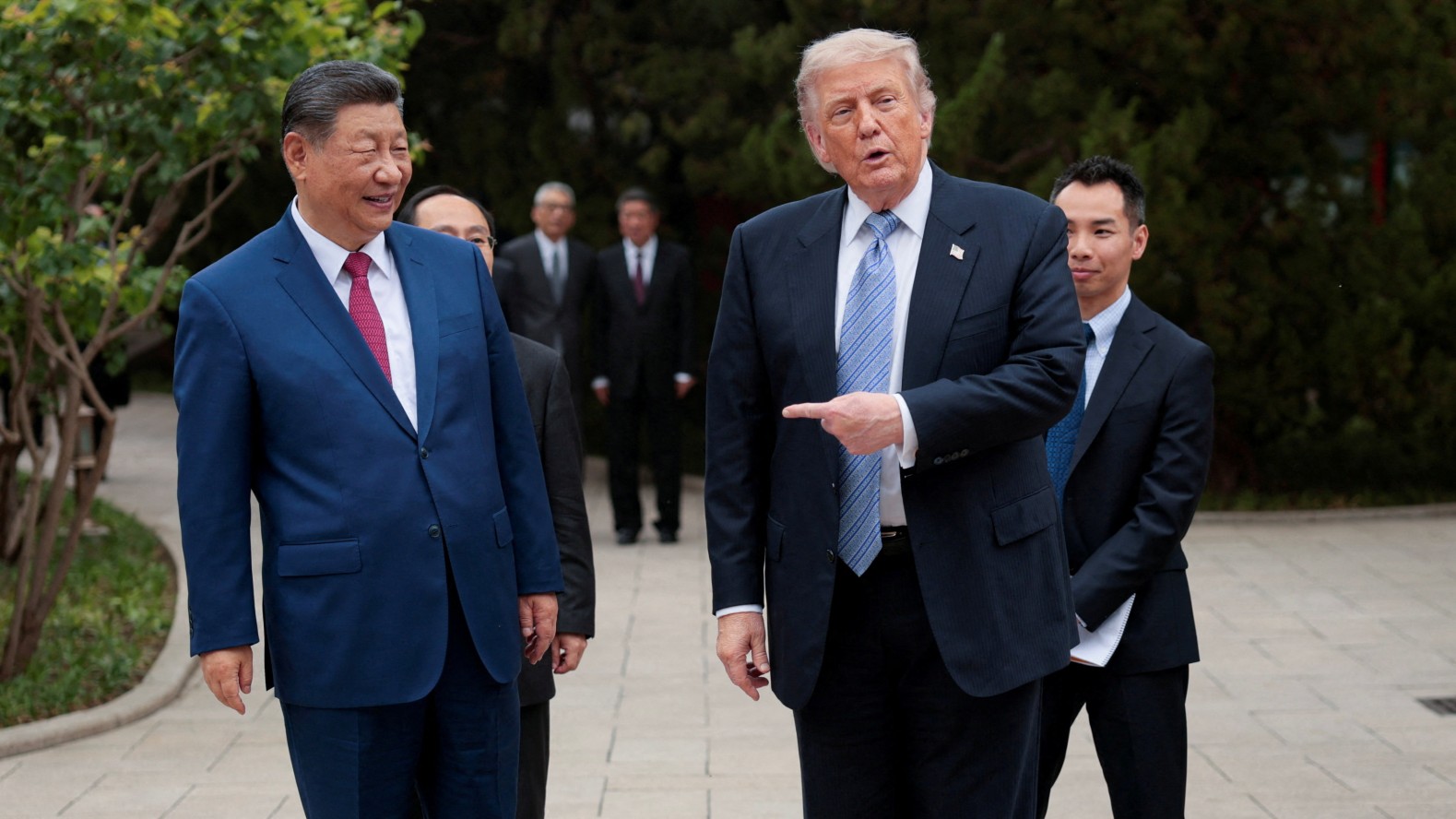
Could China be the true winner of the US’ war against Iran?To be sure, Beijing’s signature doesn’t appear on the memorandum of understanding signed by Washington and Tehran. Even so, its influence is everywhere apparent.Chinese Foreign Minister Wang Yi and Iranian Foreign Minister Abbas Araghchi have held dozens of conversations both over the phone and in person, and China worked closely with its partner Pakistan, playing an indirect, yet important, role in the US-Iran negotiations.Iran and the Strait of Hormuz were also major items on the agenda of Chinese President Xi Jinping and US President Donald Trump’s summit in May. After signing the MOU to halt the fighting, Trump said in a press conference at the Group of Seven summit in France that “President Xi helped me. He tried to help, and I think he probably helped get it solved.”Since its attack on Iran on Feb. 28, the Trump administration has spent tens of billions of dollars and burned through the US’ stockpile of precision-guided munitions while achieving few of its stated goals and only proving the limitations of American power. In the meantime, China’s diplomatic influence has grown substantially.While the US was struggling to contain Iran’s counteroffensive and stranglehold on the Strait of Hormuz, China was inviting national leaders to Beijing to promote its image as a partner that’s much more predictable and reliable than the US, the world’s supposed “guardian of peace.”Trump’s failure has obviously elevated the position of China, which has studiously cultivated its relationship with Iran, but that doesn’t mean that China will be claiming hegemony over the Middle East anytime soon. Trump’s attack on Iran was part of the US’ long-running efforts to reassert its leadership over the Middle East and Central Asia while blocking China from expanding its influence there. This latest version of the “Great Game” dates back to the Biden administration’s hurried retreat from Afghanistan in August 2021.Fan Hongda, the director of the China-Middle East Center at Shaoxing University, argued in an article published in Singapore-based e-magazine ThinkChina on June 18 that the US and China’s tug-of-war in the Middle East since the US’ withdrawal from Afghanistan has been “nothing short of a rollercoaster ride” ultimately leading to the US’ attack on Iran.The Biden administration had intended to pull troops out of Afghanistan by late 2021 to refocus its resources on the strategic competition with China. But the Taliban’s unexpectedly rapid advance toward Kabul forced the US to essentially flee the country that August.The US’ humiliating retreat left a power vacuum that China gladly exploited to boost its standing. China convened a meeting of foreign ministers from Afghanistan’s neighbors, pointedly showing its support for a stable transition in the country. Following Xi’s visit to Saudi Arabia in December 2022, China brokered a historic reconciliation between Riyadh and Tehran in March 2023.Notably, Iran cozied up to China following Trump’s unilateral withdrawal from the Iran nuclear deal (officially called the Joint Comprehensive Plan of Action) in 2018. In effect, Iran served as a critical bridgehead for China to rapidly expand its influence in the Middle East.But China began facing headwinds after Hamas launched a sneak attack on Israel on Oct. 7, 2023. Israel degraded Iranian-backed militant groups such as Hamas and Hezbollah, and Syria’s pro-Iranian regime under Bashar al-Assad collapsed and was soon replaced by a US-aligned government.Then in June 2025, Israel unilaterally destroyed Iranian nuclear facilities in what was dubbed the Twelve-Day War. During this turbulent period, China stood on the sidelines without providing Iran or its proxies with military support, provoking growing disappointment over China’s passivity.