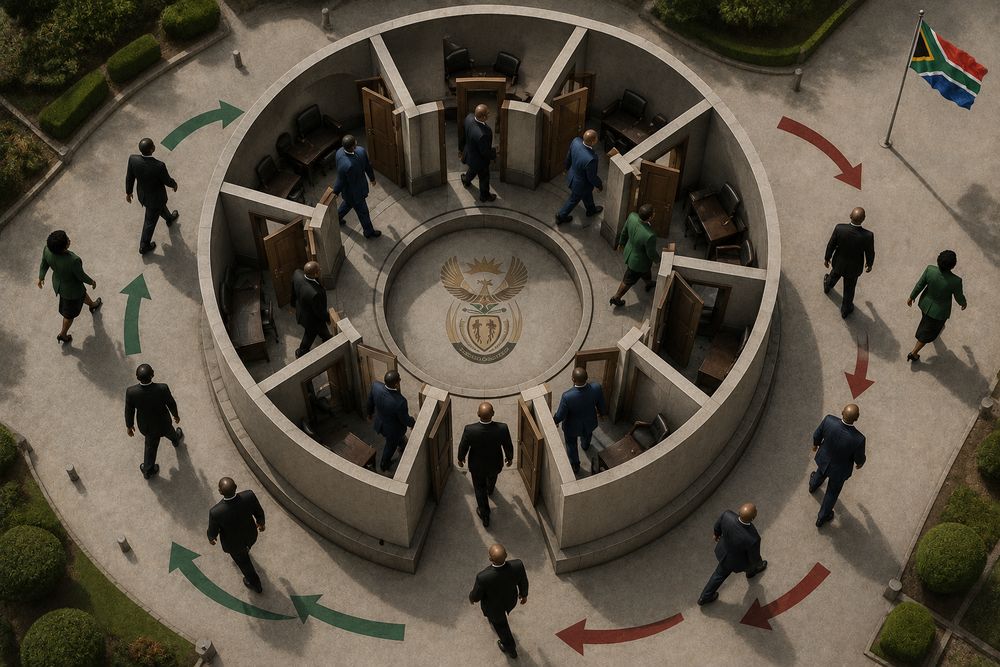
A government that repeatedly depends upon the same individuals despite recurring governance shortcomings inevitably raises questions about the strength of its leadership pipeline and the effectiveness of its accountability mechanisms.
EVERY institution, whether public or private, is ultimately defined not by how it celebrates success, but by how it responds to failure.
Some organisations investigate failure, learn from it, and emerge stronger. Others deny it, conceal it, or quietly redistribute it until it becomes someone else's responsibility. It is this distinction that separates resilient institutions from declining ones.
South Africa's recurring cabinet reshuffles invite us to confront an uncomfortable question: what if our political system has reached the point where failure is no longer regarded as a liability, but as a renewable resource?
Cabinet reshuffles are invariably presented as moments of decisive leadership. The public is assured that the government is renewing itself, correcting weaknesses, and positioning the state to respond more effectively to the country’s challenges.