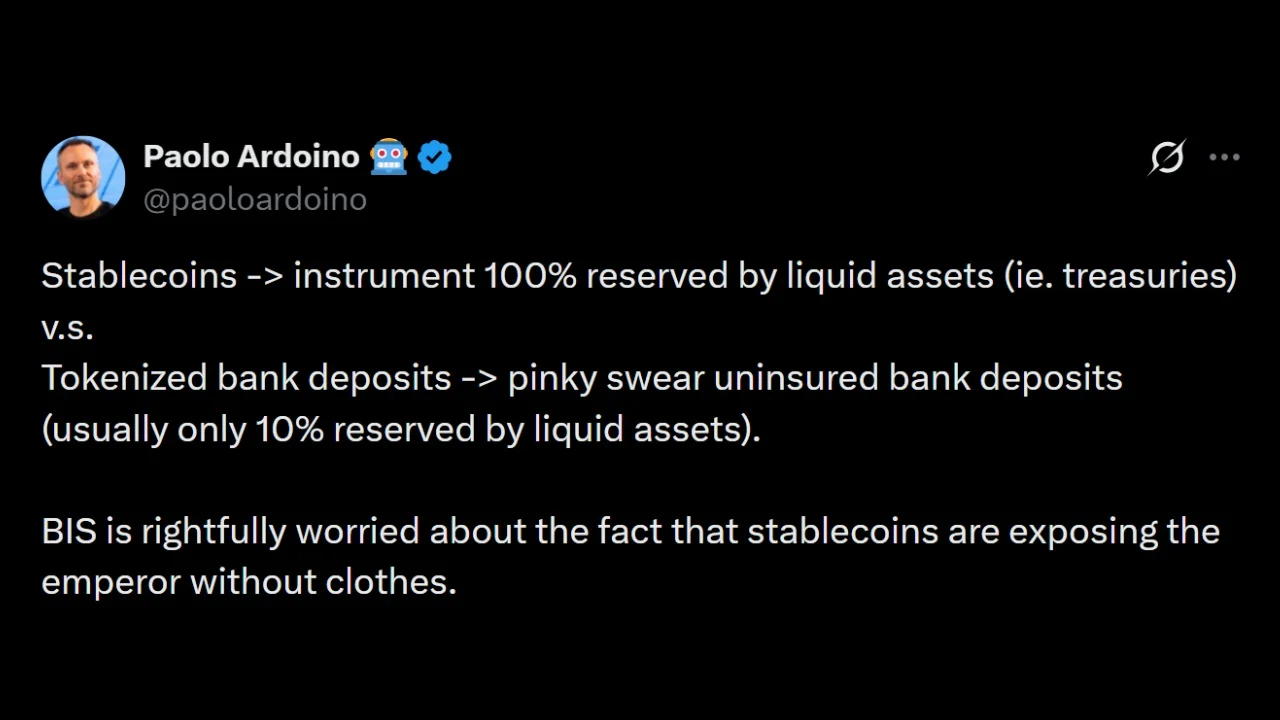
Tether CEO Paolo Ardoino has chosen a hill to die on, and it happens to be the entire European Union’s crypto regulatory framework. On July 2, Ardoino confirmed that Tether deliberately did not apply for a MiCA license for USDT, calling the EU’s stablecoin reserve rules “dangerous” and “ill-conceived.”
The timing is not subtle. His statement landed one day after MiCA’s transitional period officially ended on July 1, triggering the delisting and geofencing of USDT across major EU-regulated platforms including Coinbase, Kraken, Crypto.com, and Binance in the European Economic Area.
The reserve rule Tether won’t touch
At the heart of the dispute is a single requirement: MiCA mandates that significant stablecoin issuers, defined as those with over 5 billion euros in circulation or more than 10 million users, must hold at least 60% of their reserves in cash deposits at European banks.
Tether, with a market cap of approximately $184B and a user base Ardoino claims exceeds 400 million, would comfortably qualify as “significant” under those thresholds. Which is precisely the problem, from his perspective.