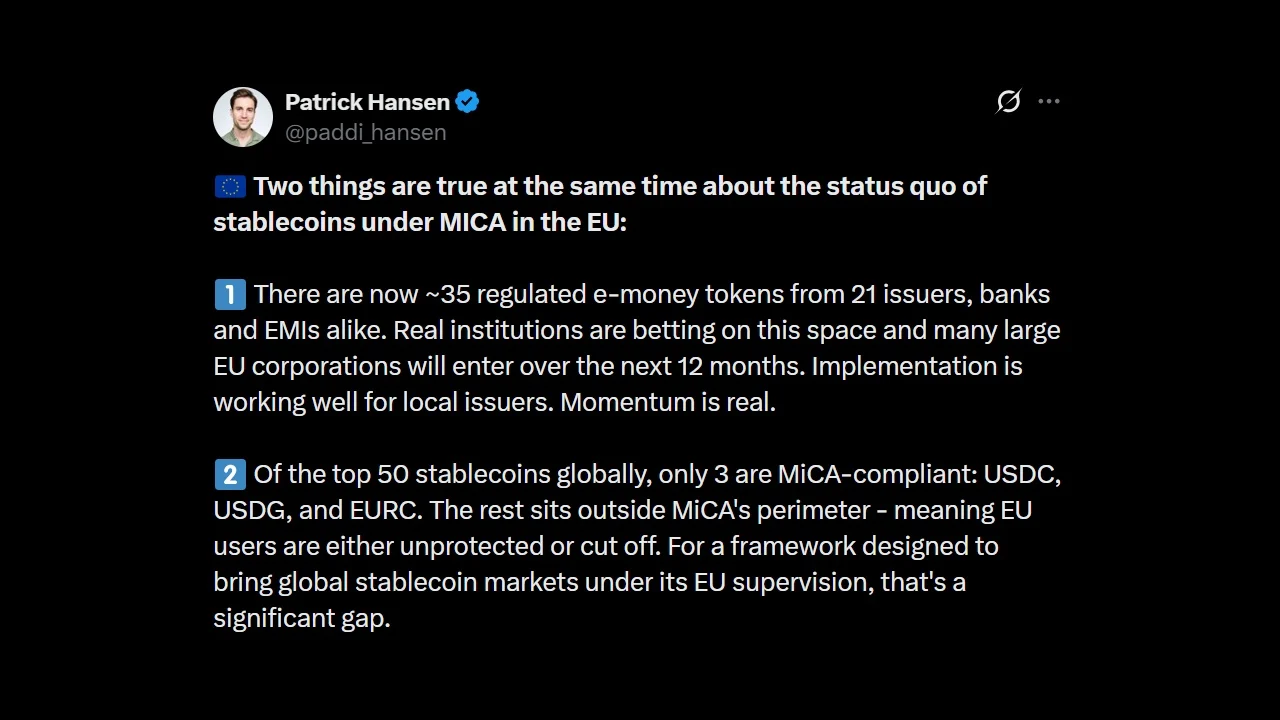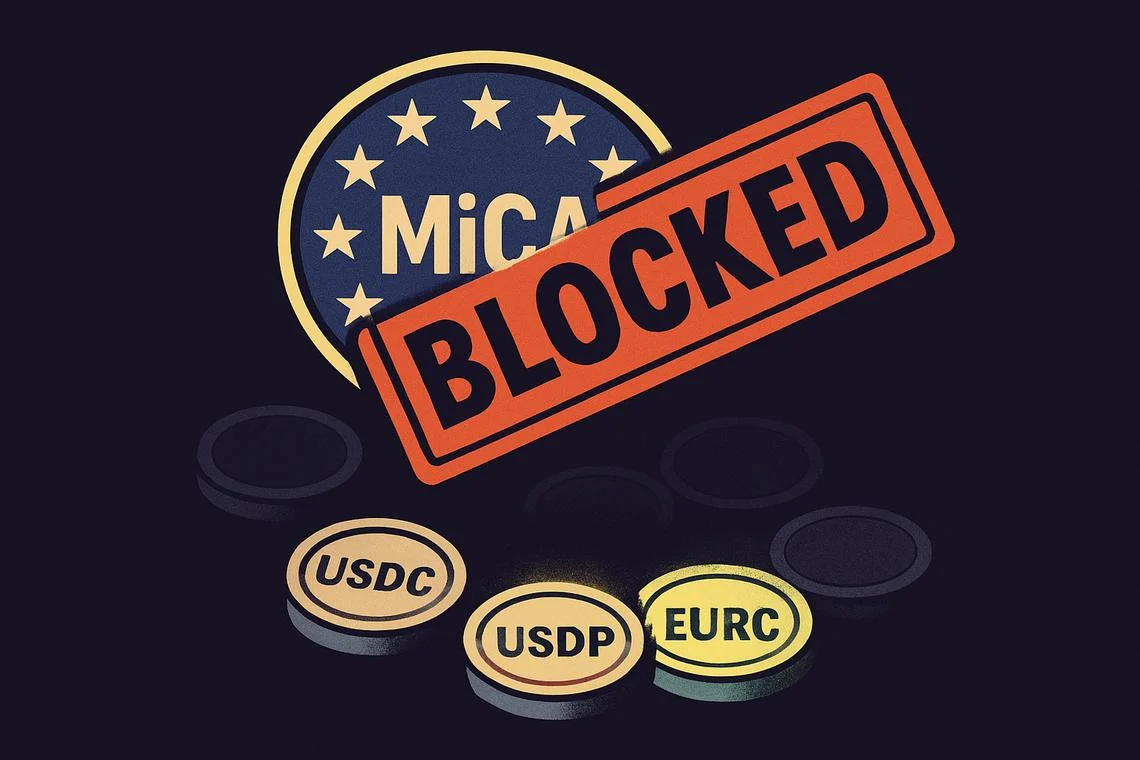
An EY global analysis has ranked the EU’s Markets in Crypto-Assets (MiCA) regulation as the most restrictive major stablecoin framework in the world, outpacing both US and UK rules in terms of compliance burden, reserve mandates, and market access barriers for foreign issuers.
What MiCA actually requires
MiCA’s stablecoin rules came into effect on June 30, 2024, with the full regulatory framework implemented by December 30, 2024. Transitional periods extend into 2026, but the core demands are already live.
To issue an electronic money token (EMT), a stablecoin pegged to a single fiat currency, companies must obtain authorization as either a credit institution or an electronic money institution within the EU.
Reserve requirements are where MiCA gets particularly demanding. All stablecoins must maintain 1:1 backing with segregated assets. What separates MiCA from other frameworks is the bank deposit mandate: at least 30% of reserves must be held in bank deposits. For tokens deemed “significant” by regulators, that figure jumps to 60%.