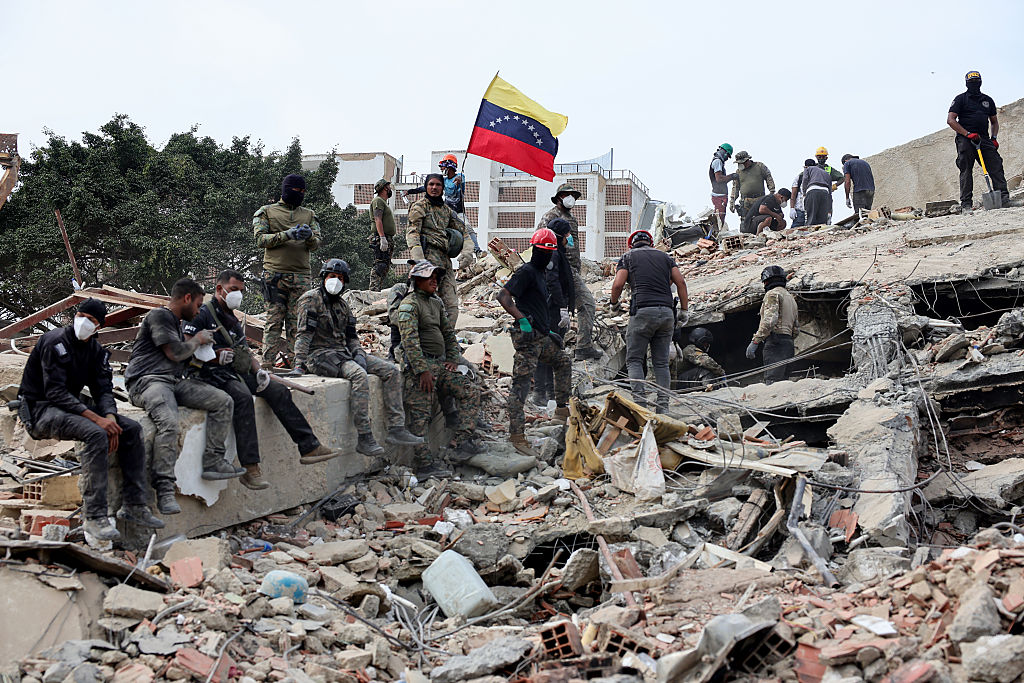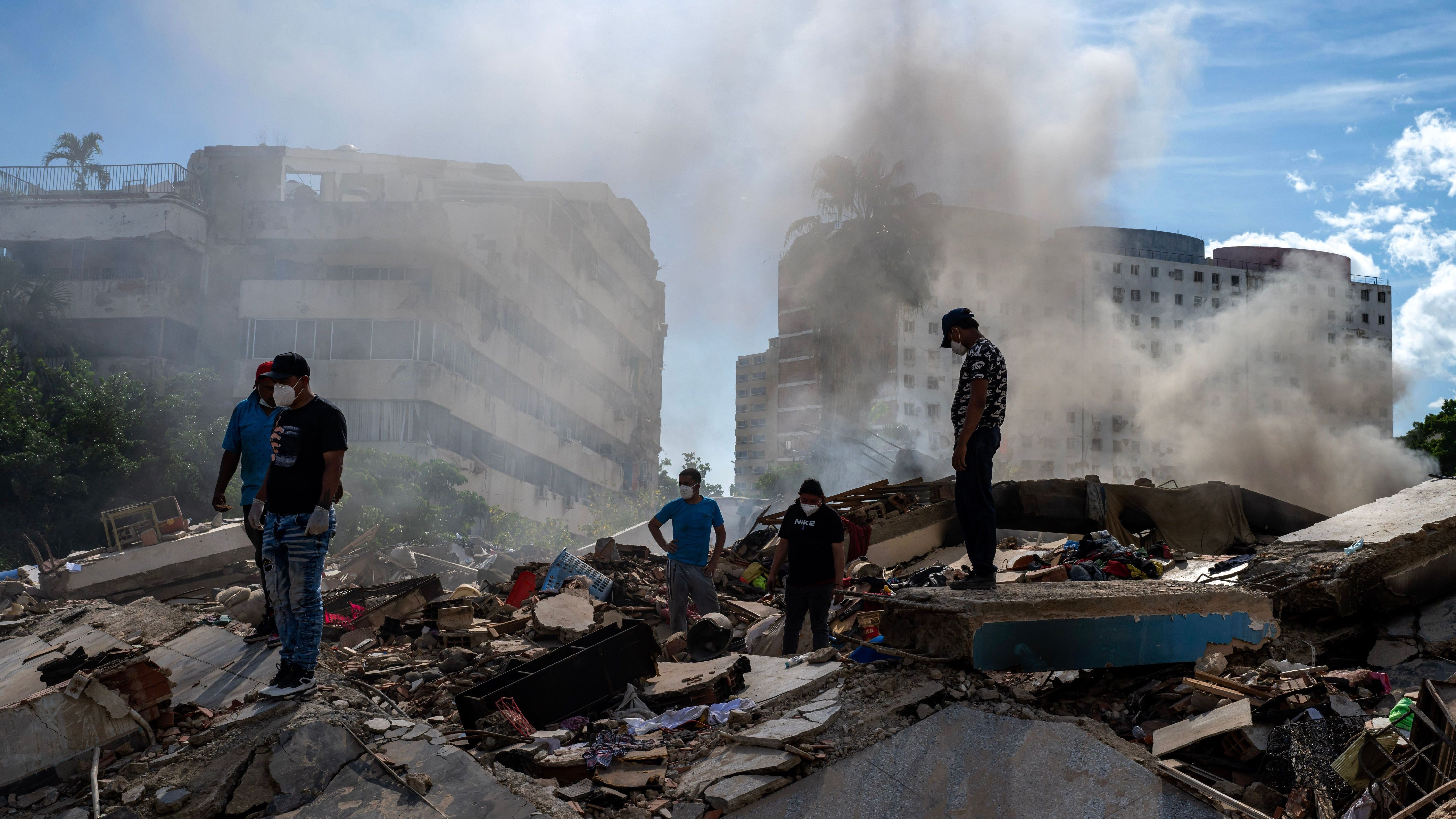
Editor's NoteThe earthquakes that shook northern Venezuela in quick succession on June 24 were among the most severe the South American country has recorded in the past hundred years. Over the course of this week the death toll rose to more than 2,000, and tens of thousands of people are still considered missing. As the smell of decomposing bodies spreads over the devastated areas, it is becoming ever clearer that the tremors struck a country that has limited resources to confront a catastrophe of this magnitude.Venezuela may have the largest oil reserves in the world, but it lacks the technical equipment to pull victims from the rubble, it lacks ambulances, medication, clean water, and a state capable of coordinating the rescue efforts. In these dramatic days, help is coming mainly from abroad – from France, Germany, Mexico and the United States, which has governed Venezuela like a vassal state since the arrest of the dictator Nicolás Maduro."In Trump's Colony" is the title of the feature that DER SPIEGEL writer Marian Blasberg reported in the weeks before the earthquake. In his piece, Blasberg examines what has changed in Venezuela since Maduro's fall. In Caracas, he spoke with supporters of interim president Delcy Rodríguez, who has been opening up the economy to foreign corporations since January; with profit-seekers now sensing a big opportunity; and with opposition politicians who hope that Trump will bring democracy back to Venezuela.It is possible that the earthquakes will change the situation somewhat in the medium term. For now, though, the accounts in the feature – which went to press at the same time as the tremors struck the Caribbean – have lost none of their relevance. Because it offers a particularly revealing look inside the country, we are republishing it here in its original form.
(S+) In Trump's Colony: Does the US Really Hold the Reins in Venezuela?
Shortly before the earthquakes, DER SPIEGEL traveled to Venezuela to explore the question: Who is really in charge in the country?
544 words~2 min read