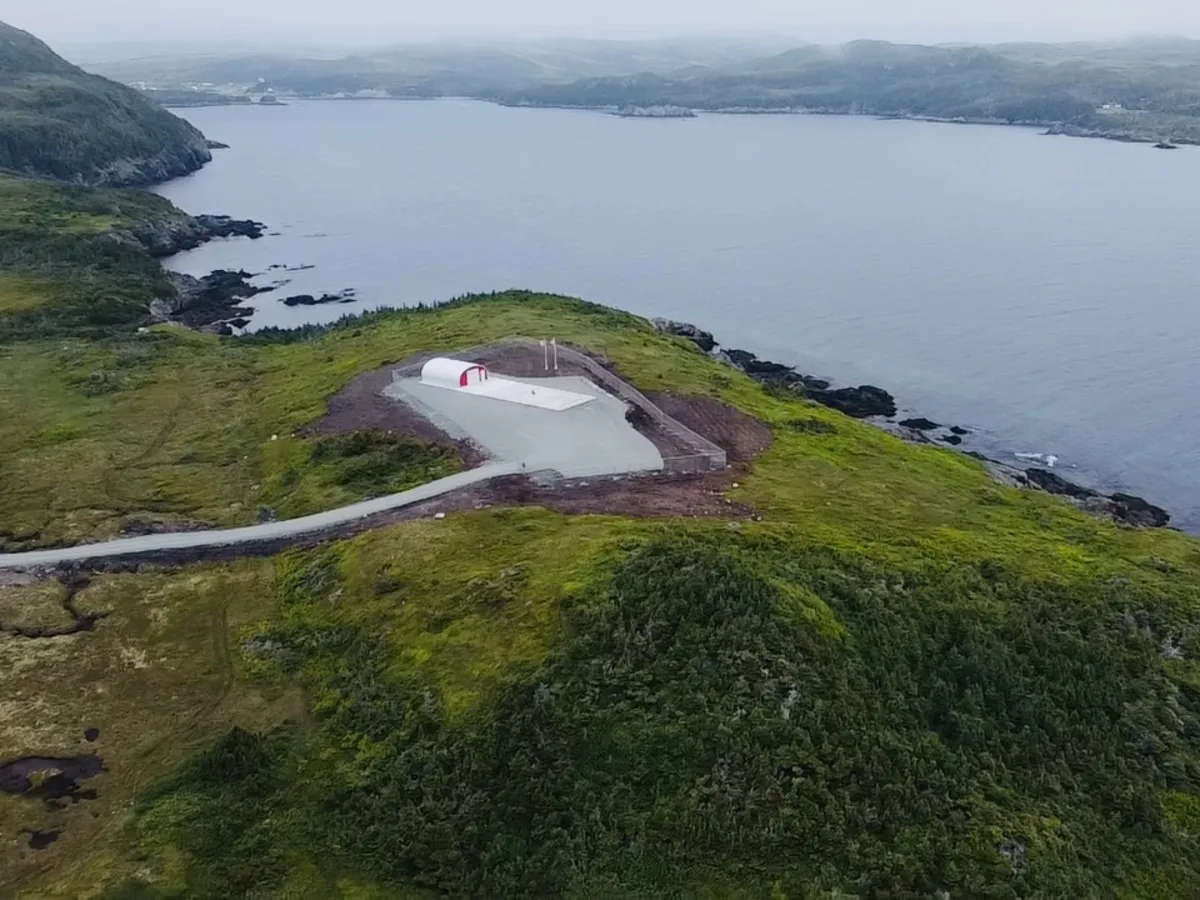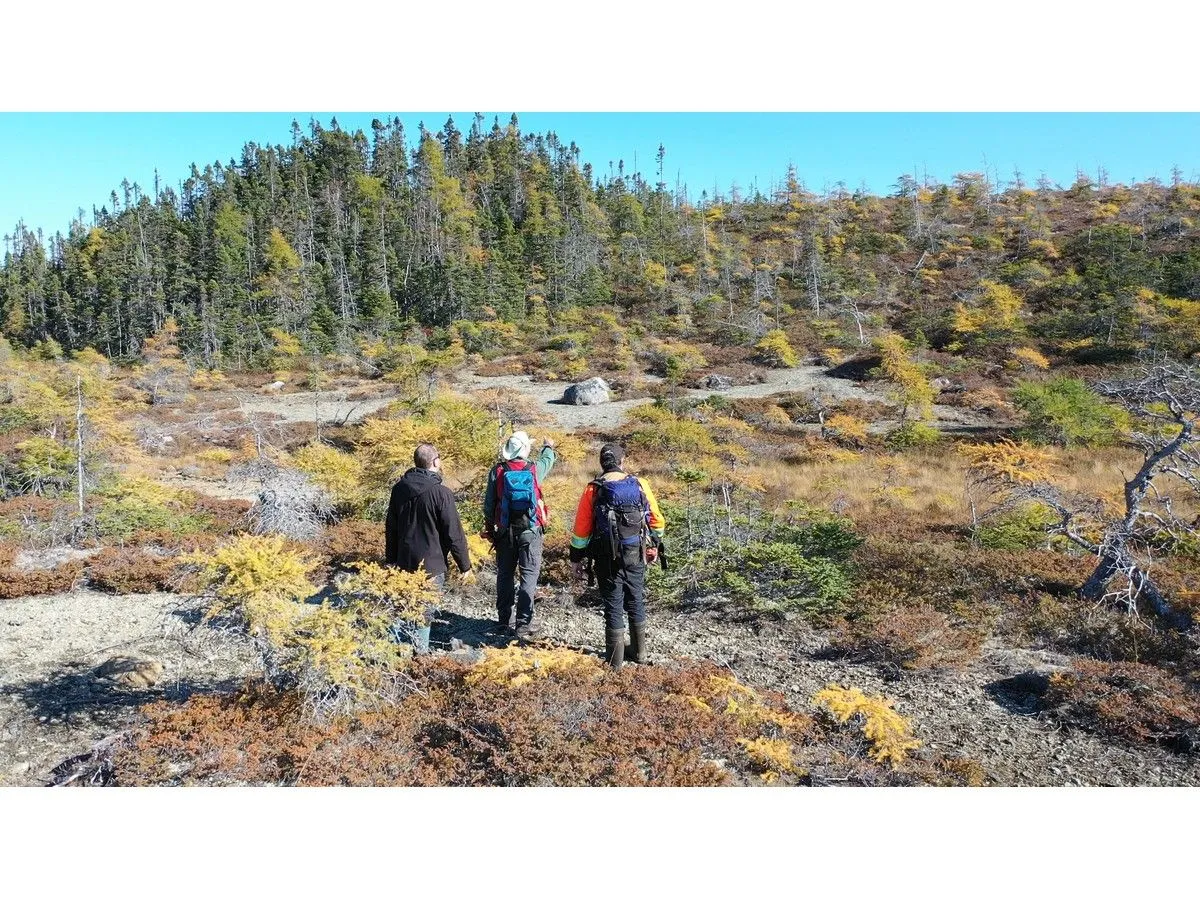
Skip to Content News Archives Economy Energy Oil & Gas Renewables Electric Vehicles Mining Commodities Agriculture Real Estate Mortgages Mortgage Rates Finance Banking Insurance Fintech Cryptocurrency Work Wealth Smart Money Wealth Management Investor Personal Finance Family Finance Retirement Taxes High Net Worth FP Comment Executive Women Puzzmo Newsletters Financial Times Business Essentials More Innovation Information Technology FP500 Podcasts Small Business Lives Told Tails Told Shopping Financial Post Store Obituaries Place a Notice Advertising Advertising With Us Advertising Solutions Postmedia Ad Manager Sponsorship Requests Classifieds Place a Classifieds ad Working Profile Settings My Subscriptions Saved Articles My Offers Newsletters Customer Service FAQ News Economy Energy Mining Real Estate Finance Work Wealth Investor FP Comment Executive Women Puzzmo Newsletters Financial Times Business Essentials HomeEnergyNewsHow a Newfoundland nickel mine aims to generate its own power from rocksVema Hydrogen says it can stimulate a natural geologic process that creates engineered hydrogen from the awaruite First Atlantic Nickel and Cobalt plans to mine in central Newfoundland You can save this article by registering for free here. Or sign-in if you have an account.First Atlantic Nickel says its sites in central Newfoundland and on the island's Northern Peninsula have a type of nickel that doesn't require environmentally hazardous smelting and could also be a source of clean energy from the geological hydrogen that naturally forms there. Photo by First Atlantic NickelWhen First Atlantic Nickel and Cobalt Corp. began assessing its clean nickel deposit in central Newfoundland, it also had its eye on harnessing hydrogen as a potential energy source.Subscribe now to read the latest news in your city and across Canada.Exclusive articles from Barbara Shecter, Joe O'Connor, Gabriel Friedman, and others.Daily content from Financial Times, the world's leading global business publication.Unlimited online access to read articles from Financial Post, National Post and 15 news sites across Canada with one account.National Post ePaper, an electronic replica of the print edition to view on any device, share and comment on.Daily puzzles, including the New York Times Crossword.Subscribe now to read the latest news in your city and across Canada.Exclusive articles from Barbara Shecter, Joe O'Connor, Gabriel Friedman and others.Daily content from Financial Times, the world's leading global business publication.Unlimited online access to read articles from Financial Post, National Post and 15 news sites across Canada with one account.National Post ePaper, an electronic replica of the print edition to view on any device, share and comment on.Daily puzzles, including the New York Times Crossword.Create an account or sign in to continue with your reading experience.Access articles from across Canada with one account.Share your thoughts and join the conversation in the comments.Enjoy additional articles per month.Get email updates from your favourite authors.Create an account or sign in to continue with your reading experience.Access articles from across Canada with one accountShare your thoughts and join the conversation in the commentsEnjoy additional articles per monthGet email updates from your favourite authorsSign In or Create an AccountorGeologic hydrogen naturally forms through several processes, including chemical reactions of water with ultramafic rocks — the sort found at First Atlantic’s Pipestone XL site in Newfoundland’s interior — over long periods of time.Now, the company is looking to speed up that otherwise natural process, known as serpentinization, in a way that could generate power for its proposed awaruite nickel and cobalt mine and processing plant.Breaking business news, incisive views, must-reads and market signals. Weekdays by 9 a.m.By signing up you consent to receive the above newsletter from Postmedia Network Inc.A welcome email is on its way. If you don't see it, please check your junk folder.The next issue of Posthaste will soon be in your inbox.We encountered an issue signing you up. Please try againVancouver-based First Atlantic Nickel has partnered with Houston, Texas company Vema Hydrogen Inc., on a joint venture to generate engineered mineral hydrogen as a fuel source for the project.Engineered mineral hydrogen involves injecting a catalyst to stimulate and expedite the otherwise natural process in underground rock formations.“Instead of taking whatever Mother Nature gives to us, we accelerate natural reactions, which generate hydrogen into certain types of rocks,” explained Pierre Levin, Vema Hydrogen’s chief executive officer. Pierre Levin is chief executive officer of Vema Hydrogen Inc., which is assessing the potential to create engineered mineral hydrogen at First Atlantic Nickel and Cobalt Corp.’s mine site in central Newfoundland. Photo by Ludovic Letot/vema.earthWhile it may sound similar at first glance, Levin emphasized that Vema’s patented process to create hydrogen is not the same as fracking, a sometimes controversial method of injecting high-pressure mixes of water and chemicals to break open rocks to release trapped natural gas or oil below the surface for extraction.Engineered mineral hydrogen, he noted, injects its solution at a lower pressure to generate energy and there is far less risk of groundwater contamination.Levin would not reveal the exact composition of the catalysts Vema Hydrogen uses, saying that it is part of the company’s proprietary intellectual property.“We mix several catalysts, and we take great care and precision to adjust it to each project,” he said. “The mix is dependent on a variety of factors, including the chemical composition of the rocks.”Each individual catalyst, he noted, is a soluble, non-toxic salt of a metal. Drill core samples are laid out on a table in the geologists’ core shack at First Atlantic Nickel’s Pipestone Ophiolite Complex in central Newfoundland. Vema Hydrogen says it can stimulate a natural geologic process that creates engineered hydrogen from the awaruite First Atlantic Nickel and Cobalt plans to mine in central Newfoundland.Vema currently operates the world’s first engineered mineral hydrogen project at the Thetford ophiolite complex in Quebec.The company finished drilling two pilot wells there in early 2026 and plans to analyze subsurface fluid movement and hydrogen production to guide it towards the next phase of commercialization.“Vema’s engineered mineral hydrogen is on the verge of delivering clean energy at a scale cost-competitive with hydrocarbons,” said Dr. Douglas Wicks, strategic advisor to First Atlantic Nickel and Cobalt and former program director for the geologic hydrogen portfolio within the United States’ Department of Energy.Pipestone XL, added Wicks, is an ideal location due to its size, proximity to infrastructure and the potential for cost efficiencies in co-locating hydrogen production with nickel and cobalt mining.“Having worked closely with Vema’s founders since before the company’s founding and having seen firsthand how they developed the engineered approach to geologic hydrogen, I believe Pipestone XL represents a compelling opportunity to bring this technology to commercial scale,” said Wicks. Drilling is under way at the Alloy Max Zone, a second major awaruite nickel-cobalt alloy discovery First Atlantic Nickel has found within its Pipestone Ophiolite Complex in central Newfoundland. Photo by First Atlantic NickelAccording to a joint press release issued by Vema and First Atlantic, the Pipestone ophiolite complex, which spans 30 kilometres of ultramafic rock, “holds enough potential hydrogen to power industrial demand in Newfoundland for generations.”The companies are already touting the project’s potential to supply regional industry and seaborne export markets, but Levin said there is still much work to do before determining how big the project could become.“I believe the proper rationale will be we do a pilot project sufficient for all the needs in energy of First Atlantic Nickel, and based on that, then we’ll be able to produce more massively,” he said.In the past year, Vema has worked with First Atlantic to evaluate the Pipestone ophiolite complex, analyzing geological and geophysical data as well as infrastructure across the belt.The companies said laboratory testing of Pipestone rock samples at Vema’s facility in Orléans, France, has confirmed hydrogen production through stimulated serpentinization, indicating the formation is well suited to engineered mineral hydrogen.Vema said it will leverage the experience gained at its Quebec site to inform its work in central Newfoundland.Awaruite is a magnetic nickel-iron-cobalt alloy the U.S. Geological Survey has identified as a potential solution to nickel concentrate shortages because it does not require smelting — and the environmental hazards that come with it.It also happens to be the right kind of rock that could generate hydrogen to power the mining processes to extract it.“Given the link between awaruite formation and hydrogen, we’re excited about the potential for Vema’s technology to maximize the value of our unique nickel-cobalt alloy project,” said Adrian Smith, First Atlantic’s chief executive officer. A drill core sample from First Atlantic Nickel’s Pipestone Ophiolite Complex in central Newfoundland gets a closer examination. Photo by First Atlantic NickelWhile it would require expensive pipelines or railway lines to transport hydrogen, Levin said decarbonized methanol — which can be generated from hydrogen — could be feasibly moved by trucks.The companies say their collaboration positions them to explore how locally produced hydrogen supplying a critical mineral development could reshape energy planning for remote industrial sites. A drill core sample from First Atlantic Nickel’s Pipestone Ophiolite Complex in central Newfoundland. Photo by First Atlantic NickelLevin said engineered mineral hydrogen could be produced for less than $1 per kilogram and the projects his company is pursuing around the world could produce enough energy to last thousands of years.By comparison, he said the green hydrogen generated by electrolysis — considered the cornerstone of the global clean energy transition — costs at least $5 per kilogram under the best-case production scenarios.“This is not magic,” said Levin. “The difference between electrolysis and what we do is that electrolysis is breaking the molecule of water at brute force, using expensive and scarce electricity. All we do, we accelerate the natural reaction, and, of course, our energetic and economic performance is much better. That’s very basic.”Aaron Ball is the energy minerals division president with the American Association of Petroleum Geologists, and the concept of engineered mineral hydrogen is relatively new to him.He could not offer an opinion on the particulars of the First Atlantic Nickel and Cobalt partnership with Vema Hydrogen without first viewing the technical data.Still, he said, it’s an exciting approach to generating energy for a project.From what he has read about the process, Ball said there is hypothetically a risk of unwanted elements, such as uranium or lead, in flow-back waters during production.“I don’t know if (the First Atlantic project) have these, but those can be mobilized in rocks that do have it, so this would be something that would need to be monitored on the back end as flow back is happening because those elements should not be left in the watershed,” he said.Levin said the first 500 metres of a drilled well is cased in cement to prevent any spillage on the surface or any aquifers.There are also potential upsides to the engineered mineral hydrogen process, noted Ball.He said it could also mobilize other elements, such as antimony or lithium, which might offer an opportunity for direct conversion of the element into a critical mineral product.“Simply knowing that those elements are in the waters as they’re coming out, and if you’re monitoring those, means, in my mind, you want to handle those in a way that’s going to feed into a circular economy of some kind, so it’s no longer waste,” said Ball. Join the Conversation This website uses cookies to personalize your content (including ads), and allows us to analyze our traffic. Read more about cookies here. By continuing to use our site, you agree to our Terms of Use and Privacy Policy.
How a Newfoundland nickel mine aims to generate its own power from rocks
Vema Hydrogen says it can expedite a natural process to create engineered hydrogen to fuel First Atlantic Nickel and Cobalt's NL mine
1,877 words~9 min read