Editorial
Behind the National Police’s glowing 82 percent public approval rating lies a much darker reality of corruption, violence and a desperate need for real reform.
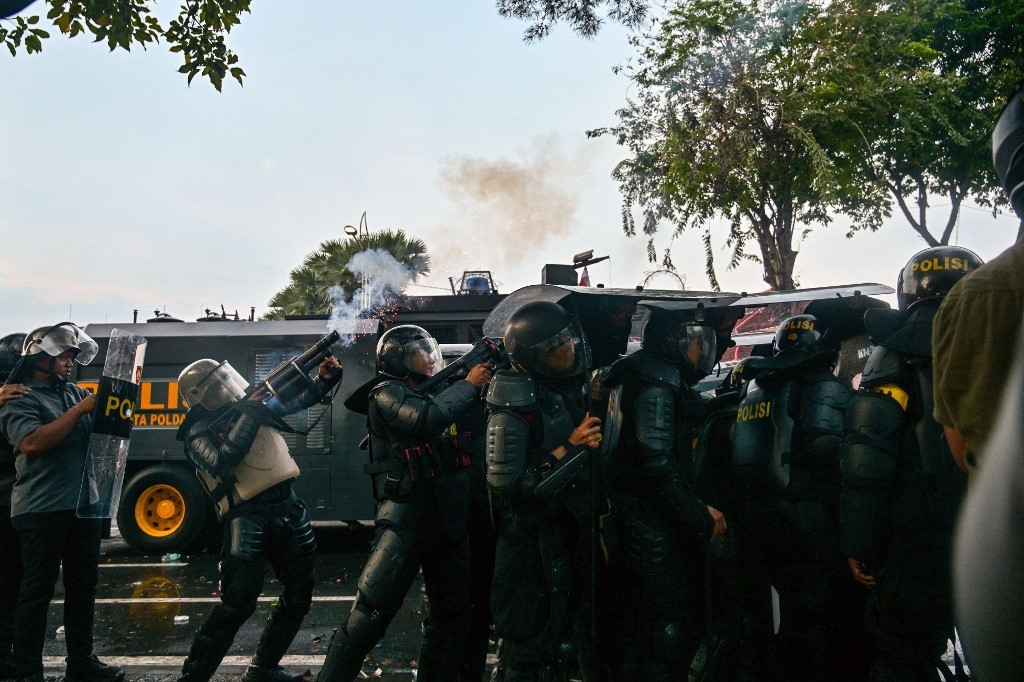
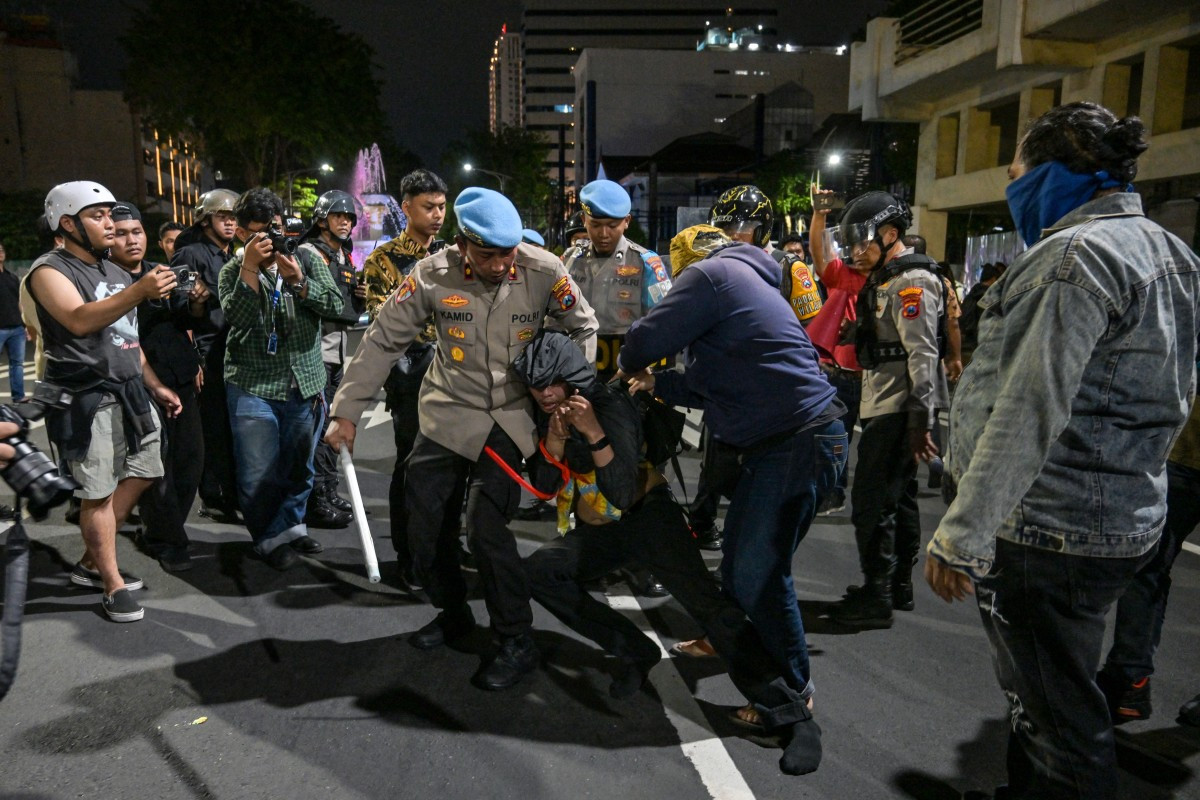
Police arrest a student following clashes on Friday during protest against a rise in nonsubsidized fuel prices, inefficient government spending and military involvement in civilian affairs and the government's free nutritious meal program, in Surabaya. (AFP/Juni Kriswanto)
Ahead of its 80th anniversary which falls today, the National Police received a welcome morale booster. A recent survey by Litbang Kompas, the research arm of Kompas daily, shows public trust in the law enforcement agency climbing to a remarkable 82.4 percent, up from 76.2 percent last year. While the police may be tempted to use these figures as a shield against criticism, resting on the laurels of popular opinion would be a grave mistake. Alternative data and expert evaluations reveal a starkly different reality: an institution still struggling with systemic vulnerability, a culture of violence and structural impunity.
The idea of a fully professional police force starts to wear thin when we look at actual governance metrics. Take the Corruption Eradication Commission’s (KPK) 2025 Integrity Assessment Survey (SPI). The police scored a meager 71.49, landing them squarely in the "vulnerable" category. In fact, they fell behind the national average of 72.32.