Spurred by recognition of different disease subtypes, prostate cancer treatment continues to evolve. So far this year, the evolution has included practice-changing and incremental improvements in various aspects of clinical management.
Paradigm-Changing Study in High-Risk Disease
Perioperative apalutamide (Erleada) plus androgen deprivation therapy (ADT) significantly reduced the risk of metastasis in high-risk localized disease as compared with ADT alone, a large randomized trial showed.
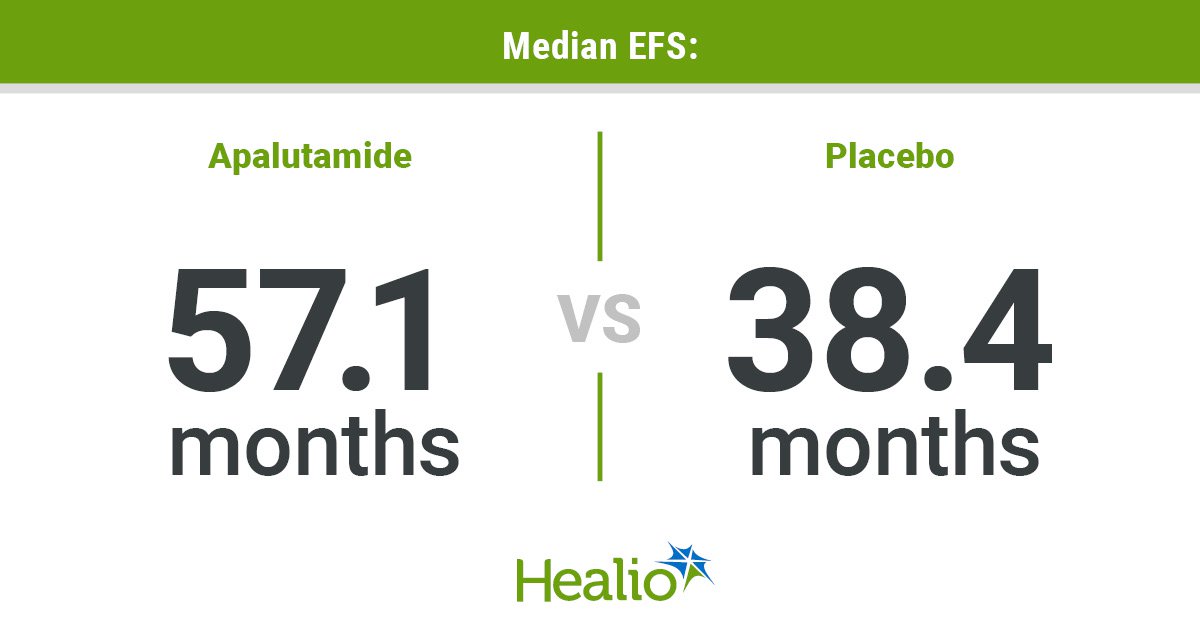
Five-year metastasis-free survival increased from 73.5% with ADT to 78.2% with the addition of apalutamide. ADT alone achieved pathologic complete response in 1% of patients, but that number increased to 8.9% with the combination. Event-free survival, time to first subsequent treatment, and time to distant metastasis or death all improved with the combination.
"The phase III PROTEUS study in patients with high-risk localized prostate cancer demonstrates a breakthrough in a decades-long treatment paradigm by showing that use of apalutamide earlier can deepen responses and significantly reduce the risk of cancer spreading or progressing," said Mary Ellen Taplin, MD, of Dana-Farber Cancer Institute in Boston, in a presentation during the American Society of Clinical Oncology (ASCO) meeting.