CHICAGO -- A paradigm-changing clinical trial in prostate cancer showed that perioperative apalutamide (Erleada) and androgen deprivation therapy (ADT) significantly reduced the risk of metastasis in high-risk localized disease versus ADT alone.
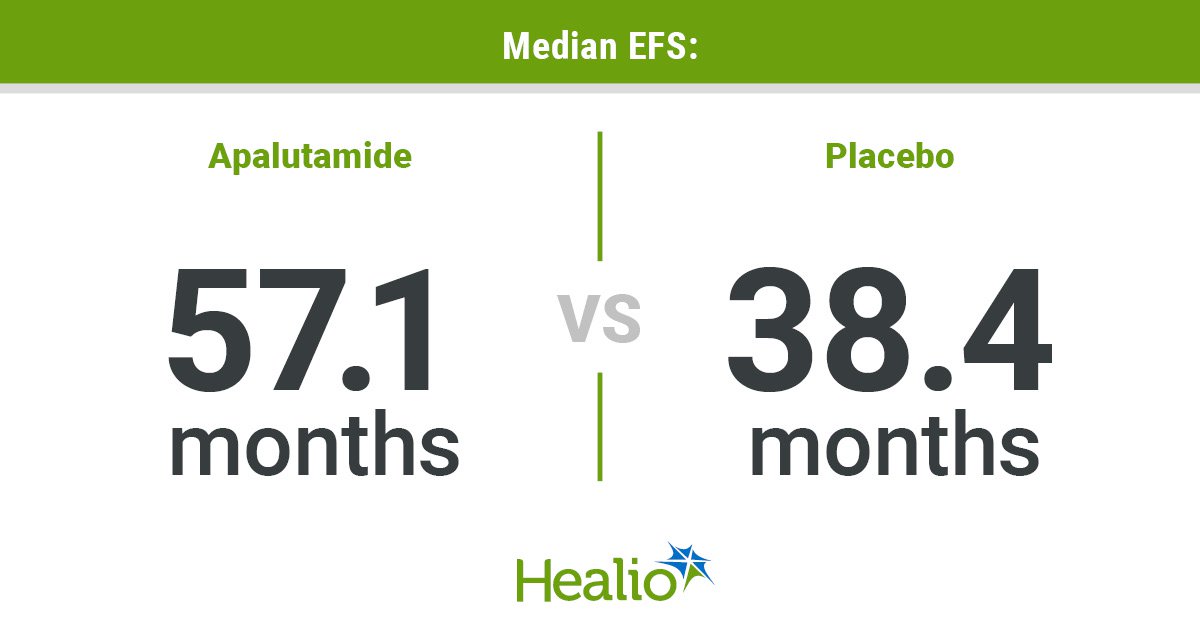
After more than 5 years of follow-up, metastasis-free survival (MFS) improved from 73.5% with ADT alone to 78.2% with the addition of the androgen receptor pathway inhibitor (ARPI). The combination arm also had a significantly higher rate of pathologic complete response (8.9% vs 1.0%), a second primary endpoint. Event-free survival (EFS), time to first subsequent treatment, and time to distant metastasis or death all improved with the combination.
Grade 3/4 adverse events (AEs) occurred slightly more often with the combination (39.6% vs 31.0%), driven primarily by apalutamide-associated rash, reported Mary Ellen Taplin, MD, of Dana-Farber Cancer Institute in Boston, at the American Society of Clinical Oncology (ASCO) annual meeting. The study was published simultaneously in the New England Journal of Medicine (NEJM).
"The phase III PROTEUS study, in patients with high-risk localized prostate cancer, demonstrates a breakthrough in a decades-long treatment paradigm, showing that use of apalutamide earlier can deepen responses and significantly reduce the response of cancer spreading or progressing," Taplin said during a press briefing. "Patients treated with apalutamide plus ADT were nine times more likely to have little to no cancer remaining in the prostate after surgery, and they had a 20% reduced risk of death or metastasis. Patients treated with apalutamide plus ADT did not need subsequent therapy for a median of 5 years."