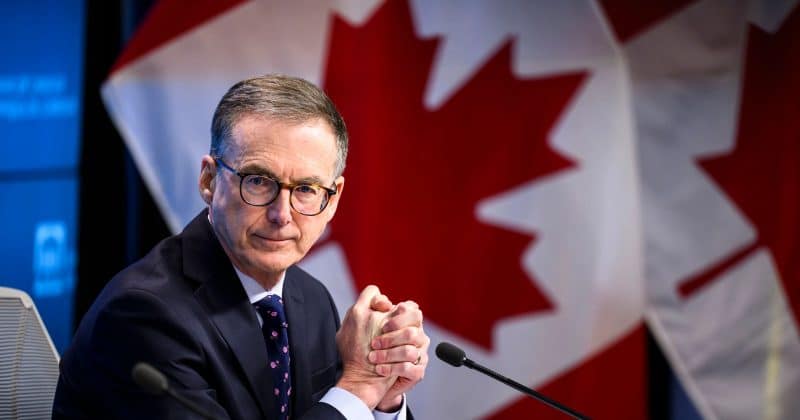
When a central bank governor flies to Paris to warn about another country’s investment boom, it’s worth paying attention. Bank of Canada Governor Tiff Macklem did exactly that on June 23, delivering a speech to the Chambre de commerce France-Canada that painted a picture of global capital flows increasingly tilted toward the US, fueled in large part by the artificial intelligence gold rush.
His core argument: the money pouring into American AI is creating competitive headwinds for countries like Canada, stretching equity and credit valuations in ways that could eventually snap back, and deepening the US’s reliance on foreign capital to a degree that makes the entire global financial system more fragile.
The imbalance problem
Macklem outlined a set of interlocking global imbalances that are funneling capital toward the US at an unusual pace. China’s heavy dependence on exports. Europe’s chronically sluggish investment climate. And the US acting as a magnet for foreign money, partly because its AI sector is generating returns that other economies simply can’t match right now.
The result is a US net international investment position, essentially the difference between what Americans own abroad and what foreigners own in America, that has swollen to a historically large negative balance. In plain English: the US owes the rest of the world more than ever, and a meaningful chunk of that gap has been driven by equity gains tied to AI investments.