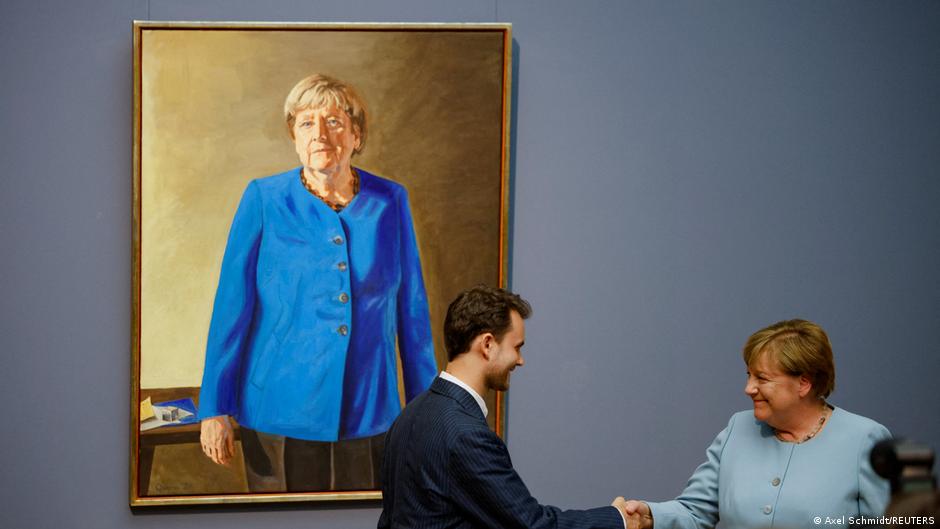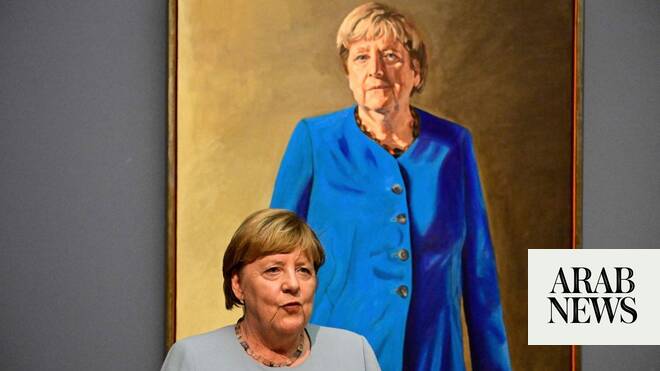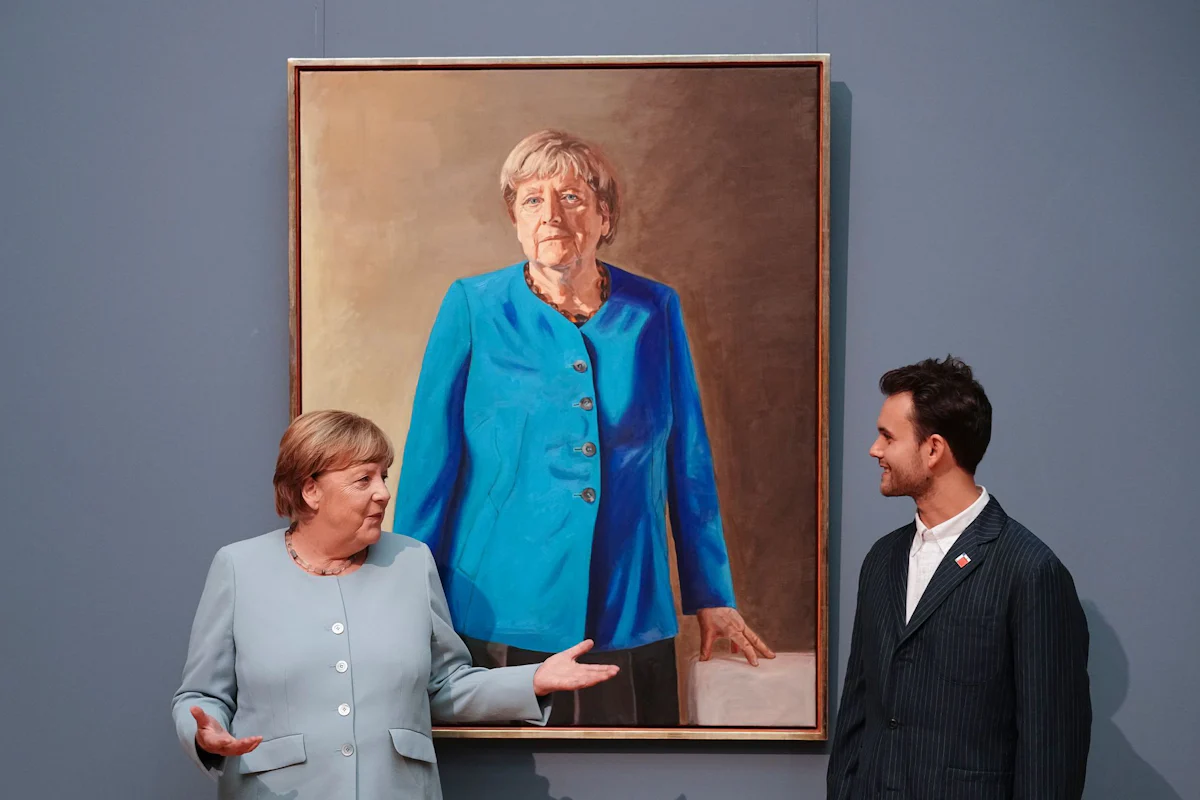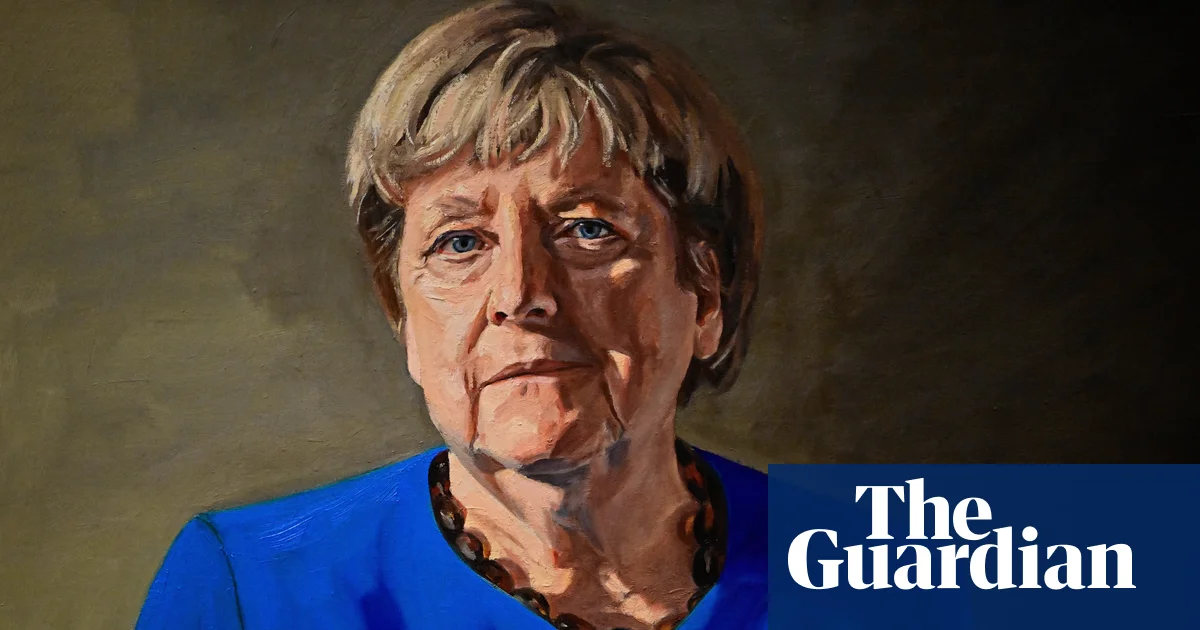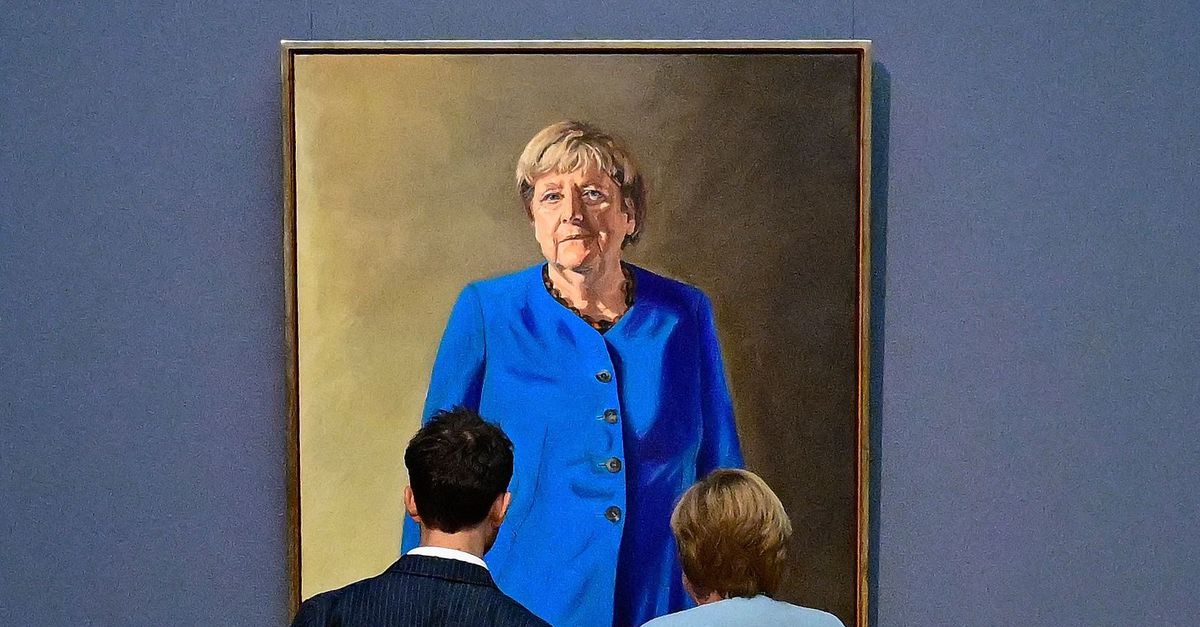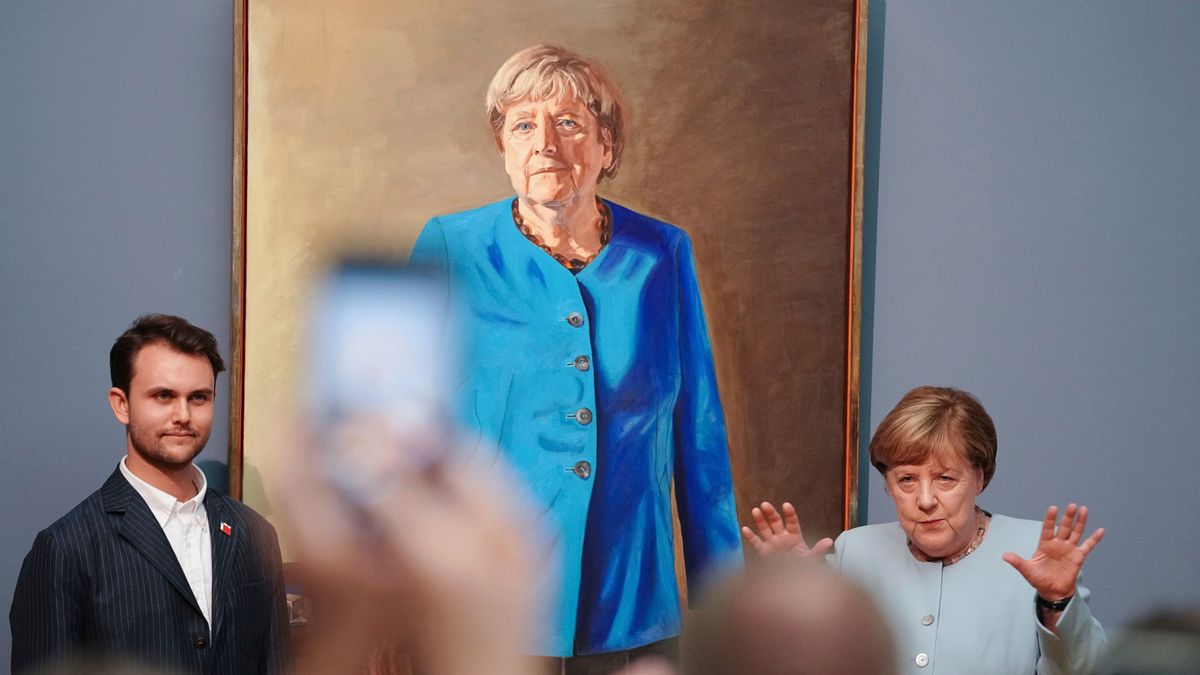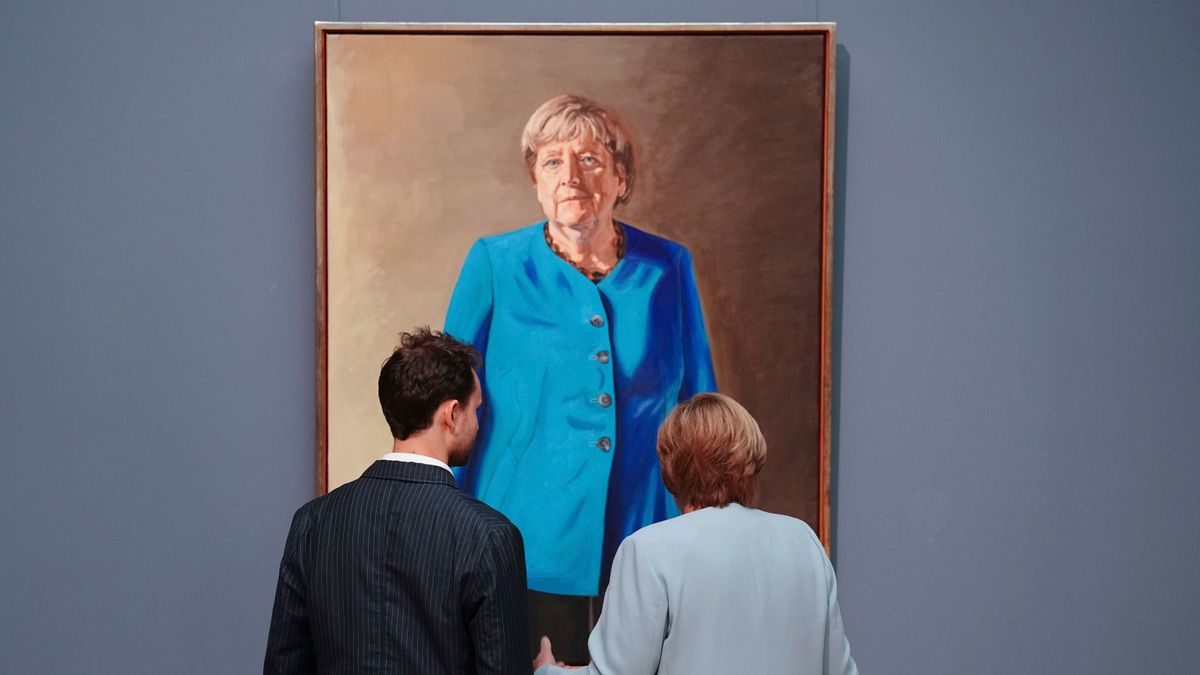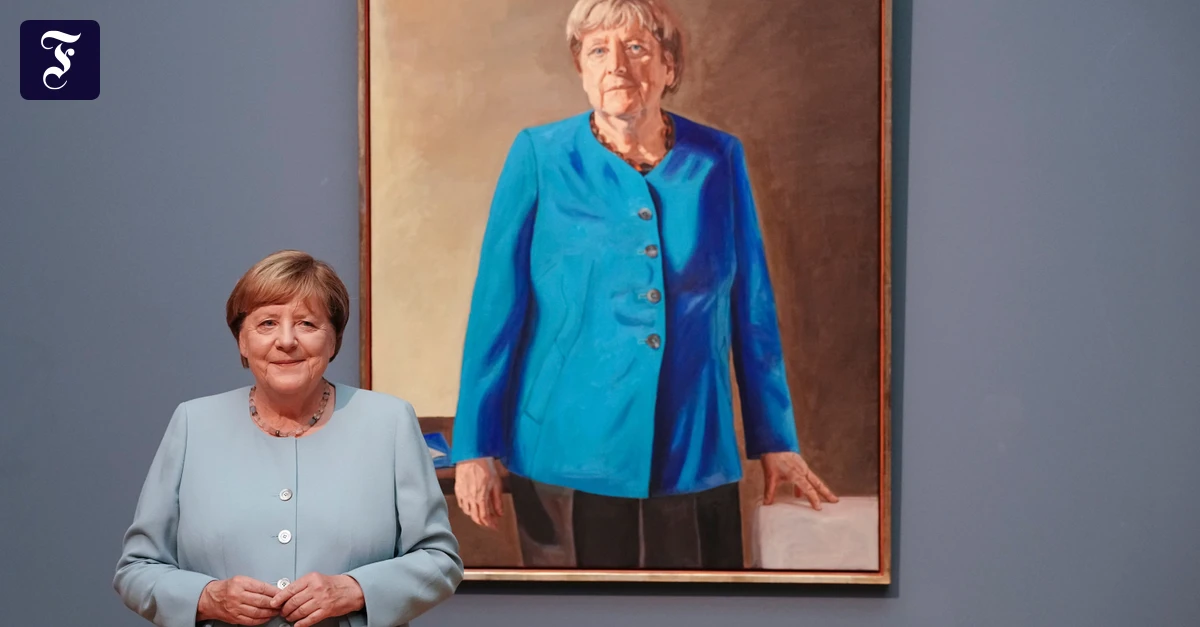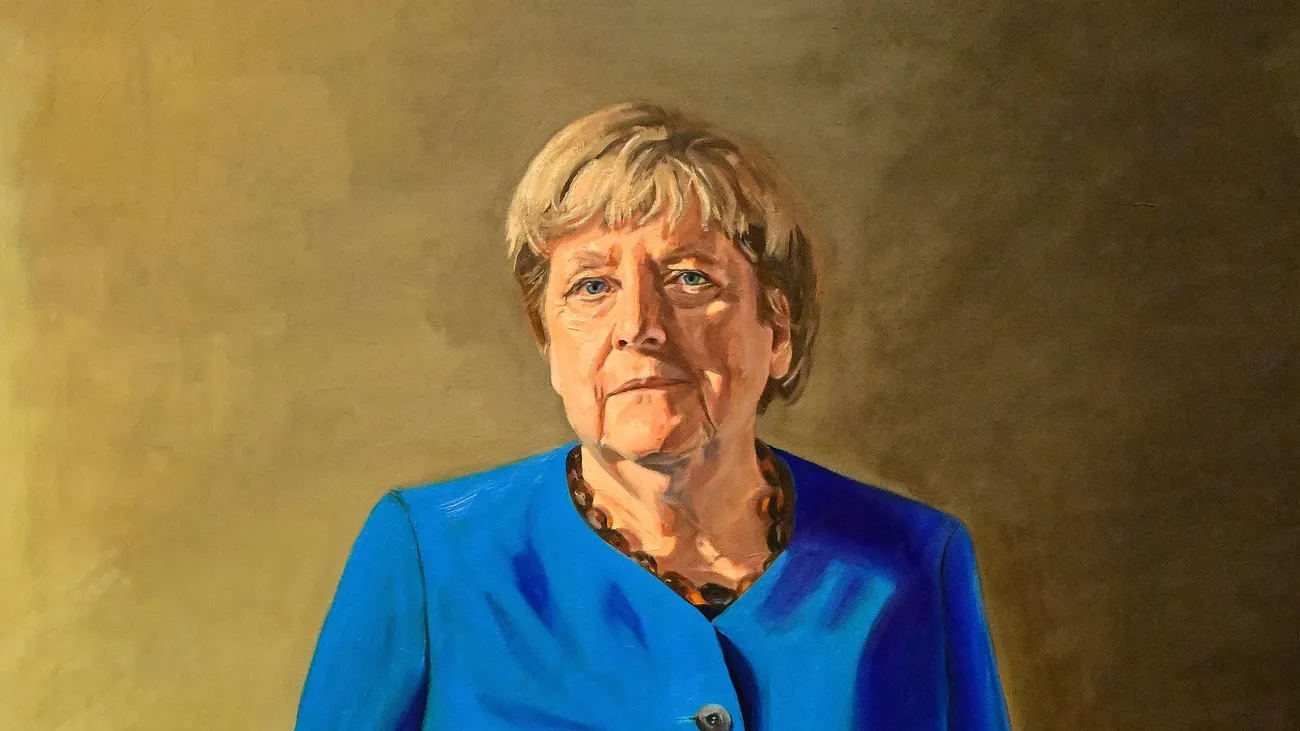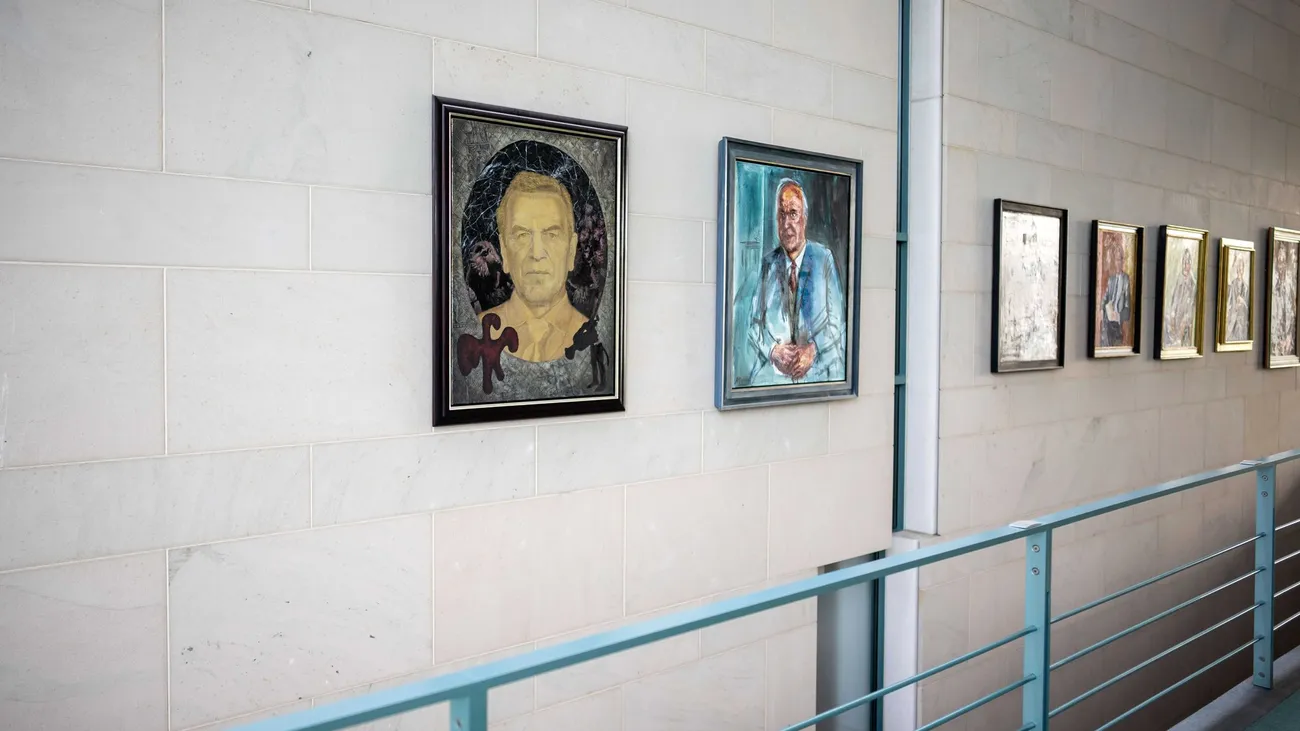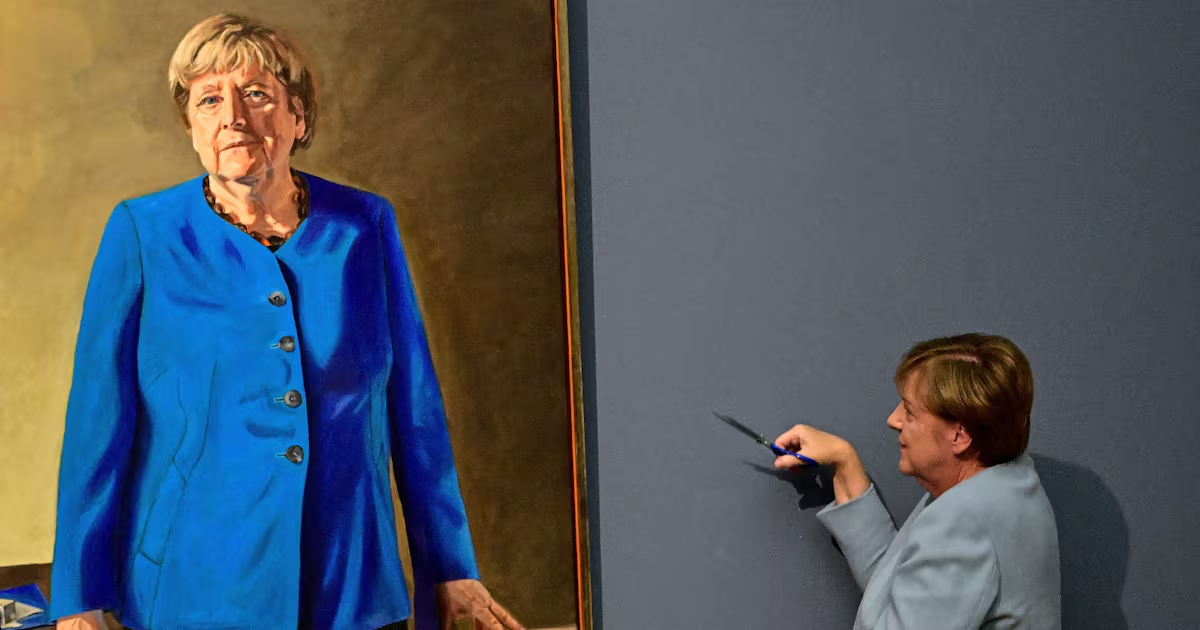
Many Germans remember the 16-year Merkel period as political stability and a blurred pantone colour chart of practical blazers. On Tuesday, nearly five years after leaving office, the 71-year-old ex-chancellor revealed in her official portrait how she wants to be remembered. Standing in a royal blue blazer, gazing down at the viewer with piercing cornflower blue eyes, wearing her favourite amber necklace, bathed in golden sunlight before a honey-toned backdrop. Beside her on a small table is a cube that lay on her chancellery desk, engraved with the words: power lies in calm.The first surprise of the portrait, unveiled on Tuesday evening in Berlin’s Bode Museum, was her hands. Angela Merkel and photographer Herlinde Koelbl. In office, Merkel habitually pressed her fingers together. In office, Angela Merkel habitually pressed together her fingers to give them something to do – and to correct her posture. Her portrait, though, has one hand propped up on a white surface and the other hanging loose. That decision was as surprising as her choice of portrait artist: the previously unknown Franco-German painter Jérémie Queyras.The 28-year-old wrote to Merkel with some pictures of his work, they met and, last summer, Queyras moved to Berlin to start work on the challenging commission.“How do you paint a person whose face everyone already knows well, who has been photographed thousands of times?” he asked at the unveiling on Tuesday. “I think we were both in agreement that this picture should be different and develop slowly.”Queyras said he hopes those who view the portrait – hanging for three months in Bode Museum before it moves a kilometre down the Spree river to the chancellery – “recognise [Merkel] immediately yet get to know a new side of her”.The real Merkel looked positively fresh and lively next to her more haggard painted self. In brief remarks, she sidestepped what she thought of the work to recall instead their secret sitting period.“We opened up to each other, listened to music and, in the truest sense of the word, talked about God and the world,” she said.And why did she wait so long for the official portrait?“The reason was simple: I needed distance,” she said. “I didn’t want to work through such a portrait like a point on a to-do list, I wanted to have joy in such a project.”For Elke Buhr, editor-in-chief of art magazine Monopol, her first reaction on seeing the picture was to feel a little underwhelmed.“The eyes are nicely done, the gaze works well but he didn’t get other details right, like the hands,” she told German national radio. “It’s a very conventional approach. He took no liberties, with his broad brushstrokes. It is a very restrained approach to reflect her cautious character. With this, Merkel wanted to shrug off expectations – and she succeeded.”
All eyes drawn to Angela Merkel’s hands in long-awaited official portrait
Elements of the piece are surprising – not least her choice of a previously-unknown portrait artist
465 words~2 min read