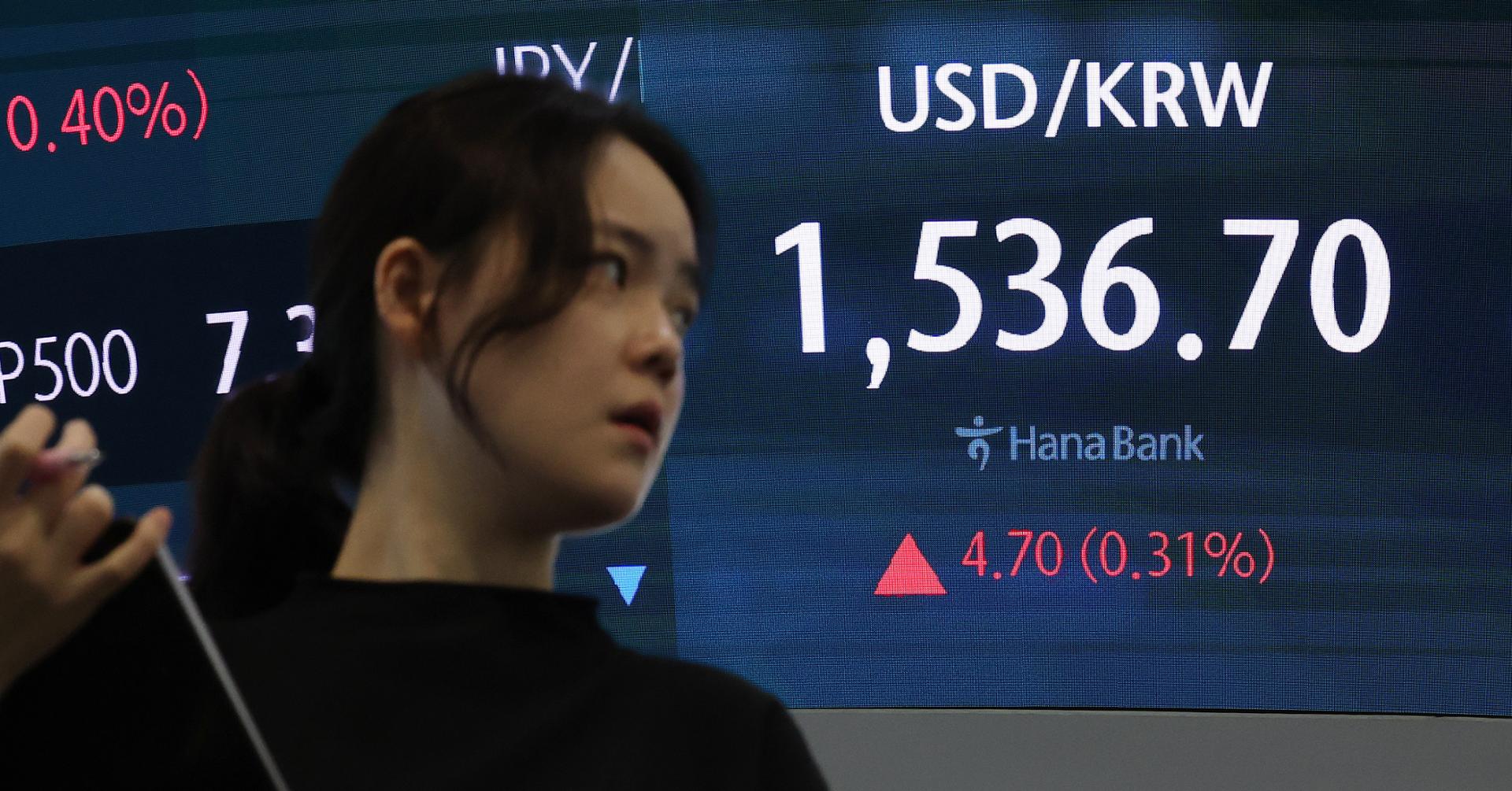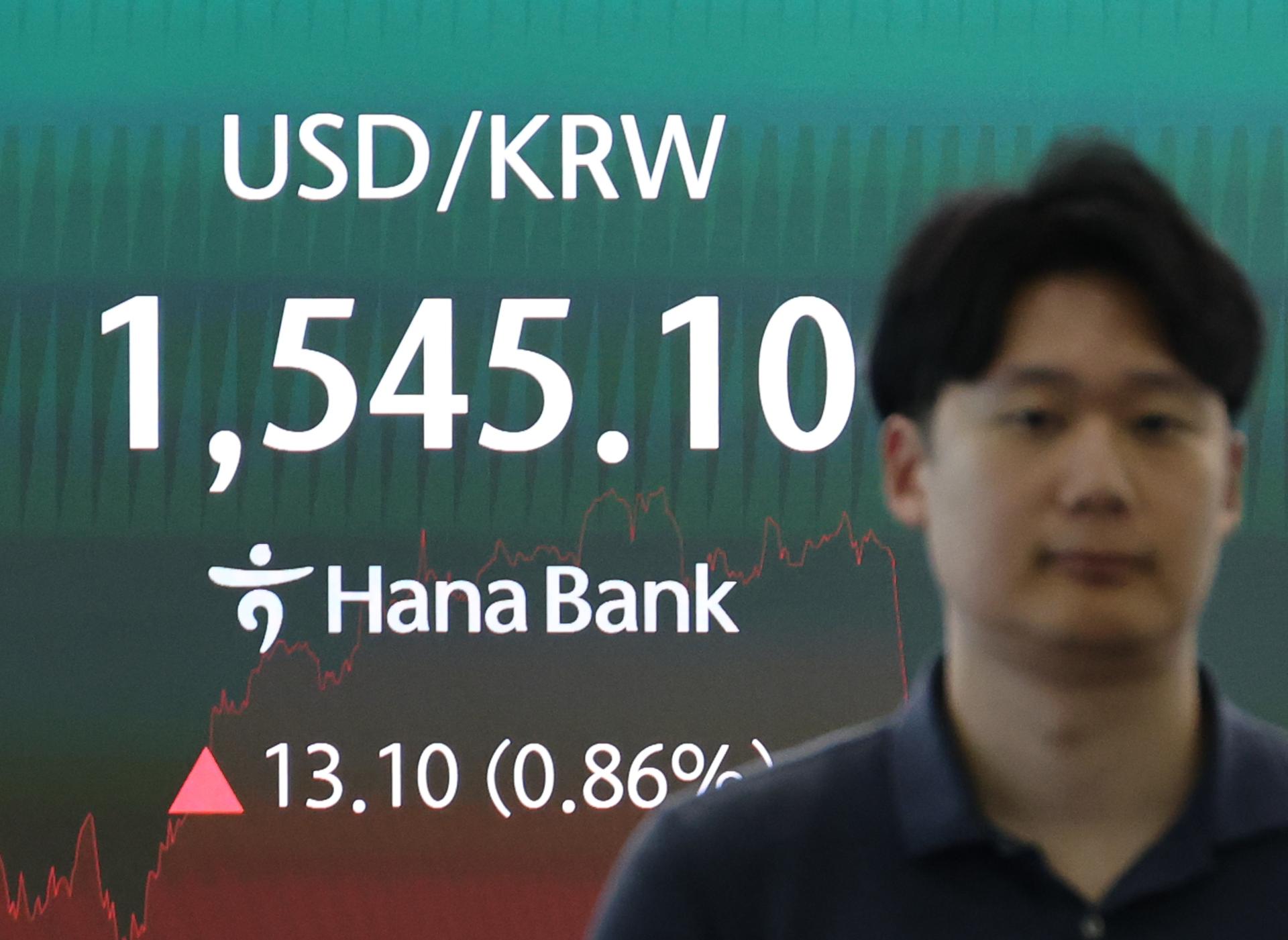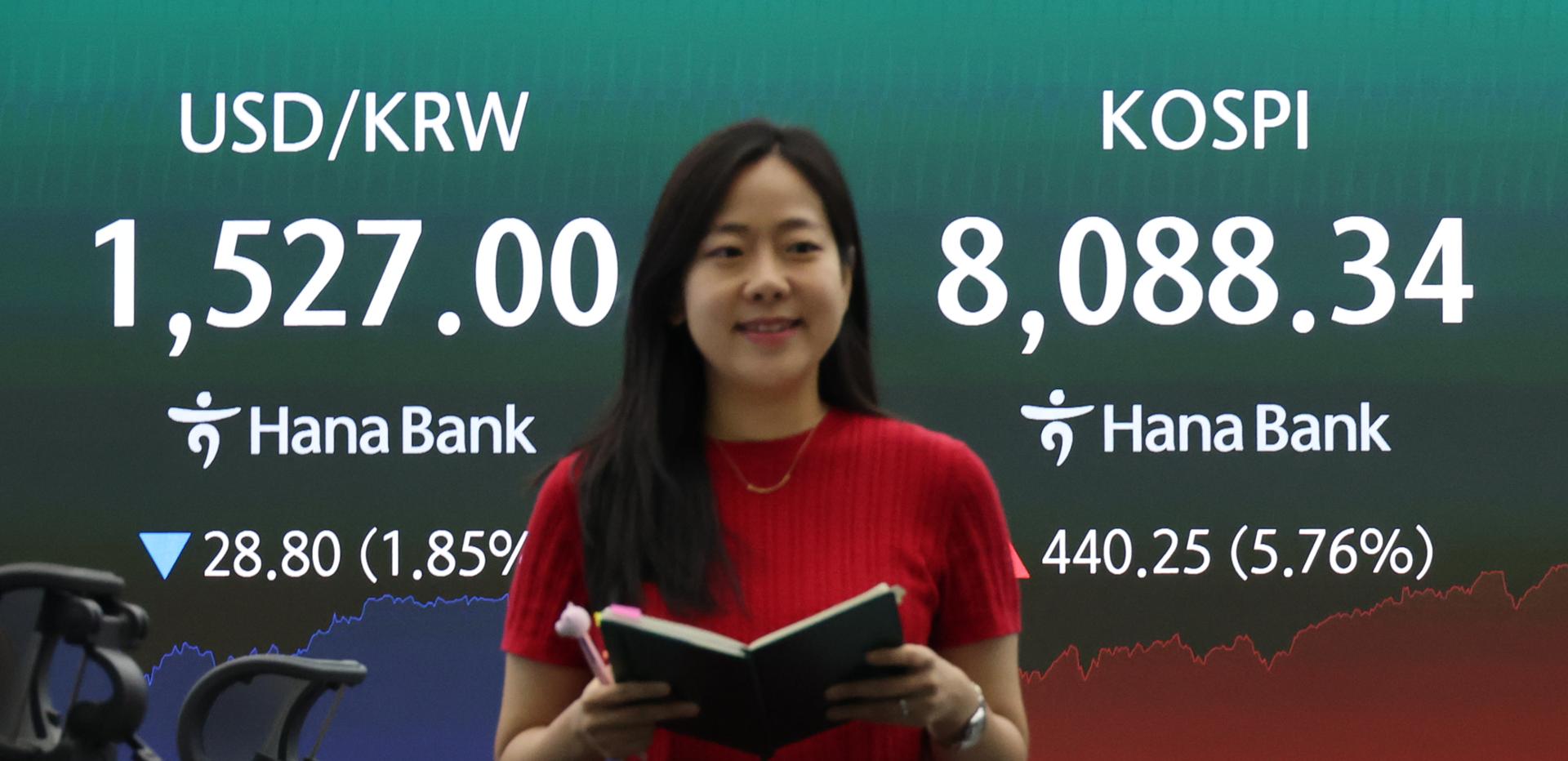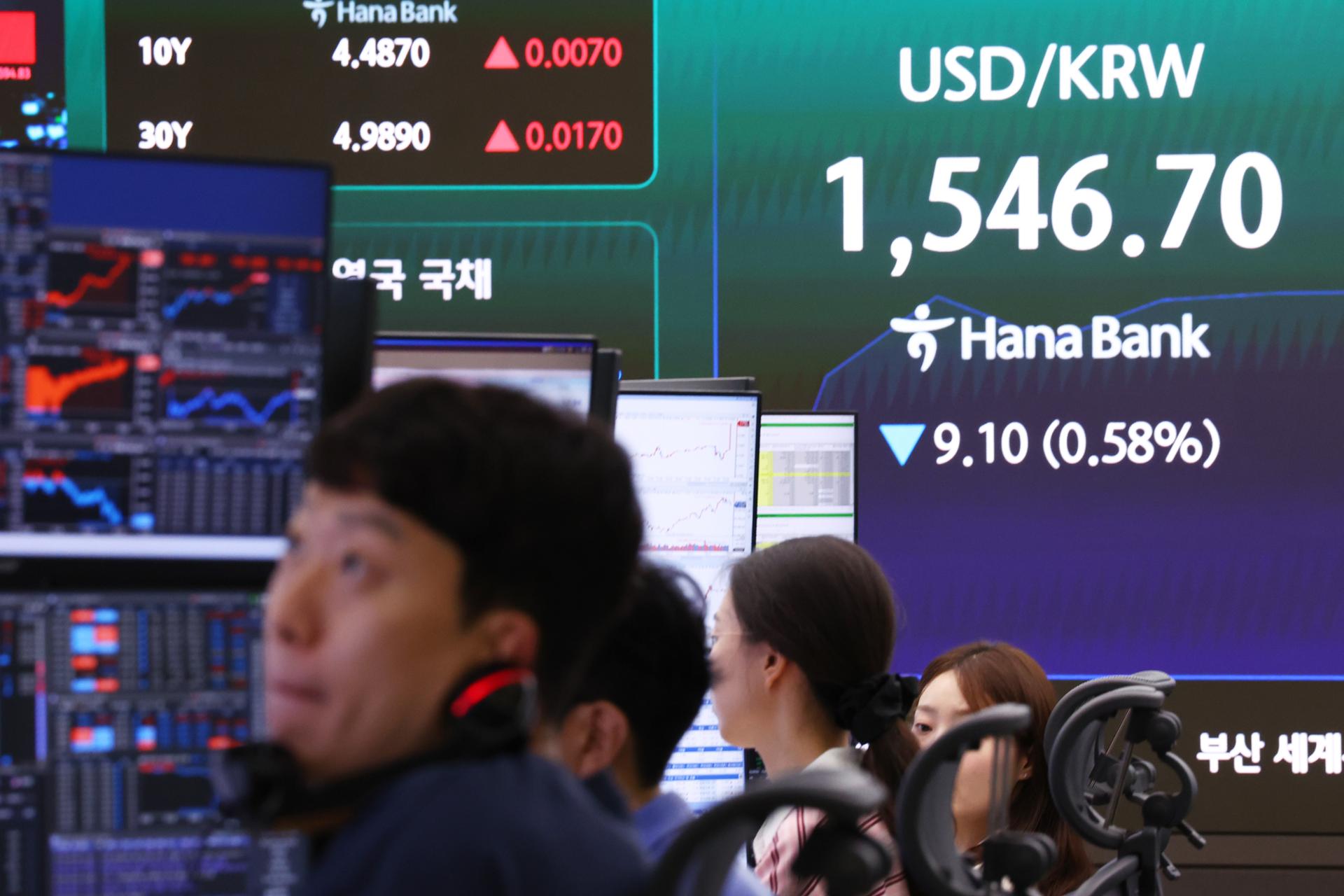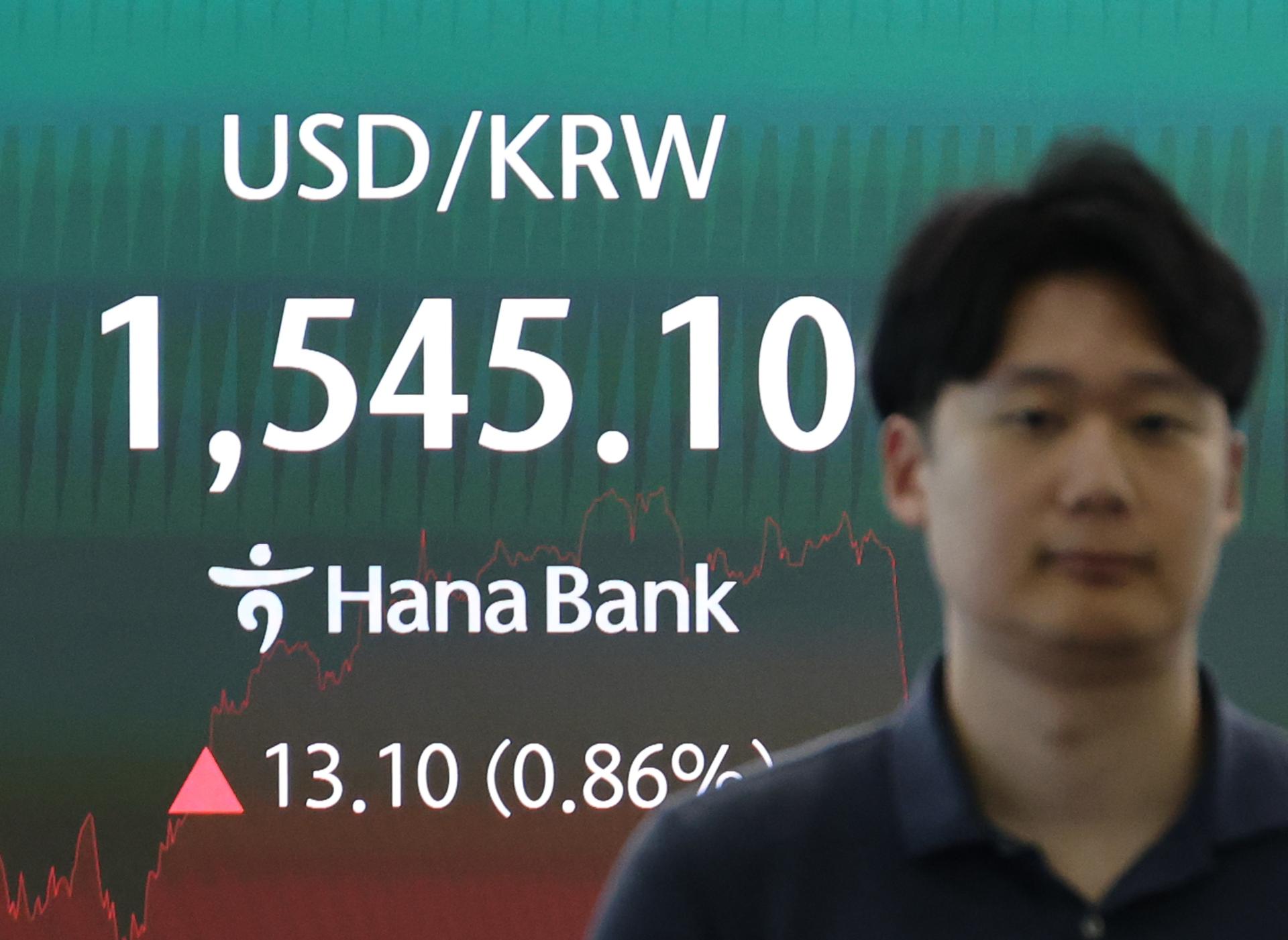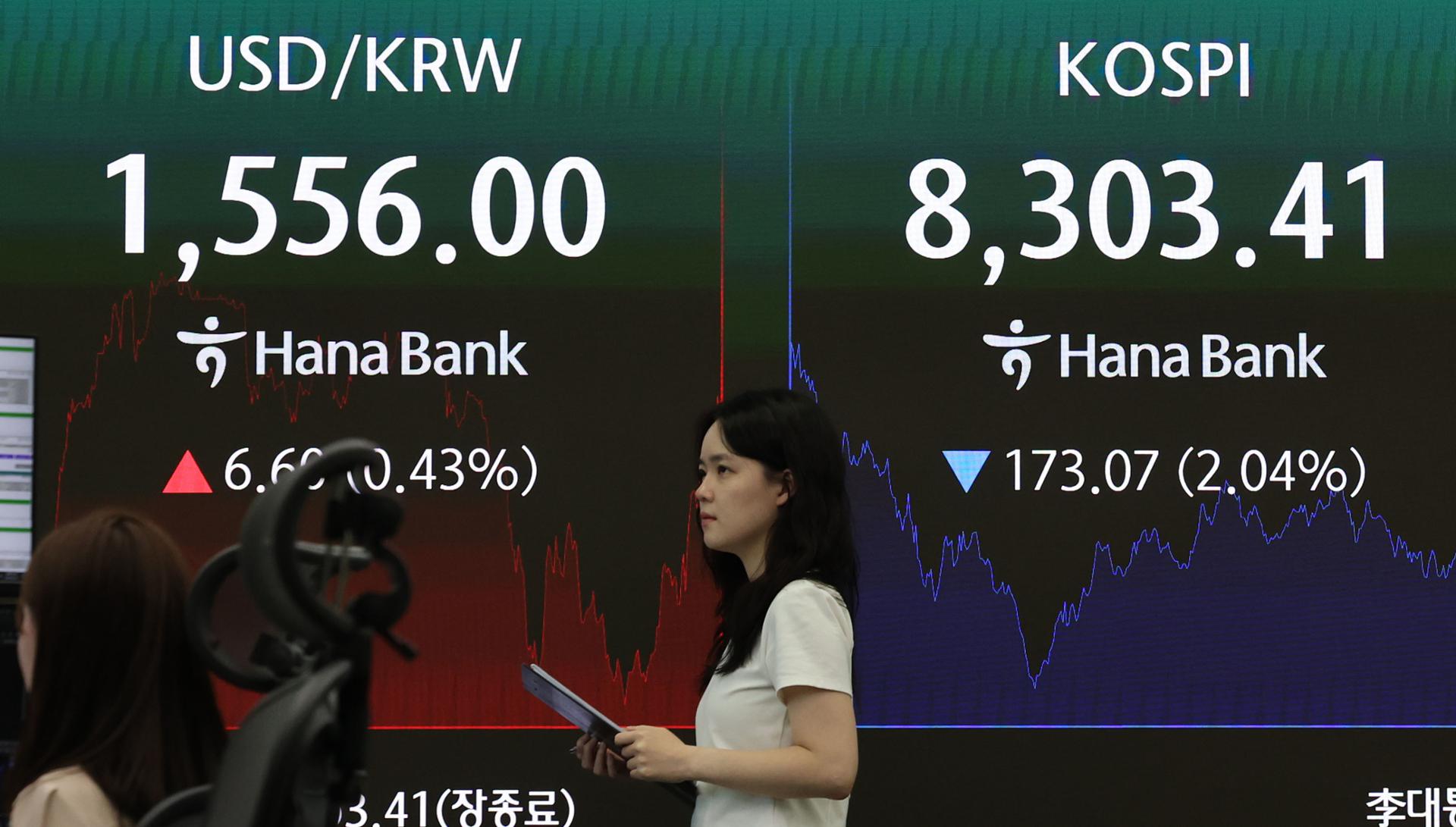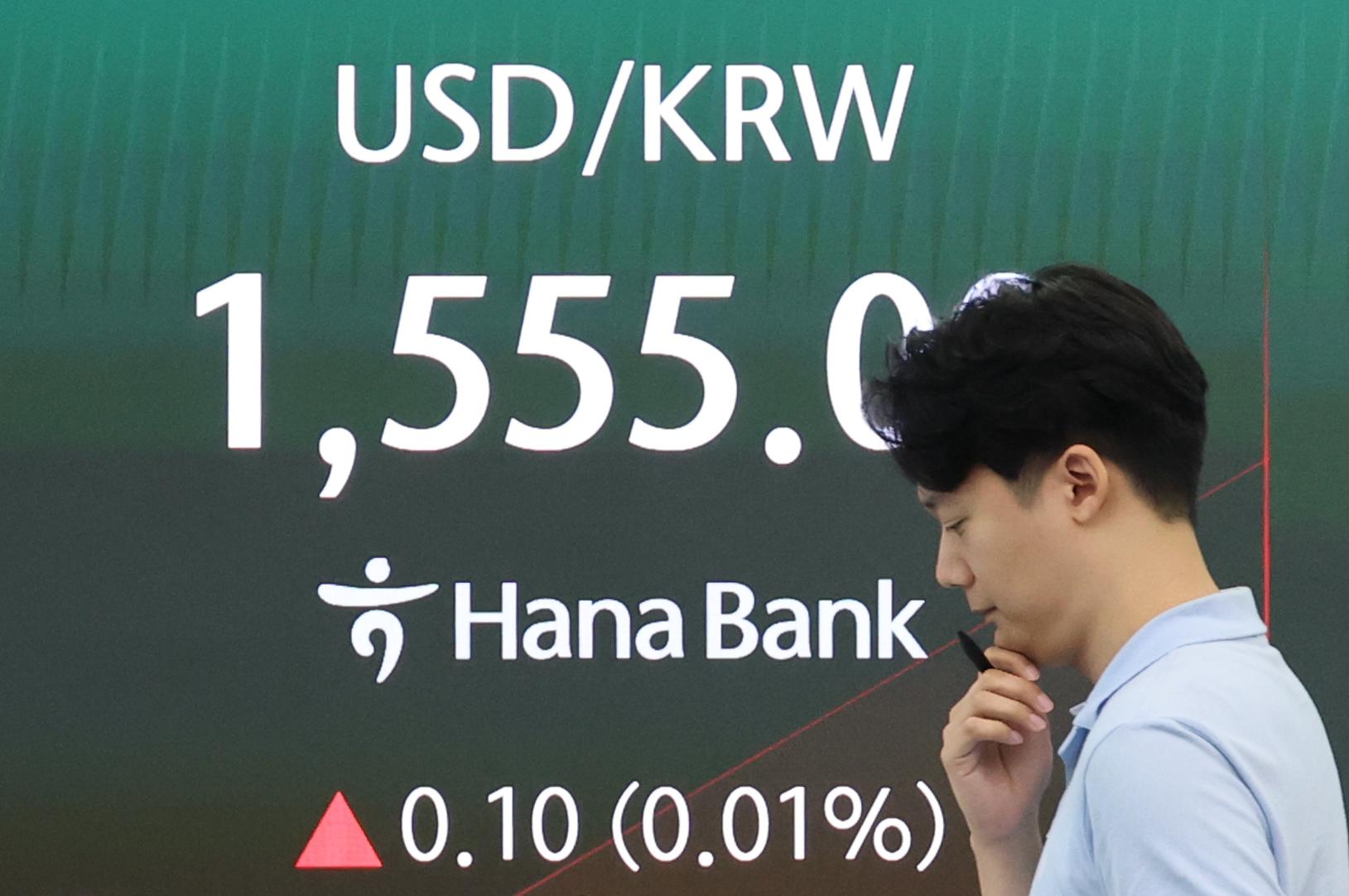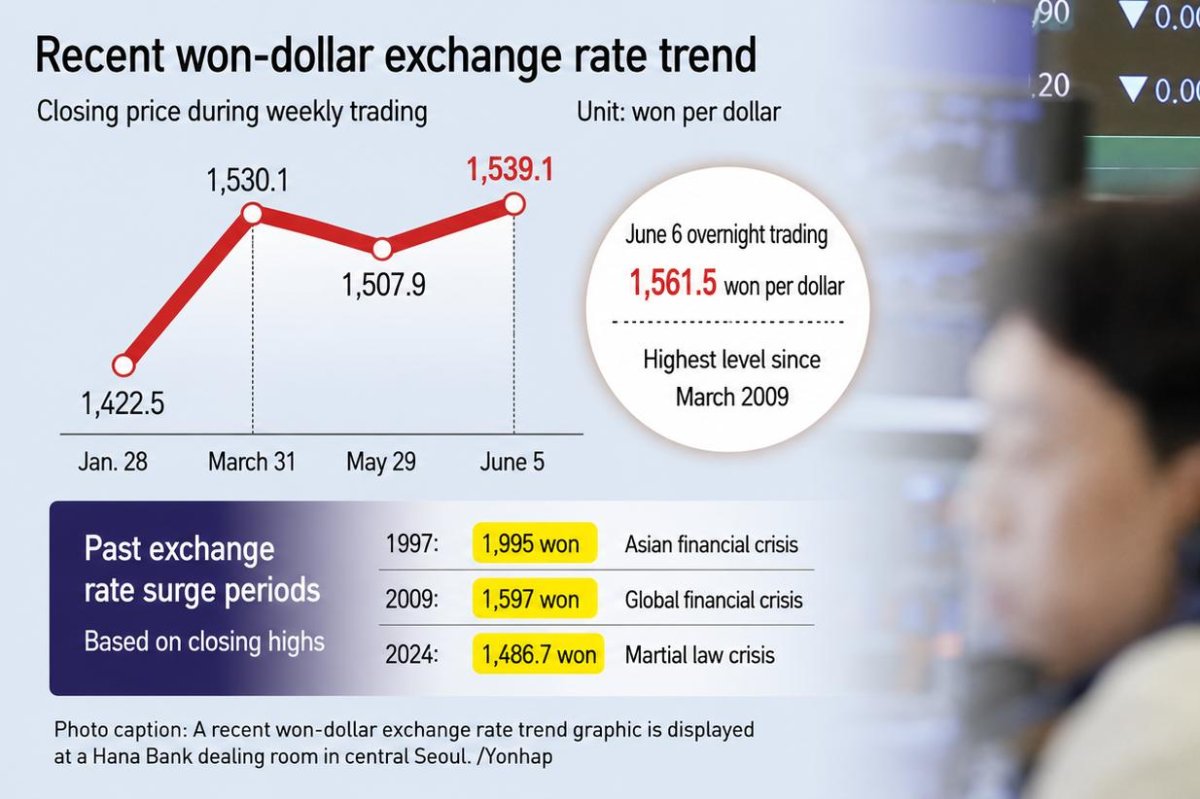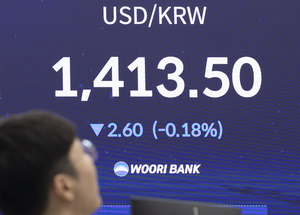
The South Korean won just hit a level that carries some uncomfortable historical baggage. Trading at 1,557 per US dollar, and briefly touching an intraday low of 1,561.5 on June 6, the currency is now at its weakest point since March 2009, when the world was still digging out of the global financial crisis.
The roughly 15% decline over the past year has been driven by a familiar cocktail: foreign investors selling Korean equities in size, strong US economic data propping up the dollar, and a general risk-off mood that tends to hit emerging market currencies hardest. South Korean authorities have pledged to step in and curb excessive volatility, but so far the won hasn’t gotten the memo.
What’s driving the sell-off
Foreign investors have been dumping billions in Korean equities, creating relentless downward pressure on the won. When overseas funds sell Korean stocks and repatriate their capital, they’re effectively selling won and buying dollars.
South Korean authorities recognized the severity of the situation as early as June 4, when they pledged action to mitigate excessive currency moves as the won approached 1,540 levels. That intervention talk briefly steadied things. Then the currency blew right past 1,540 and kept going.