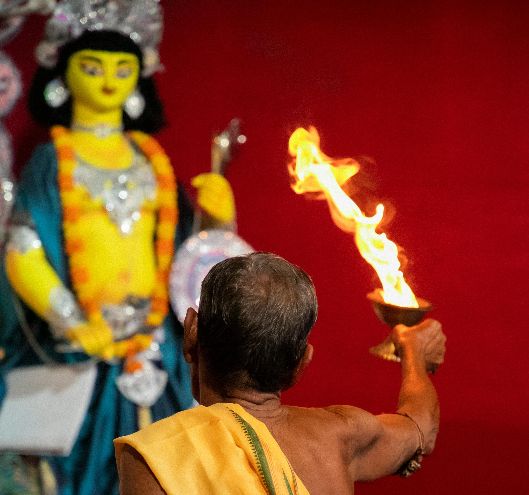
Discrimination based on religion is prohibited, and the right to practice one’s faith openly is constitutionally protected, says the writer.
WHILE South Africa is a secular state, it is also a religiously active country. It is also one of three countries, with the USA and Italy, where religious affiliation has increased in recent years.
For reasons unknown, the 2011 South African census excluded religious affiliation. According to the 2022 census, 97% of South Africans had a religious affiliation. Christianity was dominant, with 85% of the population belonging to various denominations. About 8% were affiliated with African Traditional Religions, and Islam, Hinduism, Judaism, and Buddhism were minority faiths.
In contrast to the heinous apartheid era, in democratic South Africa, freedom of worship and association is constitutionally enshrined. Respect for all faiths and modes of worship is an important principle. Unlike many other parts of the world, religious differences have not been a major driver of violence or political division.
Internationally, South Africa is widely regarded as a role-model for a multi-faith society with little or no religious conflict, largely due to its constitutional protections, inclusive values, and culture of tolerance. Interfaith organisations regularly encourage dialogue and cooperation. According to a 2023 Ipsos survey, South Africa is ranked as the most religiously tolerant country in the world. More specifically, 92% of South Africans felt “completely comfortable being around people with different religious beliefs".