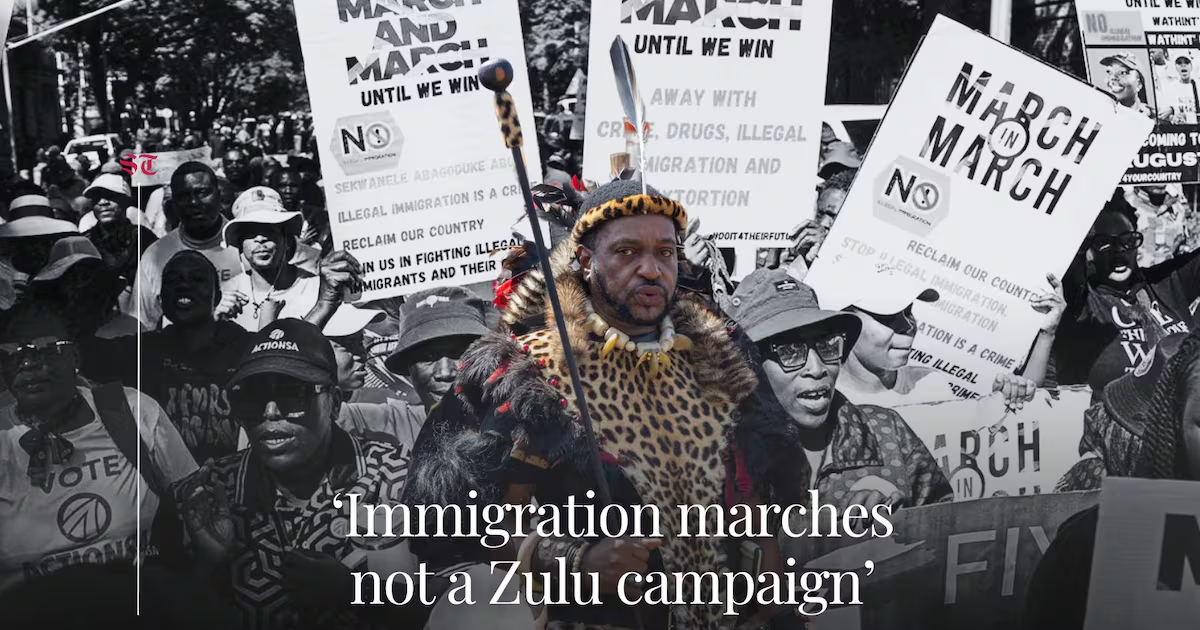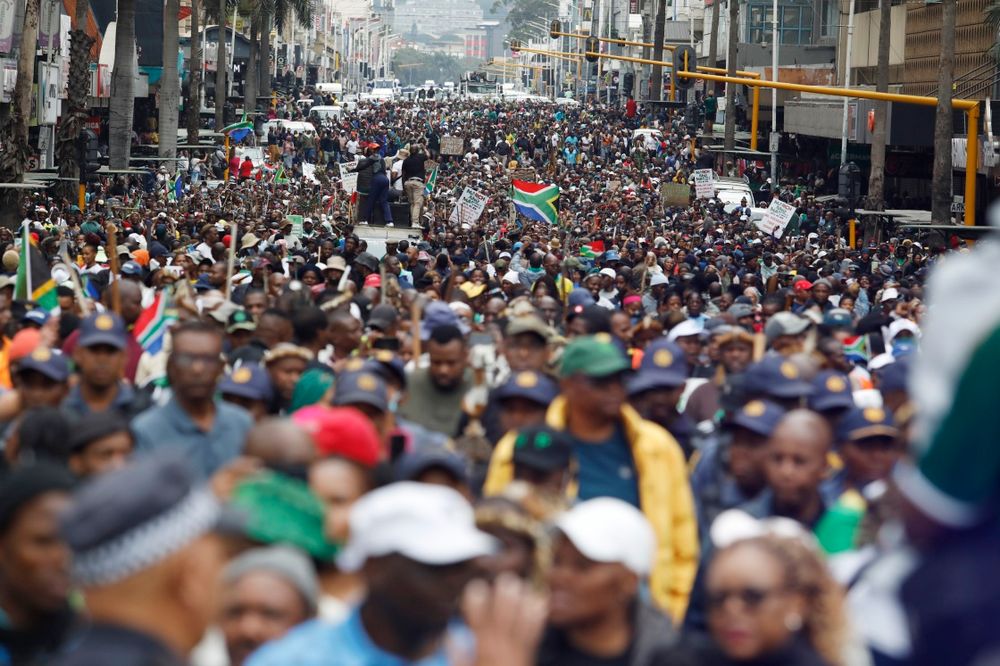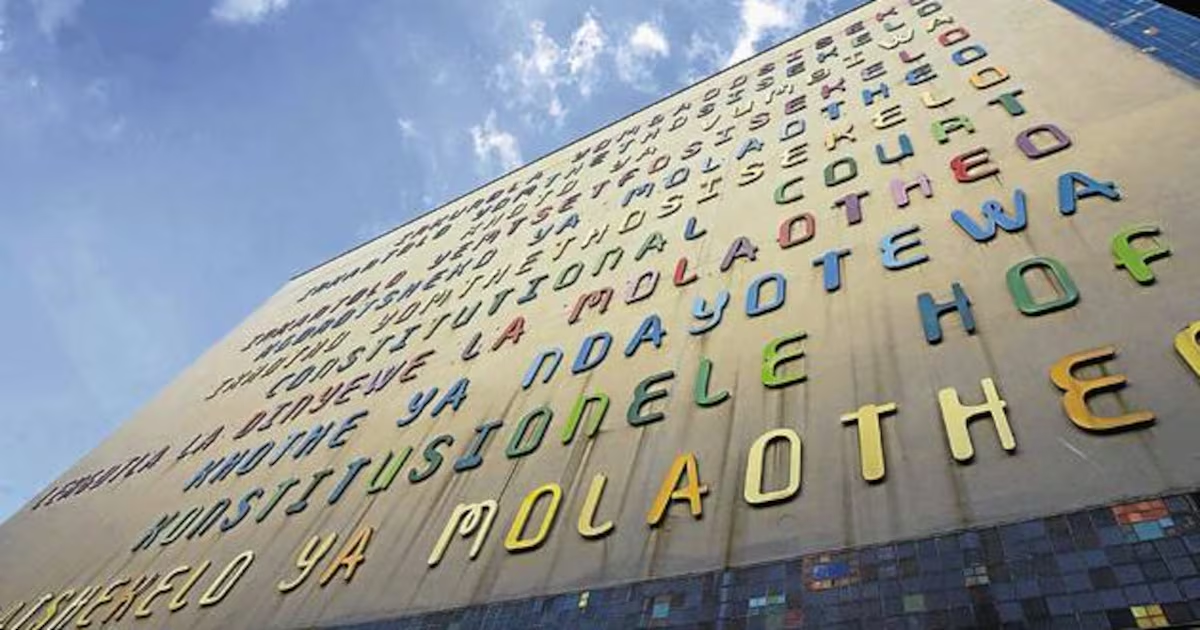
South Africa does not lack diversity. Our constitution’s preamble; the coat of arms’ motto ‘!ke e: /xarra //ke’ (drawn from the extinct ǀXam, a member of the Khoisan languages, literally meaning “diverse people unite”) and decades of “rainbow nation” rhetoric acknowledge gender orientation and racial, linguistic, religious and cultural differences.Ongoing anti-migrant actions have shown the shallowness of pluralism, which refers to the negotiated, continuously renewed set of rules and structures that allow a diverse population to disagree, compete and even resent one another’s claims without resorting to expulsion or violence. It would be tempting to think that the registration of 508 parties for the 2026 local government elections testifies to pluralism in South Africa. Pluralism is much more than that: building pluralism requires durable institutions, a renewed “sphere of consent” and a willingness to extend accommodation beyond the boundaries of citizenship, all of which is the harder part of South Africa’s democratic project. In the classical liberal tradition associated with Isaiah Berlin, pluralism begins from the recognition that human values are genuinely multiple and often irreconcilable and that a decent political order must make room for that plurality rather than pretending it can be dissolved into a single correct answer. Berlin’s often-cited counsel was that societies should approach difference with humility, trying to understand what others need rather than assuming that a single value system can settle all disputes.Robert Dahl argued that democratic health depends on power being dispersed among competing groups such as unions, religious bodies, professional associations and minorities, rather than concentrated in a single elite. William Connolly distinguished between a “shallow, secular pluralism” and a “deep, multidimensional pluralism”, which is essential for fostering justice and inclusion in society, allowing space for different groups to bring their religious faiths into the public realm. Thus, it may be useful to frame pluralism as producing a structure of “polyarchy”, of dispersed power, that functions socially the way checks and balances function constitutionally. This view insists pluralism only works if a “sphere of dissent” (the right to contest) is matched by a “sphere of consent” whereby citizens first agree on baseline rules of mutual recognition and non-violence before they can safely disagree about everything else. Diversity supplies the raw material for a sphere of dissent. Pluralism is what has to be built through institutions and regular practice to make that dissent constructive rather than destructive.The increasing preference for military rule, in the form of coups and as tracked through the Afrobarometer survey, should not be seen as a rejection of pluralist values but rather a judgment on the delivery of pluralist democratic systems. Gabon is a good example of where a coup in 2023 led to elections being held under the aegis of the ruling former general, Brice Clotaire Oligui Nguema. Elections were actually held ahead of schedule, but his landslide victory has been attributed to a reworked electoral code and the exclusion of opposition candidates: pluralism survived while much of its substance did not.For pluralism to be supported, it needs to be seen as genuinely delivering on the needs of citizens. It also needs enforceable institutions, not aspirational language. In South Africa, institutions responsible for managing plural claims, from the Cultural, Religious and Linguistic Commission to the bargaining councils to the Commission for Conciliation, Mediation and Arbitration, require resourcing and authority proportionate to the conflicts they are meant to resolve.We also need to constantly renew our sphere of consent, not just assume it. The 1996 constitution provided the founding basis of our consent. That sphere of consent has to be actively rebuilt through processes such as the ANC governing in the government of national unity coalition since 2024, as well as through the national dialogue envisaged in the GNU’s statement of intent. The stalling of that process could be a worrying signal of the work needed to attain pluralism.Furthermore, pluralist accommodation has to extend beyond the boundaries of citizenship. A framework that manages diversity only among South Africans, while treating everyone else as a problem to be expelled, is not pluralism. It is a more comfortable, bounded version of the same majoritarian logic that pluralism was designed to check. • Abba Omar is director operations at the Mapungubwe Institute (Mistra).Business Day
YACOOB ABBA OMAR | South Africa needs to build pluralism while celebrating diversity
Sustaining democracy requires stronger institutions and renewed civic consensus
701 words~3 min read